Understand the ocean: marine biology for the curious
This curriculum takes a beginner from a sense of wonder about the ocean all the way to a rigorous understanding of marine ecosystems, deep-sea science, and conservation biology. Each stage builds vocabulary and conceptual scaffolding so that later, more technical books feel accessible rather than overwhelming — starting with narrative immersion, moving through ecology and oceanography, and finishing with the hard science of conservation.
First Dive — Wonder & Orientation
BeginnerBuild an emotional connection to the ocean and a broad mental map of its major zones, creatures, and challenges — without needing any prior science background.
▸ Study plan for this stage
Pace: 8–10 weeks total, reading roughly 20–25 pages per day on weekdays with lighter reading on weekends. Suggested pacing: "The Soul of an Octopus" in weeks 1–3 (~270 pages), "The Sea Around Us" in weeks 4–6 (~250 pages), and "Spineless" in weeks 7–10 (~300 pages). Allow 1–2 buffer days between books for
- Ocean as a living, layered world: Montgomery's immersive portraits of Athena, Octavia, Kali, and Karma in 'The Soul of an Octopus' reveal the ocean not as a backdrop but as a community of minds — introducing the idea that marine creatures have personalities, intelligence, and inner lives.
- Invertebrate cognition and alien intelligence: Octopuses have distributed nervous systems (two-thirds of their neurons are in their arms), challenge human-centric ideas of intelligence, and serve as a gateway to appreciating the vast diversity of non-vertebrate ocean life.
- The ocean's grand architecture — zones and layers: Carson's 'The Sea Around Us' maps the physical ocean — its basins, seamounts, currents, tides, and depth zones (sunlit epipelagic, twilight mesopelagic, midnight bathypelagic) — giving the reader a mental globe of where life lives and why.
- Ocean as a dynamic, ancient force: Carson frames the sea as billions of years old, constantly shaping coastlines, climate, and life on land — establishing deep time as a lens for understanding marine biology.
- Jellyfish as ecological bellwethers: Berwald's 'Spineless' introduces jellyfish blooms as a measurable signal of ocean stress, weaving together overfishing, warming, and acidification through one surprisingly complex animal.
- Interconnectedness of ocean health and human activity: Across all three books, human impact — aquarium captivity (Montgomery), pollution and climate (Carson, Berwald) — emerges as a thread connecting wonder to responsibility.
- Science as personal narrative: All three authors are non-scientists (or science writers) who learned alongside the reader — modeling that curiosity, not credentials, is the entry point to marine biology.
- Emotional attunement as a scientific tool: Montgomery's grief at the deaths of her octopus friends, Carson's lyrical awe, and Berwald's anxiety about jellyfish blooms all demonstrate that emotional engagement is compatible with — and even essential to — rigorous observation.
- After reading 'The Soul of an Octopus,' how would you describe octopus intelligence to someone who thinks only mammals and birds are 'smart'? Use at least one specific example from Montgomery's time at the New England Aquarium.
- Carson organizes 'The Sea Around Us' around the idea that the ocean is in constant motion and change. Name at least two forces (physical, chemical, or biological) she describes that shape the ocean's character, and explain why they matter to marine life.
- How does Berwald use jellyfish in 'Spineless' as a lens to examine broader ocean problems? What human activities does she connect to jellyfish blooms, and what does that tell us about ecosystem balance?
- All three books were written by women who came to marine science through wonder rather than formal training. How does that authorial perspective shape the way each book presents scientific information — and what does it suggest about who 'belongs' in science?
- Draw or describe (in words) a rough cross-section of the ocean from surface to seafloor, labeling the major depth zones Carson introduces. For each zone, name one creature or phenomenon associated with it from any of the three books.
- By the end of this stage, what is your single biggest unanswered question about the ocean? Where in these three books did that question first surface for you?
- **Creature Journal (ongoing, all 3 books):** Keep a dedicated notebook. Each time you meet a new animal in any of the three books, write its name, one surprising fact, and one question it raises. Aim for at least 15 entries by the end of the stage.
- **Octopus Observation Challenge (after 'The Soul of an Octopus'):** Visit a local aquarium, tide pool, or — if neither is accessible — spend 30 minutes watching a high-quality octopus documentary (e.g., 'My Octopus Teacher'). Write one page comparing what you observe to Montgomery's descriptions of Athena or Octavia. What did you notice that the book prepared you to see?
- **Hand-drawn Ocean Map (after 'The Sea Around Us'):** Without looking anything up, sketch a cross-section of the ocean from shoreline to deepest trench. Label every zone, current, or feature you can recall from Carson. Then compare your map to a reference diagram online and annotate what you missed — this gap list becomes your personal study guide.
- **Jellyfish Bloom News Hunt (during 'Spineless'):** Find two recent news articles (within the last 5 years) about jellyfish blooms anywhere in the world. Write a half-page connecting each article to a specific claim or story in Berwald's book. Are her warnings playing out? Where?
- **Author Voice Comparison (after finishing all 3 books):** Choose one ocean phenomenon that appears in at least two of the books (e.g., ocean warming, tides, predator-prey relationships). Write a one-page comparison of how Montgomery, Carson, and Berwald each approach it — in tone, detail, and emotional register. What does each author make you *feel* versus *know*?
- **'Letter to the Ocean' Reflection (end of stage):** Write a one-to-two page personal letter addressed to the ocean itself. Draw on specific moments, creatures, or passages from all three books. This is not a summary — it is your emotional reckoning with what you've read. Save it; you'll revisit it at the end of the full curriculum.
Next up: Having built an emotional foundation and a broad mental map of ocean zones, creatures, and threats through narrative science writing, the reader is now ready to move into more structured scientific frameworks — the next stage can introduce marine ecology, food webs, and oceanographic systems with confidence that the reader already cares deeply about what the science is describing.
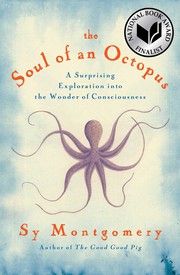
A beautifully written, narrative introduction to marine animal intelligence that makes abstract ideas about ocean life feel personal and immediate — perfect first contact with the subject.
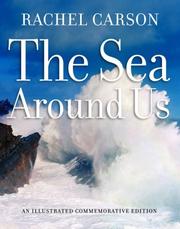
Carson's classic panorama of ocean history, currents, and life establishes the big picture of how the ocean works in lyrical, accessible prose that has introduced generations to marine science.

Follows one scientist's journey into jellyfish biology, weaving in ocean ecology and climate change — a gentle, story-driven bridge from pure wonder toward actual science concepts.
How the Ocean Works — Ecosystems & Ecology
BeginnerUnderstand the core ecological relationships in the ocean — food webs, coral reefs, kelp forests, open-ocean systems — and the physical forces (currents, temperature, light) that drive them.
▸ Study plan for this stage
Pace: 6–8 weeks total. Week 1–3: "The Brilliant Abyss" (~25–30 pages/day, including time to pause and sketch diagrams of deep-sea zones). Week 4–7: "Reef Life" (~20–25 pages/day, slower pace to absorb the rich species portraits and ecological narratives). Week 8: Review week — revisit key chapters from bo
- Ocean zonation: how the ocean is divided into depth-based layers (epipelagic, mesopelagic, bathypelagic, abyssal, hadal) and how light, pressure, and temperature change across them — as explored through the deep-sea lens of The Brilliant Abyss
- Food webs and energy flow: the chain from phytoplankton and marine snow down to deep-sea scavengers and chemosynthetic communities, showing how energy moves through ocean ecosystems
- Chemosynthesis vs. photosynthesis: how hydrothermal vent and cold-seep communities in The Brilliant Abyss survive without sunlight, challenging the assumption that all ocean life depends on the sun
- Physical ocean drivers: the roles of currents, thermohaline circulation, upwelling, temperature gradients, and light penetration in structuring where and how marine life thrives
- Coral reef ecology: the symbiotic relationships (e.g., coral-zooxanthellae mutualism), biodiversity hotspots, and the delicate balance of reef ecosystems as portrayed through Callum Roberts's lifetime of fieldwork in Reef Life
- Ecological relationships: predation, competition, symbiosis, and keystone species — illustrated by specific reef inhabitants (parrotfish, grouper, sharks) in Reef Life and by deep-sea communities in The Brilliant Abyss
- Habitat connectivity: how open-ocean systems, reefs, kelp-like structures, and the deep sea are not isolated but linked through nutrient cycling, migration, and marine snow
- Human impact as an ecological force: how overfishing, pollution, and climate change (bleaching, acidification) are reshaping the ecological relationships described in both books
- After reading The Brilliant Abyss, can you describe at least three distinct deep-sea habitats and explain what physical or chemical conditions define each one and which organisms are adapted to live there?
- How does marine snow work, and why is it the critical link connecting sunlit surface ecosystems to the deep-sea communities Helen Scales describes in The Brilliant Abyss?
- Using Reef Life as your evidence, explain the role of at least two keystone or functionally important species on a coral reef — what happens to the ecosystem if they are removed?
- What is the coral-zooxanthellae symbiosis, and how does Callum Roberts use it in Reef Life to explain both the productivity of reefs and their vulnerability to warming?
- How do the physical forces of ocean currents and upwelling influence the distribution of life, connecting the open-ocean and deep-sea worlds of The Brilliant Abyss to the reef systems of Reef Life?
- Having read both books, how would you compare the ecological resilience of a deep-sea hydrothermal vent community to that of a coral reef — what makes each system stable or fragile?
- Zone mapping diagram: After finishing The Brilliant Abyss, draw a cross-section of the ocean from surface to hadal zone. Label each zone, annotate the light/temperature/pressure conditions, and add at least two organisms from the book per zone. Pin it somewhere visible for the rest of the stage.
- Food web construction: Build a food web for (a) a deep-sea hydrothermal vent community from The Brilliant Abyss and (b) a coral reef community from Reef Life. Use arrows to show energy flow. Then identify one 'node' in each web whose removal would cause the most cascading damage — write a short paragraph justifying your choice.
- Field or aquarium visit: Visit a public aquarium, tide pool, or reef snorkel site (even a virtual aquarium tour works). Bring a checklist of ecological relationships from both books — symbiosis, predation, competition — and try to spot at least one real-world example of each. Write up your observations.
- Comparative reading journal: Keep a two-column journal throughout the stage. Left column: physical/abiotic factors (light, temperature, pressure, currents). Right column: the biological response or adaptation described on that page. After finishing both books, look for patterns — which physical factor appears most often as a driver of life?
- Bleaching scenario analysis: Using the coral ecology from Reef Life, write a one-page 'ecological forecast' — if sea surface temperatures in a reef region rise 2°C for 8 weeks, trace the likely cascade of effects through the food web you built in Exercise 2.
- Concept synthesis essay (500 words): Answer this prompt in writing — 'The ocean is one connected system.' Use at least three specific examples drawn from both The Brilliant Abyss and Reef Life to argue for or against this statement, focusing on how energy, nutrients, or species link different ocean habitats together.
Next up: By internalizing the ecological relationships and physical drivers across deep-sea and reef systems from these two books, the reader has built a mental model of how the ocean functions as a living system — the essential foundation for the next stage, which will examine how human activity, climate change, and conservation science are disrupting and attempting to restore those very systems.

A clear, up-to-date survey of deep-sea ecosystems and the threats they face; reading it after Carson shows how modern science has filled in the picture she painted.

Roberts combines personal field experience with rigorous ecology to explain how coral reef ecosystems are structured and why they are so vulnerable — essential vocabulary for later conservation reading.
Strange Creatures & Deep-Sea Science
IntermediateGo deeper into the biology of unusual marine organisms and the extreme environments they inhabit, building scientific literacy around adaptation, evolution, and deep-ocean processes.
▸ Study plan for this stage
Pace: 10–12 weeks total, reading ~25–35 pages per day on weekdays with lighter reading on weekends. Suggested pacing: "Kraken" (Weeks 1–3, ~220 pages), "Other Minds" (Weeks 4–7, ~260 pages), "Deep" (Weeks 8–12, ~300 pages). Allow buffer days between books for reflection and review.
- Cephalopod biology and the evolutionary origins of intelligence in invertebrates, as explored through giant squid and octopus research in 'Kraken' and 'Other Minds'
- Convergent evolution: how intelligence and complex nervous systems evolved independently in cephalopods and vertebrates (central theme of 'Other Minds')
- Adaptation to extreme environments — pressure, darkness, cold, and chemical gradients — as detailed in Rogers' 'Deep'
- The deep-sea as a distinct biome: hydrothermal vents, cold seeps, seamounts, and abyssal plains covered in 'Deep'
- Scientific uncertainty and the process of marine discovery — how researchers in all three books work at the frontier of knowledge with incomplete data
- Consciousness, sentience, and the philosophy of mind as applied to non-human marine animals, particularly in 'Other Minds'
- Biodiversity and extinction risk in the deep ocean, including the threats of deep-sea mining and trawling raised in 'Deep'
- The interplay between evolutionary history (the Cambrian explosion, ancient cephalopod lineages) and present-day marine biodiversity across all three books
- After reading 'Kraken,' how did scientific understanding of giant squid evolve over time, and what does this reveal about the challenges of studying elusive deep-sea organisms?
- Drawing on 'Other Minds,' what is the evidence that octopuses evolved intelligence independently from vertebrates, and what does this imply about the nature of consciousness?
- How does Peter Godfrey-Smith use the concept of the 'last common ancestor' to frame the philosophical significance of cephalopod minds?
- Based on 'Deep,' what physical and chemical conditions define the deep-sea environment, and what biological strategies do organisms use to survive them?
- Across all three books, what common themes emerge about how marine science is conducted — what tools, methods, and mindsets do researchers rely on?
- How do Rogers' findings in 'Deep' about deep-sea ecosystem fragility connect to the broader conservation concerns implied in 'Kraken' and 'Other Minds'?
- Keep a 'Species Encounter Log': each time a specific organism is named in any of the three books, write 2–3 sentences on its key adaptations, habitat, and why the author found it significant — aim for at least 20 entries by the end of the stage.
- After finishing 'Other Minds,' sketch a diagram comparing the nervous system architecture of an octopus to that of a vertebrate (e.g., a fish), labeling where decentralized vs. centralized processing occurs and annotating it with evidence from the book.
- Write a 1-page 'field dispatch' from the perspective of a scientist on a deep-sea research vessel encountering one of the environments described in 'Deep' (e.g., a hydrothermal vent or seamount) — use specific biological and geological details from the book.
- Create a three-column comparison chart across all three books: for each book, identify (1) the central organism or environment, (2) the key evolutionary or ecological argument, and (3) the primary human threat or conservation concern raised.
- Find and watch one documentary or read one peer-reviewed article about a species or environment featured in any of the three books (e.g., octopus cognition, giant squid, or hydrothermal vents), then write a half-page reflection on what the book got right, what it simplified, and what surprised you.
- Draft five discussion questions of your own after completing 'Deep' that connect all three books — then try to answer them in a short journal entry, treating the three authors as participants in the same ongoing scientific conversation.
Next up: Mastering the biology of extreme adaptations, cephalopod intelligence, and deep-ocean ecosystems in this stage equips the reader with the scientific vocabulary and ecological perspective needed to engage with broader, systems-level topics in marine science — such as ocean chemistry, climate-driven change, and global conservation policy — that a more advanced stage would address.

Uses the giant squid as a lens to explore deep-sea biology, sensory science, and the history of ocean exploration — builds on earlier ecology knowledge with more detailed biological concepts.
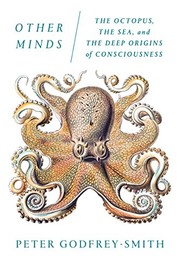
A philosopher-diver's rigorous examination of cephalopod cognition and the evolution of animal minds; deepens understanding of marine animal biology with evolutionary and neurological frameworks.

A comprehensive scientific account of deep-ocean ecosystems, hydrothermal vents, and biodiversity — the most technically detailed book so far, made accessible by the foundation already built.
Ocean Conservation Science
IntermediateUnderstand the scientific evidence behind major ocean threats — overfishing, acidification, plastic pollution, climate change — and the frameworks scientists and policymakers use to address them.
▸ Study plan for this stage
Pace: 6–8 weeks total: Weeks 1–4 for "The Ocean of Life" (~25–30 pages/day, including note-taking pauses); Weeks 5–7 for "Seasick" (~20–25 pages/day, journaling alongside each chapter); Week 8 reserved for synthesis, review, and completing exercises.
- Historical baselines and 'shifting baselines syndrome': Roberts demonstrates how each generation of scientists and fishers resets its sense of 'normal' ocean abundance, systematically underestimating cumulative depletion.
- Overfishing as a cascading ecological crisis: 'The Ocean of Life' traces how industrial fishing collapses not just target species but entire food webs, habitat structure (e.g., trawling damage to seafloor), and coastal human communities.
- Ocean acidification mechanics and consequences: Mitchell's 'Seasick' explains the chemistry of CO₂ absorption — carbonic acid formation, falling pH, and the dissolution threat to calcifying organisms like corals, pteropods, and shellfish.
- Climate change and ocean systems: Both books address rising sea temperatures, deoxygenation, altered circulation patterns (including thermohaline disruption), coral bleaching, and the ocean's role as Earth's primary heat and carbon sink.
- Plastic and chemical pollution: Roberts documents how persistent pollutants (plastics, agricultural runoff, industrial chemicals) bioaccumulate up the food chain and create dead zones, while Mitchell frames pollution as a symptom of a broader civilizational relationship with the sea.
- Marine protected areas (MPAs) and conservation frameworks: Roberts presents the scientific evidence for no-take zones, ecosystem-based management, and international governance frameworks (e.g., UNCLOS) as tools for recovery.
- The ocean-atmosphere feedback loop: Mitchell foregrounds the ocean's regulatory role in climate — absorbing ~30% of anthropogenic CO₂ and >90% of excess heat — and what breakdown of this regulation means for planetary stability.
- Science-to-policy translation: Both authors grapple with why robust scientific evidence has not produced proportionate policy action, introducing readers to the roles of lobbying, short-termism, and international coordination failures.
- According to Roberts in 'The Ocean of Life,' how does shifting baselines syndrome distort both scientific assessments and public perception of fish population health — and what methodological approaches does he propose to reconstruct true historical abundance?
- Mitchell's 'Seasick' opens with the ocean's chemistry. In your own words, explain the step-by-step process by which atmospheric CO₂ leads to ocean acidification, and identify at least three categories of marine organisms Roberts and Mitchell each flag as most vulnerable.
- Both books address coral reefs. Synthesize the threats Roberts and Mitchell each emphasize: where do their diagnoses overlap, and where do they diverge in terms of primary cause and urgency?
- Roberts makes a detailed case for marine protected areas. What does the scientific evidence he presents say about the minimum size, no-take enforcement, and network design needed for MPAs to be ecologically effective rather than 'paper parks'?
- Mitchell frames the ocean as a life-support system for the entire planet, not just marine species. What specific regulatory services does she identify, and what does she argue happens to those services as stressors compound?
- Having read both books, what do you see as the single greatest gap between the scientific consensus on ocean threats and the policy responses in place — and which author's framing do you find more persuasive in explaining that gap, and why?
- Shifting Baselines Interview Project: After reading the relevant chapters in 'The Ocean of Life,' interview two people of different generations (e.g., a grandparent and a peer) about what they consider 'normal' fish abundance or beach health. Write a 1-page reflection comparing their baselines to the historical data Roberts cites.
- Acidification Chemistry Diagram: Using Mitchell's explanation in 'Seasick' as your source, draw and annotate a step-by-step diagram of the CO₂ → carbonic acid → bicarbonate → pH drop process. Add a second layer showing which organisms are affected at each pH threshold she discusses.
- MPA Policy Brief: Drawing exclusively on the evidence Roberts marshals in 'The Ocean of Life,' write a 1–2 page mock policy brief addressed to a fictional fisheries minister. Argue for or against expanding no-take MPAs in a specific region, citing his data on recovery rates and spillover effects.
- Threat Matrix: Create a 4×4 comparison table with the four major threats (overfishing, acidification, plastic/chemical pollution, climate change) as rows, and four dimensions (mechanism of harm, most affected species/ecosystems, current policy response, evidence of reversibility) as columns. Populate it using only Roberts and Mitchell as sources, noting where they agree or contradict each other.
- 'Seasick' Reading Journal: For each chapter of Mitchell's book, write 3–5 sentences answering: (1) What new scientific finding surprised me most? (2) What emotional or rhetorical strategy does Mitchell use here, and is it effective? (3) What question does this chapter leave unanswered? Review all entries in Week 8 to identify patterns.
- Synthesis Essay — The Ocean in 2050: After finishing both books, write a 500-word speculative essay imagining the state of the ocean in 2050 under two scenarios: (a) current policy trajectories continue; (b) the conservation frameworks Roberts and Mitchell advocate are fully implemented. Ground every claim in evidence from the two books.
Next up: By internalizing the scientific evidence and policy frameworks from Roberts and Mitchell, the reader is now equipped to move from diagnosing ocean threats to exploring active, on-the-ground solutions — making the next stage's focus on restoration ecology, community-based conservation, and emerging technologies a natural and motivated progression.
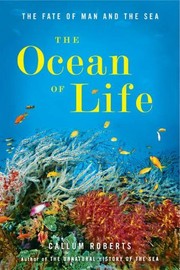
A sweeping, evidence-rich account of how human activity has transformed the ocean over centuries; Roberts synthesizes ecology, history, and policy in a way that directly applies everything learned so far.

Focuses specifically on ocean acidification and deoxygenation with clear scientific explanations — a focused, alarming, and well-sourced complement to Roberts' broader canvas.
Advanced Synthesis — Oceanography & the Future
ExpertIntegrate physical oceanography, climate science, and conservation biology into a unified, expert-level understanding of the ocean as a planetary system — and what its future may hold.
▸ Study plan for this stage
Pace: 8–10 weeks total: ~3 weeks on "A Sea in Flames" (~25–30 pages/day, including reflection pauses after key chapters) and ~5–6 weeks on "The Ends of the World" (~20–25 pages/day, with slower reading around deep-time case studies and geological data sections). Reserve the final week for cross-book synth
- Anthropogenic catastrophe as a real-time oceanographic event: Safina's account of the Deepwater Horizon disaster as a lens for understanding how industrial systems interact with — and rupture — ocean ecology, chemistry, and food webs
- Oil's cascading effects on marine ecosystems: from surface slicks and dispersant chemistry (Corexit) to deep-sea plume dynamics, hypoxic zones, and the long-tail biological impacts on fish, birds, and marine mammals in the Gulf of Mexico
- The ocean as a political and economic battleground: Safina's journalism reveals how regulatory failure, corporate accountability gaps, and media framing shape the human response to marine environmental crises
- Deep-time mass extinctions as planetary stress tests: Brannen's geological tour of the 'Big Five' extinctions — End-Ordovician, Late Devonian, End-Permian, End-Triassic, and End-Cretaceous — as case studies in how ocean chemistry, temperature, and circulation collapse under extreme forcing
- Ocean acidification and anoxia as recurring kill mechanisms: across Brannen's extinction events, the ocean repeatedly becomes the site where carbon-cycle disruptions manifest most lethally — a direct analogue to present-day CO₂ absorption trends
- The carbon cycle as the master variable of Earth's habitability: Brannen frames volcanic outgassing, weathering feedbacks, and biological carbon pumps as the long-run regulators of climate — and shows what happens when they are overwhelmed
- Comparative catastrophism — past vs. present: synthesizing both books, the reader should be able to place the Deepwater Horizon event and current ocean warming/acidification trajectories within the broader arc of Earth's most severe biotic crises
- Uncertainty, scale, and moral urgency in ocean science: both authors grapple with what it means to communicate existential risk — Safina from a conservation-journalism standpoint, Brannen from a deep-time geology standpoint — offering complementary frameworks for expert-level engagement with ocean f
- Based on Safina's detailed reporting in 'A Sea in Flames,' what were the primary physical and chemical mechanisms by which the Deepwater Horizon blowout damaged the Gulf of Mexico ecosystem, and which effects proved most persistent — and why?
- Safina documents the use of Corexit as a dispersant. What are the oceanographic trade-offs of dispersant use, and how does this decision reflect broader tensions between short-term optics and long-term ecological health?
- Brannen argues that the End-Permian extinction was essentially an ocean acidification and anoxia event driven by Siberian Trap volcanism. How does the pace of that carbon release compare to current anthropogenic emissions, and what does that comparison imply for marine life today?
- Across the extinction events Brannen covers, what role does ocean circulation — particularly the disruption of thermohaline patterns — play in amplifying or moderating biotic crises? How does this connect to present-day concerns about AMOC stability?
- Both Safina and Brannen are writing for general audiences but with expert-level sourcing. How do their rhetorical strategies differ, and how do those differences reflect the nature of their evidence (journalistic vs. geological)?
- If you were advising a marine conservation policy body, what lessons would you synthesize from 'A Sea in Flames' and 'The Ends of the World' about the conditions under which ocean systems cross irreversible tipping points — and what early-warning signals should policymakers monitor?
- Extinction-to-present analogy mapping: Create a two-column table. In the left column, list each of Brannen's major extinction events with its primary ocean-kill mechanism (acidification, anoxia, warming, sea-level change). In the right column, map each mechanism to a documented present-day ocean trend with a current measurement or data source. Identify which present trends have the closest histori
- Deepwater Horizon systems diagram: Using Safina's account, draw a cause-and-effect systems map of the blowout — from wellhead failure through regulatory gaps, dispersant decisions, media cycles, and ecological impacts. Annotate each node with a specific detail from the book. Then add a second layer: where could intervention have broken the chain?
- Carbon pulse rate analysis: Brannen repeatedly emphasizes the *rate* of carbon release as the critical variable distinguishing survivable from catastrophic events. Research the estimated carbon release rates (Gt C/year) for the Siberian Traps, PETM, and current anthropogenic emissions. Plot or compare them on a single timeline and write a one-page reflection on what the comparison reveals about th
- Rhetorical and epistemological comparison essay: Write a 500-word comparative essay analyzing how Safina (embedded journalism, real-time crisis) and Brannen (deep-time geology, narrative reconstruction) each build credibility and convey uncertainty. What are the strengths and blind spots of each approach for communicating ocean risk to the public and to policymakers?
- Future ocean scenario planning: Drawing on both books, write a 400-word speculative but scientifically grounded scenario for the state of the world's oceans in 2100 under a high-emissions pathway. Explicitly cite at least three mechanisms from Brannen's extinction case studies and at least two lessons from Safina's Gulf of Mexico reporting. Then write a second 200-word scenario under an aggressive
- Expert reading journal — synthesis entries: After finishing each book, write a 1-page 'synthesis journal entry' that answers: What did this book change or deepen in my understanding of the ocean as a planetary system? What questions did it leave unresolved? After both books are complete, write a final 1-page entry connecting the two into a unified argument about the ocean's past, present, and futu
Next up: By fusing Safina's real-time crisis reporting with Brannen's deep-time geological perspective, the reader has now internalized the ocean as both a fragile contemporary system and a planetary actor across billions of years — the ideal foundation for moving into primary scientific literature, policy frameworks, or specialized research in oceanography, climate science, or marine conservation.

Safina's rigorous on-the-ground reporting on the Deepwater Horizon disaster ties together marine ecology, toxicology, policy, and ocean chemistry into a single devastating case study.
Examines past mass extinctions through the lens of ocean chemistry and climate — gives the reader deep geological time perspective on ocean change that reframes everything learned in earlier stages.
Discussion
Keep reading
Paths that share books, cover the same subject, or open a related topic.