Learn materials science: the best books to read in order
This curriculum takes an intermediate learner from a solid conceptual grounding in materials science through to advanced, specialised understanding of material classes and failure mechanisms. Each stage builds directly on the last: atomic and crystal structure first, then the behaviour of specific material families, and finally the engineering-critical topic of why and how materials fail in service.
Foundations & Core Framework
IntermediateEstablish a rigorous, unified vocabulary covering atomic bonding, crystal structures, microstructure, and the processing–structure–properties–performance paradigm that underpins all of materials science.
▸ Study plan for this stage
Pace: 8–10 weeks, ~40–50 pages/day (Callister: Chapters 1–6, ~250 pages over 5–6 weeks; Cahn: full text, ~200 pages over 3–4 weeks)
- Atomic bonding (ionic, covalent, metallic, van der Waals) and how bond type determines material properties
- Crystal structures (cubic, hexagonal, FCC, BCC, HCP) and crystallographic notation (Miller indices, planes, directions)
- Defects in crystals (point defects, dislocations, grain boundaries) and their role in mechanical behavior
- The processing–structure–properties–performance (PSPP) paradigm as the unifying framework of materials science
- Microstructure (grain size, phase distribution, texture) and its quantitative characterization
- Historical development of materials science as an integrated discipline bridging physics, chemistry, and engineering
- Thermodynamics and kinetics fundamentals governing phase stability and transformation
- Classification and selection logic for metals, ceramics, polymers, and composites based on structure
- Explain how atomic bonding type (ionic vs. metallic vs. covalent) directly determines whether a material is brittle or ductile, and give two specific examples from Callister's material classes
- Draw and label the unit cells for FCC, BCC, and HCP structures; calculate the atomic packing fraction for each and explain why FCC metals are generally more ductile than BCC metals
- Define point defects, dislocations, and grain boundaries; explain how each type of defect affects yield strength and why materials engineers intentionally introduce or control them
- Articulate the processing–structure–properties–performance loop: start with a desired performance requirement (e.g., high-strength aerospace alloy) and trace backward through properties, microstructure, and processing choices
- Describe the historical trajectory Cahn outlines for how materials science emerged as a unified field; what key conceptual shifts separated pre-1950s materials engineering from modern materials science?
- Given a material's crystal structure and defect density, predict qualitatively how its elastic modulus, yield strength, and fracture toughness will change, and justify your reasoning using atomic-scale mechanisms
- Complete Callister's end-of-chapter problems for Chapters 1–6 (bonding, crystal structures, defects, microstructure); focus on quantitative calculations of packing fractions, density, and Miller indices
- Build or sketch 3D models of FCC, BCC, and HCP unit cells using physical materials (clay, toothpicks) or software (VESTA, CrystalMaker); measure and verify nearest-neighbor distances and coordination numbers
- Read Cahn's historical chapters and create a timeline (1900–1970) marking key conceptual breakthroughs (e.g., dislocation theory, phase diagrams, electron microscopy); annotate how each enabled new materials or properties
- Select one material from Callister (e.g., aluminum, silicon, iron) and map its PSPP chain: starting from a real-world application, identify the required performance, infer the needed properties, relate them to microstructure, and trace the processing steps that produce that microstructure
- Solve a comparative structure–property problem: given two alloys with different grain sizes or dislocation densities, predict which will be stronger, tougher, and more ductile; verify your prediction against published data or Callister's tables
- Write a 2–3 page synthesis essay: 'How did the discovery of dislocations (Cahn's historical narrative) change the way engineers design and process materials?' Ground it in specific examples from Callister's chapters on defects and strengthening mechanisms
Next up: This stage establishes the atomic and crystallographic vocabulary and the PSPP paradigm that are essential for the next stage, which will apply these foundations to quantitative phase diagrams, phase transformations, and alloy design—allowing you to predict and engineer material behavior at scale.

The canonical entry point for intermediate learners: it systematically covers bonding, crystal structure, defects, phase diagrams, and all major material classes in one coherent narrative, giving you the shared language every subsequent book assumes.
Read immediately after Callister to gain historical and intellectual context — Cahn traces how the discipline evolved, revealing why certain concepts matter and how they connect, deepening intuition before you go deeper into any single area.
Atomic Structure, Crystals & Microstructure
IntermediateDevelop a deep, quantitative understanding of crystallography, defects, diffusion, and phase transformations — the microscopic machinery that controls macroscopic properties.
▸ Study plan for this stage
Pace: 8–10 weeks, ~40–50 pages/day (Barrett: ~3 weeks; Porter: ~5–7 weeks). Allocate extra time for phase diagrams, crystallographic calculations, and defect analysis.
- Crystal systems, Miller indices, and reciprocal lattice—the language of crystallography needed to describe atomic arrangements quantitatively
- Point, line, and planar defects (vacancies, dislocations, grain boundaries) and their role in controlling mechanical and transport properties
- Diffusion mechanisms (vacancy, interstitial) and the Arrhenius relationship—how atoms move through solids and why temperature matters
- Phase equilibrium, Gibbs free energy, and phase diagrams—thermodynamic foundations for predicting which phases are stable
- Phase transformations (nucleation, growth, solid-state reactions) and kinetics—how microstructure evolves over time
- Relationship between atomic structure, defects, and macroscopic properties (strength, ductility, conductivity, corrosion resistance)
- Quantitative analysis: lattice parameters, defect concentrations, diffusion coefficients, and phase fraction calculations
- How do you use Miller indices and the reciprocal lattice to describe crystal planes and directions, and why is this notation essential for crystallography?
- What are the main types of crystalline defects, and how does each type (point, line, planar) influence mechanical strength, ductility, and other material properties?
- Explain the mechanisms of diffusion in solids. How do vacancy and interstitial diffusion differ, and why does diffusion rate follow an Arrhenius relationship?
- What is Gibbs free energy, and how do you use phase diagrams to predict which phases are thermodynamically stable at a given temperature and composition?
- Describe the stages of a phase transformation (nucleation, growth, coarsening). How do kinetic factors affect the final microstructure even when thermodynamics favors a particular phase?
- How do crystal structure, defect density, and grain size quantitatively control macroscopic properties like yield strength, electrical conductivity, and corrosion resistance?
- Crystallography practice: Determine Miller indices for given planes and directions in cubic, hexagonal, and orthorhombic systems; calculate d-spacings and angles between planes using Barrett's examples.
- Defect analysis: For a given metal (e.g., Fe, Cu, Al), estimate vacancy concentration at different temperatures using Boltzmann statistics; sketch and label point, line, and planar defects in a crystal lattice.
- Diffusion calculations: Use the Arrhenius equation and diffusion data from Barrett to calculate diffusion coefficients at different temperatures; solve 1D diffusion problems (e.g., carburization depth after time t).
- Phase diagram interpretation: For binary systems in Porter (e.g., Fe–C, Al–Cu), identify phases present at given T and composition; calculate lever rule to find phase fractions; trace cooling paths and predict microstructures.
- Thermodynamic analysis: Sketch Gibbs free energy curves for two phases at different temperatures; explain why the equilibrium phase changes with T; relate ΔG to phase stability.
- Microstructure-property correlation: Collect or sketch micrographs (from textbook or online sources) showing different grain sizes, dislocation densities, or phase distributions; relate observed microstructure to mechanical test data (hardness, tensile strength).
Next up: Mastery of atomic structure, defects, and phase transformations provides the quantitative foundation to predict and engineer microstructures—enabling the next stage to explore how processing routes (heat treatment, deformation, casting) deliberately manipulate these microscopic features to achieve desired macroscopic properties.
A classic, rigorous treatment of crystallography and X-ray diffraction in metals; reading it here cements the crystal-structure intuition from Stage 1 with real mathematical and experimental depth.
The definitive graduate-level text on thermodynamics and kinetics of phase transformations; it builds directly on phase-diagram basics from Callister and is essential before tackling specific material classes.
Metals, Ceramics & Polymers — Material Classes in Depth
IntermediateUnderstand the structure, processing, and mechanical/physical properties of each major material family, and begin to see how design choices are made for each class.
▸ Study plan for this stage
Pace: 8–10 weeks, ~40–50 pages/day (Physical Metallurgy Principles: 5–6 weeks, ~40 pages/day; Introduction to Ceramics: 3–4 weeks, ~50 pages/day)
- Crystal structures and lattice defects (vacancies, dislocations, grain boundaries) as determinants of mechanical properties in metals
- Phase diagrams and equilibrium microstructures: how composition and temperature control metal properties through solid solutions, precipitates, and phase transformations
- Strengthening mechanisms in metals: solid-solution hardening, precipitation hardening, grain refinement, and work hardening
- Atomic bonding in ceramics (ionic and covalent) and how it differs from metallic bonding, leading to brittleness and high melting points
- Ceramic crystal structures, point defects, and non-stoichiometry; how impurities and defects affect ceramic properties
- Processing-structure-property relationships: how casting, heat treatment, and sintering control final microstructure and performance
- Mechanical properties in metals (yield strength, ductility, toughness) and ceramics (hardness, brittleness, fracture toughness) explained through microstructure
- Design trade-offs: how material selection within each class depends on strength, ductility, thermal stability, and cost constraints
- How do point defects (vacancies and interstitials) and line defects (dislocations) affect the mechanical properties of metals, and what strengthening mechanisms exploit these defects?
- What information does a binary phase diagram provide, and how do you use it to predict the microstructure and properties of an alloy at a given composition and temperature?
- Why are ceramics typically harder and more brittle than metals, and how do their ionic/covalent bonding and crystal structures explain this behavior?
- How do processing methods (casting, heat treatment, sintering) control grain size, phase distribution, and defect density to achieve desired mechanical properties?
- What are the key differences in atomic bonding, crystal structure, and defect behavior between metals and ceramics, and how do these differences drive material selection?
- How do you use the structure-property relationship to explain why a particular metal or ceramic is suitable (or unsuitable) for a specific engineering application?
- Read and interpret phase diagrams from Physical Metallurgy Principles (e.g., Fe–C, Cu–Ni, Al–Cu systems): identify phases present, predict microstructure at different temperatures and compositions, and sketch cooling curves
- Work through dislocation mechanics problems: calculate dislocation density, understand how dislocations move and interact, and relate dislocation behavior to yield strength and work hardening
- Compare and contrast the crystal structures of common metals (BCC, FCC, HCP) and ceramics (rock salt, fluorite, perovskite): sketch unit cells, identify coordination numbers, and predict how structure affects properties
- Design a simple heat-treatment cycle for a metal alloy (e.g., quench and temper for steel, or age-hardening for aluminum): justify your choices based on phase diagram and strengthening mechanisms
- Analyze a ceramic material's defect structure (from Introduction to Ceramics): identify point defects, non-stoichiometry, and impurities; explain how they affect ionic conductivity, mechanical strength, or thermal properties
- Compare processing routes (e.g., casting vs. powder metallurgy for metals; sintering conditions for ceramics) and predict how each affects final microstructure and properties
Next up: This stage establishes the fundamental structure-property-processing relationships for metals and ceramics, preparing you to explore polymers and composite materials in the next stage, where you will see how different bonding and microstructural control strategies extend these principles to organic and hybrid systems.
![Physical Metallurgy Principles [International Edition]](https://covers.openlibrary.org/b/id/10086580-M.jpg)
Provides a thorough, modern treatment of metallic materials — dislocations, strengthening mechanisms, and alloy design — building naturally on the phase-transformation knowledge from Stage 2.
The foundational text for ceramic materials; its treatment of ionic/covalent bonding, sintering, and brittle behaviour complements the metallic focus of the previous book and broadens your material-class fluency.
Mechanical Behaviour & Why Materials Fail
ExpertMaster the mechanics of deformation, fracture, fatigue, and corrosion — understanding not just what happens when materials fail but the quantitative tools used to predict and prevent it.
▸ Study plan for this stage
Pace: 12–14 weeks, ~40–50 pages/day (accounting for dense technical content and worked examples). Dowling: 4–5 weeks (~500 pages); Anderson: 4–5 weeks (~400 pages); Fontana: 3–4 weeks (~350 pages).
- Stress–strain relationships and elastic/plastic deformation mechanisms: understanding tensile, compressive, and shear behavior across different material classes
- Yield criteria and plasticity theory: von Mises, Tresca, and how to predict when materials transition from elastic to permanent deformation
- Fatigue behavior and S–N curves: how cyclic loading causes failure at stresses below the static yield strength, and Miner's rule for cumulative damage
- Fracture mechanics fundamentals: stress intensity factor (K), fracture toughness (KIC), and the transition from ductile to brittle failure
- Crack growth and propagation: Paris law, fatigue crack growth rates, and predicting remaining service life
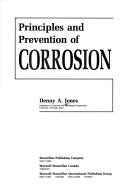
- Corrosion mechanisms and electrochemistry: galvanic corrosion, pitting, stress corrosion cracking, and how environment accelerates failure
- Material selection and failure prevention: integrating mechanical properties, environmental resistance, and design safety factors to prevent catastrophic failure
- Quantitative prediction tools: using Dowling's design equations, Anderson's fracture mechanics calculations, and Fontana's corrosion rate models in engineering practice
- What is the physical difference between elastic and plastic deformation, and how do the von Mises and Tresca yield criteria predict the onset of plasticity?
- How do S–N curves characterize fatigue behavior, and what does Miner's linear damage rule allow you to predict about component life under variable-amplitude loading?
- Define stress intensity factor (K) and fracture toughness (KIC). Why is KIC a material property while K depends on geometry and loading?
- What is the Paris law for fatigue crack growth, and how would you use it to estimate the number of cycles before a crack reaches critical size?
- Describe the electrochemical basis of galvanic corrosion and pitting corrosion. How do potential–pH (Pourbaix) diagrams guide material selection?
- How would you integrate mechanical fatigue, fracture mechanics, and corrosion considerations to design a component that must survive 10 years in a seawater environment?
- Work through Dowling's tensile test examples: calculate true stress/strain, determine yield strength, and plot stress–strain curves for at least two different material classes (e.g., steel vs. aluminum). Compare their ductility and work-hardening behavior.
- Solve 3–4 fatigue design problems from Dowling using S–N data: given a cyclic load history, calculate cumulative damage using Miner's rule and predict safe stress amplitude or component life.
- Using Anderson's fracture mechanics framework, calculate stress intensity factor (K) for a plate with an edge crack under tension; then determine whether the crack will propagate given the material's KIC.
- Perform a fatigue crack growth calculation: given Paris law coefficients (C and m) and initial/final crack sizes, estimate the number of cycles to failure and compare against design life.
- Analyze a galvanic corrosion scenario from Fontana: identify the anode and cathode, estimate corrosion current using polarization curves, and calculate mass loss over a service period.
- Design a material selection case study: choose materials for a subsea pipeline component, justify your choice using Dowling's mechanical properties, Anderson's fracture toughness data, and Fontana's corrosion resistance ratings in seawater.
Next up: This stage equips you with the quantitative mechanics and electrochemistry to diagnose why materials fail in service; the next stage will likely focus on advanced topics such as multi-scale modeling, composite failure, creep at elevated temperatures, or design optimization strategies that integrate these failure modes into predictive lifecycle frameworks.
A rigorous, engineering-focused treatment of stress-strain behaviour, fatigue, and fracture mechanics; it translates microstructural knowledge from earlier stages into predictive, quantitative tools.

The standard advanced reference on fracture mechanics — stress intensity factors, crack-tip plasticity, and fatigue crack growth — read after Dowling to go from introductory to expert-level understanding of fracture.
Rounds out the failure curriculum with electrochemical and environmental degradation; Fontana's case-study-driven approach shows how real structures fail in service, tying together everything learned about structure and properties.
Advanced Topics & Materials Design
ExpertSynthesise the entire curriculum by exploring how materials are selected and designed for real engineering systems, and gain exposure to advanced and emerging material concepts.
▸ Study plan for this stage
Pace: 8–10 weeks, ~40–50 pages/day (mix of dense technical content and case studies)
- Materials selection methodology: using property charts, indices, and trade-off diagrams to match materials to design constraints
- Performance metrics and design equations: translating functional requirements into material property specifications
- Ashby's selection strategy: screening, ranking, and documentation phases for systematic material choice
- Nanomaterials fundamentals: structure-property relationships at the nanoscale and how size effects alter bulk properties
- Synthesis, characterization, and processing of nanomaterials: bottom-up and top-down approaches
- Applications of nanomaterials in engineering: nanocomposites, nanocoatings, and functional nanostructures
- Cost, sustainability, and manufacturability constraints in materials design decisions
- Emerging material concepts: graphene, carbon nanotubes, and other advanced nanostructures for next-generation applications
- How do you construct and use a materials selection chart to eliminate unsuitable candidates for a given design problem?
- What is the difference between screening, ranking, and documentation phases in Ashby's selection methodology, and why is each necessary?
- How do nanoscale dimensions fundamentally alter material properties compared to bulk materials, and what mechanisms drive these changes?
- What are the main synthesis routes for nanomaterials (bottom-up vs. top-down), and what are the trade-offs between them?
- How would you select a nanomaterial for a specific engineering application, considering both performance and manufacturability?
- What role do cost, environmental impact, and processing feasibility play in real-world materials design decisions?
- Work through a complete materials selection case study from Ashby: choose materials for a bicycle frame, aircraft wing, or pressure vessel using property charts and selection indices
- Create your own materials selection chart for a design problem of your choice (e.g., smartphone casing, prosthetic limb, heat sink); identify screening and ranking criteria
- Compare bulk vs. nanoscale properties for a material system (e.g., TiO₂, Al₂O₃, or Au); calculate or research how properties change with particle size
- Design a simple nanocomposite material: specify the matrix, reinforcement type, and nanofiller loading; justify choices using Vollath's synthesis and property concepts
- Conduct a literature search on a specific nanomaterial application (e.g., graphene in batteries, CNTs in composites); write a 2–3 page technical summary on synthesis, properties, and performance
- Perform a cost-benefit analysis for a material substitution: compare a conventional material with a nanomaterial alternative for a real product, including processing, performance, and lifecycle costs
Next up: This stage equips you with the systematic frameworks and cutting-edge material knowledge to make informed design decisions in complex engineering contexts, preparing you to apply these principles to specialized domains (e.g., biomaterials, energy materials, or extreme-environment applications) or to pursue independent research and innovation in materials engineering.
Ashby's Ashby charts and performance-index methodology unify everything — structure, properties, processing, and failure — into a rational design framework; this is the ideal capstone that shows how experts actually choose materials.
Extends the curriculum to the frontier of the field, showing how size effects at the nanoscale alter the structure–property relationships established throughout the earlier stages, preparing the reader for current research literature.
Discussion
Keep reading
Paths that share books, cover the same subject, or open a related topic.