The standard route into reggae is a Marley greatest-hits collection and a vague sense that the music is about peace. That gets the history backwards. Jamaican popular music moves fast — mento to ska to rocksteady to reggae to dub to dancehall in barely twenty years — and it was driven by sound system competition, a handful of producers, and a studio innovation culture that invented remixing before anyone had a word for it.
The other thing worth getting right early is Rastafari. It is a religious movement with its own theology, history, and internal divisions, not a lifestyle accessory attached to the music. Books that treat it as decoration produce a badly distorted picture of what the lyrics are doing.
Get the map first
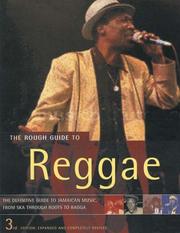
Start with The rough guide to reggae by Steve Barrow and Peter Dalton. It is a reference rather than a narrative, and that is its strength: era-by-era coverage from mento through ska, rocksteady, roots, dub, and dancehall, with the labels, producers, and specific records that mattered. Barrow co-founded Blood and Fire, so the discographical judgment is exceptional. Read it with a streaming service open — this is a music where hearing the transition from rocksteady to reggae explains more than any paragraph can.
Marley, twice, for different reasons
Catch a Fire: The Life of Bob Marley by Timothy White is the standard biography, strong on the Jamaican context, the Trench Town years, and the political violence around the 1976 shooting. It is also the book most responsible for the mythologized Marley, so read it as the popular account rather than the scholarly one.
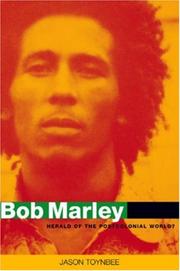
Then Bob Marley by Jason Toynbee, which is the corrective — an academic study that treats him as a musician working inside an industry and a political moment, examining how he was marketed to a global rock audience and what that did to the music. Reading these two in sequence is genuinely instructive about how biography constructs a figure.
Rastafari by Barry Chevannes is the serious study of the movement itself: its roots in Jamaican revivalism and Garveyism, the emergence of the houses and mansions, and how its beliefs and practices developed over decades. Chevannes did fieldwork, and this is the book that makes the lyrical content of roots reggae legible.
How the music was actually made
Bass culture by Lloyd Bradley is the best single narrative history here, and for many readers the best book on the list. It runs from the sound systems of the 1950s — the mobile rigs, the exclusive dubplates, the clashes — through every style shift, and it keeps the focus on the social and economic machinery rather than on stars. It also follows the music to Britain, which is where reggae met punk.
Then People Funny Boy by David Katz, the biography of Lee Perry, which doubles as a history of Jamaican studio practice. Perry's Black Ark work is where dub becomes an art form: the mixing desk used as an instrument, effects and dropouts as composition. If you want to understand why remix culture is descended from Kingston rather than from New York, this is the book.
Reggae explosion by Chris Salewicz and Adrian Boot is the visual companion — heavily illustrated, strong on photographs of the studios, the sleeves, and the street — and works well as a browsing book alongside the denser histories.
The path closes with Global noise, an academic collection on rap and hip-hop outside the United States. It is the outlier here and only tangentially about reggae, though it is relevant if you are interested in how Jamaican toasting fed into hip-hop and how both travelled. If your interest is strictly reggae, this is the one to skip.
Reggae and punk shared London stages, labels, and audiences in the late 1970s, so the punk rock path is a natural next step. Follow the full reading path to take these in order.
Follow the full ordered path here: Best Books on Reggae, in Reading Order.