Heavy metal has been written about badly for so long that the good books stand out sharply. The problem is that they come in three incompatible registers — the fan-facing band biography, the journalistic oral history, and the sociological study — and readers usually pick one register and stay there. The biographies give you scenes without structure. The academic work gives you structure without the noise. Read across all three, in order, and the genre finally makes sense as a fifty-year argument about volume, transgression, and belonging.
The sequence below starts at the origin, widens to the whole genre, then narrows into the subgenres where the music got most extreme, and closes with the two studies that ask what the audience was actually doing.
Where it starts
Begin with Black Sabbath by Mick Wall, a serious account of the Birmingham band that most histories treat as year zero — the industrial city, the tritone, the poverty, and the accidental invention of a template. Wall is a veteran music journalist rather than a hagiographer, and he is good on the gap between the band's occult image and its actual origins.
Then read Louder than hell, Wiederhorn and Turman's oral history, which is the closest thing to a single-volume map of the genre. Because it is assembled from hundreds of first-person interviews, it gives you the participants' own accounts of NWOBHM, thrash, glam, death metal, nu metal, and the scenes in between — contradictions included, which is a feature.
The band histories
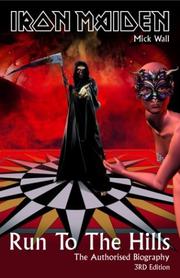
Run to the hills, also by Wall, covers Iron Maiden and with them the New Wave of British Heavy Metal that turned metal from a handful of bands into a movement with its own economy. Justice for all by Joel McIver does the same job for Metallica: the thrash breakthrough, Cliff Burton's death, the black album, and the long argument about what commercial success cost the band. McIver is thorough and unusually willing to be critical of his subject.
Into the extreme
Choosing Death by Albert Mudrian is the definitive account of death metal and grindcore — the Florida and Birmingham scenes, the labels, and the technical arms race. It takes the music seriously as music, which most mainstream coverage never did.
Then the black metal pair. Lords of chaos is the notorious one, covering the Norwegian scene's church burnings and murders; it is also contested, and has been criticized for how much credence it gives its subjects' ideological claims — read it aware of that argument rather than as settled fact. Black metal by Dayal Patterson is the better-sourced counterweight, a scene history built on extensive interviews that covers far more ground than the criminal episodes. If you read only one, read Patterson.
What the audience was doing
Close with the two academic books. Heavy Metal: The Music And Its Culture by sociologist Deena Weinstein is the standard scholarly treatment — the genre's codes, its audience, its media, and the moral panics aimed at it. Metalheads by developmental psychologist Jeffrey Arnett studies the fans themselves, particularly adolescent listeners, and pushes back on the era's assumptions about what the music did to them. Both are decades old now and read as period documents in places, but they remain the reference points for treating metal as a culture rather than a nuisance.
Read the whole arc and you get the music, the scenes, and the argument about them. Follow the full path to keep the order intact, or explore adjacent scenes at punk rock.
Follow the full ordered path here: A Reading Order for the Best Heavy Metal Books.