Best books on hearing loss, hearing aids, and deaf culture
This four-stage curriculum moves from personal, lived-experience narratives through practical guides on technology and audiology, into the science of hearing and deafness, and finally into the psychology and culture of thriving with hearing loss. Each stage builds the vocabulary, empathy, and technical grounding needed to get the most from the next — and from real audiology care.
Foundations: Living It First
BeginnerUnderstand what hearing loss feels like from the inside, learn basic terminology, and build motivation to engage with the topic more deeply — without being overwhelmed by technical detail.
▸ Study plan for this stage
Pace: 4–5 weeks, ~40–50 pages/day (approximately 2–3 hours of engaged reading). Start with "Shouting Won't Help" (weeks 1–2.5), then move to "The Way I Hear It" (weeks 2.5–5). Allow time for reflection between books.
- Hearing loss is a gradual, often invisible disability that affects identity, relationships, and daily functioning in ways that extend far beyond 'not hearing well'
- The emotional and psychological journey of accepting hearing loss includes denial, frustration, isolation, and eventual adaptation—not a linear process
- Hearing loss changes how you communicate and interact socially; strategies like lip-reading, asking for repetition, and self-advocacy become essential life skills
- Hearing aids and other technologies are tools, not cures; they require adjustment, realistic expectations, and ongoing problem-solving
- Living with hearing loss involves practical coping strategies (positioning yourself in conversations, managing background noise, being honest about limitations) that improve quality of life
- Humor, resilience, and community connection are powerful resources for navigating hearing loss and reclaiming agency
- Hearing loss intersects with aging, identity, and self-perception; reframing it as a manageable condition rather than a personal failure is transformative
- What does Katherine Bouton describe as the most isolating aspect of her hearing loss, and how does this compare to Gael Hannan's experience?
- How do both authors describe their initial denial or resistance to acknowledging their hearing loss, and what finally prompted them to seek help?
- What practical strategies do Bouton and Hannan use to manage conversations and social situations with hearing loss?
- How do the authors describe the experience of getting hearing aids, and what surprised them most about the adjustment process?
- What role does humor and self-advocacy play in how each author copes with and communicates about their hearing loss?
- How has hearing loss changed each author's sense of identity, and what have they learned about themselves through this experience?
- Reflection journal: After finishing 'Shouting Won't Help,' write 2–3 pages on which of Bouton's experiences resonated most with you and why. Then repeat after 'The Way I Hear It' with Hannan's narrative.
- Terminology glossary: Create a running list of hearing-loss-related terms mentioned in both books (e.g., 'lip-reading,' 'background noise,' 'hearing aids,' 'audiologist'). Define each in your own words and note the context where you encountered it.
- Empathy mapping: Choose one difficult social situation described by either author (e.g., a dinner party, a phone call, a meeting). Map out what they were thinking, feeling, and doing, then brainstorm 2–3 strategies they could have used.
- Comparative character study: Create a side-by-side chart comparing Bouton and Hannan on: their initial denial, their turning point, their coping strategies, their sense of humor, and their current relationship with hearing loss.
- Mock conversation practice: With a friend or family member, role-play a scenario from one of the books (e.g., asking someone to repeat themselves, explaining your hearing loss to a stranger). Reflect on what felt awkward and what felt natural.
- Personal motivation letter: Write a 1–2 page letter to yourself explaining why understanding hearing loss matters to you and what you hope to learn in the next stage of this curriculum.
Next up: This stage builds emotional literacy and lived understanding of hearing loss, preparing you to engage with the technical, medical, and audiological details in the next stage—you'll now understand *why* those details matter and how they connect to real human experience.

A journalist's honest, warm account of acquiring hearing loss as an adult. It introduces key concepts — audiograms, hearing aids, cochlear implants, denial — through lived experience, making it the perfect first read.

A witty, accessible memoir by a lifelong hard-of-hearing advocate. It normalizes the daily humor and frustration of hearing loss and expands the vocabulary of coping strategies before the reader encounters clinical material.
Practical Toolkit: Hearing Aids & Cochlear Implants
BeginnerUnderstand how hearing aids and cochlear implants work, how to evaluate options, and how to partner effectively with audiologists and ENT specialists.
▸ Study plan for this stage
Pace: 4–5 weeks, ~25–30 pages/day (approximately 150–180 pages total). Allocate 2–3 days per major section to allow time for reflection and exercises between chapters.
- How hearing aids amplify sound and compensate for different types of hearing loss (conductive, sensorineural, mixed)
- The anatomy and physiology of the ear, and how damage at different points affects hearing differently
- Cochlear implant technology: how it bypasses damaged hair cells and directly stimulates the auditory nerve
- The audiological evaluation process and what to expect during testing and fitting appointments
- Realistic expectations for hearing aid and cochlear implant outcomes, including adjustment periods and limitations
- Strategies for effective communication with audiologists and ENT specialists to advocate for your needs
- The decision-making framework for choosing between hearing aids, cochlear implants, or other interventions based on degree and type of loss
- What is the difference between conductive and sensorineural hearing loss, and how does each type affect the choice between hearing aids and cochlear implants?
- How do hearing aids work mechanically and electronically to amplify sound, and what are their limitations?
- How does a cochlear implant differ from a hearing aid in terms of how it processes and delivers sound to the auditory system?
- What should you expect during an audiological evaluation, and what questions should you ask your audiologist to ensure you get the right fit?
- What are realistic timelines and outcomes for adjusting to hearing aids or a cochlear implant, and what factors influence success?
- How can you effectively communicate your hearing needs and preferences to your healthcare team to get personalized recommendations?
- Create a personal hearing profile: document your hearing loss type and degree, listening environments where you struggle most, and specific communication goals (e.g., hearing in meetings, enjoying music, phone conversations).
- Draw and label a diagram of the human ear, marking where different types of hearing loss occur and how hearing aids vs. cochlear implants address each location.
- Prepare a list of 10–15 questions to ask your audiologist or ENT specialist before any fitting or surgery, based on Romoff's guidance in the book.
- Interview someone who uses hearing aids or a cochlear implant (or watch a recorded testimonial) and compare their experience to Romoff's account; note similarities and differences in adjustment and outcomes.
- Create a decision-making matrix comparing hearing aids and cochlear implants across criteria like cost, invasiveness, sound quality, battery life, and maintenance—then reflect on which factors matter most to you.
- Role-play a conversation with an audiologist: practice describing your hearing difficulties clearly, asking for clarification on technical terms, and advocating for specific features or adjustments you need.
Next up: This stage equips you with concrete knowledge of how devices work and how to navigate the medical system; the next stage will likely deepen your understanding of the emotional and social dimensions of hearing loss, communication strategies, and long-term adaptation to living with hearing technology.
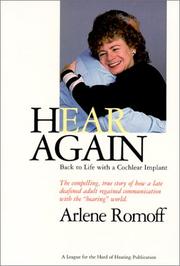
Romoff's detailed personal account of receiving a cochlear implant demystifies the surgery, activation, and rehabilitation process — essential reading before diving into more technical implant literature.
The Science of Hearing and Hearing Loss
IntermediateGain a solid understanding of the anatomy of the ear, the neuroscience of sound perception, the causes of hearing loss (noise, aging, genetics, disease), and how audiological testing works.
▸ Study plan for this stage
Pace: 4–5 weeks, ~20–25 pages/day, with 2–3 review days per week
- Gross and microscopic anatomy of the outer, middle, and inner ear, including the cochlea and its hair cells
- The mechanical and neural pathway of sound: from vibration through the ossicles to fluid waves in the cochlea to nerve impulses
- Frequency analysis and tonotopic organization: how different parts of the cochlea respond to different sound frequencies
- Sensorineural vs. conductive hearing loss: their anatomical origins and how they differ in severity and reversibility
- Common causes of hearing loss: noise-induced damage, age-related (presbycusis), genetic predisposition, infection, and ototoxic drugs
- Audiological testing methods: pure-tone audiometry, speech discrimination, tympanometry, and what the results reveal about hearing function
- The role of the central auditory system: how the brain processes sound signals from the cochlea through the brainstem to the cortex
- Describe the path sound takes from the external ear to the cochlea, naming the key structures involved and explaining how each contributes to sound transmission
- What is the difference between conductive and sensorineural hearing loss in terms of anatomical location, and why is this distinction clinically important?
- How does the cochlea perform frequency analysis, and what is tonotopic organization?
- What are the main causes of hearing loss discussed in the book, and how do noise-induced and age-related hearing loss differ mechanistically?
- How do pure-tone audiometry and speech discrimination testing work, and what do their results tell an audiologist about a patient's hearing function?
- Explain the role of hair cells in the inner ear and what happens to them in sensorineural hearing loss
- Draw a detailed, labeled diagram of the ear anatomy (outer, middle, inner) from memory, then compare it to the book's illustrations and refine it
- Create a flowchart showing the complete pathway of sound from the external ear to the auditory cortex, including both mechanical and neural stages
- Build or sketch a simple model of the cochlea showing how the basilar membrane vibrates at different frequencies (use the book's explanations to guide this)
- Write a 1–2 page case study: given a patient's audiogram and medical history, diagnose whether their hearing loss is conductive or sensorineural and explain your reasoning
- Summarize each major cause of hearing loss (noise, aging, genetics, disease) in one paragraph, noting the anatomical structures affected and the mechanism of damage
- Practice interpreting real or realistic audiograms: identify the type of hearing loss, estimate severity, and predict what the patient might experience in daily life
Next up: By mastering the anatomy, physiology, and pathology of hearing loss, you'll be equipped to understand how hearing aids, cochlear implants, and other interventions work—and to evaluate their appropriateness for different types and severities of hearing loss.

Written by two otolaryngologists for a general audience, this concise guide covers ear anatomy, types and causes of hearing loss, and treatment options — building the scientific vocabulary needed for deeper reading.
Thriving: Psychology, Identity & the Deaf World
ExpertUnderstand the psychological, social, and cultural dimensions of hearing loss and Deafness; develop strategies for communication, relationships, and mental well-being; and appreciate the full spectrum from hard-of-hearing to Deaf identity.
▸ Study plan for this stage
Pace: 6–8 weeks, ~40–50 pages/day (approximately 2–3 weeks per book, accounting for reflection time between memoirs)
- Cochlear implants as both medical technology and identity choice: weighing benefits, limitations, and cultural implications
- The psychological journey of acquired hearing loss: grief, adaptation, and reconstructing identity after deafness
- Deaf culture, community, and the spectrum of deaf/Deaf identity (hard-of-hearing vs. Deaf culture vs. late-deafened)
- Communication strategies and relationships: navigating family dynamics, romantic relationships, and social integration
- The tension between medical/rehabilitation models and cultural/identity models of deafness
- Mental health, resilience, and finding meaning: depression, isolation, and pathways to thriving rather than merely surviving
- Language access and self-advocacy: understanding ASL, hearing aids, cochlear implants, and other communication tools as personal choices
- Intersectionality of deaf identity: how age of onset, family background, and cultural exposure shape the deaf experience
- How does Michael Chorost's experience with cochlear implants differ from Mark Drolsbaugh's journey, and what do their different choices reveal about deaf identity?
- What psychological stages does Chorost describe in 'Rebuilt,' and how do they compare to Drolsbaugh's experience of becoming deaf again?
- How do both authors navigate relationships (family, romantic, social) after hearing loss, and what communication strategies do they employ?
- What is the distinction between the medical model and the cultural model of deafness, and how do Chorost and Drolsbaugh each relate to these frameworks?
- How do Chorost and Drolsbaugh each define success or 'thriving' in their lives with hearing loss, and what role does community play in their definitions?
- What are the key differences between hard-of-hearing identity, late-deafened identity, and Deaf culture identity as illustrated in these two memoirs?
- Create a comparative timeline: map Chorost's and Drolsbaugh's major life events, decisions (implant, ASL learning, community involvement), and emotional turning points side-by-side to identify patterns and divergences
- Write a reflective essay (1,500–2,000 words) on which author's approach to hearing loss resonates more with you and why; consider how your own values around technology, community, and identity shape your response
- Interview a deaf or hard-of-hearing person (or watch a recorded interview) about their identity, communication choices, and relationship to Deaf culture; document how their experience aligns with or differs from Chorost and Drolsbaugh
- Conduct a communication challenge: spend one day using only written communication or ASL (if you know it) to simulate communication barriers; journal about the emotional and practical impacts
- Create a visual identity map for each author showing the forces that shaped their deaf identity (family, age of onset, technology, community, values); annotate with specific quotes from each book
- Develop a personal communication plan: based on the strategies discussed in both books, outline how you would advocate for your own communication needs in three different contexts (workplace, healthcare, social)
Next up: This stage equips you with deep psychological and cultural literacy about deaf identity and lived experience, preparing you to move into the next stage—whether that involves practical advocacy, policy understanding, or supporting deaf individuals in specific contexts.
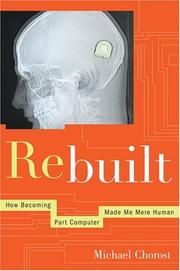
A philosopher and cochlear-implant user reflects on technology, perception, and what it means to be human — bridging the science from earlier stages with deep questions about identity and thriving.

A hearing child of Deaf parents who loses his own hearing recounts his journey to Deaf identity and community. It broadens the reader's perspective beyond the medical model to include culture and belonging.
A social psychologist with hearing loss synthesizes research on communication strategies, relationships, and psychological resilience — the ideal capstone that ties lived experience, technology, and science into actionable wisdom.
Discussion
Keep reading
Paths that share books, cover the same subject, or open a related topic.