Harry Hole Reading Order: Where to Start
Jo Nesbo's Harry Hole novels are the most commonly misread series in crime fiction, because the first two books were translated into English years after the third — so most English readers began at book three and never knew it. That accident turns out to be good advice: the Oslo trilogy that starts with The Redbreast is where the series becomes itself, and the two Australian and Thai prequels are better read afterwards as backstory. From The Redeemer onward the books run in strict order, with a continuous plot about Harry's addiction, his relationship with Rakel, and one recurring antagonist that absolutely cannot be read out of sequence.
Start Here: The Oslo Trilogy
BeginnerBegin where English readers historically began, with the three linked novels about wartime collaboration and police corruption that made the series famous.
▸ Study plan for this stage
Pace: 5–6 weeks. The Redbreast is 448 pages and the other two are comparable; Nesbø's books are long but propulsive, so 60 pages a night is realistic and a fortnight per book is comfortable. Read the three consecutively with no other crime fiction in between — they share a continuing plot and the third re
- The translation-order problem, stated plainly: the first two Harry Hole novels were published in Norwegian before this one but were not translated into English until roughly fifteen years later. English readers therefore began at the third book and mostly never knew it
- That accident turns out to be good advice, which is why this path keeps it: the Oslo trilogy is where the series becomes itself, and the two earlier novels work better as backstory than as an introduction
- So the English numbering on your copies will not match the Norwegian order, and any reading-order list you find online may be sorted by either. Go by title, not by number
- The Redbreast braids two timelines: Norwegian volunteers fighting on the Eastern Front in 1944, and an unusual rifle surfacing in Oslo sixty years later
- Its real subject is Norwegian wartime collaboration and how the country handled it afterwards, which is the most serious historical material in the series
- It also introduces the ongoing plot about a mole inside the Oslo police, and that thread runs continuously through the three books in this stage
- Nemesis is a bank robbery, a dead ex-girlfriend and Harry framed for a murder; it continues the corruption thread directly and would be badly spoiled read in any other position
- The Devil's Star closes the trilogy, resolves the mole plot, and has Harry drinking himself out of the police force — the alcoholism is not a character quirk here but the plot
- What does the 1944 timeline in The Redbreast let Nesbø say about present-day Norway that a contemporary-only plot could not?
- How is the mole plot fed to you across the three books — what is revealed in each, and what is deliberately misdirected?
- Nemesis puts Harry in the frame for a killing. What does that do to a detective series that follows one investigator so closely?
- Where does the trilogy treat Harry's drinking as tragedy and where as plot mechanics? Is it consistent?
- By the end of The Devil's Star, what kind of series is this — police procedural, serial-killer thriller, or something more political?
- Check the English publication dates in your three copies against the original Norwegian dates listed on the copyright page. Seeing the fifteen-year gap makes the order question concrete.
- Keep a note of every police officer named in The Redbreast. The mole plot expects you to have been suspicious of specific people.
- Track the 1944 chapters separately and write a two-paragraph summary of that story alone. It is a novella inside the novel.
- Decide after The Devil's Star whether the violence level suits you. The series gets considerably more brutal from here and does not moderate.
Next up: The trilogy repeatedly alludes to things that happened to Harry abroad, and the prequels are where those things happened.
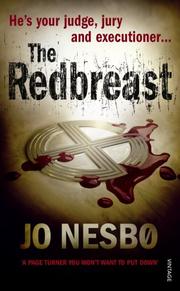
Norwegian volunteers on the Eastern Front in 1944, and a rare rifle turning up in Oslo sixty years later. The best entry point by a wide margin, and the book that introduces the ongoing plot about a mole in the police.
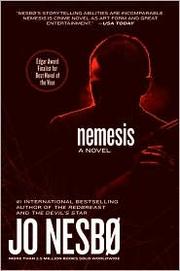
A bank robbery, a dead ex-girlfriend, and Harry being framed. Directly continues the corruption thread from The Redbreast and would be badly spoiled by any other order.
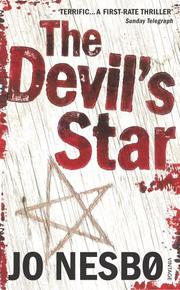
A serial killer leaving red diamonds, with Harry drinking himself out of the force. This closes the trilogy and resolves the mole plot; read it third, without exception.
The Prequels
BeginnerGo back to the two early novels that reached English last, and pick up the backstory the trilogy only alludes to.
▸ Study plan for this stage
Pace: 3 weeks. The Bat is 369 pages and Cockroaches 367, and both read faster than the trilogy because the plotting is simpler. A week to ten days each. Read them here rather than first, and read them in this order — they are the first and second Norwegian novels and the second refers back to the first.
- These are chronologically the first two Harry Hole novels and were the last to reach English, which is the whole reason this path places them fourth and fifth
- The Bat sends Harry to Sydney to observe a murder investigation, and it is much lighter and stranger than anything that follows — closer to a travelogue with a killer in it
- It matters because a trauma from this book is referred to repeatedly in the trilogy without being explained, and reading it now supplies the missing account rather than spoiling a later reveal
- Cockroaches puts Harry in Bangkok investigating the death of a Norwegian ambassador, and it is widely considered the weakest book in the series
- It is worth reading for continuity — it explains Harry's standing with his superiors and a few running references — but it is not worth starting with and it is the one book here you could skip
- Both are visibly early work: the prose is thinner, the Australian and Thai settings are handled as exotica, and the plotting relies on coincidence more than the later books do
- Read after the trilogy they function correctly as backstory, which is the argument for this whole stage: the accident of translation produced a better order than publication order would have
- They also show how much Nesbø improved in three years, which is worth seeing before the books that made his name
- What happens in The Bat that the trilogy kept alluding to, and does the explanation deepen the earlier books or diminish them?
- Is Harry recognisably the same character here as in The Redbreast? Name three differences.
- How do these books handle their non-Norwegian settings, and where does that handling become uncomfortable?
- Cockroaches is the weakest book in the run. What specifically is wrong with it — plot, character, or pacing?
- Would you now recommend a new reader start with The Bat or The Redbreast? Defend the answer against the other one.
- Before starting, note down everything the trilogy told you about Harry's time in Australia. Then check it against The Bat.
- Read the first chapter of The Bat and the first chapter of The Redbreast back to back and compare the prose.
- List what Cockroaches contributes to the ongoing series. It is a short list, and it justifies the book's inclusion honestly.
- Note which characters from the prequels reappear later. There are fewer than you expect, which is why these books are optional.
Next up: Backstory is now complete, so the series can restart cleanly with the books that made Nesbø internationally famous.
Harry sent to Sydney to observe a murder investigation. The first book chronologically and much lighter than what follows; read it after the trilogy, because it explains a trauma the later books keep referring to.
Harry in Bangkok, investigating a dead Norwegian ambassador. The weakest book in the series and the second chronologically; worth reading for continuity but not worth starting with.
The Famous Ones
IntermediateRead the three novels that made Nesbo an international name, where the plotting becomes genuinely baroque.
▸ Study plan for this stage
Pace: 6–7 weeks. The Redeemer, The Snowman and The Leopard are all long, and The Leopard is the longest and the most punishing. Two weeks each, and consider a gap after The Leopard rather than pushing straight on — it is the most violent book in the run and reading it immediately after The Snowman is a lo
- The Redeemer is the post-trilogy restart: a Salvation Army shooting in a Christmas crowd and a hitman who cannot get out of the country, and it works as a clean re-entry point for the character
- The Snowman is the best-known book in the series and the one most new readers start with, which is exactly the mistake this path is designed to prevent
- It introduces an antagonist whose consequences shape everything after it, so reading it out of place damages several later books at once
- Its premise — women disappearing on the first snow of the year — is also the clearest example of Nesbø's method: an image first, then a plot reverse-engineered to justify it
- The Leopard is a direct sequel: Harry retrieved from a Hong Kong opium den to work a case involving an apple-shaped torture device, and it is the most brutal book in the series by a wide margin
- Content warning, stated plainly: the violence in The Leopard is extended, sexualised in places, and dwelt on. Readers who found The Snowman acceptable sometimes stop here, and that is a reasonable place to stop
- The plotting across these three becomes genuinely baroque — multiple false solutions, late reversals, and a habit of revealing the killer with a hundred pages still to run
- Harry's addiction escalates in step with the plots, and the series is at its best when the two are the same problem rather than parallel ones
- Why does The Redeemer work as a restart — what has been cleared away by the end of the trilogy that makes it possible?
- The Snowman reveals its killer well before the end. What does Nesbø gain by giving up the whodunnit early?
- How much of The Leopard's violence is doing narrative work, and how much is escalation for its own sake? Point to a specific sequence.
- How does Nesbø use false solutions — how many does The Snowman offer, and does the technique wear out?
- Is Harry's addiction being taken seriously by these books, or used as a source of jeopardy?
- Note the point in The Snowman where you first suspected the killer, then check how many pages Nesbø spent making you doubt it.
- After The Leopard, decide deliberately whether to continue. The next stage is a two-book unit with the largest cliffhanger in the series.
- Track what the antagonist introduced in The Snowman changes about Harry. It is more than plot.
- Compare the opening chapter of The Redeemer with that of The Devil's Star and describe how the series has changed register.
Next up: The character is now positioned exactly where the series' biggest structural gamble requires him to be.
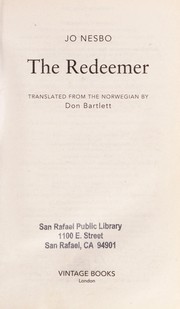
A Salvation Army shooting in a Christmas crowd and a hitman who cannot leave the country. The first of the post-trilogy books and a clean restart for the character.
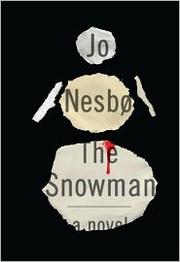
Women disappearing on the first snow of the year. The best-known book in the series, and the one that introduces the antagonist who shapes everything after it, so do not read it out of place.
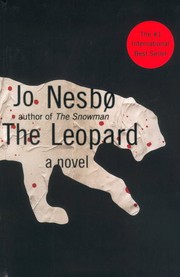
Harry retrieved from a Hong Kong opium den to work a case with an apple-shaped torture device. A direct sequel to The Snowman and the most brutal book in the run.
The Continuous Sequence
IntermediateRead the pair that function as a single novel, and where the series takes its biggest structural risk.
▸ Study plan for this stage
Pace: 4–5 weeks. Phantom and Police together run to roughly 900 pages, and Police is 435 of them. Read them as one book: finish Phantom and start Police the same week, because Police opens directly on Phantom's final situation. Do not read a summary of Police before finishing Phantom, and be careful with
- Phantom returns Harry to Oslo because Rakel's son Oleg is charged with murder, which makes it the first case that is entirely personal from page one
- It breaks the series' own rules in a way that only works because you know these characters — the structural risk is the point, and a new reader would simply find it confusing
- It ends on the largest cliffhanger in the run, and the ending is genuinely ambiguous rather than merely suspended
- Police opens directly on that ending, with police officers being murdered at the scenes of their own unsolved cases, so the two are effectively one novel in two volumes
- Police also functions as a summary of the whole series: earlier cases are revisited, the supporting cast is given real weight, and Nesbø plainly wrote it as a possible ending
- That makes Police the honest stopping point for a reader who wants a complete arc — the trilogy, the famous books, and this pair form a finished shape
- Rakel and Oleg have been in the background since The Redbreast, and this stage is where the series finally admits they were the actual through-line
- Structurally these are the most confident books in the run: the plotting is intricate without being arbitrary, which is not true of everything that follows
- What rule does Phantom break, and why can it only work at this point in the series?
- How does the Oleg case change Harry's relationship to procedure — what does he do that a police officer could not?
- Police revisits earlier cases. Which callbacks earn their place, and which are fan service?
- Is the Phantom cliffhanger resolved fairly by Police, or does the second book retroactively soften it?
- If the series had ended at Police, would it have been complete? Say what would be missing.
- Read the last chapter of Phantom twice before starting Police. It is deliberately ambiguous and most readers misread it once.
- List every earlier book Police refers back to. The list is an argument for having read in order.
- Write down the state of Harry's life at the end of Police — job, sobriety, family. The late novels dismantle each item in turn.
- Decide explicitly whether to continue. Stopping here is a defensible choice and the remaining books are more uneven.
Next up: Everything the late novels take away from Harry is now in place, which is precisely what they were written to exploit.
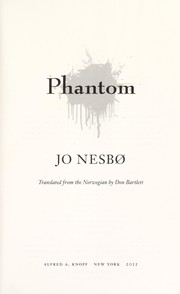
Harry returns to Oslo because Rakel's son is charged with murder. Nesbo breaks the series' own rules here in a way that only works if you know these characters, and it ends on the largest cliffhanger in the run.
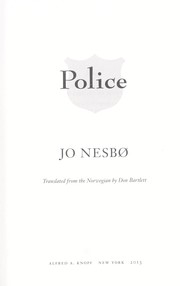
Police officers murdered at the scenes of their own unsolved cases. It opens directly on the Phantom cliffhanger, so the two are effectively one book in two volumes.
The Late Novels
IntermediateFinish the series as it stands, following Harry through the consequences the earlier books set up.
▸ Study plan for this stage
Pace: 6–7 weeks. The Thirst is 461 pages, Knife 451, and Killing Moon comparable. Two weeks each. The Thirst is the lightest of the three; Knife is the heaviest and worth a break afterwards. Read them in order — each depends directly on the one before, and Killing Moon is a response to where Knife ends.
- The Thirst brings Harry back from teaching at the police college with a killer using dating apps and an iron dentition, and it ties directly to a case he never closed
- Its entire setup depends on Police, which is why the path does not treat it as a fresh entry point despite the gap in publication
- Knife is the most consequential book for the character since The Redbreast: Harry drinking again after a catastrophe, waking with blood on his hands and no memory of the night
- It is genuinely unreadable out of order — the emotional weight comes entirely from twelve books of accumulated relationship, and summarised it sounds like a stunt
- Killing Moon takes Harry to Los Angeles and brings him back to Oslo for two missing women, and it is a direct response to where Knife left him
- It is the current stopping point rather than an ending: the series is not concluded, and the last book leaves threads open
- The late novels are more uneven than the middle run — the plots strain harder for novelty and the coincidences are less disguised — but the character work is the strongest it has been
- Across thirteen books the honest summary is this: the series peaks with the Oslo trilogy and the Snowman-to-Police run, and the late novels are for readers who now care about Harry rather than about the cases
- What does The Thirst's link to an unsolved earlier case give it, and would it stand up without that connection?
- Knife withholds a night from both Harry and the reader. What does that device let Nesbø do, and does he play fair?
- How does Killing Moon use the American setting, and does the series travel well?
- Harry has been rebuilt and destroyed repeatedly across thirteen books. Is that a character arc or a cycle?
- Where does the series peak for you, and where would you tell a new reader to stop?
- Having read all thirteen, was the translation-order accident actually the best route in? Argue it now that you can.
- Before Knife, reread the last pages of The Thirst. The opening assumes an immediate continuation.
- Write out Harry's chronology across all thirteen books — the drinking, the jobs, Rakel and Oleg. It is the real plot of the series.
- Mark where the late books rely on coincidence and ask whether the earlier ones did it more skilfully or merely more quietly.
- Write a short recommended reading order for a friend, in your own words, including where to stop. It is the single most useful thing you can pass on about this series.
Next up: You are current with Harry Hole, and the only remaining reading is whatever Nesbø publishes next — which will assume everything this path has just given you.

A killer using dating apps and an iron dentition, and a case tied to the one Harry never closed. Depends on Police for its entire setup.

Harry drinking again after a catastrophe, and waking with blood on his hands. The single most consequential book for the character since The Redbreast, and unreadable out of order.

Harry in Los Angeles, brought back to Oslo for two missing women. The most recent novel and the correct place to stop; it is a direct response to where Knife left him.
Discussion
Keep reading
Paths that share books, cover the same subject, or open a related topic.