Best Nordic Noir Books to Read, in Order
Nordic noir is a tradition built on social critique, bleak landscapes, and deeply flawed detectives — it began with Sjöwall & Wahlöö's Marxist police procedurals in the 1960s, was globalised by Mankell and Nesbø in the 1990s–2000s, exploded with Larsson's Millennium trilogy, and has since evolved into a rich new wave. This curriculum moves chronologically and thematically: first absorbing the genre's DNA, then mastering its golden-age giants, then exploring the modern reinventions that push Nordic noir into new territory.
The Global Breakthrough: Mankell & Nesbø
BeginnerMeet the two detectives — Kurt Wallander and Harry Hole — who carried Nordic noir to a worldwide audience in the 1990s and 2000s, and see how each author evolved the genre's themes of xenophobia, corruption, and personal disintegration.
▸ Study plan for this stage
Pace: 8–10 weeks, ~40–50 pages/day (approximately 2 weeks per book, allowing time for reflection and note-taking)
- Wallander's isolation and personal decay as a mirror of Swedish social anxieties: divorce, aging, and professional burnout in Faceless Killers and Dogs of Riga
- The xenophobic undertones in Nordic noir: how Faceless Killers uses rural Swedish fears of outsiders, and how Dogs of Riga expands this to Cold War tensions and Eastern European 'otherness'
- Institutional corruption and police fallibility: Wallander's struggle against bureaucratic indifference and his own moral compromises in both novels
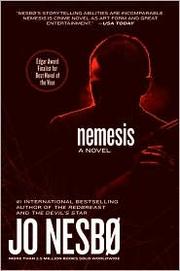
- Harry Hole's emergence as a darker, more psychologically fractured detective: his alcoholism, emotional detachment, and obsessive methods in The Bat and The Snowman
- The evolution of the serial killer archetype: from the brutal realism of Faceless Killers to the methodical, almost mythic killer in The Snowman
- Setting as character: how Ystad's bleak Swedish landscape and Oslo's urban decay shape the moral and psychological texture of each novel
- Narrative structure and pacing: how Mankell builds procedural detail while Nesbø uses fragmentation and dual timelines to create psychological tension
- How does Wallander's personal life (his divorce, his relationship with his daughter, his health anxieties) in Faceless Killers and Dogs of Riga reflect broader themes about Swedish society's anxieties in the 1990s?
- What role does xenophobia play in Faceless Killers, and how does Dogs of Riga complicate or deepen this theme by introducing Cold War politics and Eastern European characters?
- Compare Wallander's investigative methods and moral code in the two Mankell novels with Harry Hole's approach in The Bat and The Snowman. What does each detective's style reveal about their respective authors' views on justice?
- How does The Snowman's killer differ from the murderers in Faceless Killers, Dogs of Riga, and The Bat in terms of motivation, method, and psychological profile?
- What is the significance of setting in these four novels? How do Ystad and Oslo function as more than just backdrops—what do they reveal about each detective's inner world?
- How do both Mankell and Nesbø use institutional corruption or police fallibility to complicate the detective's role as a moral authority?
- Create a character timeline for Wallander across Faceless Killers and Dogs of Riga, tracking his emotional state, key relationships, and professional crises. Note how his personal disintegration parallels the cases he investigates.
- Write a comparative character profile of Wallander and Harry Hole: list their methods, flaws, personal demons, and moral codes. What does each detective reveal about his author's worldview?
- Map the xenophobic elements in Faceless Killers (the initial suspicion of immigrants, the rural setting's insularity) and trace how Dogs of Riga either reinforces or complicates these themes. Annotate specific passages.
- Analyze the opening murder scenes in all four novels (the elderly couple in Faceless Killers, the bodies in Dogs of Riga, the victim in The Bat, and the snowman victims in The Snowman). How does each author's description of violence set the tone and reveal their narrative priorities?
- Create a mood board or written description of Ystad (from Mankell's novels) and Oslo (from Nesbø's novels). How does each city's geography, weather, and social atmosphere influence the detective's psychology and the investigation?
- Write a 2–3 page essay comparing how Mankell and Nesbø use the detective's personal life (relationships, addictions, isolation) as a structural and thematic element in their narratives.
Next up: This stage establishes the foundational detectives and thematic concerns of Nordic noir—institutional failure, personal disintegration, and social anxiety—that subsequent stages will deepen by exploring how later authors either emulate or subvert these templates.

The first Wallander novel drops you into post-Cold War Sweden grappling with racism and immigration — the defining social anxiety of the era. Mankell's lonely, self-destructive detective is a direct heir to Beck, making this the perfect bridge from Stage 1.

Wallander travels to Latvia and the scope of Nordic noir expands beyond Sweden's borders. Reading this second shows Mankell's growing ambition and cements Wallander as a fully three-dimensional character before moving to a different country's tradition.
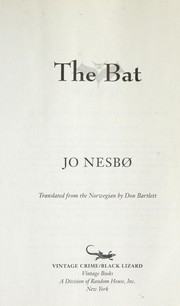
The first Harry Hole novel introduces Nesbø's Oslo detective in Sydney — an intentionally disorienting opening that mirrors the reader's own entry into Norwegian noir. Its pulpier, faster pace is a deliberate contrast to Mankell and prepares you for Nesbø's escalating ambition.
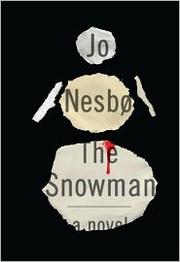
Widely considered Nesbø's masterpiece and the novel that made Harry Hole a global icon. By this point in the curriculum you have enough genre fluency to fully appreciate how Nesbø ratchets up psychological tension and operatic plotting far beyond the procedural roots.
The Phenomenon: Stieg Larsson's Millennium Trilogy
IntermediateEngage with the trilogy that turned Nordic noir into a worldwide cultural event, understanding how Larsson fused the genre with feminist rage, investigative journalism, and conspiracy thriller to create something genuinely new.
▸ Study plan for this stage
Pace: 8–10 weeks, ~50–60 pages/day (trilogy totals ~2,200 pages; allows time for reflection between books)
- Lisbeth Salander as a feminist protagonist: how her character subverts traditional crime fiction heroines and embodies rage against systemic abuse
- Investigative journalism as narrative engine: how Mikael Blomkvist's work at Millennium magazine drives plot and thematic exploration of institutional corruption
- The trilogy's architecture of conspiracy: how each book escalates from personal mystery (Vanger family) to institutional exposure (Säpo) to systemic reckoning
- Fusion of genres: how Larsson blends detective procedural, legal thriller, and political conspiracy into a hybrid form
- Violence and trauma as central to character development: how Salander's past and present suffering shape her agency and moral code
- Sweden's hidden darkness: how the trilogy reveals corruption, misogyny, and state complicity beneath Scandinavia's progressive image
- Narrative structure and dual protagonists: how Blomkvist and Salander's parallel investigations create tension, interdependence, and thematic resonance
- Technology and hacking as modern detective work: how Salander's skills redefine what investigation means in the digital age
- How does Lisbeth Salander's character challenge or redefine the role of women in crime fiction, and what is the significance of her violation and subsequent agency?
- Trace the escalation of conspiracy across the trilogy: how does each book expand the scope from personal mystery to institutional and state-level corruption?
- What role does Millennium magazine play in the narrative structure of the trilogy, and how does investigative journalism function as both plot device and thematic statement?
- How does Larsson use violence and trauma—particularly Salander's experiences—to develop character and explore systemic misogyny?
- What is the relationship between Mikael Blomkvist and Lisbeth Salander, and how does their dynamic evolve across the three books?
- How does the trilogy critique Swedish society and institutions, and what does it suggest about the gap between progressive image and hidden corruption?
- Create a conspiracy map for each book: identify the central mystery, the key conspirators, and how institutional power protects them. Compare how the scope expands across the trilogy.
- Character study: track Lisbeth Salander's emotional and psychological arc across all three books. Note moments where she exercises agency, vulnerability, and moral choice. How does her relationship with Blomkvist evolve?
- Analyze the role of Millennium magazine: list the articles Blomkvist investigates or publishes in each book and explain how they connect to the larger plot and themes of institutional accountability.
- Examine violence in the trilogy: identify 3–4 key violent scenes involving Salander. What purpose does each serve narratively and thematically? How does Larsson use violence differently than traditional crime fiction?
- Compare the legal/judicial system across the three books: how are courts, lawyers, and judges portrayed? What does the trilogy suggest about justice and the law?
- Write a 2–3 page reflection: identify one moment in the trilogy where you felt the fusion of feminist rage, investigative journalism, and conspiracy thriller most powerfully. Explain why and what it reveals about Larsson's innovation in the genre.
Next up: This stage establishes Nordic noir's global breakthrough and its core DNA—the marriage of procedural rigor, feminist consciousness, and institutional critique—preparing you to explore how subsequent Nordic noir authors either emulated or departed from Larsson's template.
![Man SOM Hatar Kvinnor [The Girl with the Dragon Tattoo] (Korean Edition)](https://covers.openlibrary.org/b/isbn/9788901116150-M.jpg)
The novel that broke Nordic noir into the mainstream. Its slow first hundred pages reward the patience built in earlier stages, and Lisbeth Salander is the genre's most original creation — an anti-detective who redefines what a Nordic noir protagonist can be.

The trilogy's pivot: Salander moves from observer to hunted subject, and Larsson's critique of Swedish institutions widens dramatically. Read immediately after Dragon Tattoo — the two books form a single narrative arc.
![Luftslottet SOM Sprangdes [The Girl Who Kicked the Hornet's Nest] (Korean Edition)](https://covers.openlibrary.org/b/isbn/9788901119533-M.jpg)
The concluding volume transforms into a courtroom and espionage thriller, showing the full range Nordic noir can absorb. Completing the trilogy gives you the genre's most discussed and debated arc as a reference point for everything that follows.
The New Wave: Nordic Noir Reinvented
ExpertDiscover how a new generation of Scandinavian writers — including women, Icelanders, and authors working in rural or psychological registers — have expanded, subverted, and renewed the genre in the 2010s and beyond.
▸ Study plan for this stage
Pace: 8–10 weeks, ~40–50 pages/day (approximately 2–3 weeks per novel)
- Psychological depth and trauma as narrative engines: how Nesbø, Sigurdardottir, and Adler-Olsen use characters' internal wounds to drive plot and moral complexity
- Expansion beyond the detective archetype: female protagonists, ensemble casts, and non-traditional investigators challenging the lone-wolf formula
- Rural and provincial settings as characters: how Icelandic isolation, Norwegian fjords, and Danish small towns create atmospheric dread distinct from urban noir
- Serialized investigation structures: multi-layered cases that reveal systemic corruption, cold cases, and institutional failure rather than individual villainy
- Subversion of genre conventions: unreliable narration, non-linear timelines, and moral ambiguity that complicate reader expectations of justice and resolution
- Gender, violence, and vulnerability: how these authors interrogate toxic masculinity and depict violence against women with unflinching psychological realism
- Interconnected character networks: how personal relationships, family secrets, and professional entanglements create webs of complicity and redemption
- How does Harry Hole's personal trauma and addiction in *The Redbreast* function as both a liability and an asset in his investigation, and what does this reveal about Nesbø's approach to the detective protagonist?
- Compare the narrative structures of *I Remember You* and *The Keeper of Lost Causes*: how do Sigurdardottir and Adler-Olsen use fragmented timelines and multiple perspectives to deepen psychological horror?
- What role do female characters play in each novel—as investigators, victims, or moral centers—and how do these portrayals expand or challenge traditional Nordic noir conventions?
- How do the three novels use setting (Norway, Iceland, Denmark) not merely as backdrop but as a thematic force that shapes character psychology and investigative methodology?
- Identify one moment in each novel where the investigation uncovers systemic or institutional failure rather than individual criminality. What does this pattern suggest about these authors' critique of Scandinavian society?
- How do *The Redbreast*, *I Remember You*, and *The Keeper of Lost Causes* each employ unreliable narration or moral ambiguity to complicate the reader's sense of justice and resolution?
- Character trauma map: For Harry Hole (*The Redbreast*), Hulda (*The Keeper of Lost Causes*), and the protagonists of *I Remember You*, create a visual diagram showing how each character's past trauma directly influences their investigative choices and blind spots.
- Setting analysis essay (1,500–2,000 words): Choose one novel and analyze how its geographic and cultural setting (Norwegian mountains, Icelandic isolation, Danish provincial towns) creates a distinct atmosphere and shapes the investigation's trajectory.
- Narrative structure comparison: Create a timeline or flowchart for *I Remember You* and *The Keeper of Lost Causes* showing how each author fragments time and perspective. Annotate moments where this structure deepens psychological tension.
- Gender and violence close reading: Select 2–3 scenes depicting violence or vulnerability toward women across the three novels. Write a comparative analysis of how each author depicts these moments and what it reveals about their thematic concerns.
- Institutional failure audit: Identify 3–4 moments in each novel where police bureaucracy, legal systems, or social institutions enable or conceal crime. Write a brief analysis of what systemic critique emerges across all three books.
- Detective archetype deconstruction: Write character sketches comparing Harry Hole, the investigators in *I Remember You*, and Carl Mørck (*The Keeper of Lost Causes*) to classic hard-boiled detectives. How do these new-wave authors subvert or reinvent the archetype?
Next up: This stage establishes how contemporary Nordic noir has evolved beyond formula through psychological complexity, diverse protagonists, and systemic critique—skills essential for recognizing how the genre continues to fracture and hybridize in the next stage's exploration of experimental forms, global adaptations, and the blurring of noir with literary fiction.
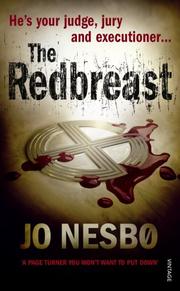
Revisiting Nesbø at this stage with his most historically layered Hole novel — weaving WWII Norwegian collaboration into a contemporary thriller — reveals how the genre can carry national trauma. It reads differently, and richer, after Larsson's institutional critiques.

Iceland's leading crime writer brings a remote, supernatural-tinged atmosphere that no previous book in this curriculum has offered. It signals that Nordic noir is not monolithically Swedish or Norwegian — geography and folklore reshape the genre entirely.
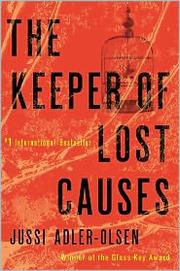
The first Department Q novel introduces Denmark's answer to Nordic noir: a cold-case unit staffed by society's cast-offs. Adler-Olsen's dark wit and focus on marginalised victims represents the genre's most recent evolution and is the perfect capstone — familiar enough to feel like home, fresh enough to show how far the tradition has travelled.
Discussion
Keep reading
Paths that share books, cover the same subject, or open a related topic.