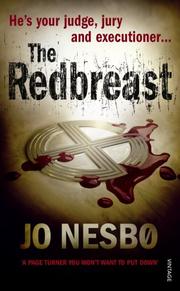
Start with The Redbreast. It is the third Harry Hole novel, not the first, and starting there is not a shortcut — it is what almost every English-language reader did for fifteen years, because the first two books were not translated until long after the rest of the series had made Jo Nesbø famous. The accident turned out to be good advice.
Here is the reason. The Bat was published in Norwegian in 1997 and Cockroaches in 1998, but English editions did not appear until 2012 and 2013. By then English readers had come in at The Redbreast, where the series stops being a competent police procedural and becomes itself: Norwegian volunteers on the Eastern Front in 1944, a rare rifle surfacing in Oslo sixty years later, and the beginning of a long plot about corruption inside the police that runs across three books.
Publication order or chronological order?
This is a real question here and it has a clear answer. Chronological order means starting with The Bat in Sydney and Cockroaches in Bangkok — two early novels set outside Norway, written before Nesbø had the character or the city working, and the second of which is widely considered the weakest book in the series. Beginning there means asking a reader to get through the two least representative books before reaching the good ones.
The recommendation is to read the Oslo trilogy first and then go back for the prequels as backstory. The Bat explains a trauma the later books keep circling, and it lands harder once you know why it matters. The counter-argument is honest — you meet a reference before its explanation once or twice — and if you are a completist who cannot bear that, chronological order will not ruin anything. It is simply the harder road for no gain.
Everything from The Redeemer onward runs in strict publication order, with no flexibility at all.
The Oslo trilogy
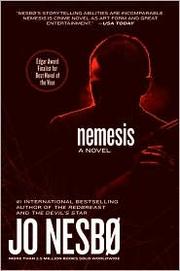
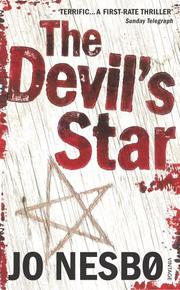
The Redbreast, then Nemesis — a bank robbery, a dead ex-girlfriend, and Harry framed — then The Devil's Star, which closes the trilogy and resolves the corruption plot. Read these three in this order without exception; any other sequence spoils the resolution.
The prequels
The Bat and Cockroaches, in that order, once the trilogy is done. Lighter, smaller, and worth reading for continuity rather than for themselves.
The famous ones
The redeemer is a clean restart for the character, with a Salvation Army shooting in a Christmas crowd and a hitman who cannot leave the country. Then The Snowman, the best-known book in the series and the one that introduces the antagonist who shapes everything after it — which is exactly why it must not be read out of place. The leopard is its direct sequel and the most brutal book in the run.
The pair that is really one novel
Phantom brings Harry back to Oslo because Rakel's son is charged with murder. It breaks the series' own rules in a way that only works if you already know these characters, and it ends on the largest cliffhanger Nesbø has written. Police opens directly on it. Treat them as one book in two volumes and do not leave a year between them.
The late novels
The thirst depends on Police for its entire setup. Knife is the single most consequential book for the character since The Redbreast and is unreadable out of order. Killing Moon takes Harry to Los Angeles and back and is the most recent novel, which makes it the correct place to stop — it is a direct response to where the previous book left him.
A warning worth giving
The series is genuinely violent, and it escalates. The leopard in particular contains extended torture, and several books involve serial killings described in detail. Readers who enjoyed The Redbreast for its wartime history sometimes find the later novels a different and harder proposition. That is a fair reason to stop after the trilogy, which is a complete story in itself. The full sequence is in the Harry Hole reading path.