Harry Bosch Reading Order: Where to Start
Michael Connelly's Harry Bosch series is best experienced in publication order, as each novel builds on Bosch's personal history, relationships, and evolving worldview. This curriculum moves from Bosch's origins through his LAPD career, then bridges into the Lincoln Lawyer universe where the two series intertwine — giving the reader the full, deeply connected Connelly experience.
Meet Harry Bosch — The Foundations
BeginnerEstablish who Harry Bosch is: his Vietnam past, his obsessive sense of justice, his LAPD Homicide career, and Connelly's signature LA noir atmosphere.
▸ Study plan for this stage
Pace: 8–10 weeks total (~3 weeks per book), reading roughly 20–25 pages per day. The Black Echo (~350 pp): weeks 1–3; The Black Ice (~320 pp): weeks 4–6; The Concrete Blonde (~430 pp): weeks 7–10. Allow one buffer day per week for note-taking and reflection.
- Harry Bosch as an outsider-hero: his distrust of institutions (LAPD bureaucracy, Internal Affairs, the FBI) vs. his unshakeable personal code of justice — introduced in The Black Echo and deepened across all three novels
- The Vietnam War as psychological bedrock: Bosch's tunnel-rat service shapes his claustrophobic courage in The Black Echo's literal tunnel sequences and haunts his worldview throughout the trilogy
- The 'everybody counts or nobody counts' ethos: Bosch's refusal to treat any victim — no matter how marginal — as disposable, first articulated through Billy Meadows in The Black Echo
- LA noir atmosphere and Connelly's sense of place: the Hollywood Hills, the dry LA River basin, Mexicali's border underworld in The Black Ice, and the seedy strip-club milieu of The Concrete Blonde as characters in their own right
- Procedural realism: Connelly's meticulous depiction of LAPD Homicide Division routines — murder books, roll calls, chain of command — grounding the stories in authentic police work
- Bosch's romantic and professional isolation: his relationships (with Eleanor Wish in The Black Echo, with the memory of the Dollmaker's victims in The Concrete Blonde) reveal his inability to separate personal feeling from casework
- The civil-liability courtroom as a new arena of justice: The Concrete Blonde introduces the idea that Bosch's past decisions can be legally — not just morally — judged, expanding the series' ethical scope
- Connelly's dual-timeline and parallel-plot structure: each novel braids a present-day investigation with a backstory (Vietnam, the Meadows case, the Dollmaker killings) that Bosch must excavate to reach the truth
- By the end of The Black Echo, what specific aspects of Bosch's Vietnam service as a tunnel rat directly influence how he navigates the storm-drain tunnels — and what does this reveal about his psychology?
- How does The Black Ice use the cross-border setting of Mexicali and the death of fellow detective Cal Moore to test Bosch's loyalty to the LAPD versus his personal sense of justice?
- In The Concrete Blonde, Bosch is simultaneously defending a past shooting in civil court and hunting a possible copycat killer — how does Connelly use this dual pressure to interrogate whether Bosch's instincts can be trusted?
- Across all three novels, how does Connelly establish Los Angeles itself — its geography, class divisions, and institutions — as an active force shaping the crimes Bosch investigates?
- What recurring tensions exist between Bosch and his supervisors/the LAPD hierarchy in these three books, and what do those conflicts tell us about Connelly's critique of institutional policing?
- How do the victims in each novel (Billy Meadows, Cal Moore, the Dollmaker's women) function as moral anchors for Bosch, and what does his treatment of each say about his evolving 'everybody counts' philosophy?
- Keep a 'Murder Book' reading journal: mirroring Bosch's own case files, create a running document for each novel with sections for Victims, Suspects, Clues, and your own evolving theory — update it chapter by chapter and compare your conclusions to Connelly's reveals
- Map Bosch's LA: using a free tool like Google Maps or a hand-drawn sketch, pin every significant location mentioned across the three books (Bosch's Woodrow Wilson Drive house, the Hollywood Division, the LA River tunnels, the Dollmaker crime scenes, the Mexicali border crossing) — annotate each pin with its narrative significance
- Vietnam context deep-dive: after finishing The Black Echo, spend 30–60 minutes reading a short non-fiction summary of US tunnel-rat operations in Vietnam, then write a one-page reflection on how that historical reality enriches Connelly's fictional portrayal of Bosch's trauma
- Character relationship diagram: after each book, draw a web of Bosch's key relationships (colleagues, antagonists, romantic interests, victims) and mark each connection as 'trust,' 'conflict,' or 'complicated' — track how the web changes across the three novels
- Ethical verdict exercise for The Concrete Blonde: before reading the courtroom resolution, write your own 200-word verdict on whether Bosch was justified in shooting the Dollmaker — then compare your reasoning to the novel's outcome and reflect on any gaps
- Connelly's prose style imitation: select one atmospheric paragraph from each novel that captures LA noir at its strongest, copy it out by hand, then write your own 100-word paragraph describing a real or imagined LA location in Connelly's style — focus on sensory detail, moral undertone, and economy of language
Next up: These three novels establish Bosch's core identity, moral code, and LAPD world as a stable foundation, so the next stage can begin pushing those foundations into crisis — through deeper personal loss, departmental exile, and cases that force Bosch to operate outside the institutional structures he has already learned to distrust.
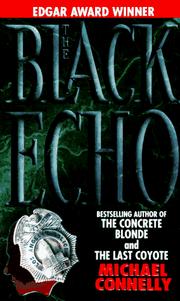
The debut novel — start here, no exceptions. It introduces Bosch, his tunnel-rat past, and the moral code that drives every subsequent book.
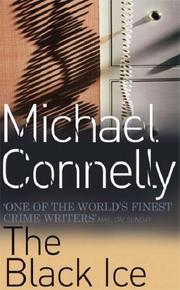
Deepens Bosch's character and his willingness to break rules for the truth; essential second step before the series grows more complex.
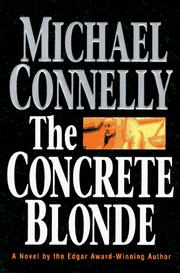
A courtroom-and-street thriller that forces Bosch to reckon with the consequences of his past actions — a pivotal early entry.
Bosch in Full Stride — The LAPD Years
BeginnerFollow Bosch through career upheaval, personal loss, and landmark cases that cement his legend inside and outside the LAPD.
▸ Study plan for this stage
Pace: 6–8 weeks total; roughly 20–25 pages per sitting, 4–5 sittings per week. Week 1–2: The Last Coyote (≈320 pp) — read slowly to absorb Bosch's psychological unraveling and backstory. Week 3–4: Trunk Music (≈400 pp) — pick up the pace as the plot is more propulsive. Week 5–6: Angels Flight (≈400 pp) —
- Bosch's origin wound: The Last Coyote forces Bosch to investigate his own mother's unsolved 1961 murder, making the personal and professional inseparable for the first time in the series.
- Mandatory therapy as a narrative device: Bosch's court-ordered sessions with Dr. Carmen Hinojos in The Last Coyote externalize his inner life and introduce the concept of 'the tunnel' — his compulsive drive toward truth at all costs.
- Career suspension and reinstatement: Bosch operates outside the LAPD in The Last Coyote, establishing that his moral code exists independently of institutional authority.
- Organized crime and Hollywood corruption: Trunk Music plunges Bosch into Las Vegas mob connections and the seductive corruption of the entertainment industry, widening his world beyond L.A. street crime.
- The returning hero and institutional distrust: Trunk Music marks Bosch's reinstatement to Homicide Special, but his colleagues and supervisors remain wary — he is celebrated and suspect simultaneously.
- Race, politics, and the LAPD's public legitimacy: Angels Flight is set against the backdrop of a high-profile civil rights attorney's murder on the Angels Flight funicular, forcing Bosch to navigate explosive racial politics in post-Rodney King Los Angeles.
- The cost of the 'one right thing' philosophy: Across all three books, Bosch repeatedly sacrifices relationships, career safety, and personal peace to pursue justice, cementing this as his defining — and self-destructive — trait.
- Los Angeles as a living character: Connelly uses specific L.A. geography (Mulholland Drive, Bunker Hill, the Vegas corridor) not just as backdrop but as moral landscape, reflecting the glamour-and-rot duality at the heart of each case.
- In The Last Coyote, what does Bosch ultimately learn about who was responsible for his mother Marjorie Lowe's murder, and how does that revelation reframe his entire career motivation?
- How does Dr. Hinojos's therapeutic relationship with Bosch in The Last Coyote both challenge and ultimately reinforce his 'tunnel' mentality rather than dismantling it?
- In Trunk Music, what is the significance of the Las Vegas mob connection to the victim, and how does Bosch's personal entanglement with Eleanor Wish complicate his objectivity as an investigator?
- How does Bosch's reinstatement to Homicide Special in Trunk Music affect the way his LAPD colleagues treat him, and what does this say about institutional memory and distrust?
- In Angels Flight, why is the murder of civil rights attorney Howard Elias so politically explosive for the LAPD, and how does Bosch's assignment to the case put him in an impossible position between the department and the public?
- Taken together across all three books, what pattern emerges in the way Bosch handles authority figures — and what does that pattern cost him personally by the end of Angels Flight?
- Character psychology journal: After finishing The Last Coyote, write a one-page 'therapy note' from Dr. Hinojos's perspective summarizing Bosch's core wounds and defenses — then revisit it after Angels Flight to see what has or hasn't changed.
- Crime-board exercise: For each of the three books, create a hand-drawn or digital suspect/evidence map as you read. Compare the three maps when finished and note how the scale and complexity of Bosch's cases escalates from personal (The Last Coyote) to institutional (Angels Flight).
- L.A. geography walk (virtual or physical): Using Google Maps or a street atlas, trace the key locations in each novel — Mulholland Drive, Bunker Hill/Angels Flight funicular, the Las Vegas strip corridor. Write two sentences on how each setting shapes the mood of its respective case.
- Thematic comparison essay (500 words): Argue whether Bosch is more effective as an investigator when he is operating outside the LAPD (The Last Coyote) or inside it (Trunk Music, Angels Flight). Use at least one specific scene from each book as evidence.
- Dialogue analysis: Find one interrogation scene in each book and annotate it — highlight where Bosch bends or breaks procedural rules, and note what he gains or loses by doing so. Look for a pattern across all three.
- Reader's prediction log: Before starting Angels Flight, write down three predictions about how the racial-politics subplot will resolve. After finishing, revisit your predictions and reflect on what Connelly subverted or confirmed about your expectations of a police procedural.
Next up: Completing these three books leaves Bosch at a crossroads — professionally reinstated but personally fractured — setting the stage for the next phase of the curriculum, where the consequences of his choices inside the LAPD begin to accumulate into something he can no longer outrun.

Bosch investigates his own mother's cold-case murder while on suspension — the most personal and emotionally raw novel in the series.
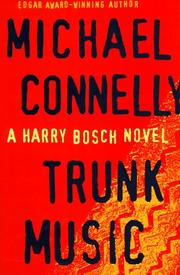
A mob-flavored thriller that reintegrates Bosch into the LAPD and introduces Las Vegas as a key setting; great momentum after the intensity of The Last Coyote.
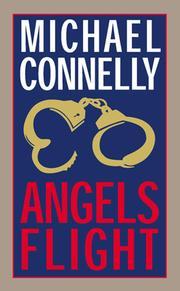
A high-stakes racial-politics case that puts Bosch under maximum institutional pressure and marks a turning point in his LAPD career.
Cold Cases & New Chapters — The Open-Unsolved Unit
IntermediateExperience Bosch's reinvention as a cold-case detective, where older crimes and long-buried secrets test his patience and obsession in new ways.
▸ Study plan for this stage
Pace: 8–10 weeks total; roughly 25–30 pages per day. Suggested pacing: City of Bones (weeks 1–3), The Closers (weeks 4–6), Nine Dragons (weeks 7–10). Allow an extra buffer day between books to reflect and journal before moving on.
- The Cold-Case Mindset: How Bosch approaches decades-old evidence in City of Bones and The Closers with the same obsessive urgency he brings to fresh homicides, illustrating that for him no case is ever truly 'cold'
- Institutional Reinvention: Bosch's return to the LAPD in The Closers and his placement in the Open-Unsolved Unit marks a deliberate career pivot — explore how the bureaucratic structure of a cold-case unit both enables and constrains his methods
- Bones as Narrative Device: In City of Bones, skeletal remains stripped of context force Bosch (and the reader) to reconstruct a life and a crime purely from physical evidence and inference, highlighting forensic patience as a storytelling tool
- Race, History, and the LAPD: The Closers reopens a racially charged murder from the 1980s, embedding Bosch's investigation in the longer arc of Los Angeles's troubled racial history and the department's own legacy of misconduct
- Personal Stakes Crossing Professional Lines: Nine Dragons ruptures the boundary between Bosch's private life and his casework when his daughter Maddie is endangered in Hong Kong, testing whether his obsession can survive when the victim is someone he loves
- Globalization of Crime: Nine Dragons expands the series' geography beyond Los Angeles to Hong Kong's Triad underworld, signaling that Connelly is broadening the moral and physical universe Bosch operates in
- Evidence vs. Intuition: Across all three books, Bosch repeatedly acts on gut feeling before the evidence fully supports him — track how often he is right, how often he overreaches, and what the consequences are
- The Weight of the Past on the Present: All three novels hinge on crimes or relationships formed years or decades earlier; examine how Connelly uses time as both a structural and thematic element throughout this unit
- In City of Bones, how does the identity of the child's killer reframe everything Bosch believed about the case, and what does his emotional response reveal about his own childhood trauma?
- The Closers pairs Bosch with Kizmin Rider for the first time in years — how does their partnership dynamic differ from his earlier pairings, and how does the racial dimension of the Rebecca Verloren case affect both detectives differently?
- How does Connelly use the cold-case unit's procedural rules (chain of custody, statute of limitations considerations, witness re-interviews) as both realistic texture and a source of dramatic tension across City of Bones and The Closers?
- In Nine Dragons, Bosch makes a series of decisions in Hong Kong that many readers and critics consider his most reckless ever — do you think his actions are justified, and what do they cost him professionally and personally?
- All three books involve secrets that powerful or respected people have kept for years. Compare how those secrets are finally exposed in each novel — what triggers the unraveling, and who pays the price?
- By the end of Nine Dragons, how has Bosch's relationship with his daughter Maddie changed the emotional stakes of the series, and what new vulnerabilities does it introduce for future stories?
- Evidence Timeline Exercise: For City of Bones, build a written timeline that separates (a) when events in the victim's life actually occurred, (b) when Bosch discovers each piece of evidence, and (c) when the reader learns each fact. Analyze how Connelly's sequencing of revelations controls suspense.
- Cold-Case File Simulation: After finishing The Closers, create a one-page mock 'Open-Unsolved case summary' for the Verloren murder as it would have existed before Bosch reopened it — only the facts available at the time of the original investigation. Then annotate it with everything Bosch adds. This makes the investigative gap visceral.
- Character Relationship Map: Draw a network diagram for each book showing Bosch at the center, with lines to every significant character labeled by relationship type (partner, suspect, victim, antagonist, personal). Compare the three diagrams: how does Bosch's social world shift from book to book, and what does the Nine Dragons map look like compared to the others?
- Thematic Annotation Sprint: Re-read the opening and closing chapters of each book back-to-back (six short readings total). Annotate every passage where time — past, present, or future — is explicitly invoked. Write a one-paragraph thesis on how Connelly uses temporal language to reinforce the cold-case theme.
- Moral Judgment Journal: After each book, write a 200-word entry answering: 'What is the one decision Bosch makes in this book that I most agree with, and the one I most question?' At the end of the unit, read all three entries together and look for a pattern in your own moral responses to his character.
- Comparative Setting Analysis: Nine Dragons moves the action to Hong Kong. Write a short comparison (300–400 words) contrasting how Connelly renders Los Angeles in City of Bones or The Closers versus Hong Kong in Nine Dragons — consider sensory detail, Bosch's level of control, and how setting shapes his psychology in each location.
Next up: This unit leaves Bosch with a teenage daughter now living under his roof and a career defined by reopening the past — conditions that will force the next stage of the curriculum to reckon with how fatherhood, aging, and shifting LAPD politics reshape the detective's identity and methods going forward.

A child's skeleton found in the Hollywood Hills launches Bosch into cold-case work — widely considered one of the best in the series and a natural pivot point.
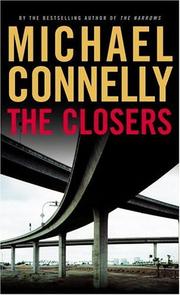
Bosch returns to the LAPD's Open-Unsolved Unit after a stint away; a masterclass in cold-case procedure and a great re-entry novel.

Raises the personal stakes to their highest yet by threatening Bosch's daughter — essential reading before the series enters its final LAPD phase.
The Lincoln Lawyer Connection — Two Worlds Collide
IntermediateUnderstand how defense attorney Mickey Haller (Bosch's half-brother) fits into the universe, and read the crossover novel where both protagonists share the page.
▸ Study plan for this stage
Pace: 4–5 weeks total: Week 1–2 — Read The Lincoln Lawyer (~400 pages, ~25–30 pages/day); Week 3–5 — Read The Reversal (~370 pages, ~20–25 pages/day, slower pace to track the dual-protagonist dynamics carefully)
- Mickey Haller as a defense attorney protagonist: understanding the moral and procedural world of criminal defense, which is the mirror image of Bosch's detective worldview
- The half-brother relationship: Haller and Bosch share a father but were raised in entirely different worlds — this biological tie creates both kinship and philosophical tension
- Defense vs. prosecution ethics: The Lincoln Lawyer forces the reader to sit inside a system where 'winning' for the defense may mean a guilty man goes free — a direct contrast to Bosch's obsessive pursuit of justice
- The Lincoln Lawyer's central moral trap: Haller discovers his client may be guilty of a worse crime than the one charged, and he is bound by attorney-client privilege — exploring the limits of legal ethics
- The Reversal as a structural experiment: Connelly uses alternating first-person (Haller) and third-person (Bosch) narration in the same novel, signaling each character's distinct voice and worldview
- Mickey Haller's 'office on wheels': the Lincoln Town Car as a symbol of Haller's transient, client-driven lifestyle — contrasted with Bosch's rooted, case-obsessed identity
- The crossover as universe-building: The Reversal is the first novel where both men work the same case from different institutional angles (Haller as special prosecutor, Bosch as investigator), testing whether their values can coexist
- Justice vs. the law as a recurring theme: both books ask whether the legal system and true justice are the same thing — a question that will echo throughout the rest of the Connelly universe
- By the end of The Lincoln Lawyer, what impossible ethical dilemma does Haller face regarding his client Louis Roulet, and how does he resolve it without violating privilege?
- How does Connelly use the Lincoln Town Car as more than just a setting — what does it reveal about Haller's character, work style, and place in the legal world?
- In The Reversal, how does the shift between first-person (Haller) and third-person (Bosch) narration reflect each character's self-awareness and relationship to the cases they work?
- What does the working relationship between Haller and Bosch in The Reversal reveal about the tensions between defense law and law enforcement — and where do they actually agree?
- How does Haller's background as a defense attorney complicate or enrich your understanding of the justice system as previously seen through Bosch's detective lens?
- What does the Jason Jessup case in The Reversal suggest about the fallibility of the justice system, and how do both Haller and Bosch respond differently to that fallibility?
- Character contrast journal: After finishing The Lincoln Lawyer, write a one-page profile of Mickey Haller — his values, methods, and moral code — then compare it point-by-point to a profile of Harry Bosch based on what you know from prior stages. Where do they overlap? Where do they clash?
- Ethical debate exercise: Identify the moment in The Lincoln Lawyer when Haller realizes the truth about Roulet. Write a short argument (one paragraph each) FOR and AGAINST the choice Haller ultimately makes — then decide which side you find more compelling and why.
- Narration tracking in The Reversal: As you read, keep a two-column log — one column for chapters told from Haller's first-person POV, one for Bosch's third-person chapters. Note one key piece of information or emotional insight each narration style reveals that the other could not.
- Scene rewrite: Choose one scene in The Reversal where Bosch and Haller interact or disagree. Rewrite it from the opposite character's POV (e.g., if it's a Bosch chapter, rewrite it as Haller's first-person voice). This forces you to inhabit both worldviews.
- Theme mapping: Create a simple two-axis chart with 'Justice' on one axis and 'The Law' on the other. Plot key decisions made by Haller and Bosch across both books to visualize when the two concepts align and when they diverge.
- Timeline construction: Build a shared timeline of the Jason Jessup case in The Reversal, annotating which character (Haller or Bosch) drives each development — this reveals how Connelly engineers their interdependence while keeping them distinct.
Next up: By understanding how Haller and Bosch's opposing institutional roles can coexist — and even reinforce each other — on the same case, the reader is primed to follow Bosch into later novels where his relationship with the legal system grows even more adversarial and personal, deepening the moral complexity established here.

The debut of Mickey Haller — read this first to understand his world, his ethics, and his relationship to Bosch before the crossover.

The first true crossover: Bosch and Haller work the same case from opposite sides of the law, making the half-brother dynamic explicit and thrilling.
Retirement & Legacy — Bosch Unchained
ExpertSee Bosch operate outside the LAPD as a private investigator and later a San Fernando PD volunteer, where freedom from institutional rules makes him both more effective and more dangerous.
▸ Study plan for this stage
Pace: 3–4 weeks total; Week 1–2: The Burning Room (~30 pages/day, ~2 weeks); Week 3–4: The Wrong Side of Goodbye (~25 pages/day, ~2 weeks). Allow extra time for reflection journaling between the two books.
- Institutional liberation vs. institutional accountability — Bosch's retirement from LAPD frees him from bureaucratic constraints in The Burning Room's cold-case unit and The Wrong Side of Goodbye's PI work, but also removes the safety net of oversight that once checked his impulses
- The cold-case methodology — The Burning Room demonstrates how Bosch and rookie partner Lucia Soto reconstruct decades-old crimes (the Bonnie Brae fire) using fragmentary evidence, showing that patience and archival thinking are as vital as street instincts
- Mentorship as legacy — Bosch's relationship with Lucia Soto in The Burning Room mirrors his own early career formation, forcing him to examine what values and methods he is passing on to the next generation of detectives
- The PI as truth-seeker without a badge — In The Wrong Side of Goodbye, Bosch's work for aging billionaire Whitney Vance strips away the authority of a badge, making persuasion, reputation, and moral credibility his only tools
- Parallel-case architecture — Both novels use dual or layered investigations (the Bonnie Brae fire alongside a gang shooting; the Vance heir search alongside the San Fernando serial attacker) to contrast Bosch's old-world deliberateness with urgent present-day threats
- San Fernando PD as a second home — The Wrong Side of Goodbye introduces the small-town department as a community Bosch genuinely serves rather than merely tolerates, redefining what 'the job' means to him in his final chapter
- Moral danger of unchecked autonomy — Without LAPD rules, Bosch makes decisions — evidence handling, confrontations, personal risk — that would have triggered Internal Affairs reviews, raising the question of whether freedom makes him more just or merely more unilateral
- Legacy and mortality — Whitney Vance's search for an heir in The Wrong Side of Goodbye mirrors Bosch's own reckoning with what he leaves behind, thematically linking a billionaire's end-of-life crisis to Bosch's own sense of purpose and time running out
- In The Burning Room, how does the Bonnie Brae fire cold case expose the tension between institutional memory (old case files, retired detectives) and fresh investigative eyes, and what does this say about how justice ages?
- How does Bosch's mentorship of Lucia Soto in The Burning Room both reflect and complicate his own origin story — what does he choose to teach her, and what does he deliberately withhold?
- In The Wrong Side of Goodbye, what specific limitations does Bosch face as a private investigator that he never faced as an LAPD detective, and how does he compensate for each?
- How do the dual storylines in The Wrong Side of Goodbye (the Vance heir search and the San Fernando serial case) comment on each other thematically — what does finding an heir have to do with stopping a predator?
- Across both novels, how has Bosch's relationship with institutional authority evolved — does he appear more at peace with operating outside the LAPD, or does the tension remain unresolved?
- Both books feature Bosch working alongside or for people with significantly less experience or power than him (Soto, the San Fernando PD). How does this dynamic change his behavior compared to when he was embedded in a large bureaucracy like the LAPD?
- Dual-timeline mapping: For The Burning Room, draw a timeline with two tracks — the original Bonnie Brae fire events and the present-day investigation. Note every moment the past directly reshapes a present-day decision, then write a paragraph on how Connelly uses time as a structural character.
- Mentor audit: After finishing The Burning Room, list every piece of advice or behavior Bosch models for Lucia Soto. Categorize each as 'by-the-book,' 'gray area,' or 'rule-breaking.' Reflect in writing: is Bosch a good mentor, and by whose standard?
- PI constraint log: While reading The Wrong Side of Goodbye, keep a running log of every moment Bosch lacks the legal authority, database access, or institutional backing he would have had as an LAPD detective. After finishing, write a one-page analysis of how these constraints shape the novel's plot and Bosch's character.
- Thematic parallel essay: Write a 400–600 word comparative essay arguing how Whitney Vance's search for an heir in The Wrong Side of Goodbye functions as a mirror for Bosch's own legacy anxiety. Use at least three specific scenes from the novel as evidence.
- Autonomy ethics debate: Choose one decision Bosch makes in either book that would likely have triggered an Internal Affairs review at the LAPD. Write both a defense of his choice (from Bosch's perspective) and a prosecution of it (from an oversight perspective), then conclude with your own verdict.
- Stage synthesis: After completing both books, write a one-page character statement titled 'Bosch Unchained' — argue whether freedom from the LAPD has made Bosch more effective, more ethical, more dangerous, or some combination of all three, grounding every claim in specific scenes from The Burning Room and The Wrong Side of Goodbye.
Next up: By seeing Bosch fully severed from the LAPD yet still magnetically drawn to justice, the reader is primed to explore how his relationships — particularly with his daughter Maddie and figures from his past — become the last remaining tether that defines who he is and what he is still fighting for.

Bosch's final years at the LAPD paired with a new young partner — a graceful, elegiac novel that sets up his departure beautifully.

Bosch's first full novel as a private investigator, running parallel cases that showcase his reinvention and the full arc of who he has become.
Discussion
Keep reading
Paths that share books, cover the same subject, or open a related topic.