Learn Latin: a reading path from first declensions to Caesar and Cicero
This curriculum takes a complete beginner from the very first Latin declension all the way to reading unabridged classical prose and poetry, moving through four carefully sequenced stages. Each stage pairs grammar instruction with reading practice so that rules are immediately reinforced by real (or adapted) Latin sentences, building both analytical confidence and genuine reading fluency.
Foundations: Grammar & First Words
BeginnerMaster the five noun declensions, basic verb conjugations (all tenses, active and passive), pronouns, and adjective agreement — the essential skeleton of every Latin sentence.
▸ Study plan for this stage
Pace: 12–14 weeks, ~25–30 pages/day from Wheelock's Latin (chapters 1–20), then 2–3 weeks of Wheelock's Latin Reader at ~15–20 pages/day with focused grammar review
- The five Latin noun declensions (nominative, genitive, dative, accusative, ablative cases) and how to identify which declension a noun belongs to
- Present, imperfect, and perfect tense conjugations for regular verbs in active and passive voice across all persons
- The subjunctive mood and its use in dependent clauses, conditional statements, and purpose clauses
- Pronoun declensions (personal, demonstrative, relative) and their agreement with antecedents
- Adjective agreement with nouns in case, number, and gender; first and second declension adjectives
- Sentence structure: how subjects, objects, and modifiers interact through case endings rather than word order
- Deponent verbs and their passive forms with active meanings
- Infinitive forms and their role in indirect statements and purpose constructions
- Can you identify which declension a noun belongs to and decline it fully across all five cases in singular and plural?
- How do you form the present, imperfect, and perfect tenses for a regular verb in both active and passive voice?
- What is the subjunctive mood, and what are three common uses of the subjunctive in dependent clauses?
- How do pronouns and adjectives agree with their nouns, and what role does gender play in agreement?
- What is a deponent verb, and why does it have passive forms but active meanings?
- How do infinitives function in indirect statements, and what case does the subject of an infinitive take?
- Complete all paradigm drills in Wheelock's Latin (chapters 1–20): write out full declensions and conjugations from memory at least twice per chapter
- Parse 10–15 sentences per day from Wheelock's Latin: identify the case, number, gender, tense, voice, and mood of every word
- Create flashcards for the 200+ vocabulary words introduced in chapters 1–20, organized by part of speech and declension/conjugation pattern
- Translate 5–10 sentences daily from the 'Sententiae Antiquae' sections in Wheelock's Latin, checking your work against the provided translations
- Write 20–30 original Latin sentences using newly learned grammar (e.g., one sentence per new subjunctive use, one per new verb tense)
- Work through the reading passages in Wheelock's Latin Reader, translating and parsing all verbs and pronouns; identify which grammar rule from Wheelock's Latin each sentence demonstrates
- Take weekly self-assessment quizzes: decline 5 random nouns, conjugate 5 random verbs in specified tenses/voices, and translate 5 unseen sentences
Next up: Mastery of these foundational grammar structures and vocabulary equips you to read authentic Latin texts with confidence, moving from controlled sentences in Wheelock's Latin Reader to longer passages and literary works where you'll apply these rules to real Roman prose and poetry.

The single most widely used introductory Latin grammar in the English-speaking world; its 40 chapters march systematically through all core morphology and include vocabulary drawn directly from classical authors. Start here to build the grammatical framework everything else depends on.
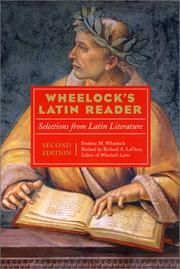
Designed as a direct companion to Wheelock's Latin, this reader bridges the gap between drill exercises and real texts by offering lightly annotated passages from Caesar, Cicero, Livy, and others — read it chapter-by-chapter alongside the later units of Wheelock.
Consolidation: Continuous Reading in Adapted Latin
BeginnerDevelop reading stamina and vocabulary by working through continuous narrative Latin that is grammatically authentic but pedagogically graded, reducing dependence on word-by-word parsing.
▸ Study plan for this stage
Pace: 8–10 weeks, ~15–20 pages/day of "Lingua Latina per se Illustrata" (Chapters 1–20), followed by 3–4 weeks of "38 Latin Stories" at 2–3 stories/day with guided comprehension work
- Reading without constant dictionary lookup: recognizing word patterns and inferring meaning from context and illustrations in Lingua Latina
- Mastery of core nominal and verbal paradigms through immersive exposure rather than isolated drills
- Building narrative comprehension stamina: moving from word-level parsing to sentence and paragraph-level understanding
- Internalization of common Latin word order and syntactic patterns through repeated exposure to authentic but graded prose
- Active vocabulary expansion: distinguishing high-frequency words that recur across texts from low-frequency vocabulary
- Confidence in handling unfamiliar words using morphological analysis and contextual clues rather than translation aids
- Transition from pedagogical scaffolding (Lingua Latina's pictures and repetition) to independent reading with minimal support (38 Latin Stories)
- After reading a passage in Lingua Latina, can you summarize the main narrative events in English without consulting a translation?
- Can you identify the grammatical function of a noun or verb in a sentence by recognizing its case ending or conjugation, even if you don't know the word's meaning?
- When encountering an unfamiliar word in 38 Latin Stories, can you use morphological analysis (root, prefix, suffix) and sentence context to make an educated guess about its meaning?
- Can you read a full chapter of Lingua Latina (10–15 pages) in one sitting without stopping to parse every word, maintaining comprehension of the narrative arc?
- Can you explain how the illustrations and repetitive vocabulary in Lingua Latina support reading fluency, and how 38 Latin Stories removes that scaffolding?
- After completing a story from 38 Latin Stories, can you answer comprehension questions in English that require understanding of plot, character motivation, and causal relationships?
- Daily immersive reading of Lingua Latina (15–20 pages) with minimal pausing; use illustrations and context to infer meaning before consulting the vocabulary at the back of the book
- Weekly vocabulary review: list 20–30 high-frequency words from each chapter of Lingua Latina and use them in simple Latin sentences without translation
- Retelling exercises: after finishing a chapter of Lingua Latina, write a 5–10 sentence summary in English of the narrative, focusing on main events rather than word-for-word details
- Morphological analysis drills: when you encounter an unfamiliar word in 38 Latin Stories, break it into root + affix and predict meaning before checking a dictionary
- Timed reading sprints: set a timer for 20–30 minutes and read continuously through Lingua Latina or 38 Latin Stories without stopping, then assess comprehension afterward
- Comparative reading: read the same passage from Lingua Latina twice (once with minimal dictionary use, once with full support), and note how your comprehension improves on the second pass
- Story mapping: for each story in 38 Latin Stories, create a simple outline or diagram showing character relationships, plot sequence, and key turning points
- Oral recitation: read aloud passages from Lingua Latina to internalize rhythm, word order, and pronunciation, then answer comprehension questions without re-reading
Next up: This stage builds the reading fluency and contextual inference skills necessary to move into independent, unsupported reading of authentic classical Latin texts, where pedagogical scaffolding is removed entirely and the reader must rely on accumulated vocabulary, morphological intuition, and comfort with varied syntax.
The gold-standard immersion reader: 35 chapters of entirely Latin prose that grow in complexity organically, with all new vocabulary glossed in the margins in Latin. Reading it after Wheelock reinforces grammar in context and dramatically expands active vocabulary.
Short, self-contained stories keyed to Wheelock's chapters provide low-stakes reading practice; placed here to fill any remaining gaps in morphology recognition before moving to unadapted classical prose.
Transition: Early Classical Prose
IntermediateRead genuine, unabridged (or minimally adapted) classical Latin prose, handling periodic sentences, indirect statement, and the full range of subjunctive uses with growing confidence.
▸ Study plan for this stage
Pace: 8–10 weeks, ~15–20 pages/day of Latin text with commentary
- Periodic sentence structure: recognizing main clauses, subordinate clauses, and their rhetorical function in Caesar's military narrative
- Indirect statement (accusative + infinitive) in both Caesar and Cicero: identifying subjects, tense sequencing, and how it conveys reported thought
- Subjunctive in purpose clauses, result clauses, and conditional sentences: distinguishing their logical relationships and translating them fluidly
- Subjunctive in subordinate clauses within indirect statement: navigating the interaction of reported speech and modal verbs
- Caesar's narrative style: ablative absolutes, military terminology, and the cumulative effect of parataxis and hypotaxis
- Cicero's epistolary voice: the shift from oratorical to personal prose, use of subjunctive for wishes and deliberation, and tone variation across different addressees
- Temporal and causal relationships signaled by conjunctions (cum, quia, quod, ut, ne) and their effect on clause hierarchy
- Building reading fluency: moving from word-by-word parsing to recognizing syntactic patterns and grasping meaning at the sentence level
- How do you identify the main clause in a long periodic sentence from Caesar, and what role do subordinate clauses play in building the narrative?
- What is the difference between indirect statement and direct quotation, and how does Cicero use indirect statement to convey nuance in his letters?
- When you encounter a subjunctive verb, how do you determine whether it expresses purpose, result, a condition, or a wish—and what does each convey about the speaker's intent?
- How does the subjunctive function differently inside an indirect statement than in a main clause, and why does tense sequencing matter?
- What are ablative absolutes in Caesar's text, and how do they compress information and drive narrative momentum?
- How does Cicero's tone and use of subjunctive shift between letters to different correspondents (e.g., to Atticus versus to Brutus), and what does this reveal about his rhetorical flexibility?
- What is the cumulative effect of Caesar's use of parataxis (coordination) versus hypotaxis (subordination), and how does it shape the reader's sense of military events?
- After reading both texts, can you read an unseen passage of classical Latin prose and parse its periodic structure, identify subjunctive clauses, and translate it with reasonable fluency?
- Daily parsing: select 3–5 sentences from Caesar per day; diagram the main clause and each subordinate clause, label conjunctions, and identify subjunctive verbs and their function before translating.
- Indirect statement drills: extract 10–15 examples of indirect statement from both Caesar and Cicero; rewrite each as direct speech, then reverse the process to reinforce the transformation.
- Subjunctive function chart: as you encounter each subjunctive use (purpose, result, condition, wish, deliberation), record the Latin, its function, and your translation; review weekly to internalize patterns.
- Periodic sentence reconstruction: take a long Caesar sentence, break it into its component clauses, then rebuild it in English to show how the Latin structure creates emphasis and flow.
- Ablative absolute identification: mark every ablative absolute in a passage of Caesar (typically 1–2 pages); translate each and note how it condenses a full clause into a participial phrase.
- Comparative letter analysis: read two Cicero letters to different recipients; annotate subjunctive verbs, indirect statements, and shifts in tone; write a short paragraph explaining how Cicero adapts his voice.
- Unseen passage practice: every 2–3 weeks, work through a 10–15 sentence passage from classical Latin (not yet studied) using only a dictionary and your growing syntactic knowledge; time yourself and track improvement in parsing speed and accuracy.
- Translation journal: maintain a running log of difficult sentences from both texts; record the original, your initial translation, the correct translation, and the syntactic principle that made it tricky—review monthly to identify persistent weak points.
Next up: This stage equips you to read unabridged classical prose with confidence in its most challenging syntactic features, preparing you to tackle more demanding texts—such as Livy's histories or Cicero's orations—where periodic sentences, indirect discourse, and subjunctive complexity reach their height, and where rhetorical effect becomes as important as grammatical accuracy.
Caesar's war commentaries are famously clear and syntactically regular, making them the traditional first stop for unadapted classical prose; the military narrative also keeps motivation high. Use an annotated school edition (e.g., the Clyde Pharr or Loeb) for support.

Cicero's personal letters (especially those to Atticus and his friends) are conversational, shorter than his speeches, and full of everyday Latin idiom — a perfect next step that broadens stylistic range after Caesar's uniform register.
Classical Mastery: Poetry & Philosophical Prose
ExpertTackle the full complexity of classical Latin style — poetic meter, elevated diction, Stoic philosophical argument — and read major canonical works with only a dictionary and commentary for support.
▸ Study plan for this stage
Pace: 12–16 weeks, ~40–50 pages/day (Aeneid: 4–5 weeks; Metamorphoses: 5–6 weeks; Letters from a Stoic: 3–4 weeks). Allocate 2–3 days per week for grammar review and commentary study alongside continuous reading.
- Dactylic hexameter: scansion, elision, caesura, and how meter reinforces meaning in the Aeneid
- Elevated diction and poetic register: how Virgil and Ovid employ rare words, archaic forms, and syntactic inversion to create grandeur and pathos
- Mythological allusion and intertextuality: recognizing how the Metamorphoses reworks earlier myth and how the Aeneid echoes Homer
- Narrative technique in epic: focalization, digression, ekphrasis, and the role of the narrator in the Aeneid
- Ovid's transformative imagination: the logic of metamorphosis, causality, and emotional psychology across diverse mythological episodes
- Stoic philosophical argument: Seneca's use of rhetorical questions, exempla, and logical progression to persuade on virtue, death, and the good life
- Syntactic complexity and periodic sentences: unpacking long, embedded Latin constructions typical of philosophical prose
- Authorial voice and persona: distinguishing between narrator, speaker, and author across all three works
- How does Virgil use dactylic hexameter and caesura to create dramatic pauses or emphasize key moments in the Aeneid? Scan and analyze a passage.
- What is the relationship between the Aeneid and Homer's Iliad and Odyssey? Identify three specific echoes or inversions Virgil makes.
- How does Ovid's narrative voice differ from Virgil's? Compare the tone and structure of a digression in the Metamorphoses with an episode in the Aeneid.
- Explain the philosophical argument in one of Seneca's Letters: what is his thesis, what examples does he use, and how does he move from premise to conclusion?
- How does Seneca's prose style differ from Virgil's and Ovid's poetry? What grammatical and rhetorical features mark his philosophical register?
- Identify and interpret a moment of metamorphosis in Ovid: what triggers the change, what does the transformation symbolize, and how does Ovid's language capture the process?
- Scan 10–15 lines of the Aeneid per week, marking long and short syllables, identifying the metrical pattern, and noting caesurae and elisions. Discuss how the meter reinforces the sense.
- Create a glossary of rare or archaic words from each work (30–50 entries per book), noting their poetic register and frequency. Compare diction across the three texts.
- Read a scholarly commentary passage on a key scene in the Aeneid (e.g., Dido's death, Aeneas in the underworld) and write a 1–2 page analysis of how historical and mythological context illuminates the text.
- Identify and translate three instances of intertextual reference in the Aeneid to Homer; then do the same for Ovid's allusions to earlier myth. Write brief notes on the effect of each.
- Select one letter from Seneca and outline its logical structure: identify the thesis, supporting arguments, counterarguments, and conclusion. Rewrite the argument in modern English prose.
- Choose a complex periodic sentence from Seneca (15+ words) and diagram its syntax, identifying the main clause, subordinate clauses, and rhetorical purpose. Translate it carefully.
- Write a short comparative essay (2–3 pages) on how the Aeneid, Metamorphoses, and Letters from a Stoic each handle the theme of human suffering or mortality.
- Memorize and recite 10–15 lines of the Aeneid in Latin, paying attention to meter and pronunciation. Reflect on how embodied recitation deepens comprehension.
Next up: This stage equips you to read the full canon of classical Latin literature independently—you have internalized meter, elevated syntax, and philosophical argument—preparing you to tackle specialized texts (e.g., Cicero's rhetorical works, Livy's history, or Pliny's natural philosophy) or to deepen your study of any single author with advanced scholarly apparatus.

The central monument of Latin literature; reading it in the original rewards every hour of prior study. Begin with Books I and IV, which are most commonly taught, then read the full epic. A line-by-line commentary (e.g., Austin or Williams) is strongly recommended.
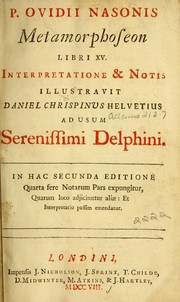
Ovid's hexameters are more playful and syntactically varied than Virgil's, expanding poetic range; the mythological content is intrinsically engaging and the vocabulary overlaps heavily with what has already been learned.

Seneca's Epistulae Morales offer sophisticated philosophical prose in a direct, aphoristic style that contrasts productively with Ciceronian periodicity; finishing the curriculum here gives the reader access to the full breadth of classical Latin writing.
Discussion
Keep reading
Paths that share books, cover the same subject, or open a related topic.