Learn topology: the best books to read in order
This curriculum takes an expert mathematics student from rigorous point-set topology through the full machinery of algebraic topology, ending at the frontier of modern homotopy theory. Each stage assumes mathematical maturity and builds directly on the language and results of the previous one, so the sequencing within and across stages is deliberate and load-bearing.
Point-Set Foundations
BeginnerMaster the rigorous language of topological spaces, continuity, compactness, connectedness, separation axioms, and metrization — the bedrock vocabulary for everything that follows.
▸ Study plan for this stage
Pace: 8–10 weeks, ~40–50 pages/day (Munkres Chapters 2–4, then Kelley Chapters 1–3)
- Topological spaces: open sets, closed sets, and the axioms that define a topology
- Basis and subbasis: generating topologies efficiently and understanding subspace topologies
- Continuous functions: ε–δ definitions, open/closed set characterizations, and homeomorphisms
- Compactness: Heine–Borel theorem, sequential compactness, and compactness in metric spaces
- Connectedness: path-connected vs. connected spaces, intermediate value theorem in topological settings
- Separation axioms (T₀, T₁, T₂/Hausdorff, T₃, T₄): how they distinguish topological spaces and enable metrization
- Metrization theorems: conditions under which a topological space is metrizable (Urysohn's metrization theorem)
- Product and quotient topologies: constructing new spaces and understanding their properties
- What are the three axioms that define a topology, and why is the arbitrary union property essential?
- How do you prove that a function is continuous using open sets, and how does this differ from the ε–δ definition in metric spaces?
- State the Heine–Borel theorem and explain why compactness is a topological property (invariant under homeomorphism).
- What is the difference between a connected space and a path-connected space, and can you construct an example of each?
- Define the separation axioms T₀ through T₄, and explain why Hausdorff (T₂) spaces are important for metrization.
- What conditions on a topological space guarantee that it is metrizable, and why does Urysohn's theorem matter?
- Verify that the standard topology on ℝ, the cofinite topology, and the discrete topology each satisfy the three axioms of a topology.
- Prove that the product topology on ℝ² is the same as the standard Euclidean topology by showing bases generate the same open sets.
- Given a function f: X → Y between topological spaces, prove it is continuous by showing that the preimage of every open set in Y is open in X.
- Construct a compact, connected space that is not path-connected (e.g., the topologist's sine curve or a quotient of [0,1]²).
- Verify that ℝ with the standard topology is Hausdorff, and show that a finite space with the cofinite topology is not Hausdorff.
- Work through Urysohn's lemma and use it to prove that a compact Hausdorff space is normal (T₄), then apply metrization.
- Prove that compactness is preserved under continuous images: if f: X → Y is continuous and X is compact, then f(X) is compact.
- Construct the quotient space ℝ/ℤ (the circle) and verify it is compact and Hausdorff by analyzing the quotient topology.
Next up: Mastery of these foundational concepts—topological spaces, continuity, compactness, and separation axioms—provides the rigorous language needed to study advanced topics such as homotopy, fundamental groups, manifolds, and algebraic topology, where these properties become tools for deeper geometric and algebraic insights.
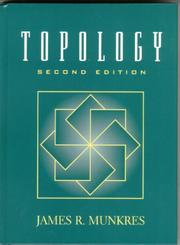
The canonical self-study reference for point-set topology: precise, thorough, and packed with exercises. Even expert beginners benefit from its systematic treatment of separation axioms and metrization theorems before moving on.
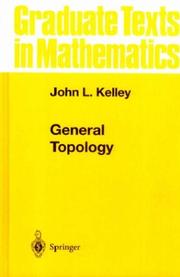
A deeper, more sophisticated treatment that fills gaps Munkres leaves — nets, filters, and function spaces — giving the expert student the full classical picture before algebraic methods appear.
Bridge to Algebraic Topology
IntermediateDevelop geometric intuition for surfaces, CW complexes, and the fundamental group, and see for the first time how algebra encodes topological information.
▸ Study plan for this stage
Pace: 8–10 weeks, ~40–50 pages/day (Jänich: 4–5 weeks; Massey: 4–5 weeks). Allocate extra time for CW complexes and fundamental group sections in both texts.
- Surfaces as 2-dimensional manifolds: classification via orientability and genus, and how to visualize them through cell decompositions
- CW complexes as a combinatorial way to build spaces inductively from cells, and how they provide a computable framework for topology
- The fundamental group π₁(X) as the algebraic invariant encoding loops and homotopy, with explicit computation for circles, spheres, and surfaces
- Covering spaces and their relationship to the fundamental group, including the correspondence between subgroups and covering spaces
- Homology and cohomology as algebraic tools that capture topological features (connected components, holes, voids) more computably than the fundamental group
- How Jänich's intuitive geometric approach transitions into Massey's rigorous algebraic framework for encoding topology
- Functoriality: how continuous maps induce homomorphisms between fundamental groups and homology groups, preserving topological structure
- What is the fundamental group of the circle, the torus, and the projective plane, and how do you compute it using covering spaces or Seifert–van Kampen?
- How do you build a CW complex for a given space (e.g., a torus or Klein bottle), and why is the cell structure useful for computing invariants?
- What is the relationship between the fundamental group and covering spaces? Given a covering space p: X̃ → X, how does π₁(X̃) relate to π₁(X)?
- How do homology groups H_n(X) differ from the fundamental group in what topological information they capture, and when is one more useful than the other?
- State the Seifert–van Kampen theorem and use it to compute the fundamental group of a space built from two simpler pieces.
- What is a CW complex, and how does the cellular chain complex allow you to compute homology algorithmically?
- Work through Jänich's classification of surfaces by hand: draw or model a torus, Klein bottle, and projective plane; understand orientability and the role of genus.
- Build CW complex structures for standard spaces (circle, torus, real projective plane, figure-eight) and draw their attaching maps explicitly.
- Compute π₁ for at least five spaces using Seifert–van Kampen: e.g., figure-eight, wedge of circles, torus, Klein bottle, and a space you construct.
- Trace through a covering space example (e.g., ℝ → S¹, or the universal cover of the figure-eight) and verify the relationship between π₁ of the base and the structure of the covering space.
- Compute the homology groups H₀, H₁, H₂ for three surfaces (sphere, torus, projective plane) using cellular homology from a CW structure.
- Work a selection of exercises from Massey on functoriality: verify that induced maps on π₁ and H_* are indeed group/module homomorphisms for specific continuous maps.
Next up: This stage equips you with concrete geometric intuition and the algebraic machinery (fundamental group, homology, CW complexes) needed to tackle advanced topics such as higher homotopy groups, spectral sequences, and cohomology rings in the next stage.
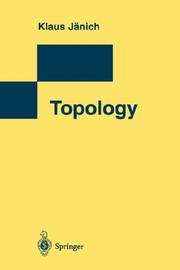
A concise, beautifully motivated book that builds geometric intuition for manifolds and topological constructions — ideal as a conceptual bridge between point-set rigor and algebraic machinery.
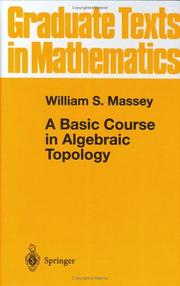
Covers the fundamental group, covering spaces, and surface classification with exceptional clarity, providing the geometric grounding needed before tackling the full generality of Hatcher.
Core Algebraic Topology
IntermediateAchieve fluency in homotopy theory, singular homology and cohomology, CW complexes, and the major computational tools such as exact sequences, excision, and the Universal Coefficient Theorem.
▸ Study plan for this stage
Pace: 12–14 weeks, ~40–50 pages/day (Hatcher Chapters 1–3 and selected sections of tom Dieck)
- Homotopy and homotopy equivalence: deformation retracts, contractibility, and the fundamental group as a homotopy invariant
- Singular homology: chain complexes, boundary maps, cycles and boundaries, and homology groups as homotopy invariants
- Cohomology and the Universal Coefficient Theorem: relating homology and cohomology, cup products, and ring structure
- Exact sequences: long exact sequences of pairs, Mayer–Vietoris sequences, and their use in computation
- Excision theorem and relative homology: computing homology of quotient spaces and pairs
- CW complexes: cellular homology, attaching maps, and computing homology via cellular chains
- Homotopy groups and higher homotopy invariants: relationship to homology and computational techniques
- Group actions and equivariant topology: fixed-point theorems, orbit spaces, and equivariant homology (from tom Dieck)
- What is the relationship between homotopy equivalence and homology? Why are homology groups homotopy invariants?
- How do you compute the homology of a space using the Mayer–Vietoris sequence? Give a concrete example.
- State and apply the excision theorem: when can you remove a subspace and how does this simplify computation?
- What is the Universal Coefficient Theorem and how does it relate singular homology to cohomology?
- How do CW complexes simplify homology computation? What is cellular homology and why is it useful?
- Describe the long exact sequence of a pair and explain how it connects relative and absolute homology.
- What are higher homotopy groups and how do they relate to singular homology? Why is π₁ special?
- How do group actions affect topology? What is an equivariant homology theory and when is it useful?
- Compute the fundamental group and first homology group of the circle S¹ directly from definitions; verify they are homotopy invariants by computing for a deformation retract
- Use the Mayer–Vietoris sequence to compute homology of the torus T² = S¹ × S¹ by decomposing it as a union of two open sets
- Compute homology of real projective space ℝPⁿ using the CW complex structure (attaching cells inductively); verify using excision
- Apply the Universal Coefficient Theorem to compute cohomology groups H*(X; ℤ) and H*(X; ℤ/2ℤ) for a space X you've studied (e.g., S¹, T², ℝP²)
- Construct the long exact sequence of the pair (D², S¹) and use it to compute relative homology H*(D², S¹)
- Verify the excision theorem for a specific pair: remove a contractible subspace from a space and show the induced map on homology is an isomorphism
- Compute higher homotopy groups π₂(S²) and π₂(S¹) using covering space theory and the relationship to homology
- Work through tom Dieck's treatment of group actions: compute the homology of an orbit space X/G for a finite group action and compare with equivariant homology
Next up: Mastery of these computational tools and invariants provides the foundation for studying advanced topics such as spectral sequences, characteristic classes, and applications to manifolds and fiber bundles.
The modern standard text: it unifies homotopy, homology, and cohomology in one volume with geometric intuition and rigorous proofs. Its free availability and wealth of exercises make it the centerpiece of any algebraic topology curriculum.

A more categorical and structurally complete treatment than Hatcher, covering duality, bordism, and bundle theory — reading it alongside or after Hatcher solidifies and extends the core theory.
Advanced Tools: Cohomology & Fiber Bundles
ExpertCommand the advanced machinery of spectral sequences, characteristic classes, fiber bundles, and K-theory that underlies modern geometry and topology research.
▸ Study plan for this stage
Pace: 12–14 weeks, ~40–50 pages/day (mix of dense theory and worked examples; expect 2–3 hours daily for careful study and problem-solving)
- Characteristic classes (Stiefel–Whitney, Chern, Pontryagin) as cohomological invariants of vector bundles and their geometric meaning
- Fiber bundles, principal bundles, and associated bundles as the foundational structures for defining characteristic classes
- Spectral sequences as computational tools for computing cohomology, particularly the Leray spectral sequence for fibrations
- The Serre spectral sequence and its application to computing cohomology of total spaces from base and fiber
- K-theory (both real and complex) as a generalized cohomology theory and its relationship to characteristic classes
- Chern character and the relationship between K-theory and ordinary cohomology via spectral sequences
- Massey operations and higher-order cohomology structures revealed by spectral sequences
- Naturality, functoriality, and the universal property of characteristic classes
- What are the Stiefel–Whitney classes and how do they classify real vector bundles up to stable equivalence?
- How do you construct characteristic classes using the classifying space approach, and why does this construction yield natural cohomology classes?
- What is a spectral sequence, what information does each page contain, and how do you extract the final answer from the $E_∞$ page?
- How does the Leray spectral sequence relate the cohomology of a total space to the cohomology of the base and fiber of a fibration?
- What is K-theory, how does it differ from ordinary cohomology, and what is the Chern character?
- How do you use spectral sequences to compute concrete cohomology groups (e.g., for homogeneous spaces or flag varieties)?
- Work through Milnor's explicit calculations of Stiefel–Whitney classes for real projective spaces and Grassmannians; verify the results by hand for small cases
- Compute the cohomology ring of a homogeneous space (e.g., $\text{SO}(n)/\text{SO}(n-1)$) using the Leray spectral sequence from McCleary
- Construct a simple principal bundle and compute its characteristic classes; verify that they satisfy the expected naturality properties
- Build and run a spectral sequence computation for a non-trivial fibration (e.g., the path-loop fibration $\Omega X \to PX \to X$) and track differentials across multiple pages
- Prove that two vector bundles are stably equivalent by showing their Stiefel–Whitney classes coincide; then construct a non-trivial example where unstable equivalence fails
- Compute the K-theory of a compact manifold or homogeneous space using the Chern character and relate the result back to characteristic classes via spectral sequences
Next up: Mastery of characteristic classes, fiber bundles, and spectral sequences provides the computational and conceptual foundation for studying index theory, cobordism, and applications to differential geometry—topics that require fluent use of these advanced tools to relate topological invariants to analytical and geometric phenomena.
The definitive treatment of Stiefel–Whitney, Chern, and Pontryagin classes via the Grassmannian, essential for connecting algebraic topology to differential geometry and index theory.
Spectral sequences are the central computational engine of modern algebraic topology; McCleary's book is the most accessible yet rigorous guide, with abundant worked examples that make this notoriously difficult tool learnable.
Modern Homotopy Theory
ExpertReach the frontier: model categories, stable homotopy theory, and the modern ∞-categorical perspective that drives current research in algebraic topology.
▸ Study plan for this stage
Pace: 12–16 weeks, ~40–50 pages/day (with 2–3 days/week for problem sets and reflection)
- Model categories as the foundational framework for homotopy theory: weak equivalences, fibrations, cofibrations, and the lifting axioms
- Homotopy limits and colimits in model categories, and their role in organizing derived functors
- The stable homotopy category: localization at weak equivalences and the formal inversion of suspension
- Spectra and stable homotopy groups: from unstable to stable phenomena and the Freudenthal suspension theorem
- Generalized homology and cohomology theories via spectra: Brown representability and the universal coefficient theorem in the stable setting
- Adams spectral sequence and its applications: computing stable homotopy groups of spheres
- Monoidal and enriched structures in stable homotopy: ring spectra, module spectra, and derived algebra
- The ∞-categorical perspective: how model categories embed into ∞-categories and why this language is essential for modern research
- What are the three classes of morphisms in a model category, and why must they satisfy the lifting axioms? How do these axioms ensure that homotopy is well-defined?
- Explain the relationship between the unstable and stable homotopy categories. Why is stabilization necessary, and what does the Freudenthal suspension theorem tell us about when this process stabilizes?
- What is a spectrum, and how does the category of spectra provide a natural home for generalized homology and cohomology theories?
- State the Adams spectral sequence and explain how it is used to compute stable homotopy groups of spheres. What information does each page encode?
- How do ring spectra and module spectra extend the notion of rings and modules to the stable homotopy category? Give examples.
- What is the relationship between model categories and ∞-categories? Why is the ∞-categorical perspective considered more natural or powerful for modern homotopy theory?
- Work through Strom's detailed treatment of model category axioms: verify that the category of topological spaces with Serre fibrations, cofibrations, and weak homotopy equivalences forms a model category. Construct explicit examples of lifting problems.
- Compute homotopy limits and colimits in concrete cases (e.g., homotopy pullbacks, homotopy pushouts) and verify that they satisfy the universal property. Compare with ordinary limits/colimits.
- Prove the Freudenthal suspension theorem for a specific space (e.g., S^n) and determine the stable range. Understand why suspension eventually becomes an equivalence.
- Construct the stable homotopy category step-by-step: define the suspension spectrum functor, verify that it is a localization, and compute a few stable homotopy groups of spheres by hand.
- Work through Adams's construction of the Adams spectral sequence for a specific example (e.g., computing π_*(S^0) or π_*(S^1) in the stable category). Trace through the E_2-page and identify differentials.
- Define a ring spectrum (e.g., the sphere spectrum S, complex cobordism MU, or singular homology H) and verify the ring structure axioms. Construct a module spectrum over your chosen ring.
- Read and work through a modern paper or expository article on ∞-categories (e.g., from the Stacks Project or a survey by Lurie) to see how the model-categorical framework translates into ∞-categorical language.
- Solve selected problem sets from both Strom and Adams, focusing on those that connect model categories to stable phenomena and those that apply the Adams spectral sequence to concrete computations.
Next up: Mastery of model categories, stable homotopy, and the Adams spectral sequence equips you to engage with modern ∞-categorical texts and research papers that use these tools to study derived algebraic geometry, chromatic homotopy theory, and higher categorical structures.
Develops classical homotopy theory — cofibrations, fibrations, Whitehead's theorem, obstruction theory — with a modern categorical lens, bridging the gap between classical results and contemporary language.

Adams's Chicago lectures remain the essential entry point into stable homotopy theory and generalized cohomology theories, written by one of the field's masters and indispensable for anyone moving toward research.
Discussion
Keep reading
Paths that share books, cover the same subject, or open a related topic.