Financial advising career: the reading path to becoming an advisor
This curriculum takes a complete beginner from personal finance fundamentals through professional-grade investing knowledge, client relationship skills, and finally the technical and ethical mastery required for CFP certification. Each stage builds the vocabulary and mental models needed for the next, so that by the end the reader is genuinely prepared to pursue licensure and serve clients with confidence.
Foundations: Money, Markets & Mindset
BeginnerBuild core financial literacy — how money works, how markets behave, and the basic vocabulary every financial advisor must speak fluently with clients.
▸ Study plan for this stage
Pace: 8–10 weeks, ~40–50 pages/day (approximately 2–3 weeks per book, with review and integration time)
- The psychology of money: how emotions, habits, and behavior drive financial decisions (Ramsey's debt-free mindset and behavioral foundations)
- Debt elimination and cash flow management: the Baby Steps framework and why eliminating high-interest debt is foundational (Ramsey)
- Index investing and the power of long-term compounding: why low-cost, diversified index funds outperform active management (Bogle)
- Market efficiency and the random walk hypothesis: understanding why beating the market consistently is nearly impossible for most investors (Malkiel)
- Asset allocation and risk tolerance: how to construct a portfolio aligned with time horizon and personal circumstances
- The true cost of fees and active management: how expense ratios and trading costs erode returns over decades (Bogle & Malkiel)
- Financial vocabulary and client communication: speaking fluently about stocks, bonds, mutual funds, diversification, and risk
- The advisor's role: helping clients avoid behavioral mistakes and stay disciplined during market volatility
- What are the Baby Steps in Ramsey's framework, and why does he prioritize debt elimination before investing?
- Explain the concept of the random walk hypothesis and what evidence Malkiel presents for why markets are difficult to beat consistently.
- What is an index fund, and why does Bogle argue that low-cost index funds are superior to actively managed funds for most investors?
- How do expense ratios and fees compound over time to reduce investor returns? Provide a concrete example.
- What is asset allocation, and how should it differ between a 25-year-old and a 60-year-old investor?
- Describe the behavioral biases that prevent investors from achieving market returns (e.g., panic selling, overconfidence) and how an advisor can help clients overcome them.
- Complete a personal debt audit: list all debts (credit cards, student loans, mortgages) with interest rates and minimum payments. Map out a payoff strategy using Ramsey's avalanche or snowball method.
- Calculate your own net worth and track it monthly for 8 weeks. Identify which Ramsey Baby Step you're currently on and set a realistic timeline for the next step.
- Build a sample portfolio using only index funds for three hypothetical clients: a 30-year-old aggressive investor, a 50-year-old moderate investor, and a 70-year-old conservative investor. Justify your allocation choices.
- Research and compare three actively managed mutual funds against their benchmark index over 10, 15, and 20 years. Calculate the fee drag and document how many beat the index consistently.
- Write a one-page client communication explaining why you recommend index funds over active management, using concepts from Bogle and Malkiel. Use plain language, not jargon.
- Simulate a market crash scenario: choose a portfolio allocation, then model how it would have performed during the 2008 financial crisis or COVID-19 market drop. Reflect on what advice you'd give a panicked client.
Next up: This stage establishes the psychological, behavioral, and analytical foundations that every financial advisor needs—understanding how clients think about money, why markets behave the way they do, and the evidence-based principles of sound investing—preparing you to move into the next stage where you'll learn to apply these principles to specific client situations, tax strategies, and comprehensiv

Establishes foundational personal finance principles (budgeting, debt, saving) that advisors must deeply understand because most clients arrive with these exact struggles. Reading it first builds empathy and baseline vocabulary.
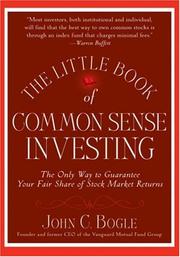
Introduces index funds, costs, and long-term investing logic in plain language — the single most important conceptual framework for advising everyday investors. Bogle's clarity makes complex market mechanics accessible before diving deeper.
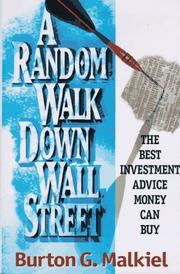
Expands on market efficiency, asset classes, and portfolio theory with rigorous but readable depth. Builds the analytical intuition needed for the intermediate stages ahead.
Investing Craft: Portfolios, Planning & Behavior
IntermediateUnderstand how to construct and manage client portfolios, recognize behavioral biases that derail investors, and connect investment strategy to real financial planning.
▸ Study plan for this stage
Pace: 12–14 weeks, ~40–50 pages/day. Allocate 5–6 weeks to "The Intelligent Investor" (challenging, dense material), 4–5 weeks to "Thinking, Fast and Slow" (conceptually rich but more accessible), and 2–3 weeks to "The Only Investment Guide You'll Ever Need" (practical synthesis and application).
- Margin of safety: the foundational principle that protects investors by requiring a significant discount between intrinsic value and purchase price
- Value investing vs. speculation: distinguishing between analyzing fundamentals and chasing market trends, and why this distinction matters for client portfolios
- System 1 vs. System 2 thinking: recognizing automatic, intuitive decision-making versus deliberate, analytical reasoning, and how each drives investment mistakes
- Cognitive biases and heuristics: anchoring, overconfidence, loss aversion, and herding behavior that cause investors to deviate from rational strategy
- Portfolio construction fundamentals: asset allocation, diversification, and rebalancing as practical tools to manage risk and align with client goals
- Behavioral finance applied to planning: using knowledge of biases to design investment processes and client communication that reduce emotional decision-making
- Simplicity and low-cost investing: understanding why index funds, tax efficiency, and minimal trading often outperform active management for most investors
- Long-term perspective and discipline: connecting investment strategy to life goals, time horizons, and the psychological resilience needed to stay the course
- What is the margin of safety, and why did Graham consider it essential to investment success? How would you explain this concept to a client who wants to buy a 'hot stock'?
- Describe the difference between System 1 and System 2 thinking. Give three examples of how System 1 thinking leads investors astray, and how you might help a client engage System 2 instead.
- What are four major cognitive biases that derail investors (e.g., anchoring, overconfidence, loss aversion, herding)? For each, explain how it manifests in portfolio decisions and one strategy to mitigate it.
- What is the relationship between intrinsic value and market price in Graham's framework? How does this concept help you evaluate whether a security is suitable for a client's portfolio?
- Why does Tobias argue that most investors should use index funds and minimize trading? What evidence from Kahneman or Graham supports this view?
- Design a simple portfolio allocation and rebalancing strategy for a 40-year-old client with moderate risk tolerance and a 25-year time horizon. Justify your choices using concepts from all three books.
- Read Graham's chapters on margin of safety and intrinsic value. Then select a real stock (or use a case study), calculate a rough intrinsic value using earnings and growth assumptions, and determine what margin of safety would be required before recommending it. Write a one-page memo explaining your reasoning.
- Identify three recent market events or trends (e.g., meme stocks, cryptocurrency rallies, sector rotations). For each, diagnose which System 1 biases (anchoring, overconfidence, herding, loss aversion) likely drove investor behavior, citing specific examples from Kahneman's research.
- Create a 'bias mitigation playbook' for a financial advisory practice: for each of the five major biases Kahneman describes, write a one-sentence client communication or process rule designed to reduce that bias (e.g., 'We rebalance quarterly on a fixed schedule, not based on recent performance').
- Build a sample portfolio for a hypothetical client (define age, income, goals, risk tolerance, time horizon). Justify your asset allocation using Graham's principles, then stress-test it against a market downturn. Write a brief client letter explaining the strategy and why staying invested matters.
- Compare the investment advice in Graham's 'Intelligent Investor' with Tobias's 'Only Investment Guide.' Identify three points of agreement and one area where they differ. Explain how you would reconcile these views when advising a client.
- Conduct a personal bias audit: reflect on your own investment decisions (or hypothetical ones). Identify which System 1 biases you are most susceptible to, and design a checklist or rule to counteract each one before making a recommendation to a client.
Next up: This stage equips you with the intellectual foundation—value principles, behavioral awareness, and portfolio mechanics—needed to move into advanced topics like tax optimization, estate planning, and specialized strategies for high-net-worth clients.
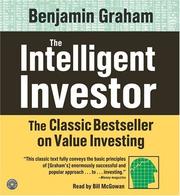
The canonical text on value investing and investor psychology — every serious advisor must have read it. Placed here after market-efficiency basics so the reader can appreciate both sides of the active-vs-passive debate.

Explains the cognitive biases and emotional shortcuts that cause clients (and advisors) to make poor financial decisions. Essential reading before studying client relationships, as it reframes the advisor's role as a behavioral coach.
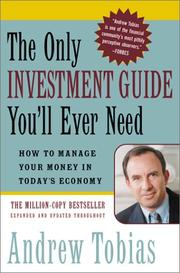
Bridges pure investing theory and practical financial planning — taxes, insurance, and real-world trade-offs — giving advisors a holistic view of a client's financial life beyond just a portfolio.
The Advisory Relationship: Clients, Ethics & Communication
IntermediateMaster the human side of financial advising — how to build trust, communicate complex ideas, manage difficult conversations, and uphold fiduciary and ethical standards.
▸ Study plan for this stage
Pace: 6–7 weeks, ~25–30 pages/day. Week 1–2: "The Wealthy Barber" (~200 pages); Week 3–4: "The Trusted Advisor" (~250 pages); Week 5–7: Review, reflection, and integration exercises.
- The advisor's role as educator and simplifier of financial concepts for diverse client audiences
- Building trust through transparency, reliability, and genuine client-centered advice (the trust equation)
- Fiduciary responsibility and ethical decision-making when client interests conflict with advisor incentives
- Active listening and diagnostic questioning to uncover true client needs and concerns
- Clear communication strategies for explaining complex financial ideas in accessible language
- Managing emotional and behavioral barriers clients face around money decisions
- The relationship lifecycle: establishing credibility, deepening engagement, and maintaining long-term partnerships
- What are the core principles Chilton uses in 'The Wealthy Barber' to make financial advice accessible to ordinary people, and how do these relate to the trust-building framework in 'The Trusted Advisor'?
- According to 'The Trusted Advisor,' what are the four components of the trust equation, and how does each one apply to the advisor-client relationship?
- How does Maister distinguish between being a trusted advisor versus a technical expert, and why does this distinction matter for long-term client relationships?
- What communication techniques does Chilton model in 'The Wealthy Barber' for discussing sensitive financial topics, and how do these align with Maister's emphasis on listening and empathy?
- How should a financial advisor handle a situation where their recommended action conflicts with what the client wants to do, based on the ethical frameworks presented in both books?
- What role do client emotions and behavioral biases play in financial decision-making according to these texts, and how should an advisor address them?
- Rewrite one complex financial concept from 'The Wealthy Barber' (e.g., compound interest, asset allocation) as you would explain it to a friend with no financial background; record yourself and listen for clarity.
- Conduct a mock client discovery interview using Maister's diagnostic questioning framework; record it and analyze how often you asked open-ended questions versus closed questions.
- Identify three moments in 'The Trusted Advisor' where the advisor chose relationship-building over short-term gain; write a case study explaining why each decision strengthened trust.
- Role-play a difficult conversation where a client wants to make a financially risky decision; practice using Chilton's accessible language and Maister's listening techniques to explore their concerns.
- Create a personal 'trust audit' for yourself as an advisor: rate yourself on each component of Maister's trust equation (credibility, reliability, intimacy, self-orientation) and identify one concrete action to improve each.
- Develop a client communication plan for a complex topic (e.g., market volatility, fee structures) using Chilton's simplification approach; test it with a peer or mentor for comprehension.
Next up: This stage establishes the relational and ethical foundation for advising, preparing you to move into the next stage where you'll apply these principles to specific financial planning methodologies, product knowledge, and portfolio construction.
A story-driven guide that models how advisors explain financial concepts to real people in plain language. Reading it trains the advisor's communication instincts and reveals how clients actually think and talk about money.
The definitive professional guide to building deep client trust across any advisory field. Placed here to translate investing knowledge into relationship skills — the core differentiator for successful financial advisors.
Professional Mastery: CFP Exam & Career Launch
ExpertAcquire the technical, regulatory, and exam-ready knowledge required to pass the CFP exam, understand licensing requirements, and launch a professional advisory practice.
▸ Study plan for this stage
Pace: 8–10 weeks, ~40–50 pages/day, with 2–3 dedicated review days per week for problem sets and case studies
- Comprehensive financial planning framework: integrating goals, risk assessment, and holistic client analysis across all planning domains
- Cash flow and liquidity planning: budgeting, emergency funds, and debt management as foundational planning elements
- Investment planning principles: asset allocation, diversification, risk tolerance, and performance measurement aligned with client objectives
- Tax planning strategies: tax-efficient investing, retirement account optimization, and coordination across planning domains
- Retirement planning: accumulation strategies, distribution planning, Social Security optimization, and longevity risk management
- Risk management and insurance: life, disability, liability, and property insurance as integrated components of comprehensive plans
- Estate planning fundamentals: wills, trusts, beneficiary designations, and tax-efficient wealth transfer strategies
- Professional practice standards: fiduciary duty, client communication, compliance, and ethical decision-making in advisory relationships
- How do you construct a comprehensive financial plan that integrates cash flow, investments, tax, retirement, insurance, and estate planning into a cohesive strategy?
- What are the key steps in assessing a client's financial situation, and how do you identify and prioritize planning goals?
- How do tax-efficient strategies differ across investment accounts, retirement vehicles, and life stages, and how do you coordinate them?
- What are the critical elements of retirement income planning, including Social Security, pension optimization, and withdrawal sequencing?
- How do you determine appropriate insurance coverage (life, disability, liability) based on client needs and integrate it into overall risk management?
- What are the legal and tax implications of different estate planning tools (wills, trusts, gifting, beneficiary designations), and when is each appropriate?
- Build a complete financial plan for a realistic client scenario (e.g., married couple, age 35–45, with children, mortgage, and investment portfolio), addressing all seven planning domains
- Conduct a cash flow analysis: create a detailed budget, identify surplus/deficit, and develop a debt paydown and emergency fund strategy
- Perform an asset allocation exercise: given a client's risk tolerance, time horizon, and goals, design and justify a diversified portfolio allocation
- Analyze tax optimization opportunities: compare tax-deferred vs. taxable accounts, calculate tax-loss harvesting benefits, and model Roth conversion scenarios
- Develop a retirement income plan: project retirement needs, model Social Security claiming strategies, and design a sustainable withdrawal plan
- Design an insurance plan: calculate life and disability insurance needs using multiple methods (human capital, income replacement, needs analysis) and recommend appropriate coverage
Next up: This stage establishes the comprehensive planning methodology and technical knowledge required for the CFP exam; the next stage will deepen regulatory expertise, exam-specific problem-solving, and practice management implementation to finalize certification and launch a professional advisory practice.
A comprehensive, textbook-level treatment of all CFP topic domains — retirement, tax, estate, insurance, and investment planning — written by a practicing CFP. This is the technical backbone for exam preparation and real client work.
Discussion
Keep reading
Paths that share books, cover the same subject, or open a related topic.