Start investing for retirement
This curriculum builds from core money mindset and saving habits, through index-fund investing mechanics, into account strategy and a concrete retirement plan. Each stage assumes the vocabulary and intuition of the previous one, so reading in order prevents overwhelm and fills gaps before they become obstacles.
Money Foundations
BeginnerUnderstand personal finance basics — budgeting, saving, and why investing early matters — so that investing concepts have a concrete context.
▸ Study plan for this stage
Pace: 6–8 weeks total: Weeks 1–3 cover "The Total Money Makeover" (~30–40 pages/day, including time to reflect on each of Ramsey's 7 Baby Steps); Weeks 4–6 cover "I Will Teach You to Be Rich" (~25–35 pages/day, with pauses to complete Sethi's action-item checklists); Week 7–8 is a consolidation week — no
- Debt elimination as a prerequisite to wealth-building: Ramsey's 'debt snowball' method prioritizes paying off smallest balances first to build psychological momentum before tackling investing.
- The 7 Baby Steps framework (Ramsey): a sequential, milestone-based roadmap from a $1,000 starter emergency fund → debt payoff → 3–6 month emergency fund → 15% retirement investing → college funding → mortgage payoff → wealth-building and giving.
- The 'latte factor' fallacy vs. big wins: Sethi pushes back on micro-frugality and instead emphasizes automating big financial systems (accounts, transfers, contributions) so good behavior happens without willpower.
- Conscious spending plan (Sethi): allocating income into four buckets — Fixed Costs (~50–60%), Investments (~10%), Savings goals (~5–10%), and Guilt-free Spending (~20–35%) — as a flexible alternative to rigid budgeting.
- Automation as the cornerstone of personal finance: Sethi's 'set it and forget it' system links checking → savings → investment accounts on a scheduled basis, removing human error and procrastination.
- The power of starting early — compound interest in concrete terms: both authors illustrate how even modest contributions in your 20s dwarf larger contributions started in your 40s, making time-in-market the single most powerful retirement variable.
- Employer 401(k) matching as 'free money': Sethi specifically frames capturing the full employer match as the very first investing action a beginner must take, before any other financial move.
- Behavioral and psychological barriers to financial success: Ramsey addresses denial, blame, and 'keeping up with the Joneses'; Sethi addresses paralysis-by-analysis and social scripts around money — both frame mindset as the root cause of financial failure.
- After reading Ramsey, can you list all 7 Baby Steps in order and explain the reasoning behind their sequence — specifically why investing (Step 4) comes after debt payoff rather than alongside it?
- How does Sethi's 'conscious spending plan' differ from a traditional line-item budget, and which of his four spending buckets directly feeds retirement investing?
- Both authors agree that starting early matters, but they disagree on debt vs. investing priority. What is each author's core argument, and which approach makes more sense for your current financial situation?
- Using Sethi's automation ladder, what is the correct order in which to link and fund your financial accounts each month — and where does a Roth IRA or 401(k) contribution fall in that sequence?
- What does compound interest actually mean in practice? If you invested $300/month starting at age 25 vs. age 35 (assuming 7% average annual return), roughly how much more would the earlier investor accumulate by age 65?
- What psychological or behavioral obstacle does each author identify as the #1 reason people fail financially, and what specific system or mindset shift do they each prescribe as the solution?
- Complete a 'Baby Step Audit': Write down every debt you currently hold (student loans, credit cards, car payments, etc.), list them smallest-to-largest balance, and calculate how long Ramsey's debt snowball would take you to clear them before you could invest at full capacity.
- Build your own Conscious Spending Plan using Sethi's four-bucket framework: pull up last month's bank and credit card statements, categorize every transaction, and check whether your percentages align with his recommended ranges. Identify one category to rebalance.
- Set up (or audit) your financial automation: following Sethi's automation ladder, map out — on paper or a spreadsheet — exactly how money flows from your paycheck to each account each month. If any link is missing or manual, set it up this week.
- Run a compound interest simulation: use a free online compound interest calculator (e.g., investor.gov) to model three scenarios — investing $200/month starting at 25, 30, and 35 — all at a 7% return until age 65. Write a one-paragraph reflection on what the numbers mean for your own timeline.
- Check your 401(k) match: log into your employer benefits portal and confirm (a) whether your employer offers a match, (b) what the match formula is, and (c) whether you are currently contributing enough to capture 100% of it. If not, increase your contribution rate this week.
- Write a one-page 'Money Autobiography': reflecting on both Ramsey's and Sethi's discussions of money psychology, identify two or three beliefs or habits about money you inherited from your upbringing, and note how each one has helped or hurt your financial decisions so far.
Next up: By internalizing budgeting systems, debt sequencing, and the mechanics of early investing from Ramsey and Sethi, the reader now has a stable financial foundation and a clear 'why' — making them ready to explore the specific vehicles, strategies, and market principles that turn saved dollars into a retirement portfolio in the next stage.

Establishes the non-negotiable habits (eliminating debt, building an emergency fund) that must come before investing. Gives beginners a clear, motivating starting line.
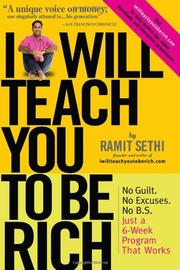
Bridges basic saving habits to automated investing and account setup in plain language. Introduces 401(k)s, IRAs, and index funds at a friendly pace, building the vocabulary needed for later stages.
The Index-Fund Philosophy
BeginnerDeeply understand why low-cost, passive index investing beats most active strategies, and feel confident in the core philosophy before touching mechanics.
▸ Study plan for this stage
Pace: 5–6 weeks total: Weeks 1–2 for "The Little Book of Common Sense Investing" (~20–25 pages/day, ~30 min/session); Weeks 3–5 for "A Random Walk Down Wall Street" (~25–30 pages/day, ~40 min/session); Week 6 for review, reflection, and exercises.
- The tyranny of costs: how expense ratios, turnover costs, and fees compound over decades to devastate net returns, as Bogle quantifies throughout 'The Little Book'
- The simple arithmetic of investing: the market must return what it returns, and after costs, the average active investor must underperform the index — Bogle's core 'cost matters' hypothesis
- Reversion to the mean in fund performance: past outperforming funds reliably fail to sustain their edge, making manager selection a losing game (central to both books)
- The Efficient Market Hypothesis (EMH) and its three forms (weak, semi-strong, strong) as laid out by Malkiel in 'A Random Walk' — and what each implies about the futility of stock-picking and market timing
- Random Walk theory: stock price movements are largely unpredictable, meaning technical analysis ('chartism') and most fundamental analysis cannot consistently generate alpha
- The index fund as the logical conclusion: owning the whole market at minimal cost captures the full return of capitalism without the drag of active management, per Bogle's founding philosophy
- Behavioral traps that lead investors to underperform their own funds: performance chasing, panic selling, and overconfidence, discussed by Malkiel in the investor behavior chapters
- Long-term compounding as the investor's greatest ally — and how costs and behavioral mistakes are the primary forces that erode it
- According to Bogle in 'The Little Book of Common Sense Investing,' why is it a mathematical certainty that the average actively managed fund must underperform the total market index over time?
- What does Malkiel mean by a 'random walk,' and what does that concept imply about the value of reading stock charts or following analyst price targets?
- How does Malkiel define the three forms of the Efficient Market Hypothesis, and which form is most relevant to the debate between active and passive investing?
- Bogle repeatedly emphasizes that 'you get what you don't pay for' — what specific costs does he identify, and how does each one compound against the investor over a 30-year horizon?
- Both Bogle and Malkiel address the fact that some fund managers do beat the market. Why do they argue this does not undermine the case for indexing?
- What behavioral biases does Malkiel warn about in 'A Random Walk,' and how does a simple index-fund strategy help an investor sidestep them?
- Cost drill: Use a free compound-interest calculator (e.g., investor.gov) to model a $10,000 investment over 30 years at 7% gross return. Run it three times — with 0.05% (index fund), 0.75% (low-cost active), and 1.5% (typical active fund) expense ratios. Record the dollar difference. This makes Bogle's 'cost matters' argument visceral and personal.
- Fund autopsy: Look up a well-known actively managed fund (e.g., a large-cap blend fund on Morningstar). Find its 1-, 5-, 10-, and 15-year returns and compare them to its benchmark index. Note whether the pattern matches Bogle's reversion-to-the-mean argument from 'The Little Book.'
- EMH self-test: Pick any stock that was in the news last week for a major announcement (earnings beat, scandal, etc.). Chart its price movement the day before, the day of, and the week after the announcement. Reflect on what Malkiel's semi-strong EMH would predict — and whether the data matched.
- Annotated summary: After finishing each book, write a one-page 'core argument' summary in your own words — no jargon. Then write one genuine objection you have to the argument and find the passage in the book where the author addresses (or fails to address) it.
- Index fund inventory: Browse a brokerage platform (Fidelity, Vanguard, or Schwab) and locate three total-market or S&P 500 index funds. Record their expense ratios, minimum investments, and whether they are ETF or mutual fund structures. This previews the mechanics stage without jumping ahead.
- Debate prep: Write a 10-sentence 'devil's advocate' case for active investing, then systematically rebut each sentence using specific arguments and data points from Bogle and Malkiel. This forces deep engagement with both sides of the argument.
Next up: Having internalized *why* passive indexing wins on philosophical and mathematical grounds, the reader is now primed to move from conviction to construction — learning the practical mechanics of *how* to actually build and maintain a low-cost index portfolio (asset allocation, account types, rebalancing, and fund selection).
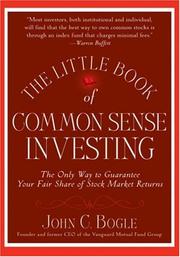
The definitive case for index funds, written by their creator. After the previous stage's vocabulary, readers can now absorb Bogle's data-driven argument that costs and simplicity are everything.
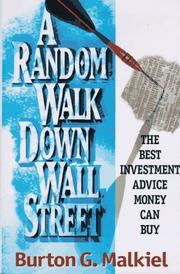
Provides the academic and historical evidence behind market efficiency, reinforcing Bogle's philosophy with broader context. Solidifies conviction so the reader won't be tempted by stock-picking later.
Practical Investing & Accounts
IntermediateKnow exactly which accounts to use (401k, IRA, Roth), which funds to pick, and how to build and maintain a simple, diversified portfolio.
▸ Study plan for this stage
Pace: 6–8 weeks total: Weeks 1–4 for "The Bogleheads' Guide to Investing" (~25–30 pages/day, reading in chapter clusters by topic); Weeks 5–8 for "The Simple Path to Wealth" (~20–25 pages/day, with slower re-reading of the VTSAX/bond chapters). Allow 1–2 buffer days per week for note review and exercise c
- Tax-advantaged account hierarchy: always maximize 401(k) employer match first, then Roth/Traditional IRA, then taxable accounts — a core Bogleheads principle
- Traditional vs. Roth trade-off: pre-tax (Traditional/401k) vs. post-tax (Roth) contributions and how to choose based on current vs. expected future tax bracket
- Index fund investing: why low-cost, broad-market index funds (e.g., VTSAX in Collins' framework) beat actively managed funds over the long run due to lower expense ratios and market efficiency
- The three-fund portfolio: U.S. total market + international + bond index funds as the Bogleheads' model for simple, diversified, low-cost investing
- Asset allocation by life stage: Collins' 'wealth accumulation' (high stock %) vs. 'wealth preservation' (adding bonds) phases, and the Bogleheads' age-based bond allocation heuristics
- Expense ratios and fund costs: how even a 1% difference in annual fees compounds into tens of thousands of dollars of lost wealth over decades
- Rebalancing: what it is, why it matters, and how to do it simply (annual or threshold-based) to maintain your target allocation
- Avoiding behavioral mistakes: the Bogleheads' and Collins' shared warnings against market timing, panic selling, and chasing performance
- After reading both books, can you explain the order in which you should fill tax-advantaged accounts (401k match → IRA → remaining 401k → taxable) and the reasoning behind that sequence?
- What is the core argument Collins makes for owning a single fund like VTSAX, and how does it align with or differ from the Bogleheads' three-fund portfolio approach?
- How do you decide between a Traditional IRA/401(k) and a Roth IRA/401(k), and what factors — income, current tax rate, expected retirement tax rate — drive that decision according to the Bogleheads' guide?
- What does 'staying the course' mean in practice, and what specific behavioral traps do both Larimore and Collins warn against when markets drop sharply?
- How do you calculate whether a fund's expense ratio is acceptable, and what expense ratio thresholds do the Bogleheads recommend for index funds?
- What is rebalancing, when should you do it, and what are the two main methods (calendar-based vs. threshold-based) described in The Bogleheads' Guide?
- Account audit: List every retirement account you currently have (or could open). Map each one to the Bogleheads' priority ladder and identify any gaps — e.g., are you leaving employer match on the table? Write a one-page action plan.
- Fund cost calculator: Pick 2–3 funds currently in your 401(k) or a hypothetical portfolio. Use a compound-interest calculator to compare their ending balances over 30 years at their actual expense ratios vs. a 0.03–0.05% index fund equivalent. Record the dollar difference.
- Build a model three-fund portfolio: Using Vanguard, Fidelity, or Schwab's fund screener, identify the specific ticker symbols for a U.S. total market, international, and bond index fund. Assign a target allocation appropriate for your age/risk tolerance, citing the Bogleheads' guidelines.
- Roth vs. Traditional decision worksheet: Using your current marginal tax rate and an estimated retirement tax rate, work through the Bogleheads' framework to decide which account type makes more sense for you right now. Write a 1-paragraph justification.
- Rebalancing simulation: Take your model three-fund portfolio and simulate a 20% stock market drop. Recalculate your new allocation percentages, then write out the exact trades you would make to rebalance back to your target — practicing the discipline Collins calls 'staying the course'.
- Reading journal — compare and contrast: After finishing both books, write a one-page synthesis noting where Collins (simplify to one fund, ignore international) and the Bogleheads (three funds, include international) disagree, and record your own reasoned conclusion about which approach you will follow and why.
Next up: Mastering account types, fund selection, and portfolio construction here gives you the stable foundation needed to tackle more advanced topics — such as tax-loss harvesting, withdrawal sequencing in retirement, and optimizing Social Security timing — that build directly on knowing *where* your money is and *what* it's invested in.
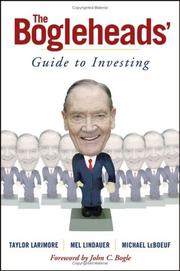
Translates the index-fund philosophy into step-by-step account and fund selection guidance. Covers tax-advantaged accounts and asset allocation in the practical detail the prior books intentionally skipped.

Distills everything into a minimal, actionable portfolio strategy (essentially one or two funds). Reads as the natural capstone to the Bogleheads guide, showing how simple the execution can actually be.
Behavioral Mastery
IntermediateUnderstand the psychological traps that derail investors and develop the discipline to stay the course through market volatility for decades.
▸ Study plan for this stage
Pace: 6–8 weeks total: Weeks 1–3 cover "The Psychology of Money" (~20–25 pages/day, reading in short daily sessions to allow reflection); Weeks 4–7 cover "Your Money and Your Brain" (~15–20 pages/day, slower pace due to denser neuroscience content); Week 8 is a dedicated review and exercise week with no n
- Wealth vs. Richness — Housel's distinction between earning a high income and actually building lasting wealth through saving and humility
- The Role of Luck and Risk — recognizing that outcomes in investing are partly random, which guards against both overconfidence after wins and despair after losses
- Long Tails and Compounding — understanding that a small number of decisions and years drive the vast majority of long-term returns, so staying invested matters more than being clever
- Reasonable vs. Rational — Housel's argument that a strategy you can stick with emotionally beats a theoretically optimal one you'll abandon in a crisis
- The Seduction of Pessimism — why bad news feels more credible and urgent than good news, causing investors to over-react to downturns
- Neuroeconomics of Loss Aversion — Zweig's brain-science explanation of why losses feel roughly twice as painful as equivalent gains feel good, and how this drives panic selling
- Prediction Addiction and the Illusion of Control — Zweig's research on how the brain craves certainty and manufactures false confidence in forecasts and market timing
- Behavioral Guardrails — practical techniques from both books (automatic investing, written investment policy statements, pre-commitment devices) to override emotional impulses
- According to Housel, why can two investors with identical portfolios have completely different financial outcomes, and what does that imply about judging your own investing decisions?
- How does Zweig's neuroscience research explain why investors reliably sell near market bottoms and buy near market tops — what is happening in the brain at each moment?
- Housel argues you should save money even when you have no specific goal for it. What is his reasoning, and do you find it convincing for your own situation?
- What is 'reflexive investing' as described by Zweig, and what specific brain systems does he identify as hijacking deliberate financial decision-making under stress?
- Both books address the danger of comparing your financial life to others'. How do Housel and Zweig each approach this problem, and where do their perspectives complement each other?
- After reading both books, what is the single biggest psychological vulnerability you personally identified in yourself as an investor, and which specific technique from either book will you use to address it?
- Wealth Audit Journal: After finishing 'The Psychology of Money,' write a one-page personal 'financial story' identifying at least two moments where luck or risk (not skill) shaped your financial life — this builds the humility Housel argues is essential.
- Volatility Stress Test: Using a free portfolio simulator (e.g., Portfolio Visualizer), run your current or hypothetical retirement portfolio through a historical crash scenario (2008–2009 or 2000–2002). Write down, honestly, at what percentage drawdown you believe you would have sold — then compare that to Zweig's loss-aversion research.
- Write Your Investment Policy Statement (IPS): Draft a one-page document stating your asset allocation, the conditions under which you will and will NOT rebalance, and a pre-written message to your future panicking self explaining why you will not sell during a crash. Seal it and only open it the next time markets drop 15%+.
- Bias Self-Inventory: After finishing 'Your Money and Your Brain,' work through Zweig's bias checklist (overconfidence, recency bias, herding, anchoring) and rate yourself 1–5 on each. For any bias rated 3 or higher, write one concrete system-level change (not a willpower-based change) to counteract it.
- News Blackout Experiment: For one full week during your reading of Zweig's book, avoid all financial news, market updates, and portfolio logins. At the end of the week, journal how it felt and whether your financial situation actually changed — this directly tests Zweig's point about the illusion of informational control.
- Compounding Visualization: Build a simple spreadsheet showing a $500/month investment growing at 7% annually over 10, 20, 30, and 40 years. Annotate which decade produces the most dollar growth. Use this as a visual anchor for Housel's 'long tail' and 'just keep going' thesis whenever you feel the urge to time the market.
Next up: Having internalized why investors self-sabotage and built personal guardrails against emotional decision-making, the reader is now psychologically equipped to engage with the mechanics of portfolio construction — learning not just what to build, but trusting they have the discipline to hold it through inevitable turbulence.
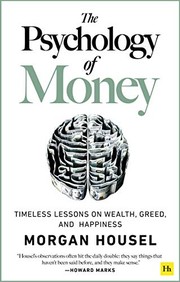
Explains why behavior — not intelligence or spreadsheets — determines long-term investing success. Best read after the mechanics are understood, so the reader can map the lessons directly to their own plan.
Goes deeper into the neuroscience of financial decision-making, arming the reader with specific mental frameworks to resist panic-selling and market-timing — the two biggest threats to a retirement plan.
Retirement Planning & the Finish Line
ExpertBuild a complete, personalized retirement plan covering savings rate, withdrawal strategy, Social Security timing, and how to know when you have 'enough.'
▸ Study plan for this stage
Pace: 6–8 weeks total. Week 1–4: "The Bogleheads' Guide to Retirement Planning" (~25–30 pages/day, reading chapters thematically — tax-advantaged accounts, asset allocation, Social Security, and withdrawal strategies in sequence). Week 5–8: "How Much Money Do I Need to Retire?" (~15–20 pages/day, slower p
- The Boglehead philosophy of low-cost, diversified, tax-efficient investing as the foundation of a retirement plan — and how it applies specifically to the accumulation-to-distribution transition
- Savings rate as the single most powerful lever in retirement planning: how Larimore's contributors frame the relationship between income, spending, and time to retirement
- Social Security optimization: timing strategies (age 62 vs. 66/67 vs. 70), spousal benefits, and how delaying can function as longevity insurance
- Withdrawal sequencing and the 4% rule: which accounts to draw from first (taxable, tax-deferred, Roth), Roth conversion ladders, and Required Minimum Distributions (RMDs)
- Tresidder's critique of the single-number retirement model and his multi-model approach: the Traditional (savings rate/nest egg), the Cash Flow (income streams), and the Hybrid models
- The concept of 'enough' — defining a personalized retirement number using spending-based reverse engineering rather than arbitrary income-replacement percentages
- Sequence-of-returns risk: why the order of market gains and losses matters far more in retirement than during accumulation, and strategies to mitigate it (cash buffer, dynamic withdrawal, bucket strategy)
- Healthcare and longevity planning: bridging the gap before Medicare eligibility, long-term care considerations, and stress-testing a plan against a 30+ year retirement horizon
- After reading Larimore, can you explain the Boglehead withdrawal hierarchy — which account types to spend down first and why — and how tax-bracket management shapes that sequence?
- What are the three retirement models Tresidder presents in 'How Much Money Do I Need to Retire?', and in what personal circumstances would each model be most appropriate to rely on?
- Using Tresidder's spending-based framework, what is YOUR personal retirement number, and what assumptions (inflation rate, withdrawal rate, retirement age, life expectancy) did you use to derive it?
- What does Larimore's treatment of Social Security timing tell you about the break-even age for delaying to 70, and how does that calculation change if you are married and coordinating spousal benefits?
- How does sequence-of-returns risk threaten a retirement plan that looks mathematically sound on paper, and what specific tactical responses do both books suggest to guard against a bad early-retirement market downturn?
- What is the difference between a fixed withdrawal strategy and a dynamic (or flexible) withdrawal strategy, and why does Tresidder argue that flexibility is the most underrated retirement planning tool?
- Build your personal retirement balance sheet: list every current account (401k, IRA, Roth, taxable brokerage, pension, expected Social Security benefit) with current balances and projected values at your target retirement age using a 6% and 4% real return assumption — two scenarios side by side.
- Run the Tresidder 'reverse-engineering' exercise: start with your detailed projected monthly retirement budget (not a percentage of income — actual line items), multiply by 12 for annual spend, then calculate the nest egg required under a 3%, 3.5%, and 4% withdrawal rate. Note how sensitive your 'number' is to that single variable.
- Use the SSA.gov retirement estimator to model three Social Security claiming scenarios for yourself (and a spouse/partner if applicable): claim at 62, at your full retirement age, and at 70. Calculate the cumulative lifetime benefit break-even point for each and write a one-paragraph decision rationale.
- Draft a withdrawal sequence plan for your first 10 years of retirement: map out which accounts you will draw from each year, flag years where Roth conversions make sense to fill lower tax brackets, and identify when RMDs will begin to force distributions from tax-deferred accounts.
- Stress-test your plan with a 'bad sequence' scenario: assume the market drops 30% in years 1 and 2 of retirement. Using your planned withdrawal amount, recalculate your portfolio balance at year 5 and year 10. Then apply one mitigation strategy from either book (cash buffer, spending cut, part-time income) and re-run the numbers.
- Write a one-page 'Retirement Readiness Statement' — a personal document that defines your target retirement date, your 'enough' number with its underlying assumptions, your planned withdrawal strategy, your Social Security timing decision, and the two or three biggest risks to your plan with a named mitigation for each.
Next up: By completing this stage, the reader has moved from theory to a concrete, personalized retirement plan — making them ready for any subsequent stage focused on advanced portfolio management, tax optimization, or estate planning, where the plan built here becomes the living document being refined and executed.

Applies the full Boglehead framework specifically to retirement — contribution strategies, Roth conversions, required minimum distributions, and decumulation. A direct sequel to the earlier Bogleheads guide.

Challenges the oversimplified '4% rule' and teaches readers to model their own retirement number with real-world variables. The ideal final read — it ties every prior concept into a concrete, personalized plan.
Discussion
Keep reading
Paths that share books, cover the same subject, or open a related topic.