Learn to act: acting and improv for beginners
This curriculum moves from the foundational principles of truthful acting through major technique systems, into the spontaneity of improv, and finally into the professional craft of auditioning and self-direction. Each stage builds the vocabulary and inner life needed for the next, so that by the end the learner has both a deep theoretical grounding and practical, stage-ready skills.
Foundations: Truth on Stage
BeginnerUnderstand what acting fundamentally is — presence, truth, and human behavior — and absorb the vocabulary every serious actor needs before studying any specific technique.
▸ Study plan for this stage
Pace: 10–12 weeks total: ~5 weeks on "An Actor Prepares" (~20–25 pages/day, reading slowly and journaling as you go), then ~5–6 weeks on "Respect for Acting" (~15–20 pages/day, pausing after each chapter to attempt Hagen's exercises in real space).
- Stanislavsky's 'Magic If' — the actor's imaginative engine for truthful belief in given circumstances
- Emotion Memory (Affective Memory) — accessing genuine feeling through recalled sensory and emotional experience
- The Through-Line of Action & Super-Objective — every moment serves a character's overarching want
- Units and Objectives — breaking a scene into playable beats, each with a specific, active 'I want to…' goal
- Communion and Adaptation — truly listening and responding to your scene partner in the present moment
- Uta Hagen's Six Steps — a practical pre-scene analysis framework (Who am I? What are the circumstances? What are my relationships? What do I want? What's in my way? What do I do?)
- Substitution — replacing the fictional person, place, or object with a real one from the actor's own life to generate authentic response
- Physical Action as the Gateway to Emotion — Hagen's insistence that doing specific, concrete tasks unlocks feeling more reliably than 'indicating'
- In your own words, what does Stanislavsky mean by 'truth on stage,' and why does he argue that theatrical truth differs from everyday truth?
- How does the 'Magic If' differ from simply pretending, and why is that distinction important for an actor's psychology?
- What is the difference between a super-objective and a scene objective, and how do they relate to each other in performance?
- Hagen argues against 'indicating' — what is indicating, what causes it, and what does she prescribe instead?
- How does Hagen's technique of Substitution build on — or depart from — Stanislavsky's Emotion Memory?
- Why do both Stanislavsky and Hagen place such emphasis on the actor's relationship to objects and physical tasks in the environment?
- **Magic If Journal (An Actor Prepares):** Choose three mundane daily situations (making coffee, waiting for a bus, writing an email). Apply the Magic If to each — 'What if my life depended on this coffee being perfect?' Write a full page per situation describing how your inner life and physical behavior shift.
- **Beat & Objective Mapping:** Select any two-page scene from a play you admire. Divide it into units/beats, label each beat's objective as an active 'I want to…' sentence, and identify the scene's super-objective. Compare your map with a classmate's or revisit it a week later.
- **Emotion Memory Excavation (An Actor Prepares):** Recall a past event that produced a strong but manageable emotion. Reconstruct it sense by sense (what did you smell, hear, feel physically?) in writing. Then stand up and let the physical sensations guide you through a simple improvised monologue — do NOT plan the words.
- **Hagen's Six Steps in Full (Respect for Acting):** Take the same scene from Exercise 2 and write out all six of Hagen's analytical questions in complete, specific sentences for your character. Notice where your answers are vague — vagueness reveals where your preparation is thin.
- **Substitution Practice (Respect for Acting):** Perform a short monologue (60–90 seconds). First, use the fictional circumstances only. Second, substitute the imaginary person you're speaking to with a real person from your life. Record both attempts (phone video is fine) and write a half-page reflection on what changed in your body, voice, and impulses.
- **Object Work & Specificity Drill:** Spend 10 minutes performing a real, everyday task (folding laundry, cooking, repairing something) with full concentration — no acting, just doing. Then repeat the task while privately holding one of your scene objectives in mind. Journal: how did the objective change the quality of your physical actions?
Next up: Mastering the vocabulary of truth, objectives, and physical action from Stanislavsky and Hagen gives you the stable foundation to engage with more specialized or divergent techniques — such as Meisner's moment-to-moment repetition, Strasberg's deeper emotional work, or the physical/devised approaches of later stages — without losing your grounding in why those methods exist.
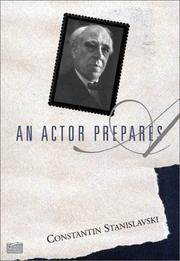
The original source of modern acting theory; introduces given circumstances, imagination, and emotional truth. Reading this first establishes the core language that every subsequent technique responds to or builds upon.

Hagen translates Stanislavski's ideas into clear, practical exercises for the American actor. It bridges pure theory and daily rehearsal work, making it the ideal second read before diving into more specialized methods.
Major Techniques: Deepening the Instrument
BeginnerSurvey the landmark American acting techniques — Meisner, Strasberg, and Adler — understanding where each diverges and what each demands of the actor's body, imagination, and emotional life.
▸ Study plan for this stage
Pace: 8–10 weeks total: ~2.5–3 weeks per book at roughly 20–25 pages/day. Suggested breakdown — Weeks 1–3: "Sanford Meisner on Acting" (read slowly; it is structured as transcribed lessons, so pause after each exercise unit); Weeks 4–6: "The Technique of Acting" (Adler's chapters are dense with imaginatio
- Meisner's 'living truthfully under imaginary circumstances' — the foundational definition of acting that underpins his entire repetition-based training
- The Repetition Exercise as a tool for developing moment-to-moment listening, spontaneity, and genuine human contact between actors
- Adler's core argument that imagination — not personal emotional memory — is the actor's primary creative source, and that 'the text gives you the words, the circumstances give you the life'
- Adler's concept of Actions and Given Circumstances: how analyzing what a character does (not feels) unlocks truthful, playable behavior
- Strasberg's Method and Affective Memory (Emotional Recall): the deliberate, sensory-based re-experiencing of past personal events to generate authentic emotion on stage
- Sensory Exercises in Strasberg's work: the use of relaxation, concentration, and the 'private moment' to free the actor's instrument from self-consciousness
- The historical split between Adler and Strasberg — both rooted in Stanislavski but diverging sharply on whether emotion comes from imagination or personal memory
- The actor's 'instrument' as a unified concept across all three teachers: body, voice, imagination, and emotional availability must all be trained simultaneously
- After reading Meisner, can you explain in your own words why he built his entire technique on the Repetition Exercise, and what specific actor habits — such as 'indicating' or 'playing the result' — it is designed to break?
- Adler argues forcefully against using personal emotional memory. What is her alternative, and how does her reading of Stanislavski differ from Strasberg's reading of the same source material?
- How does Strasberg define Affective Memory, and what is the step-by-step sensory process he prescribes for accessing it safely and reliably in performance?
- All three teachers demand 'truthful' acting, yet they mean different things by it. How would each — Meisner, Adler, and Strasberg — answer the question: 'Where does true emotion in acting come from?'
- What does Adler mean by 'action,' and how does identifying a character's action change the way an actor prepares a scene compared to focusing on emotion?
- Strasberg describes the actor's psychological blocks and self-consciousness as the central problem his Method addresses. How do Meisner's and Adler's techniques address the same problem differently?
- Meisner Repetition Drill (solo adaptation): Stand before a mirror and make a simple, honest observation about what you physically notice ('You are tapping your foot'). Respond only to what is genuinely true in the moment. Practice for 5 minutes daily to build the habit of observation over invention.
- Imagination Substitution (Adler): Take a mundane given circumstance from your own day — waiting for a bus — and rewrite it with a heightened imaginary circumstance from a play or story (e.g., waiting for a verdict that will change your life). Write a one-page journal entry in the character's voice, drawing only on the imagined circumstances, not personal memory.
- Action Hunting (Adler): Choose any two-page scene from a play. Go line by line and replace every emotional adjective in your notes ('she is sad') with a transitive verb action ('she tries to make him stay'). Rehearse the scene playing only the actions — notice how emotion arises as a byproduct.
- Sensory Object Exercise (Strasberg): Choose a simple, emotionally neutral object — a coffee cup. Spend 10 minutes with eyes closed reconstructing it through all five senses without touching it. Then open your eyes and compare. Repeat weekly, gradually moving toward objects with mild personal significance, as Strasberg prescribes in 'A Dream of Passion'.
- Comparative Technique Journal: After finishing each book, write a one-page 'manifesto' in that teacher's voice answering: 'What is the actor's single most important job?' After all three books, place the three manifestos side by side and write a synthesis paragraph identifying where they agree and where they are irreconcilable.
- Scene Lab — Three Approaches: Take one short scene (2–3 minutes). Prepare and perform it three times using a different primary lens each time: (1) Meisner — focus entirely on your partner, respond only to what they actually do; (2) Adler — build the given circumstances imaginatively and play clear actions; (3) Strasberg — use a sensory relaxation warm-up and allow personal emotional associations.
Next up: Mastering these three foundational American techniques gives the reader a precise internal vocabulary — action, given circumstance, emotional recall, presence — that makes the physical and ensemble-based approaches of the next stage (such as Viewpoints, Lecoq, or improv-rooted methods) immediately legible as responses to, and expansions of, the psychological tradition just studied.
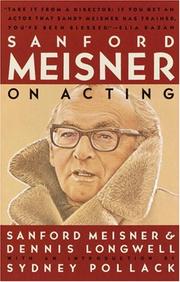
Meisner's technique of 'living truthfully under imaginary circumstances' is captured here in transcript form; reading it after Hagen shows how the Repetition Exercise and moment-to-moment listening extend the Stanislavski lineage.
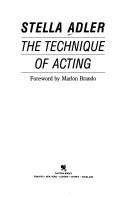
Adler's emphasis on imagination and given circumstances (rather than personal emotional memory) offers a crucial counterpoint to Strasberg and Meisner, rounding out the learner's picture of the major American schools.
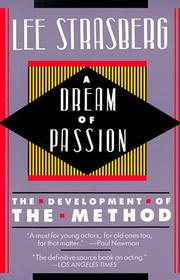
Strasberg explains the Method and the controversial use of affective memory in his own words; placed last in this stage so the learner can evaluate it critically against the alternatives already studied.
Improv: Spontaneity and Scene-Building
IntermediateMaster the core principles of improvisational theater — yes-and, listening, status, and narrative — and understand how improv training sharpens every actor's instincts, even for scripted work.
▸ Study plan for this stage
Pace: 6–7 weeks total: Weeks 1–4 for "Impro" by Keith Johnstone (~20–25 pages/day, reading each chapter slowly and reflectively); Weeks 5–7 for "Truth in Comedy" by Charna Halpern (~15–20 pages/day, pausing frequently to connect concepts back to Johnstone).
- Yes-And: the foundational agreement principle — accepting your partner's offer and building on it, as emphasized in Truth in Comedy as the bedrock of ensemble work
- Status Play (Impro): Johnstone's detailed framework of high- and low-status transactions in everyday life and on stage — how tiny physical and verbal choices signal dominance or submission and drive scene dynamics
- Blocking and Canceling Offers (Impro): Johnstone's concept of how actors instinctively block offers out of fear, and why learning to accept every offer is a creative discipline
- Narrative and Storytelling Structures (Impro): Johnstone's 'narrative routines' and the idea that stories follow organic, inevitable logic — plus Truth in Comedy's Harold structure as a long-form narrative built from a single audience suggestion
- Listening and Presence: Both books converge on the idea that real listening — not planning your next line — is the actor's most powerful tool
- The Group Mind (Truth in Comedy): Halpern's concept that an ensemble thinks and creates as one organism, subordinating individual ego to collective story
- Spontaneity vs. Originality (Impro): Johnstone's counter-intuitive argument that the first idea is usually the best, and that 'trying to be original' is the enemy of genuine spontaneity
- Character and Mask (Impro): Johnstone's exploration of how masks and character work bypass the ego and unlock unexpected behavior — directly applicable to scripted character-building
- According to Johnstone in Impro, why does blocking an offer feel 'safe' to an actor, and what psychological mechanism does he argue is actually at work?
- How does Johnstone define status, and can you give an example from Impro of how a single word or gesture shifts status between two people in a scene?
- What is the 'Harold' as described in Truth in Comedy, and how does its structure — opening, game, group scenes, callbacks — create long-form narrative coherence from a single suggestion?
- Both Johnstone and Halpern argue that ego is the primary obstacle to good improv. How does each author propose overcoming it, and where do their approaches differ?
- How does the 'yes-and' principle in Truth in Comedy relate to Johnstone's concept of accepting offers in Impro — are they the same idea, or does each book add a distinct dimension?
- In what specific ways do Johnstone's status exercises translate to scripted acting — how might a stage actor use status awareness when analyzing a written scene?
- Status Walk (from Impro): Walk through a space and silently assign yourself a status number from 1–10. Change it every 30 seconds without announcing it. Debrief: what physical changes did you make automatically? Then do it with a partner and observe how your statuses interact.
- Offer Acceptance Drill (from Impro): In pairs, one person makes a physical or verbal offer; the partner must accept it fully and advance it before making a new offer. Run for 5 minutes with a rule: no questions allowed. Reflect on how often the impulse to question or block arises.
- Yes-And Circle (from Truth in Comedy): In a group of 4–6, build a story one sentence at a time, each person beginning their sentence with 'Yes, and…'. Record the story. Analyze afterward: where did the story gain momentum, and where did someone subtly block or hedge?
- Narrative Inevitability Exercise (from Impro): Write or improvise the opening two lines of a scene, then stop. Write down three 'obvious' continuations you immediately dismissed. Perform the most obvious one. Johnstone's point: the 'obvious' choice is often the most dramatically satisfying.
- Mini-Harold (from Truth in Comedy): With a group, take one-word audience suggestion, do a free-association opening, then play three unrelated two-person scenes. Find the thematic connection between them and build a group scene that weaves all three together. Debrief on the 'group mind' — did the ensemble discover a shared theme organically?
- Scripted Scene with Status Annotations: Take any two-person scripted scene from a play you know. Re-read it and mark every line with H (high status) or L (low status) for each character. Then perform it twice — once following your annotations, once deliberately inverting every status choice. Discuss how the scene's meaning changes.
Next up: Mastering improv's core principles — spontaneous offer-acceptance, status awareness, and ensemble listening — builds the instinctive, present-moment responsiveness that the next stage will channel into the disciplined craft of scripted scene study and character analysis.
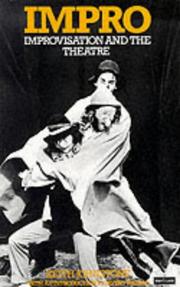
The canonical text on improv; Johnstone's ideas about status, spontaneity, and blocking are foundational to every improv tradition. Reading it first gives the learner a philosophical framework for all improv work.
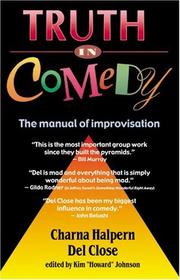
Co-written with Del Close, this book codifies the Harold and the 'yes-and' philosophy of the Chicago/Second City tradition, showing how long-form improv structures scenes and builds ensemble — a practical complement to Johnstone's theory.
The Working Actor: Auditions and the Business
IntermediateTranslate craft into the real professional context — learn how to audition effectively for stage and screen, choose material, and sustain a career with intention and resilience.
▸ Study plan for this stage
Pace: 8–10 weeks total: Weeks 1–5 cover "Audition" by Michael Shurtleff (~20–25 pages/day, reading each of the 12 guideposts slowly and reflectively); Weeks 6–10 cover "The Intent to Live" by Larry Moss (~20 pages/day, pausing after each chapter to journal and apply concepts to a chosen monologue or scene
- Shurtleff's 12 Guideposts — the systematic emotional and relational triggers (love, conflict, humor, competition, etc.) used to unlock a scene in the audition room
- Relationship as the engine of every scene: Shurtleff's insistence that every moment must be played TO someone with specific, personal stakes
- The 'as if' substitution — personalizing fictional circumstances with real emotional memories to generate genuine behavior under pressure
- Making bold, specific choices rather than 'safe' or generic ones; the audition as an act of creative assertion, not approval-seeking
- Larry Moss's concept of 'the intent to live' — that characters pursue survival-level desires, not just surface objectives, giving performances existential urgency
- Moss's distinction between the character's 'want' (tactical objective) and 'need' (deep psychological drive), and how layering both creates dimensional acting
- Selecting and preparing audition material: choosing pieces that reveal your unique instrument, fit the room, and demonstrate range without gimmick
- Resilience and the long game — treating rejection as data, maintaining artistic identity outside of outcomes, and building a sustainable professional practice
- What are Shurtleff's 12 Guideposts, and how would you apply at least four of them to a single two-minute monologue you are currently preparing?
- According to Shurtleff, why is 'relationship' the single most important element in an audition scene, and how does that change the way you enter the room?
- How does Larry Moss differentiate between a character's 'want' and their deeper 'need,' and why does collapsing the two flatten a performance?
- What criteria does Moss suggest for choosing audition material that genuinely serves the actor rather than simply showcasing technical skill?
- How do Shurtleff's concept of bold choice-making and Moss's concept of living truthfully under imaginary circumstances complement or tension each other in practice?
- Both authors address the psychological toll of the audition process. What concrete strategies do they each offer for maintaining artistic identity and resilience across a career?
- Guidepost Audit: Take one monologue and write a one-paragraph response to each of Shurtleff's 12 Guideposts as they apply to that piece — do not skip any; the ones that feel irrelevant are usually the most revealing.
- Relationship Letter: Before rehearsing a scene or monologue, write a full-page letter IN CHARACTER to the person you are speaking to, using Shurtleff's relational specificity — include history, grievances, love, and need. Then perform the piece immediately after writing.
- Want vs. Need Breakdown (Moss): For three different characters from your audition repertoire, write two columns — the surface 'want' in each beat, and the underlying survival-level 'need' driving the whole play. Rehearse the scene prioritizing the 'need' and notice what shifts.
- Material Audit: List every piece in your current audition book. Apply Moss's criteria for authentic material selection — does each piece reveal something true about YOU, fit your age and type honestly, and give you something genuinely difficult to solve? Cut or replace anything that fails two or more criteria.
- Cold-Read Simulation: Once a week, pull an unfamiliar monologue or sides, give yourself 10 minutes of prep using only Shurtleff's Guideposts (relationship, conflict, humor, as-if), then perform it on camera. Review the footage asking: 'Was there a real person in the room with me?'
- Rejection Debrief Journal: After every audition or class performance, write a structured entry with three sections — (1) the choices I committed to, (2) what I would change based on craft (not outcome), and (3) one sentence reaffirming my artistic identity independent of the result. Sustain this for the full 10 weeks.
Next up: By grounding craft in the audition room and the realities of a professional career, this stage equips the actor to bring fully-formed, personally-invested choices into any performance context — laying the foundation for deeper exploration of advanced scene study, character transformation, and ensemble work at the next level.
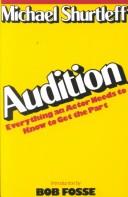
The definitive book on auditioning; Shurtleff's twelve guideposts give actors a concrete, repeatable process for breaking down any scene under pressure. It is best read after technique study so the tools feel immediately applicable.
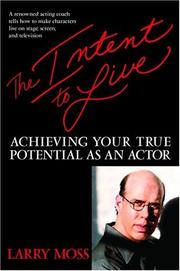
A master acting coach synthesizes Stanislavski, Adler, and Meisner into a unified approach to script analysis and character, bridging the gap between technique class and the audition room or rehearsal hall.
Advanced Integration: The Actor as Artist
ExpertDevelop a personal, mature artistic philosophy — understanding the actor's inner life, the nature of transformation, and how to sustain creative growth across a lifetime in the craft.
▸ Study plan for this stage
Pace: 10–14 weeks total: Weeks 1–3 on "The Empty Space" (~30–40 pages/day, reading actively with a director's eye); Weeks 4–12 on "An Actor's Work" (~25–35 pages/day, journaling responses to each chapter as Tortsov's student); Week 13–14 reserved for synthesis, re-reading key passages from both, and compl
- Brook's four theatrical spaces — Deadly, Holy, Rough, and Immediate — and how each demands a different quality of presence and aliveness from the actor
- The 'Deadly Theatre' as a diagnostic lens: recognizing mechanical, habitual, or uncommitted performance in oneself and resisting it as a lifelong practice
- Stanislavsky's System as an organic whole: the interplay of imagination, attention, units and objectives, emotion memory, and the 'magic if' working together rather than as isolated techniques
- The through-line of action (the 'super-objective'): how every moment of a role must serve a single, deeply personal, overarching desire that gives the performance its spine
- Communion and ensemble: Stanislavsky's insistence that acting is relational — genuine attention to and exchange with a partner is the source of spontaneity and truth
- The actor's inner creative state — the circle of attention, relaxation of muscles, and public solitude — as daily disciplines rather than pre-show rituals
- Transformation vs. self-expression: the tension between losing oneself in a role (Stanislavsky's embodiment ideal) and Brook's demand that the actor remain a living, present human being in the moment
- Sustaining artistic growth: how both Brook and Stanislavsky frame the actor's craft as a lifelong, evolving inquiry rather than a fixed set of skills to be mastered once
- According to Brook, what makes a theatrical space 'Deadly,' and what specific behaviors or institutional habits cause an actor to slip into deadly performance — and how would you recognize those habits in your own work?
- How does Stanislavsky's concept of the 'magic if' differ from simple pretending, and why does he argue it is the gateway to genuine emotion rather than forced feeling?
- Brook writes that the 'Holy' theatre requires the actor to make the invisible visible. How does this idea connect to or challenge Stanislavsky's technique of emotion memory and inner experiencing?
- What is the super-objective, and how does identifying it change the way you approach individual beats, units, and objectives within a scene from 'An Actor's Work'?
- Both Brook and Stanislavsky are deeply concerned with the problem of repetition — how does a performance stay alive night after night? What answers does each author offer, and where do they agree or diverge?
- Having read both books, how would you articulate your own emerging artistic philosophy? What do you take from Brook's spatial/theatrical thinking and from Stanislavsky's psychophysical system to define the kind of actor-artist you intend to become?
- 'Deadly vs. Alive' Audit: Perform or record a monologue you know well, then watch it through Brook's four-spaces framework. Write a one-page diagnosis — which moments are 'Deadly' and why? Rework those moments and record again, comparing the two versions.
- Super-Objective Mapping: Take a full scene from any play and, using Stanislavsky's method from 'An Actor's Work,' break it into units and objectives on paper. Then write a single sentence super-objective for your character. Rehearse the scene twice — once without the super-objective consciously in mind, once with it as your north star — and journal the difference in your inner experience.
- The 'Magic If' Substitution Journal: For one week, apply the 'magic if' to real-life situations (a difficult conversation, a mundane task). Write daily entries exploring how the imaginative proposition shifts your emotional and physical engagement. Then bring this practice into a rehearsal room.
- Communion Exercise (Partner Work): With a scene partner, perform a two-person scene in which neither actor is permitted to plan or pre-set any reaction — every response must arise only from genuinely watching and listening to the partner in that moment. Debrief together using Stanislavsky's language of 'circles of attention' and 'adaptation.'
- Brook Reflection Walk: Visit three very different physical spaces (a black-box theatre, a street corner, a large empty hall). Sit silently in each for 10 minutes and ask: What does this space demand of a performer? What kind of story wants to be told here? Write a short essay connecting your observations to Brook's argument that space itself is a dramaturgical force.
- Artistic Philosophy Manifesto: After completing both books, write a 500–750 word personal artistic manifesto. It must directly engage with at least one idea from Brook and one from Stanislavsky, articulate the tension between them, and state clearly what kind of actor-artist you are committing to become. Return to this document at the end of every major project and revise it.
Next up: By internalizing Brook's demand for living theatrical presence and Stanislavsky's psychophysical architecture of a role, the reader has built a mature personal framework that is now ready to be stress-tested through advanced scene study, devised work, or directorial collaboration — the natural territory of any subsequent stage focused on applied practice and professional artistry.
Brook's visionary examination of what theater can and should be challenges the actor to think beyond technique into purpose and meaning; it reframes everything learned so far through the lens of a world-class director's eye.

The modern, complete scholarly translation of Stanislavski's full system (combining An Actor Prepares, Building a Character, and Creating a Role); returning to the source at an advanced level reveals layers invisible to the beginner and consolidates the entire curriculum.
Discussion
Keep reading
Paths that share books, cover the same subject, or open a related topic.