Learn animation: from the principles to your first short
This curriculum takes you from the timeless physical laws of movement all the way through character performance, major production techniques, and finally the creative and practical craft of making your own short film. Each stage builds on the last — you'll first internalize *why* animation works, then *how* to execute it across different media, and finally *what* it takes to bring an original piece to life.
Foundations — The Principles of Movement
BeginnerUnderstand the 12 core principles of animation, how physics and weight create believable motion, and develop an eye for what makes movement feel alive.
▸ Study plan for this stage
Pace: 8–10 weeks total: Weeks 1–6 cover "The Animator's Survival Kit" (~20–25 pages/day, focusing on Williams's step-by-step breakdowns and timing charts); Weeks 7–10 cover "Cartoon Animation" (~15–20 pages/day, studying Blair's character construction and movement examples at a slower, more observational
- The 12 Principles of Animation as introduced and demonstrated by Williams — Squash & Stretch, Anticipation, Staging, Straight-Ahead vs. Pose-to-Pose, Follow Through & Overlapping Action, Slow In & Slow Out, Arcs, Secondary Action, Timing, Exaggeration, Solid Drawing, and Appeal
- Timing and spacing: understanding how the distance between drawings on a timeline controls the perceived speed, weight, and personality of a movement (Williams's core thesis)
- The role of physics and weight in believable motion — how gravity, inertia, and mass must be 'felt' in every action, from a bouncing ball to a character walk
- Walks and cycles: Williams's exhaustive breakdown of weight shifts, contact positions, passing positions, and how personality is embedded in a walk cycle
- Straight-Ahead vs. Pose-to-Pose workflows and when to use each — spontaneity vs. control — as a foundational production decision
- Preston Blair's approach to cartoon character construction: how simplified geometric forms (spheres, cylinders, ovals) underpin expressive, flexible character movement
- Overlapping action and follow-through as tools for organic, life-like motion — secondary elements (hair, clothing, tails) that continue moving after the primary action stops
- Exaggeration as a deliberate, principled choice: Blair's cartoon figures demonstrate how pushing poses beyond realism amplifies emotional clarity and entertainment value
- In your own words, explain how 'timing and spacing' differ from each other, and give a concrete example from Williams of how changing spacing alone changes the feeling of a movement.
- What is the difference between Straight-Ahead and Pose-to-Pose animation? According to Williams, what are the strengths and risks of each approach, and when would you choose one over the other?
- How do Slow In and Slow Out (Ease In / Ease Out) relate to real-world physics? Describe what a bouncing ball looks like without these principles applied versus with them.
- Using Blair's character construction method, how do simplified geometric forms contribute to a character's ability to move expressively and maintain volume through an action?
- What is 'overlapping action,' and why does Williams argue it is essential for avoiding mechanical, robotic-looking motion? Provide an example with a character wearing a cape or with long hair.
- How does exaggeration function differently in cartoon animation (Blair) versus more realistic animation (Williams)? Can the two approaches coexist, and how?
- Bouncing Ball Drill (Williams): Animate a bouncing ball from scratch — first with even spacing (robotic), then applying Slow In/Slow Out and Squash & Stretch. Compare the two side by side and write a one-paragraph reflection on what changed and why.
- Timing Chart Transcription (Williams): Pick any timing chart from 'The Animator's Survival Kit' and redraw it by hand three times without looking at the original. Then flip your drawings and assess whether the spacing matches the intended feel described by Williams.
- Walk Cycle Study (Williams): Using Williams's walk cycle chapter as a direct reference, draw or animate a basic human walk cycle hitting all key positions: contact, down, passing, and up. Then modify one variable (e.g., head bob, arm swing) to give the character a distinct personality.
- Character Construction Sheet (Blair): Choose one of Preston Blair's cartoon characters and reconstruct it from scratch using only basic geometric shapes. Then draw the same character in three different emotional poses (happy, scared, angry), maintaining consistent volume and proportions.
- Overlapping Action Flip-Book (Williams + Blair): Create a short 20–30 frame flip-book of a character stopping suddenly. Apply follow-through and overlapping action to at least two secondary elements (e.g., hair, a scarf, or a tail). Compare a version without overlap to one with it.
- Principle Spotting Log: Watch 10–15 minutes of a classic animated film or short (e.g., a Looney Tunes or Disney short). Pause frequently and log every instance you can identify of the 12 principles in action, citing the specific principle, the character, and the moment. Aim for at least 20 logged observations.
Next up: Mastering the 12 principles and the physics of believable motion through Williams and Blair gives you the perceptual vocabulary and draftsmanship foundation needed to tackle more advanced topics — such as character performance, acting choices, and scene composition — which build directly on these mechanical fundamentals.
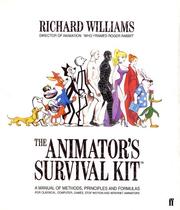
The single most essential animation book ever written — Williams breaks down walk cycles, timing, weight, and the 12 principles with extraordinary clarity. Start here; everything else in the curriculum assumes this vocabulary.
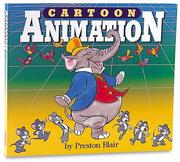
A classic, hands-on companion that teaches you to *draw* the principles in action — squash-and-stretch, follow-through, and character construction. Reading it right after Williams lets you immediately practice what you've just learned conceptually.
The Art of Character — Performance and Acting
BeginnerLearn how to translate emotion, personality, and story intent into animated performance — making characters feel like they think and feel, not just move.
▸ Study plan for this stage
Pace: 8–10 weeks total: ~5 weeks on "The Illusion of Life" (~25–30 pages/day, given its density and visual richness) and ~3–4 weeks on "Acting for Animators" (~15–20 pages/day with active reflection pauses after each chapter).
- The 12 Principles of Animation (from The Illusion of Life) — especially Squash & Stretch, Anticipation, Staging, and Follow Through — as tools of performance, not just motion
- Appeal and Personality: how a character's silhouette, design choices, and movement vocabulary communicate who they are before a single line of dialogue
- The Illusion of Life itself: the animator's core goal is to make audiences believe a drawn or digital figure is thinking and feeling in real time
- Thinking as the root of all action: Ed Hooks' central thesis that every movement must be motivated by a thought, and every thought must serve a dramatic need
- The difference between acting and indicating — performing genuine internal states vs. telegraphing emotion through surface-level gestures
- Empathy and the audience contract: characters must pursue goals and face obstacles so viewers can emotionally invest in their journey
- Scene-level dramatic structure: setup, conflict, and resolution exist even in a 3-second shot — animators must understand the mini-arc of every scene
- Collaboration between animation and story: how performance choices must serve the narrative context established by the script and storyboard
- According to The Illusion of Life, which of the 12 Principles most directly serve emotional performance (as opposed to physical believability), and why?
- How does Frank Thomas and Ollie Johnston's concept of 'appeal' go beyond visual cuteness — what does it mean for a villain or a comedic side character?
- Ed Hooks argues that 'acting is doing.' What does this mean in practical animation terms, and how does it change the way you plan a character's movement?
- What is the difference between 'indicating' an emotion and genuinely 'playing' one, and how can you spot the difference in a finished shot?
- How do empathy and objectives work together in a scene? Using an example from either book, explain how a character's want drives their physical performance.
- Why must an animator understand the full dramatic context of a scene — not just their assigned shot — before making a single performance decision?
- Principles-to-Performance Mapping: Re-read the chapters on each of the 12 Principles in The Illusion of Life and write one sentence for each explaining how it serves storytelling or emotion — not just physics. Pin this list above your workspace.
- Character Autopsy: Choose any animated character from a film or show you love. Using the vocabulary from The Illusion of Life (appeal, personality, staging), write a one-page breakdown of how their design and movement communicate their inner life before they speak.
- The Thinking Pose: Sketch or block out (in your preferred medium) a character in three different 'thinking' poses — curious, suspicious, and delighted. Apply Hooks' rule that thought precedes action: what thought is the body expressing, not just the emotion?
- Indication vs. Performance Journal: Watch 10 minutes of any animated film and pause on 5 distinct character moments. For each, write whether the animator is 'indicating' or 'performing,' using Hooks' framework to justify your answer. Discuss at least one example of each.
- Mini-Scene Blocking: Animate or storyboard a 5–8 second silent scene in which a character discovers something unexpected (good or bad — your choice). Apply at least four of the 12 Principles deliberately, and ensure every pose change is motivated by a new thought, per Hooks.
- Objective Statement Practice: For five scenes from any animated film, write a single 'I want ___' objective statement for the main character in that scene. Then identify one physical action in the animation that either supports or contradicts that objective, and explain what you would change if it contradicts it.
Next up: Mastering performance and acting gives you the 'why' behind every pose and movement; the next stage will build on this foundation by exploring how timing, weight, and the physics of motion give that performance its convincing physical reality in the world of the film.
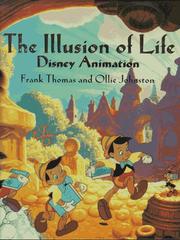
Written by two legendary Disney animators, this is the definitive text on character performance and emotional truth in animation. It builds directly on the principles from Williams, showing how they serve storytelling.
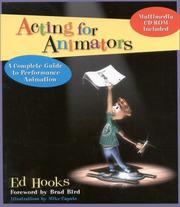
Hooks applies real acting theory (Stanislavski, intention, beats) specifically to animators. After absorbing Disney's philosophy in Thomas & Johnston, this book gives you a practical, repeatable method for directing your characters' inner life.
Techniques and Media — 2D, Stop-Motion, and CG
IntermediateSurvey the major production techniques — traditional 2D, stop-motion, and computer animation — understanding the unique strengths, workflows, and challenges of each.
▸ Study plan for this stage
Pace: 10–12 weeks total: ~3 weeks on "Timing for Animation" (Whitaker, ~20–25 pages/day), ~3 weeks on "Stop Motion" (Shaw, ~20 pages/day), ~4–5 weeks on "The Art of 3-D Computer Animation and Effects" (Kerlow, ~25–30 pages/day). Aim for 5 reading days per week, leaving 2 days for exercises and review.
- Timing as the soul of animation: how the spacing and number of frames between key positions controls weight, personality, and believability (Whitaker)
- The 'chart' system for inbetweening: reading and drawing exposure/dope sheets to translate timing intentions into frame-by-frame instructions (Whitaker)
- Anticipation, follow-through, overlapping action, and ease-in/ease-out as timing-driven principles rather than purely drawing-driven ones (Whitaker)
- Stop-motion production pipeline: armature and puppet construction, set building, frame-by-frame capture workflow, and the unique challenge of working in physical, irreversible increments (Shaw)
- Replacement animation, pixilation, and object animation as distinct sub-techniques within stop-motion, each with its own strengths and limitations (Shaw)
- The CG production pipeline: modeling, rigging, surfacing/shading, lighting, animation, rendering, and compositing as interdependent, non-linear stages (Kerlow)
- Keyframe vs. procedural vs. motion-capture animation in CG, and how timing principles from traditional 2D (Whitaker) translate — and must be re-learned — in a digital environment (Kerlow)
- The role of pre-production (storyboards, animatics, asset lists) as the common backbone that unifies all three production techniques
- Given a scene description (e.g., a character lifting a heavy box), how would you chart the timing differently in 2D traditional animation versus blocking it out in a CG timeline, and what does Whitaker's spacing logic tell you about conveying weight?
- What are the core structural and material considerations Shaw identifies when building a stop-motion armature, and how do those physical constraints directly shape what movements are achievable on screen?
- How does Kerlow describe the relationship between the modeling and rigging stages, and why does a poorly planned model create downstream problems for the animator?
- Compare the 'dope sheet' in traditional 2D animation (Whitaker) with the CG timeline/graph editor (Kerlow) — what information does each encode, and what is fundamentally different about how a animator reads and edits them?
- What unique advantages does stop-motion offer over 2D and CG that Shaw argues make it a deliberate artistic choice rather than simply an older or cheaper method?
- Across all three books, what single pre-production discipline is treated as non-negotiable regardless of medium, and how does each author frame its importance?
- Timing charts in practice (Whitaker): Draw 10 simple arcs and bouncing-ball cycles by hand, writing out a full exposure/dope sheet for each. Vary the spacing to produce at least three distinct 'feels' (heavy, light, snappy) and annotate why each chart produces its effect.
- Frame-by-frame timing analysis: Choose two 10–15 second clips — one classic 2D animated scene and one stop-motion short — and scrub through them frame by frame using a free tool (e.g., VLC or DaVinci Resolve). Log the frame counts between key poses and map them back to Whitaker's spacing principles.
- Stop-motion micro-project (Shaw): Using a smartphone and a free app (e.g., Dragonframe Webcam or Stop Motion Studio), animate a simple inanimate object (a pencil, a coin) performing a 5–10 second action. Focus on applying Whitaker's ease-in/ease-out logic in a physical medium and write a one-page reflection on where the physical constraints matched or fought your timing intentions.
- CG pipeline mapping (Kerlow): Using free software (Blender), build and rig a primitive character (a simple box figure is fine), then animate a 3-second walk cycle. Document each pipeline stage (model → rig → animate → light → render) in a production log, noting which stage caused the most rework and why.
- Cross-medium comparison essay: Write a 500-word comparison of how anticipation is achieved in 2D (using Whitaker's charts), stop-motion (using Shaw's puppet/set constraints), and CG (using Kerlow's graph editor and rig controls). Identify one advantage and one limitation of each medium for this single principle.
- Pre-production document: Choose one 15-second scene idea and create a full pre-production package for it in all three media — a dope sheet (2D), a shot checklist with armature notes (stop-motion), and a CG asset/pipeline breakdown — then reflect on how the same creative idea transforms under each medium's constraints.
Next up: By mastering the distinct workflows, constraints, and timing logic of 2D, stop-motion, and CG, the reader has built a medium-agnostic production vocabulary that makes the next stage — studying character performance, storytelling, and direction — immediately applicable across any tool or technique.
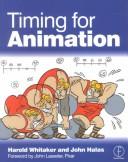
A focused, technical deep-dive into timing and spacing — the single hardest skill to master. Placed here, after you understand principles and performance, it sharpens your craft before you commit to a specific medium.
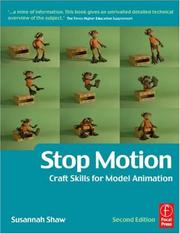
A thorough, practical guide to stop-motion — armatures, sets, lighting, and on-set timing. It broadens your understanding of animation as a physical craft, not just a drawn or digital one.
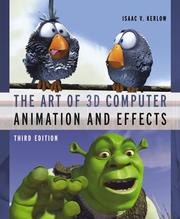
Covers the full pipeline of CG animation — modeling, rigging, rendering, and compositing — in a medium-agnostic way. Reading it after stop-motion highlights how the same principles apply across radically different tools.
Vision and Voice — Storytelling and Direction
IntermediateDevelop the storytelling instincts, visual language, and directorial thinking needed to conceive and structure an original animated work.
▸ Study plan for this stage
Pace: 8–10 weeks total: Weeks 1–5 on "Directing the Story" (~20–25 pages/day, including time to sketch and annotate panels); Weeks 6–10 on "The Animation Book" (~25–30 pages/day, with hands-on experiments alongside each chapter).
- Visual storytelling and the storyboard as a directorial tool — Glebas's core argument that every panel must answer 'what does the audience need to feel/know right now?'
- The Pixar-style problem-solving approach to story structure: setup, conflict, escalation, and resolution mapped panel-by-panel in 'Directing the Story'
- Shot grammar and cinematic language: how camera angle, framing, staging, and cut timing communicate emotion and meaning without words (Glebas)
- Character desire, obstacle, and action as the engine of every scene — distinguishing what a character wants vs. what they need (Glebas)
- The director's eye: making deliberate choices about what to show, what to withhold, and how to guide audience attention through composition (Glebas)
- The full animation production ecosystem — Laybourne's panoramic view of formats, techniques, and workflows as a map for an independent animator-director
- Technique as voice: how the choice of animation method (cel, cut-out, stop-motion, digital) shapes and expresses the story's tone and the director's identity (Laybourne)
- Iterative development and the role of experimentation — Laybourne's emphasis on making short tests and rough cuts as a creative and directorial practice
- After reading Glebas, can you explain why a storyboard is a directorial document and not merely a planning tool — and what decisions it forces you to make before production begins?
- How does Glebas define the relationship between a character's goal, the obstacle they face, and the emotional arc of a scene? Can you apply this framework to a scene you invent?
- What specific shot choices (angle, framing, staging) would you make to convey a character's vulnerability versus their power, and why — drawing on Glebas's visual language principles?
- Using Laybourne's overview of animation techniques, how would you justify choosing one method over another for a specific story idea — and what trade-offs does that choice carry?
- How does Laybourne's production ecosystem model change the way you think about the director's role: is the director primarily a storyteller, a technician, or something else?
- What is your own directorial 'voice' beginning to look like after working through both books — what visual and narrative tendencies do you notice in your own storyboard and concept sketches?
- Glebas Panel Deconstruction: Choose any 60-second sequence from an animated short you admire. Re-draw it as a rough storyboard (stick figures are fine), then annotate each panel using Glebas's framework — what is the audience meant to feel, what is the character's goal, and what shot choice serves that goal? Write a one-paragraph director's note explaining the sequence.
- Original Scene Storyboard: Invent a simple 3-character scenario with a clear want, obstacle, and resolution. Board it in at least 12 panels using Glebas's shot grammar (establish, medium, close-up, reaction). Present it to a peer or record yourself 'pitching' it as a director would in a story meeting.
- Shot Grammar Sketchbook: Create a personal reference sheet of 20 thumbnail compositions — 4 each for: power/dominance, vulnerability, mystery, joy, and tension. Label each with the specific technique used (angle, negative space, eyeline, etc.) drawing on Glebas's vocabulary.
- Technique-to-Story Matching (Laybourne): Write three one-paragraph story concepts — one dark/psychological, one comedic, one documentary-style. For each, use Laybourne's technique survey to select the most appropriate animation method and write a 150-word director's statement justifying the choice.
- Short Animatic: Take your 12-panel storyboard from Exercise 2, scan or photograph the panels, cut them together in any free video editor (DaVinci Resolve, iMovie, etc.) with a rough sound bed, and time each cut to match the intended emotional beat. Screen it and note where the pacing feels wrong.
- Director's Vision Document: Write a 1-page 'bible' for an original animated short (under 3 minutes). Include: logline, visual tone references, chosen technique (justified via Laybourne), a 6-panel thumbnail story arc, and a note on what the audience should feel in the final moment (justified via Glebas). This document becomes the seed for the next stage of the curriculum.
Next up: By completing this stage the reader has moved from passive viewer to active director — they can articulate story structure, make intentional shot choices, and select a technique that serves their voice — which means the next stage can shift focus from conception to execution: the craft of actually animating, scene-building, and production pipeline management.

A former Disney story artist teaches visual storytelling, storyboarding, and how to guide an audience's eye and emotion. This is the bridge between animation craft and narrative filmmaking.
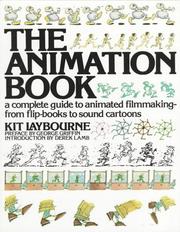
A comprehensive survey of animation history, formats, and production approaches that gives you creative context and inspires your own voice. It rounds out the intermediate stage before you move into making your own work.
Making Your Short — Production and Creative Practice
ExpertApply everything learned to plan, produce, and complete your first animated short — understanding pre-production, pipeline, and the creative decisions that define a finished piece.
▸ Study plan for this stage
Pace: 3–4 weeks, ~20–25 pages/day — read in two passes: first for broad career and industry context, then revisit chapters on short film production, pitching, and professional pipeline with active annotation and project planning in parallel
- Pre-production planning: developing a concept, writing a premise, and building a production bible or pitch document for a short film
- The animation pipeline as a professional framework: how industry workflows (storyboarding, animatic, layout, animation, post) map onto an independent short
- Creative decision-making: how personal voice, story economy, and constraint-driven choices define the identity of a finished short
- Pitching and communication: articulating your project's vision clearly to collaborators, festivals, or employers — the language of professional animation
- Career pathways in animation and how completing a short film functions as a portfolio centerpiece and proof of creative authorship
- The role of networking, mentorship, and community in sustaining a creative practice beyond a single project
- Self-producing vs. studio pipelines: understanding the trade-offs of independence, resource management, and creative control
- Festival strategy and audience: how finished shorts enter the world, find viewers, and serve long-term career goals
- According to Levy, what are the key elements that make an animated short effective as both a creative statement and a career tool — and how do you apply those criteria to your own project?
- How does Levy describe the professional animation pipeline, and which stages are most critical to manage carefully when self-producing a short on a limited budget and timeline?
- What does Levy identify as the most common mistakes emerging animators make when trying to break into the industry, and how can completing a short film help you avoid them?
- How should a pitch document or production bible for a short film be structured, and what does Levy suggest it must communicate to be taken seriously by collaborators or decision-makers?
- In what ways does Levy frame the relationship between personal creative voice and professional marketability — and how do you reconcile those tensions in your own short?
- What festival, distribution, and community strategies does Levy recommend for animators launching their first finished work into the world?
- Draft a one-page premise document for your animated short: logline, visual style reference, target length, and core emotional or thematic intent — then stress-test it against Levy's criteria for what makes a short compelling and career-relevant
- Build a full pre-production checklist and production schedule for your short using the pipeline stages Levy describes: concept → script/storyboard → animatic → production → post → output. Assign realistic deadlines to each phase
- Write a mock pitch document (2–3 pages) for your short as if presenting it to a collaborator or festival committee — include concept, visual approach, tone, and a single sample storyboard page
- Conduct a 'constraint audit': list every resource limitation you have (time, software, team size, budget) and, drawing on Levy's advice on working within constraints, rewrite your project scope so it is genuinely completable
- Research 10 animation festivals or online platforms relevant to your short's style and length (e.g., Sundance, Ottawa, Vimeo Staff Picks). For each, note submission requirements and deadlines, then map them to your projected completion date
- Complete at least one full scene or sequence of your short — from rough animation to a polished cut — and screen it for at least two peers. Document their feedback and revise one specific element based on Levy's guidance on iteration and professional communication
Next up: Completing this stage — with a short in production and a professional pipeline established — positions the reader to move into industry integration, where the focus shifts from making a single piece to sustaining a body of work, navigating studios, and building a long-term animation career.

Levy demystifies the real-world production process — pitching, pre-production, collaboration, and finishing a project — giving you the practical roadmap to take your short from idea to screen.
Discussion
Keep reading
Paths that share books, cover the same subject, or open a related topic.