Self-publish your first book
This four-stage curriculum takes a complete beginner from blank page to profitable self-published author. Each stage builds directly on the last: you first learn to write a compelling book, then craft and produce it professionally, then master the Amazon KDP ecosystem, and finally scale sales beyond your immediate circle through marketing and platform-building.
Foundations: Writing a Book Worth Publishing
BeginnerUnderstand how to plan, draft, and complete a full manuscript with structure and clarity — so you have something worth publishing before worrying about anything else.
▸ Study plan for this stage
Pace: 8–10 weeks total: Week 1–3 — "On Writing" (~20–25 pages/day, reading both the memoir and craft halves); Week 4–5 — "2k to 10k" (~15–20 pages/day, a short book best read actively with a writing session alongside each chapter); Week 6–10 — "Story" (~25–30 pages/day, dense and conceptual — slow down, t
- The writer's life as discipline, not inspiration: King's core argument that writing is a craft practiced daily through consistent output, not waited upon as a muse-driven event.
- Toolbox layers — vocabulary, grammar, style, and voice: King's hierarchy of a writer's tools and why mastering the lower levels frees the upper levels (voice, originality) to emerge naturally.
- The honest first draft: King's 'closed door' draft written for yourself alone, without self-censorship, followed by a deliberate 'open door' revision for the reader.
- The Knowledge–Enthusiasm–Plot triangle (Rachel Aaron): Aaron's framework that writing speed and quality both increase when you know what you're writing, care about it emotionally, and understand where it fits in the larger story.
- Scene-level planning vs. outline rigidity: Aaron's method of writing a quick, low-pressure pre-scene summary to unlock momentum — planning just enough to write fast without losing spontaneity.
- Story as structure, not just plot: McKee's foundational argument that story is the architecture of meaningful change — every scene must turn on a value shift from positive to negative or vice versa.
- The Story Triangle — Archplot, Miniplot, Antiplot: McKee's spectrum of narrative forms and how understanding classical story design (Archplot) gives a writer the grammar they need before they can break the rules.
- Scene construction and the gap: McKee's concept that compelling scenes are built on the gap between a character's expectation and reality — the engine of reader engagement at the micro level.
- According to King in 'On Writing,' what is the single most important habit a serious writer must build, and what specific daily output target does he recommend as a baseline?
- What are the three points of Rachel Aaron's triangle in '2k to 10k,' and how does addressing all three before writing a scene change both speed and quality?
- How does McKee define 'story value' in 'Story,' and why must every scene contain at least one value shift for the scene to earn its place in a manuscript?
- King argues that plot is the enemy of good fiction — what does he recommend instead, and how does this tension resolve (or not) with McKee's highly structural approach in 'Story'?
- Using Aaron's pre-scene journaling method, what specific questions should a writer answer before drafting a difficult scene they feel stuck on?
- What is the difference between McKee's concepts of 'complication' and 'crisis,' and why does understanding that difference help a writer avoid flat, uneventful chapters?
- Daily word-count log (King): For the entire duration of this stage, write a minimum of 1,000 words of original prose every day. Track your count in a simple spreadsheet. The goal is not quality — it is showing up. Review the log at the end of each week and note what conditions (time of day, location, prior planning) correlated with higher output.
- Toolbox audit (King): After finishing 'On Writing,' write two pages of your own prose, then annotate them ruthlessly — circle every passive construction, every adverb, every vague abstraction. Rewrite the passage eliminating at least 80% of those flagged elements. Compare the two versions aloud.
- Triangle warm-up before every writing session (Aaron): Before each session, open a blank document and spend 5–10 minutes answering three questions in free-write form: (1) What happens in this scene? (2) Why do I personally find this moment exciting or meaningful? (3) How does this scene change the trajectory of the story? Only then open your manuscript. Do this for at least 10 consecutive sessions
- Scene value-shift audit (McKee): Take any three consecutive scenes from your current draft (or a published novel you admire). For each scene, identify the dominant story value at stake (e.g., hope/despair, freedom/imprisonment), its charge at the scene's opening, and its charge at the scene's close. If a scene ends on the same charge it began, rewrite its turning point so a genuine shift occurs.
- Structural beat sheet (McKee): Using McKee's story triangle and his breakdown of Inciting Incident → Progressive Complications → Crisis → Climax → Resolution, map your entire manuscript (or planned manuscript) onto a single page. Each story beat gets one sentence. Identify any act where complications are not escalating in charge or where the crisis is missing entirely.
- Synthesis draft sprint: In the final week of this stage, use all three frameworks simultaneously — King's closed-door freedom, Aaron's pre-scene triangle warm-up, and McKee's value-shift checklist — to draft or redraft one complete chapter (minimum 2,000 words) from scratch in a single week. Annotate the finished chapter noting where each author's influence is visible.
Next up: Completing this stage means you have a manuscript (or a near-complete draft) built on solid craft fundamentals — which makes the next stage, covering editing, packaging, and publishing decisions, immediately actionable rather than theoretical.
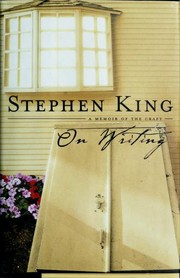
The most accessible and motivating book on the craft of writing; it dismantles fear and gives beginners a clear, honest picture of what writing a book actually requires.

A short, practical guide to writing faster and finishing manuscripts — essential for beginners who struggle to complete a draft before losing momentum.
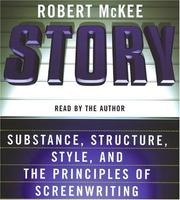
Teaches universal story structure at a deep level; reading this after King gives you the architectural vocabulary to make your manuscript compelling, whether fiction or narrative nonfiction.
Editing & Professional Production
BeginnerLearn to self-edit your manuscript to a professional standard and understand cover design, formatting, and the production steps that separate amateur from market-ready books.
▸ Study plan for this stage
Pace: 5–6 weeks total: Weeks 1–3 cover "Self-Editing for Fiction Writers" (~20–25 pages/day, including pause-and-apply sessions after each chapter); Weeks 4–5 cover "The Non-Designer's Design Book" (~15–20 pages/day, with hands-on design sketching alongside reading); Week 6 is a consolidation week for rev
- Show vs. tell: recognizing and eliminating over-explained emotion and action in your own prose (Browne's foundational principle)
- Dialogue mechanics: how beats, attribution, and subtext work together to make dialogue feel natural and carry weight (Browne, chapters on dialogue)
- Proportion and pacing: understanding scene vs. summary and how chapter/scene length signals importance to the reader (Browne)
- Point of view discipline: staying cleanly inside a chosen POV and spotting 'head-hopping' during self-editing passes (Browne)
- The four core design principles — Contrast, Repetition, Alignment, and Proximity (C.R.A.P.) — and how they govern every visual decision on a cover or interior page (Robin Williams)
- Typography as communication: how typeface choice, hierarchy, and spacing convey genre, tone, and professionalism (Williams)
- Visual hierarchy and white space: guiding the reader's eye so that the most important information (title, author name) lands first (Williams)
- The difference between decoration and design: why restraint and intentionality separate market-ready book covers from amateur ones (Williams)
- After reading Browne, can you identify at least five specific 'telling' passages in your own draft and rewrite them to 'show' the emotion or action through concrete detail?
- What does Browne mean by 'proportion,' and how would you use it to decide whether a scene deserves a full dramatized treatment or a brief summary?
- How does Browne's advice on dialogue attribution (said vs. elaborate synonyms) connect to the broader goal of keeping the reader immersed?
- What are Robin Williams's four design principles (C.R.A.P.), and can you point to a published book cover that demonstrates each one clearly?
- Using Williams's framework, how would you critique a self-published cover that feels 'off' — which principle is most likely being violated, and what specific fix would you apply?
- How do typeface pairing and font hierarchy on a book cover signal genre expectations to a browser in an online store, according to Williams's principles?
- Self-editing pass #1 — Show vs. Tell audit: Print or export 10 pages of your own manuscript. Highlight every sentence where you name an emotion directly (e.g., 'she felt nervous'). Rewrite each one using only physical action, dialogue, or sensory detail, following Browne's method.
- Dialogue workshop: Take one dialogue-heavy scene from your draft. Strip out every dialogue tag except 'said' and 'asked,' replace the rest with action beats, then read it aloud. Note where the scene gains or loses clarity, using Browne's dialogue chapters as your checklist.
- Pacing map: Create a one-page outline of your manuscript listing each scene/chapter, labeling it as 'scene' (dramatized) or 'summary' (told). Flag any section where a high-stakes moment is summarized rather than dramatized, and schedule it for a full rewrite.
- C.R.A.P. analysis of 10 covers: Find 10 covers in your genre on Amazon. For each, write two sentences identifying which of Williams's four principles is strongest and which is weakest. Keep this as a reference sheet for your own cover.
- Cover mock-up exercise: Using a free tool (Canva, Book Brush, or even PowerPoint), design two alternative covers for your book applying Williams's principles deliberately — choose one typeface pair, establish a clear visual hierarchy, and use alignment and proximity to organize all text elements. Print both and ask someone unfamiliar with the book which feels more professional.
- Integrated production checklist: Draft a one-page 'manuscript-to-market' checklist that sequences every step covered in both books — from self-editing passes (Browne's chapter order) through final cover design decisions (Williams's principles) — so you have a reusable workflow for future projects.
Next up: Mastering self-editing and visual production ensures your manuscript and cover meet professional standards, which is the essential foundation before tackling the next stage — publishing platforms, distribution, and marketing — where a polished, market-ready product is the non-negotiable starting point for commercial success.
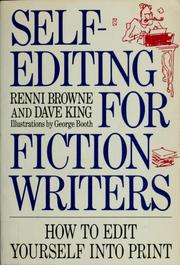
The go-to editing manual used by writing instructors worldwide; it teaches you to see your own manuscript the way a professional editor does, fixing the most common beginner mistakes.

Gives you just enough design literacy to brief a cover designer intelligently — or create a clean interior layout yourself — without requiring any prior design experience.
Publishing: Amazon KDP & the Self-Publishing Business
IntermediateNavigate the full Amazon KDP publishing process — ISBNs, categories, keywords, pricing, print-on-demand, and ebook formatting — and understand self-publishing as a viable business model.
▸ Study plan for this stage
Pace: 6–8 weeks total: Weeks 1–3 on "Let's Get Digital" (~25–30 pages/day, including time to annotate KDP-specific sections); Weeks 4–7 on "Published." (~20–25 pages/day with active workshopping of your own book concept); Week 8 reserved for review, consolidation, and completing hands-on exercises.
- The ebook revolution and why Amazon KDP's ecosystem (Kindle Select, royalty tiers, global distribution) gives indie authors a structural advantage over traditional publishing — as argued by Gaughran in 'Let's Get Digital'
- Metadata as a marketing engine: how keywords, BISAC categories, and book descriptions function as discoverability levers inside Amazon's search algorithm, per Gaughran's framework
- Pricing strategy and royalty math: the 35% vs. 70% royalty thresholds, price elasticity for ebooks, and how to position a book competitively in its genre niche
- KDP Select and Kindle Unlimited: the trade-offs of exclusivity vs. wide distribution, and how to decide which model fits your publishing goals
- Print-on-demand (POD) via KDP Print: understanding trim sizes, cover templates, interior formatting requirements, and how POD eliminates inventory risk for self-publishers
- Bolt's 'Published.' system: the end-to-end self-publishing roadmap from manuscript to launch, including the role of an advance reader team, launch-week strategy, and hitting bestseller categories
- Self-publishing as a scalable business model: building a backlist, understanding sell-through rates, and treating each book as an asset that generates compounding royalties
- Author platform and email list as business infrastructure: why Bolt emphasizes list-building as the single most controllable marketing lever a self-publisher owns
- After reading 'Let's Get Digital,' can you explain the specific royalty structure of Amazon KDP — including when the 70% tier applies and what delivery costs affect net earnings on ebooks?
- How does Gaughran recommend selecting categories and keywords, and what is the strategic logic behind targeting sub-categories rather than broad top-level genres?
- What are the concrete trade-offs between enrolling in KDP Select (Kindle Unlimited exclusivity) versus publishing 'wide' to other retailers, and which factors should drive that decision for your specific book?
- Using Bolt's framework from 'Published.', what are the key phases of a self-publishing launch, and what role does an Advance Reader Copy (ARC) team play in generating early reviews and sales velocity?
- How do you calculate whether a print-on-demand edition is financially viable for a given book, taking into account KDP Print's per-unit printing costs, minimum list price requirements, and your target royalty?
- What does treating self-publishing as a business — rather than a one-book event — look like in practice, drawing on the backlist and platform-building principles from both Gaughran and Bolt?
- KDP Metadata Audit: Choose a real or hypothetical book and use Gaughran's keyword and category principles to identify 7 backend keywords and 2 optimal KDP categories. Validate your choices by searching those terms on Amazon and analyzing the top 10 results for competition level and sales rank.
- Royalty Calculator Spreadsheet: Build a simple spreadsheet that calculates net royalty per sale for both ebook (35% and 70% tiers) and KDP Print editions at three different price points. Run your own book concept through it to find the pricing sweet spot.
- Book Description Rewrite: Take a published book's Amazon description (or draft one for your own project) and rewrite it using Gaughran's copywriting principles — hook, benefit-driven body, and a clear call to action. Compare the before and after.
- Launch Plan Draft: Following Bolt's 'Published.' launch system, write a one-page launch plan for your book that includes: ARC team recruitment timeline, target bestseller sub-category, launch-week pricing strategy, and email list touchpoints.
- POD Cover & Interior Checklist: Download KDP Print's cover template for a chosen trim size and interior formatting guidelines. Audit a sample manuscript (or your own) against the checklist, noting every element that would need to change before upload.
- Self-Publishing Business Model Canvas: Sketch a one-page business model for yourself as an author-publisher — including revenue streams (ebook, POD, audiobook licensing), key costs (editing, cover design, ads), and the backlist growth trajectory needed to reach a target monthly income, drawing on the business framing from both books.
Next up: Mastering KDP's mechanics and the launch-as-a-system mindset establishes the publishing infrastructure that the next stage builds on — shifting focus from getting a book live to sustainably marketing it, growing readership, and scaling revenue across multiple titles and channels.

The clearest beginner-to-intermediate guide to self-publishing on Amazon and other retailers; it explains the entire KDP workflow, metadata strategy, and pricing in plain language.

Written by the founder of Self-Publishing School, this book maps the end-to-end self-publishing process as a business system, reinforcing KDP mechanics with a launch-oriented mindset.
Marketing: Launching & Selling Beyond Friends and Family
IntermediateBuild a real readership through email lists, Amazon ads, launch strategies, and long-term platform-building so your book keeps selling to strangers, not just people you know.
▸ Study plan for this stage
Pace: 8–10 weeks total: Week 1–3 — "Platform" by Michael S. Hyatt (~25–30 pages/day); Week 4–6 — "Your First 1000 Copies" by Tim Grahl (~20–25 pages/day); Week 7–10 — "Mastering Amazon Ads" by Brian D. Meeks (~20 pages/day, with slower re-reading of data/strategy chapters). Allow extra days between books
- Platform as infrastructure (Hyatt): your owned media — website, email list, and social presence — is the foundation that makes every other marketing effort compound over time, not a one-time launch tactic.
- The 'WOW' content principle (Hyatt): consistently producing remarkable, shareable content is what attracts strangers and converts them into loyal followers before your book even exists.
- The Connection System (Grahl): sustainable book sales come from building genuine relationships at scale through a repeatable system of content, outreach, and email — not one-off promotions.
- Email list as the #1 asset (Grahl): unlike social media followers, an email list is owned, direct, and proven to drive the majority of early sales; growing it before launch is non-negotiable.
- The 'First 1000 Copies' launch framework (Grahl): a structured pre-launch, launch-week, and post-launch sequence that turns a small but engaged list into social proof, reviews, and momentum.
- Amazon's advertising auction model (Meeks): Sponsored Product ads operate on a cost-per-click keyword auction; understanding match types (broad, phrase, exact) and bid logic is the prerequisite to profitable campaigns.
- Data-driven ad optimization (Meeks): KENP reads, ACOS (Advertising Cost of Sale), and click-through rates are the core metrics; decisions must be made from 30–60 days of clean data, not gut feeling.
- Long-tail keyword discovery (Meeks): mining Search Term Reports to find low-competition, high-converting keywords is the repeatable process that separates profitable ads from money-losing ones.
- After reading Hyatt's 'Platform,' can you clearly articulate what your platform consists of right now, identify its weakest pillar, and name three specific actions to strengthen it before your book launches?
- Grahl argues that most authors market wrong — what is the core mistake he identifies, and how does his Connection System correct it in practical, week-to-week terms?
- What does Grahl say is the single most important thing to do in the 90 days before a book launch, and what does a healthy pre-launch email sequence look like according to his framework?
- Using Meeks's framework, what is ACOS, how do you calculate it, and what ACOS range signals a campaign is profitable versus one that needs to be paused or restructured?
- How does Meeks recommend you use the Amazon Search Term Report to graduate keywords from a broad-match discovery campaign into a tightly controlled exact-match campaign?
- Taken together across all three books, what is the logical order of operations for a self-published author going from zero audience to sustainable sales — and where does each book's advice fit in that sequence?
- Platform Audit (after Hyatt): Map your current platform on paper — list every owned channel (website, email list, podcast, YouTube, etc.), your follower/subscriber count on each, and your posting frequency. Score each pillar 1–5 and write a one-paragraph 'Platform Improvement Plan' targeting your lowest-scoring pillar.
- Content Pillar Workshop (after Hyatt): Using Hyatt's WOW content framework, brainstorm and outline 10 blog posts, newsletter issues, or videos you could realistically produce in the next 90 days. Write the first one in full and publish or schedule it.
- Email List Launch (after Grahl): If you don't have an email list, set one up (ConvertKit, Mailchimp, etc.) this week. Write and schedule a 3-email welcome sequence for new subscribers. Set a concrete 90-day subscriber goal and identify 5 specific outreach tactics from Grahl's book you will use to hit it.
- Pre-Launch Sequence Draft (after Grahl): Following Grahl's launch framework, write a full pre-launch email sequence of at least 4 emails (announcement, story/why, social proof ask, launch day). Even if your book isn't ready, draft these for a future or hypothetical title to build the muscle.
- Amazon Ads Sandbox Campaign (after Meeks): Set up one live Sponsored Products campaign for your book (or a comparable book in your genre if yours isn't published yet, as a study exercise). Use automatic targeting first to gather data, set a modest daily budget ($3–5), and let it run for 14 days before touching it.
- Search Term Report Mining (after Meeks): After 14–30 days of ad data, download your Search Term Report, highlight every search term with at least 1 sale and an ACOS under your target threshold, and manually add those as exact-match keywords in a new manual campaign. Document your findings and compare ACOS between the two campaigns after another 14 days.
Next up: By the end of this stage you will have a functioning platform, a growing email list, a launch playbook, and live ad campaigns generating real sales data — the perfect foundation for the next stage, which typically focuses on scaling revenue through pricing strategy, wide distribution (beyond Amazon), and building a backlist that compounds your marketing efforts.

The foundational text on building an author platform and audience before and after launch; read this first in the marketing stage to understand why discoverability starts with you, not the algorithm.

Translates platform-building into a concrete email-list and outreach system specifically for authors — the most practical next step after Hyatt's strategic overview.

The definitive hands-on guide to Amazon Advertising for authors; read last because it assumes you already have a polished, published book and a basic audience, and it teaches you to scale sales with paid traffic.
Discussion
Keep reading
Paths that share books, cover the same subject, or open a related topic.