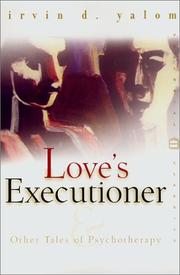
Start with Love's Executioner. Irvin Yalom's ten case stories are the best introduction to what this approach actually feels like in a room — a therapist working openly with death, freedom, isolation and meaning rather than with symptoms and techniques. It is written for general readers, it is short, and it will tell you within fifty pages whether this is your kind of therapy.
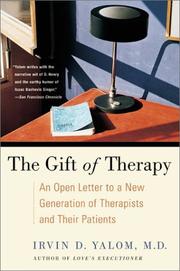
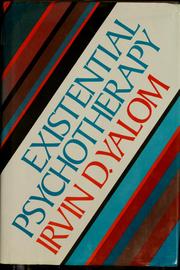
If you are a clinician, follow it with The Gift of Therapy, Yalom's eighty-five short pieces of advice to a new generation of therapists — practical, opinionated, and organised so you can read it a page at a time. Then, and only then, the theoretical anchor: Existential psychotherapy, his 1980 volume built around four ultimate concerns — death, freedom, isolation and meaninglessness. It is a serious academic book of several hundred pages and it is the spine of the whole field in English.
Say this once, plainly. These books are education, not treatment. Reading them will not qualify anyone to practise, the practitioner texts assume training and supervision, and if you are in acute distress or thinking about suicide the right move is a clinician or a crisis line, not another chapter.
Yalom, finished
Staring at the Sun is the last of his to take, and it is specifically about death anxiety — how it shows up disguised as other complaints, and the idea of rippling, that what we pass on to others is a real form of persistence. It repeats some of the death material in the 1980 book at a much gentler pitch, so read whichever suits your purpose rather than both back to back.
The American existential tradition before Yalom
Rollo May is the earlier figure and The Discovery of Being is his most readable statement of the position — what an existential psychology is, and why he thought American psychology had lost the person. Existence, the 1958 volume he edited with Ernest Angel and Henri Ellenberger, is the historically decisive book: it introduced Ludwig Binswanger, Eugène Minkowski and European phenomenological psychiatry to an English-speaking audience. Be warned that the translated case studies are dense and philosophically demanding, and that most readers take May's own long introductory essays and sample the rest.
Love and will is May writing for a general audience about eros, intentionality and what he saw as a cultural loss of both. It is very much a book of its moment, the late 1960s, and dates more than the others.
The British school and the practical texts
Existential therapies by Mick Cooper is the single most useful book here for orientation, because it does what nobody else does: it maps the actual schools. Daseinsanalysis, logotherapy, the British existential-phenomenological school, the American existential-humanistic strand and the newer existential-integrative work are genuinely different practices that share a vocabulary, and Cooper compares them fairly rather than advocating one.
Existential Counselling & Psychotherapy in Practice by Emmy van Deurzen is the core text of the British school — structured around the four dimensions of existence and far more concrete about what the therapist does session to session than Yalom ever is. Skills in Existential Counselling and Psychotherapy by Martin Adams is the skills-level companion, close to a training manual, with transcripts and exercises.
The philosophy underneath
The Doctor and the Soul is Viktor Frankl's clinical statement of logotherapy, and it is the book to read rather than his famous memoir if what you want is the method rather than the testimony. Being and Nothingness by Jean-Paul Sartre is the hardest thing on the list, and existential therapists mostly use a few ideas from it — bad faith, the look, radical freedom — rather than the whole system; a guided reading or a companion volume is a reasonable way in. I and Thou by Martin Buber is short, closer to poetry than argument, and supplies the relational core that most existential therapists actually work from; the translation you pick changes the experience considerably.
The Denial of Death by Ernest Becker closes the list. Written by an anthropologist rather than a therapist, it argues that culture and character are largely defences against mortality. It won a Pulitzer, it later seeded terror management theory in experimental psychology, and its Freudian scaffolding has aged less well than its central claim.
On the evidence: existential therapies have a far thinner trial base than cognitive behavioural approaches, and that is not seriously disputed by their proponents. Meaning-centred work in advanced illness has the strongest supporting data. Read these books for the depth of their account of what people bring to therapy, not as a claim of demonstrated superiority.
Follow the path in order — Yalom, then the schools, then the philosophy.
Follow the full ordered path here: Existential Therapy: The Best Books to Read, in Order.