Humanistic Psychology: The Best Books on Rogers, Maslow and the Third Force, in Order
Humanistic psychology is remembered mostly through second-hand summaries — the pyramid of needs, unconditional positive regard — and the summaries are noticeably worse than the originals. This path reads Rogers and Maslow in their own words first, then the existential wing that is usually filed alongside them, then what the movement actually did in clinics, classrooms and companies, and finishes with two books that assess the third force from outside rather than from within it.
Rogers in His Own Words
BeginnerUnderstand the person-centred approach as Rogers stated it — the therapeutic conditions, the fully functioning person, and the claim that the client rather than the therapist directs the work.
▸ Study plan for this stage
Pace: 6–7 weeks, roughly 1,375 pages. On Becoming a Person (420) is a collection of essays written for different audiences and can be read at 30 pages a day; Client-Centered Therapy (560) is Rogers's formal systematic statement with case transcripts and is much slower going — budget three of the weeks for
- The six necessary and sufficient conditions for therapeutic personality change, as Rogers actually enumerates them
- Congruence, unconditional positive regard and empathic understanding — the three usually quoted, and the three usually dropped
- The organismic valuing process and conditions of worth
- The fully functioning person as an ideal-type rather than an observed population
- Non-directiveness: the claim that the client rather than the therapist directs the work, and what it forbids the therapist from doing
- Rogers's use of recorded transcripts and Q-sorts — his own attempt to make the approach empirically testable, which was unusual for the movement
- The extension from therapy to education, groups and conflict in A Way of Being, and how much weaker the evidence gets as the scope widens
- List Rogers's necessary and sufficient conditions. Which are conditions on the therapist, which on the client, and which on the relationship?
- What does 'unconditional positive regard' commit a therapist to, and what does it explicitly rule out?
- How does Rogers propose to test whether the conditions produce change, and what does he report?
- In A Way of Being, what does Rogers say he got wrong over thirty years — and does he retract anything from the two earlier books?
- Where does Rogers's argument depend on evidence and where on a prior claim about human nature?
- Write out the six conditions from Client-Centered Therapy in Rogers's own wording and beside each note which of them a modern manualised therapy would still endorse.
- Take one transcript from Client-Centered Therapy and mark every therapist utterance as reflection, clarification, or something else — then count how often Rogers departs from his own rule.
- Compare the same idea as it is stated in On Becoming a Person and in Client-Centered Therapy, and note what the informal register adds and what it quietly loses.
- Read A Way of Being's chapters on education and politics and list each claim there that has no evidential support in the earlier books.
Next up: Rogers is the movement's careful half; the next stage is the half that produced the poster, and it needs the same close reading for the same reason.
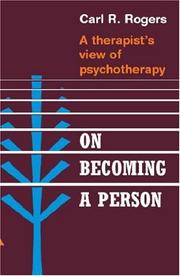
The 1961 essay collection that made Rogers famous, and the best entry to humanistic psychology as a whole. Start here: the chapters were written for different audiences, so it repeats its core claims in several registers until they stick.
The 1951 systematic statement, including transcripts and the formal account of the necessary and sufficient conditions for change. Read it second, as the technical version of what the first book argues informally.
Rogers at the end of his career, extending the approach beyond therapy to education, groups and politics. Third because it is where he says what he thinks he got right and wrong over thirty years.
Maslow in His Own Words
BeginnerRecover the hierarchy of needs and self-actualisation from the poster version, including the parts Maslow himself qualified or abandoned.
▸ Study plan for this stage
Pace: 4–5 weeks, about 1,055 pages: Motivation and Personality (400), Toward a Psychology of Being (240), The Farther Reaches of Human Nature (415). Read them in that order. Set the expectation now: the hierarchy of needs is far more popular than it is empirically supported. Maslow derived it largely from
- The hierarchy as Maslow states it in Motivation and Personality — including his own qualifications about ordering, partial satisfaction and exceptions
- The pyramid is not Maslow's: he never drew one, and the graphic hardens claims he deliberately left loose
- Deficiency motivation versus being motivation (D-needs and B-needs)
- Self-actualisation and how Maslow selected his exemplars — the methodological problem at the centre of the whole theory
- Peak experiences and B-values, and the difficulty of operationalising either
- The move to transcendence and a proposed 'fourth force' in the late work, where testability drops away almost entirely
- Why the theory nevertheless became institutionally dominant in management and education despite the evidence gap
- State the hierarchy as Maslow states it, including every qualification he attaches. Which of those qualifications survives into the popular version?
- How did Maslow choose the people he studied as self-actualised, and what does that selection method do to the conclusions?
- What is the difference between deficiency and being motivation, and what observable prediction, if any, does it generate?
- In The Farther Reaches of Human Nature, which claims could in principle be tested, and which could not?
- If the hierarchy is not well supported, why is it still taught — and does anything in these three books deserve to survive the finding?
- Copy out Maslow's own qualifying sentences about the ordering of needs from Motivation and Personality and set them against a standard textbook pyramid diagram; list the discrepancies.
- Write out Maslow's selection criteria for a self-actualised person and try applying them to three living people — the exercise is to notice how much judgment the criteria require.
- For each level of the hierarchy, write down what evidence would falsify the claim that it is prepotent over the level above it.
- Take one B-value from Toward a Psychology of Being and attempt to define it operationally — well enough that two observers would agree on a case.
Next up: Maslow and Rogers share an optimism about human nature; the next stage is the wing of the same movement that refused it.
The 1954 book where the hierarchy of needs first appears at length — and where it is far more hedged, and never drawn as a pyramid. The most useful corrective on this list.

Catalogued as Towards a Psychology of Being. Maslow's account of being-values, peak experiences and growth motivation as distinct from deficiency motivation. Read it second: it is the constructive half that the earlier book only gestures at.
The posthumous collection where Maslow pushes into transcendence and what he called the fourth force. Third and last of his, because it is also where his claims become hardest to test — worth reading with that in mind.
The Existential Wing
IntermediateMeet the American existential psychologists who shared the humanists' platform but rejected their optimism about human nature.
▸ Study plan for this stage
Pace: 3–4 weeks, about 775 pages: Man's Search for Himself (280), Love and Will (352), The Courage to Create (143). May is a clinician writing philosophy for a general readership, drawing on Kierkegaard, Tillich and European existentialism rather than on data; read him as argument, not as findings. The bo
- Anxiety as a condition of being rather than a symptom to be removed — May's key departure from both Rogers and mainstream psychiatry
- Emptiness, loneliness and conformity as the mid-century diagnoses in Man's Search for Himself
- The daimonic: May's term for the impulse that can be either creative or destructive, and why it makes 'no bad parts' optimism untenable for him
- Will and intentionality, and May's claim that both have collapsed into technique
- Eros distinguished from sex, and what May argues is lost when they are conflated
- Creativity as an act of will performed against anxiety rather than as self-expression
- Where May shares a platform with the humanists and where he is in flat disagreement with them
- What does May mean by anxiety, and how does his usage differ from the clinical usage of the term?
- What is the daimonic, and why is it incompatible with Maslow's account of growth as the natural direction?
- What has happened to will, on May's account, and what does he think caused it?
- In The Courage to Create, what does May say the creative act requires, and how does that follow from the two earlier books?
- Rogers and May were allies institutionally. Where do their accounts of human nature actually conflict?
- Write a two-column comparison of May's account of anxiety and Rogers's account of incongruence, using passages from each rather than summaries.
- Take one case vignette from Man's Search for Himself and rewrite it as Rogers would have handled it; note what May would say is lost.
- Trace the word 'will' through Love and Will and record how May's definition of it shifts across the book.
- Apply The Courage to Create's account to a specific creative decision you have made or avoided, and check whether May's description fits or whether it is unfalsifiable.
Next up: You now have the theory from all three of its main authors; the next stage is what the movement did with it in practice, which is a less flattering record.

May's 1953 diagnosis of anxiety, emptiness and loneliness as the characteristic mid-century conditions. Read it first of his: it is the most accessible, and it sets the darker tone that distinguishes him from Rogers.

May's best-known book, on the collapse of both love and will into technique. Second because it is where he most directly refuses the humanistic assumption that growth is the natural default.
The short late book on creativity as an act of will against anxiety. Read it here as the bridge to the applied stage — it is the most practical thing May wrote.
What the Movement Actually Did
IntermediateSee the third force in practice — in Gestalt work, in encounter groups, and in management — including the parts that later embarrassed it.
▸ Study plan for this stage
Pace: 3–4 weeks, about 690 pages: Gestalt Therapy Verbatim (293), Carl Rogers on Encounter Groups (172), Eupsychian Management (227). Read Perls first, Rogers second and Maslow last. Gestalt Therapy Verbatim is a transcript of Perls running workshops at Esalen and is evidence rather than a manual — the co
- The empty chair, dream work and Perls's confrontational style as recorded rather than as later described
- The 'here and now' rule and the refusal of interpretation in Perls's practice
- The encounter group as the movement's mass-participation technology, and its rapid spread through the 1960s
- Casualties: Rogers's own accounting of group participants who were harmed, and what he concludes about screening and leadership
- Maslow's Eupsychian management — self-actualisation applied to work, later republished as Maslow on Management
- The direct line from this journal to modern corporate motivation theory, engagement surveys and 'purpose' language
- Practice running ahead of evidence: all three books describe methods being deployed at scale before they had been tested
- What is Perls actually doing, move by move, in one of the transcribed dream-work sessions?
- What does Rogers report about encounter-group casualties, and what does he propose in response?
- How does Rogers's assessment of the group movement differ from Perls's practice within it?
- Which of Maslow's Eupsychian propositions are empirical claims about workplaces and which are values statements?
- What is the through-line from Eupsychian Management to the language your own employer uses about motivation?
- Take one Perls transcript and annotate each of his interventions with what it assumes about the participant; note where he is interpreting despite claiming not to.
- List Rogers's stated criteria for a competent group facilitator and check each one against what Perls does in the transcripts.
- Pull ten propositions out of Eupsychian Management and sort them into empirical and normative; then find a modern management book making the same claim.
- Write down what a controlled evaluation of an encounter group would have to look like, then compare it to the evidence Rogers actually has.
Next up: The final stage steps outside the movement to ask what any of this established, using a biography that reads Maslow's theory against his journals and the field's own reference volume.

Perls in transcript, running dream work and the empty chair at Esalen. The most vivid and the most uncomfortable document of the movement's practice: read it as evidence rather than as a manual.
Rogers's own assessment of the encounter-group movement he helped create, including its casualties. Read it directly after Perls, because it is Rogers weighing the same phenomenon soberly.

Maslow's 1965 journal of a summer spent at a California electronics company, applying self-actualisation to work. Later republished as Maslow on Management, and the reason humanistic psychology now sits underneath most corporate motivation theory.
Assessing the Third Force
IntermediateStep outside the movement to judge what it established, what it merely asserted, and what survives in current psychology.
▸ Study plan for this stage
Pace: 4–5 weeks. The Right to Be Human (382) is Edward Hoffman's biography of Maslow, drawing on his journals, and it is the best single check on treating the hierarchy as a finding rather than a proposal. The Handbook of Humanistic Psychology (832) is a multi-author reference volume from inside the field
- How much of Maslow's theory traces to his own preoccupations, as the journals show
- The difference between a proposal, a heuristic and an empirical finding — and where each of the movement's central claims sits
- Qualitative and phenomenological research methods as the field's answer to the charge of untestability, and how far that answer goes
- What did survive: the therapeutic alliance and common-factors research, client-centred elements in modern practice, self-determination theory
- What did not: the hierarchy as a validated model of motivation, and most of the movement's claims about groups
- The movement as an institutional actor — Esalen, the Journal of Humanistic Psychology, the 'third force' branding
- How a framework can be enormously influential and weakly evidenced at the same time, without either fact cancelling the other
- Which of Maslow's ideas does Hoffman trace directly to events in his life, and does that origin bear on their truth?
- What methods does the Handbook offer as appropriate to humanistic research, and what can they establish?
- Which humanistic claims have been supported by later research programmes, and under whose names did they survive?
- How does the field itself, in the Handbook, account for its evidence gap?
- Having read all five stages: what is the strongest defensible statement of humanistic psychology's contribution, and what should be dropped?
- Build a table of the movement's ten central claims with a column for the primary source that states it and a column for the strongest evidence you have encountered for or against it.
- Read Hoffman's account of how Maslow arrived at self-actualisation and write the same episode as Maslow presents it in Motivation and Personality; compare.
- Take the Handbook's research-methods chapters and design a study that would test one Rogerian condition — then say honestly whether it would convince a sceptic.
- Write a 500-word verdict on the third force that a critic and a practitioner would both concede is fair.
Next up: The Handbook points onward to Yalom's Existential Psychotherapy and Buber's I and Thou, which are the two obvious next books once you can tell the movement's evidence from its rhetoric.

The standard Maslow biography, which uses his journals to show how much of the theory came from his own preoccupations. The best available check on taking the hierarchy of needs as a finding rather than a proposal.

The field's own reference volume, covering theory, research methods, practice and the honest question of the movement's evidence base. Finish here — it will also point you to Yalom's Existential Psychotherapy and Buber's I and Thou, the two obvious next books.
Discussion
Keep reading
Paths that share books, cover the same subject, or open a related topic.