Become a therapist: counseling careers that resist AI
This four-stage curriculum takes a career-changer from zero background to a confident, practice-ready understanding of mental health counseling. It begins with the human experience of therapy itself, builds through foundational psychology and core counseling skills, advances into major therapeutic modalities, and closes with the professional, ethical, and future-facing realities of the field — including licensure, the AI landscape, and what makes human connection irreplaceable.
Why This Work Matters — The Human Side of Therapy
BeginnerDevelop an intuitive, felt sense of what therapy actually is: what happens in the room, why people seek it, and what makes a counselor effective — before touching any textbook.
▸ Study plan for this stage
Pace: 6–8 weeks total: Weeks 1–4 for "Maybe You Should Talk to Someone" (~25–30 pages/day, reading in long narrative arcs of 2–3 chapters at a sitting to preserve the storytelling momentum); Weeks 5–7 for "The Gift of Therapy" (~10–15 pages/day — the book is structured in short, standalone tips, so read 3
- The therapeutic relationship as the primary vehicle of change — both books show that technique matters far less than genuine human connection and presence
- The therapist as a fellow human being, not an all-knowing authority — Gottlieb's dual role as patient and therapist, and Yalom's radical transparency, both dismantle the 'blank screen' myth
- Why people seek therapy: the gap between the life one is living and the life one longs for, illustrated through Gottlieb's four patients (John, Julie, Rita, Charlotte) and her own crisis
- The concept of the 'presenting problem' vs. the deeper issue — what clients say they want versus what they actually need, a tension Gottlieb dramatizes in every case
- Existential givens as the bedrock of human suffering — Yalom's framework of death, freedom, isolation, and meaninglessness as the ultimate concerns underneath most clinical complaints
- The here-and-now: Yalom's insistence that what happens between therapist and client in the room, in real time, is the richest therapeutic data available
- Countertransference and the therapist's own inner life — Gottlieb's therapy with Wendell models how a counselor's unresolved material surfaces and must be worked through
- What makes a counselor effective: curiosity, honesty, the willingness to be moved, and the courage to say the difficult thing at the right moment
- After reading Gottlieb's account of her own therapy with Wendell, how would you describe what 'being heard' actually feels like — and why is that experience itself therapeutic, before any advice is given?
- Gottlieb's patient John resists change even as he claims to want it. Using both books, how would you explain the concept of ambivalence, and what does Yalom suggest a therapist should do when a client is stuck?
- Yalom argues that therapists should 'engage rather than reflect.' What does he mean, and how does Gottlieb's narrative illustrate the difference between a therapist who engages and one who hides behind technique?
- Both authors write about endings — termination of therapy. What do Gottlieb's cases and Yalom's tips reveal about why endings are therapeutically significant rather than just logistical?
- How do both books treat the idea that the therapist's own wounds and vulnerabilities are assets rather than liabilities? What are the limits of that idea?
- What is one moment in either book that genuinely surprised or unsettled you about what therapy is, and how does that moment challenge a common cultural myth about counseling?
- **Dual-journal reading log:** Keep two columns as you read — 'What the client/patient experienced' and 'What the therapist did or felt.' After finishing both books, look for patterns: which therapist moves appeared in both authors' work and seemed to produce breakthroughs?
- **Character empathy mapping:** Choose one of Gottlieb's four main patients (John, Julie, Rita, or Charlotte). Write a one-page first-person monologue from that person's point of view on the day they first walked into therapy — what they feared, what they hoped for, and what they couldn't yet say out loud.
- **Yalom tip stress-test:** Pick any five of Yalom's 85 tips and find a specific scene in Gottlieb's book that either confirms or complicates that tip. Write 2–3 sentences per tip explaining the connection. This builds the habit of moving between theory and lived example.
- **'Why therapy?' interview:** Have a candid conversation with one person in your life (with their consent) about a time they faced a problem they couldn't solve alone. Without framing it as a therapy discussion, listen for the themes Gottlieb and Yalom name — avoidance, meaning, isolation, the gap between the stated problem and the real one. Reflect in writing afterward.
- **Personal 'presenting problem' reflection:** Gottlieb shows that even therapists have blind spots. Write honestly about one recurring difficulty in your own life. Then write a second paragraph imagining what a therapist like Wendell might gently point out that you are not yet seeing. This builds self-awareness — the counselor's most essential tool.
- **Synthesis essay (one page):** After finishing both books, answer in writing: 'What is therapy, in my own words, before I have read a single textbook?' Save this essay. You will return to it at the end of the full curriculum to measure how your understanding has deepened and changed.
Next up: This stage gives you the emotional and relational foundation — the felt sense of why therapy works — so that when the next stage introduces formal theories, diagnostic frameworks, and clinical models, you will be able to anchor abstract concepts to the vivid human realities you have already encountered in Gottlieb's consulting room and Yalom's decades of practice.

A therapist's memoir of being both clinician and patient; it demystifies the therapy process from the inside and immediately answers 'what does a counselor actually do all day?' — the perfect entry point for a career-changer.
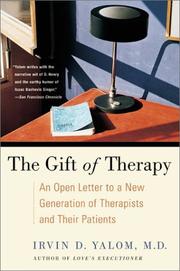
A master therapist's distilled wisdom on the therapeutic relationship; reading it second gives the newcomer a vocabulary for presence, meaning, and human connection before formal theory begins.
Foundations — Psychology, Counseling, and the Self
BeginnerUnderstand the psychological underpinnings of human behavior, the landscape of mental health conditions, and the core personal qualities and basic skills every counselor must develop.
▸ Study plan for this stage
Pace: 12–14 weeks total, reading roughly 25–35 pages per day. Allocate ~4 weeks for Lahey's "Psychology: An Introduction" (broad and dense with concepts), ~4 weeks for Egan's "The Skilled Helper" (practice-oriented, re-read key chapters), and ~4–5 weeks for Rogers' "On Becoming a Person" (reflective and p
- Core psychological frameworks (biological, psychodynamic, behavioral, cognitive, humanistic, and sociocultural perspectives) as surveyed in Lahey — understanding that human behavior is multi-caused
- Major mental health conditions (anxiety, mood disorders, personality disorders, psychosis) and their diagnostic landscape, drawn from Lahey's abnormal psychology chapters
- Egan's three-stage Skilled Helper model: Stage I (current picture — exploring the problem), Stage II (preferred picture — setting goals), Stage III (the way forward — action strategies)
- The microskills of helping from Egan: active listening, empathic responding, probing, summarizing, and challenging — and how they serve the client's agenda, not the helper's
- The therapeutic relationship as the primary vehicle of change — Egan's emphasis on the working alliance
- Rogers' three core conditions for therapeutic growth: unconditional positive regard, empathic understanding, and congruence (genuineness)
- The concept of the 'fully functioning person' and the actualizing tendency in Rogers — human beings as naturally growth-oriented when conditions are right
- Self-awareness as a professional tool — Rogers' argument that the counselor's own personal growth is inseparable from their effectiveness with clients
- After reading Lahey, can you explain how at least three different psychological perspectives (e.g., cognitive, humanistic, biological) would each interpret the same presenting problem, such as depression?
- What are Egan's three stages of the Skilled Helper model, and what is the counselor's primary task at each stage? Why does Egan insist the model is client-centered rather than technique-centered?
- According to Egan, what distinguishes a 'skilled helper' from a well-meaning friend? What specific communication behaviors separate empathic responding from simple sympathy?
- Rogers argues that the therapist's congruence is as important as their technique. What does congruence mean in practice, and why does Rogers believe its absence undermines the other core conditions?
- How does Rogers' concept of the 'actualizing tendency' challenge deficit-based models of mental illness presented in Lahey's abnormal psychology chapters?
- Reflecting on all three books: what personal qualities, blind spots, or life experiences do you currently bring to a helping role, and how might they help or hinder a future counseling relationship?
- Lahey concept map: After finishing each major section of Lahey (e.g., learning, memory, development, abnormal psychology), draw a one-page concept map linking the key terms. At the end, add a second layer showing how each concept could appear in a counseling session.
- Egan microskills practice log: Find a willing partner (friend, classmate, or family member). Conduct three 10-minute 'helper' conversations spaced across your reading of Egan — one per stage of the model. Audio-record each session (with consent), then review it against Egan's criteria for active listening and empathic responding. Write a one-paragraph self-critique after each.
- Empathic response writing drill (from Egan): Take five written client statements (you can invent them or find examples online). Write three different responses to each: (1) a sympathetic but non-empathic reply, (2) an Egan-style empathic reflection, and (3) a probe that opens new exploration. Compare and discuss the differences.
- Rogers reflective journal: While reading 'On Becoming a Person,' keep a dedicated journal. After each chapter, write for 10 minutes on one prompt: 'Where in my own life have I experienced — or failed to offer — unconditional positive regard, empathy, or congruence?' Aim for honesty over polish.
- Personal theory of helping statement: After completing all three books, write a 1–2 page 'personal theory of helping' that synthesizes Lahey's psychological foundations, Egan's practical model, and Rogers' humanistic philosophy. Identify two personal strengths and two growth edges you will carry into the next stage of study.
- Case conceptualization mini-exercise: Choose one fictional character from a film or novel who displays clear psychological distress. Write a one-page case note using (a) Lahey's framework to describe the likely contributing factors, (b) Egan's Stage I questions to explore the problem space, and (c) Rogers' core conditions to describe the therapeutic environment you would create.
Next up: Mastering the psychological foundations from Lahey, the structured helping model from Egan, and the humanistic self-awareness from Rogers equips the reader with the conceptual vocabulary and reflective habits needed to engage with more advanced, specialized counseling theories and clinical techniques in the next stage.
A clear, comprehensive introductory psychology text that builds the essential vocabulary — perception, learning, memory, development, abnormal behavior — needed to make sense of everything that follows.
The single most widely assigned counseling-skills textbook in graduate programs; it introduces the problem-management model and the concrete micro-skills (active listening, empathy, challenging) that form the backbone of counselor training.
Rogers' foundational articulation of person-centered therapy establishes the 'core conditions' — empathy, unconditional positive regard, congruence — that research consistently links to positive outcomes, and grounds the learner in why the human relationship is the mechanism of change.
Core Therapeutic Modalities — Theory into Practice
IntermediateGain working knowledge of the major evidence-based therapeutic approaches used in counseling practice today, understanding both their theory and their practical application.
▸ Study plan for this stage
Pace: 10–12 weeks total. Book 1 (Corey): 4 weeks, ~25–30 pages/day — read one theory chapter per sitting, pausing to summarize before moving on. Book 2 (Beck): 3 weeks, ~20–25 pages/day — slower, skills-focused reading with active note-taking on techniques. Book 3 (van der Kolk): 3 weeks, ~20 pages/day —
- Theoretical pluralism and eclecticism: how Corey frames the major counseling theories (psychoanalytic, Adlerian, existential, person-centered, Gestalt, behavioral, CBT, REBT, reality therapy, feminist, and postmodern) as a menu of lenses rather than competing absolutes
- Core conditions of the therapeutic relationship (empathy, unconditional positive regard, congruence) as foundational across modalities, per Corey's person-centered chapters
- The cognitive model: Beck's foundational triad of automatic thoughts, intermediate beliefs, and core beliefs, and how distorted thinking patterns drive emotional distress
- The structure of a CBT session: agenda-setting, mood check, homework review, capsule summaries, and collaborative empiricism as described by Judith Beck
- Cognitive restructuring tools: Socratic questioning, thought records, behavioral experiments, and activity scheduling from Beck's practical chapters
- Trauma and the nervous system: van der Kolk's argument that trauma is stored somatically, disrupting brain regions (prefrontal cortex, amygdala, hippocampus) and the body's stress-response systems
- Body-based and integrative trauma interventions: EMDR, yoga, neurofeedback, and somatic therapies as presented by van der Kolk, and how they complement talk-therapy modalities
- The counselor's self-awareness and personal development: Corey's recurring emphasis on the therapist's own values, biases, and ongoing growth as an ethical and clinical imperative
- According to Corey, what are the key philosophical assumptions that distinguish a humanistic/existential approach (e.g., person-centered) from a cognitive-behavioral approach, and when might a counselor choose one over the other?
- Using Beck's cognitive model, trace the pathway from a triggering situation to an emotional and behavioral response — identifying the roles of automatic thoughts, intermediate beliefs, and core beliefs along the way.
- What specific techniques does Judith Beck describe for identifying and challenging automatic thoughts, and how does the thought record serve as a practical tool in session and between sessions?
- How does van der Kolk define trauma's impact on the brain and body, and why does he argue that purely verbal/cognitive therapies are sometimes insufficient for trauma survivors?
- Which body-based or somatic interventions does van der Kolk advocate for, and how do they address the physiological dimensions of trauma that CBT alone may not reach?
- Drawing on all three books, how would you construct a rationale for an integrative approach to a client presenting with depression rooted in childhood trauma — which elements from each author's framework would you combine and why?
- Theory comparison matrix (Corey): After finishing each theory chapter, fill in a one-page table with columns for Key Theorist, Core Assumptions about Human Nature, Role of the Therapist, Primary Techniques, and Best-Fit Client Presentations. By the end of Corey, you will have a portable reference covering all major modalities.
- Thought record practice (Beck): For two weeks during and after reading Beck, complete a 7-column thought record on a personally relevant (non-clinical) worry or frustration each day — situation, automatic thought, emotion, evidence for, evidence against, balanced thought, outcome. This builds the muscle memory needed to teach the skill to clients.
- Mock CBT session outline (Beck): Write a detailed session plan for a hypothetical client with mild depression, following Beck's session structure: agenda, mood check, bridge from last session, homework review, main intervention using Socratic questioning, capsule summary, new homework assignment, and final feedback.
- Trauma case conceptualization (van der Kolk): Choose one of van der Kolk's anonymized case narratives and write a 1–2 page conceptualization that (a) identifies the trauma's neurobiological footprint using his framework, (b) explains why a purely cognitive approach might be limited, and (c) proposes a phased treatment plan incorporating at least one somatic or body-based intervention he describes.
- Integrative treatment proposal: Select a single fictional composite client profile (e.g., 32-year-old with generalized anxiety and a history of relational trauma) and write a 2–3 page integrative treatment rationale that explicitly draws on at least one concept from each of the three books — naming the source — showing how Corey's theoretical pluralism, Beck's CBT structure, and van der Kolk's som
- Peer or self-role-play (Corey + Beck): Record a 10-minute mock counseling session (with a willing peer or by scripting both sides) in which you practice at least three techniques from different modalities covered in Corey, then reflect in writing on which felt most natural, which felt awkward, and what that reveals about your emerging theoretical orientation.
Next up: ">Mastering these core modalities — their theory, structure, and somatic dimensions — equips the reader with the clinical vocabulary and conceptual toolkit needed to tackle the next stage's focus on assessment, diagnosis, and case conceptualization, where these therapeutic lenses must be applied systematically to real client presentations.

The canonical survey text used in virtually every counseling theories course; it walks through psychoanalytic, Adlerian, existential, CBT, REBT, DBT, and other major approaches side-by-side, giving the learner a map of the whole field.

CBT is the most empirically supported modality in the field; this is its definitive practical guide, and reading it after Corey's survey allows the learner to go deep on the approach they will use most in early practice.
Trauma is present in the majority of counseling caseloads; this landmark book explains the neuroscience of trauma and the body-based approaches that CBT alone cannot address, broadening the learner's clinical lens at exactly the right moment.
Professional Identity — Licensure, Ethics, and the Future of the Field
ExpertUnderstand the degree and licensure pathway (LPC/LMHC), the ethical and multicultural obligations of the profession, and how to think clearly about AI, demand trends, and what makes human counseling irreplaceable.
▸ Study plan for this stage
Pace: 10–12 weeks total: Weeks 1–3 — Erford's "Orientation to the Counseling Profession" (~25–30 pages/day, focusing on licensure chapters and professional identity sections); Weeks 4–7 — Corey's "Issues and Ethics in the Helping Professions" (~20–25 pages/day, slower pace to allow ethical reflection and
- Licensure pathways: the distinctions between LPC (Licensed Professional Counselor) and LMHC (Licensed Mental Health Counselor) designations, state-by-state variance, supervised hours requirements, and the role of CACREP accreditation (Erford)
- Professional identity formation: what it means to self-identify as a counselor rather than an adjacent helping professional, and the historical development of the counseling field (Erford)
- The ACA Code of Ethics as a living document: informed consent, confidentiality, dual relationships, competence boundaries, and mandatory vs. permissive reporting obligations (Corey)
- Multicultural and social justice competencies: the ethical obligation to recognize privilege, systemic oppression, and culturally responsive practice as non-negotiable professional standards (Corey)
- Ethical decision-making models: how to apply structured frameworks (e.g., Corey's seven-step model) when facing real-world dilemmas rather than relying on intuition alone (Corey)
- Empathy as a civilizational force: Rifkin's argument that human empathy has historically expanded in tandem with communication technology — and what that means for the counseling relationship in a digital age (Rifkin)
- The irreplaceability of the human counseling relationship: why embodied presence, attunement, and relational repair cannot be automated, even as AI tools enter the mental health space (Rifkin + Corey synthesis)
- Demand trends and the future of the field: workforce shortages, telehealth expansion, and the counselor's evolving role in integrated care settings (Erford + Rifkin synthesis)
- After reading Erford, can you map out the full licensure pathway from bachelor's degree to independent LPC/LMHC practice in your state, including required supervised hours and exam names?
- What are the five most commonly tested ethical dilemmas in Corey's text, and how does his structured decision-making model guide resolution differently than a purely intuitive approach?
- How does Corey frame the tension between client autonomy and counselor duty to protect — and under what specific conditions does confidentiality legally break down?
- According to Rifkin, how has the expansion of empathic reach across human history been tied to shifts in communication technology, and what does this imply about AI-mediated therapy tools?
- Drawing on all three books, what is your evidence-based argument for why human counselors remain irreplaceable even as AI diagnostic and support tools become more sophisticated?
- How do Erford's professional identity framework and Corey's multicultural ethics chapters together define what it means to practice with cultural humility rather than mere cultural competence?
- Licensure roadmap: Using Erford as your foundation, create a one-page visual flowchart of your specific state's LPC or LMHC pathway — include degree requirements, practicum/internship hours, supervision ratios, required exams (NCE/NCMHCE), and renewal CEU obligations. Post it somewhere visible.
- Ethical case journal: While reading Corey, write a 1-page response to at least five of his case vignettes using his structured ethical decision-making model step by step. Do not skip to the answer — work through each step before reading his analysis.
- Multicultural self-audit: After completing Corey's multicultural chapters, write a candid 2-page reflection identifying three of your own cultural assumptions or blind spots and how each could affect a specific client population you expect to serve.
- AI vs. human debate prep: After finishing Rifkin, write a structured 500-word argument both FOR and AGAINST AI replacing human counselors. Then write a 250-word synthesis that uses evidence from all three books to land on a nuanced, defensible position.
- Informational interview: Contact one licensed LPC or LMHC (via LinkedIn, a local community mental health center, or a university counseling department) and ask them five questions drawn directly from Erford and Corey — e.g., how they navigate dual-relationship risks, how licensure differed from their expectations, and how they see AI affecting their caseload.
- Synthesis essay: Write a 750–1,000 word personal professional identity statement that integrates Erford's identity framework, Corey's ethical obligations, and Rifkin's vision of empathy — articulating who you are as a future counselor, what you stand for ethically, and how you plan to stay human-centered in a tech-saturated field.
Next up: By crystallizing your professional identity, mastering the ethical scaffolding of the field, and thinking critically about the future of counseling, you are now prepared to move into the next stage — where the focus shifts from who a counselor is to what a counselor does, diving into clinical theory, evidence-based modalities, and the actual practice of the therapeutic relationship.

The most comprehensive single-volume guide to the counseling profession's identity, accreditation (CACREP), licensure requirements by state, specialty areas, and professional organizations — essential reading before applying to any program.
Ethical decision-making is a licensure exam domain and a daily clinical reality; this text presents real dilemmas around confidentiality, dual relationships, technology, and cultural competence, preparing the learner for both the exam and practice.

A sweeping argument for why empathy is the defining human capacity — and why it cannot be automated; reading this last reaffirms the learner's conviction about why they are entering this field precisely as AI reshapes the economy around them.
Discussion
Keep reading
Paths that share books, cover the same subject, or open a related topic.