Best Books on Exercise Physiology, in Order
This curriculum builds from a solid intermediate foundation in exercise physiology toward graduate-level mastery, covering energy systems, cardiovascular adaptation, VO2 max, strength and hypertrophy science, and evidence-based training methodology. Each stage assumes the previous one's vocabulary, so concepts like ATP-PCr kinetics or lactate threshold introduced early become the scaffolding for the mechanistic and research-heavy texts that follow.
Foundations Refreshed
IntermediateSolidify core exercise physiology concepts — energy systems (phosphagen, glycolytic, oxidative), cardiorespiratory function, and basic muscle physiology — at a level that prepares you for mechanistic and research-driven texts.
▸ Study plan for this stage
Pace: 8–10 weeks, ~40–50 pages/day (focusing on Parts 1–3: Energy Systems, Cardiorespiratory Physiology, and Muscle Structure & Function)
- The three energy systems (ATP-PCr/phosphagen, anaerobic glycolysis, aerobic oxidative) and their relative contributions to different exercise durations and intensities
- Oxygen uptake (VO₂), oxygen delivery, and the Fick equation as the foundation for understanding cardiorespiratory responses to exercise
- Cardiac output, stroke volume, and heart rate regulation during rest and exercise
- Pulmonary ventilation, gas exchange, and the role of the respiratory system in supporting aerobic metabolism
- Muscle fiber types (Type I, Type IIa, Type IIx) and their metabolic and contractile properties
- The sliding filament theory and the molecular basis of muscle contraction (actin-myosin interaction)
- Lactate production, lactate threshold, and the lactate shuttle concept
- Bioenergetics: ATP synthesis pathways, efficiency, and energy cost of exercise
- Explain the relative contributions of the phosphagen, glycolytic, and oxidative systems to a 10-second sprint, a 2-minute effort, and a 30-minute steady-state run. Why does the contribution of each system shift?
- What is the Fick equation, and how does it explain why VO₂max is limited by both central (cardiac output) and peripheral (arteriovenous O₂ difference) factors?
- Describe the mechanisms by which stroke volume and heart rate increase during exercise, and explain why cardiac output can increase 4–5 fold from rest to maximal exercise.
- How do Type I and Type II muscle fibers differ in their oxidative capacity, glycolytic capacity, and fatigue resistance? Which fiber type is preferentially recruited during low-intensity versus high-intensity exercise?
- What is the lactate threshold, and why is it considered a better predictor of endurance performance than VO₂max alone?
- Explain the sliding filament theory: how do actin and myosin interact to produce force, and what role does ATP play in muscle contraction and relaxation?
- Create a detailed energy system comparison table: for each system (phosphagen, glycolytic, oxidative), list the substrate, ATP yield per substrate molecule, duration of peak contribution, limiting factors, and byproducts. Use this to predict which system dominates in specific sports (e.g., 100m sprint, 400m run, marathon).
- Work through Fick equation calculations: given cardiac output and arteriovenous O₂ difference values, calculate VO₂; then manipulate variables to understand how changes in heart rate, stroke volume, or muscle oxygen extraction affect aerobic capacity.
- Sketch and label the sliding filament mechanism during contraction and relaxation, showing the role of ATP, calcium, tropomyosin, and troponin. Explain what happens when ATP is depleted (rigor mortis analogy).
- Analyze a lactate accumulation curve from a graded exercise test: identify the lactate threshold, estimate the corresponding heart rate and power output, and discuss how training might shift this threshold.
- Compare muscle fiber recruitment patterns across three different exercise scenarios (e.g., low-intensity steady-state, high-intensity interval, maximal strength effort) using the Henneman size principle and metabolic demands.
- Design a simple experiment or thought experiment: predict how VO₂max, lactate threshold, and muscle fiber composition would change in an untrained person after 8 weeks of aerobic training, and justify your predictions using McArdle's mechanistic explanations.
Next up: This stage establishes the mechanistic and quantitative foundation (energy pathways, cardiorespiratory regulation, muscle physiology) that the next stage will build upon with advanced topics such as training adaptations, environmental stressors, special populations, and research-driven applications.
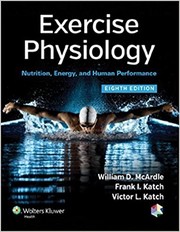
The definitive intermediate-to-advanced textbook covering all three energy systems, VO2 max, and cardiovascular adaptation in rigorous but accessible depth. Read first to establish a shared vocabulary for everything that follows.
Endurance & the Cardiovascular Engine
IntermediateDevelop a deep, evidence-based understanding of VO2 max, lactate threshold, mitochondrial biogenesis, and the physiological determinants of endurance performance.
▸ Study plan for this stage
Pace: 8–10 weeks, ~40–50 pages/day (approximately 3–4 hours of focused reading per week)
- VO2 max as the gold standard measure of aerobic capacity: definition, measurement methods (direct vs. predicted), and its role as a performance predictor across different endurance sports
- Lactate threshold (LT) and OBLA (onset of blood lactate accumulation): physiological mechanisms, how it differs from VO2 max, and why it's often a better predictor of sustained endurance performance
- Mitochondrial biogenesis and oxidative enzyme adaptation: how endurance training triggers mitochondrial growth, increases capillary density, and improves oxygen utilization at the cellular level
- The three energy systems (aerobic, anaerobic, phosphocreatine) and their interplay during endurance exercise, with emphasis on aerobic dominance in distance running
- Training intensity distribution and the polarized training model: why easy runs, tempo work, and high-intensity intervals each serve distinct physiological adaptations
- Cardiac adaptations to endurance training: stroke volume, cardiac output, and the distinction between athletic and pathological cardiac remodeling
- Individual variability in endurance response: genetic factors, training age, sex differences, and why some athletes respond better to certain training stimuli than others
- The limits of endurance performance: central (neural/cardiac) vs. peripheral (muscular/metabolic) factors, and how they shift with training status and fatigue
- What is VO2 max, how is it measured directly versus predicted, and why is it important but not the sole determinant of endurance performance?
- Explain the physiological difference between lactate threshold and VO2 max. Why can an athlete with a lower VO2 max but higher lactate threshold often outperform someone with the opposite profile?
- Describe the process of mitochondrial biogenesis in response to endurance training. What specific training intensities and durations most effectively trigger this adaptation?
- What are the three energy systems, and how do they contribute to a 5K run, a marathon, and a 100-mile ultramarathon?
- How does the polarized training model (easy/hard distribution) lead to better endurance adaptations than moderate-intensity training, and what does Daniels' formula prescribe for each intensity zone?
- What cardiac adaptations occur with endurance training, and how can you distinguish between beneficial athletic remodeling and potentially harmful pathological changes?
- Why do some athletes respond dramatically to high-intensity interval training while others show minimal gains? What factors explain individual variability in training response?
- Calculate your own VO2 max using Daniels' prediction formulas (based on recent race times), then estimate your lactate threshold pace using the tables provided. Compare the two and predict which will be more predictive of your next race performance.
- Conduct a 3-week training block following Daniels' recommended intensity distribution for your goal race (e.g., 80% easy, 10% tempo, 10% VO2 max work). Track weekly mileage, perceived effort, and resting heart rate to observe early adaptations.
- Read and annotate the cardiac case studies in 'The Haywire Heart' (particularly the arrhythmia and sudden cardiac death cases). For each, identify the proposed mechanisms and list the warning signs that might have been caught earlier.
- Create a personal training plan that incorporates the three energy systems appropriately for your chosen endurance goal (5K, half-marathon, marathon, or ultra). Justify the intensity distribution based on the physiological demands of that distance.
- Perform a lactate threshold test (either via lab testing or using a field-based protocol like a 30-minute time trial) and determine your OBLA pace. Design a 4-week block of tempo runs and threshold intervals, then retest to measure adaptation.
- Analyze a case study from 'Endure' (e.g., the discussion of central vs. peripheral fatigue, or the limits of human performance) and write a 500-word reflection on how that concept applies to a recent race or training experience of your own.
Next up: This stage establishes the physiological foundations of endurance performance—VO2 max, lactate threshold, and mitochondrial adaptation—which are the building blocks for the next stage's focus on periodization, tapering, and race-specific training strategies.
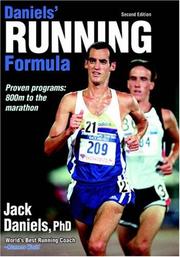
Written by one of the foremost exercise physiologists in endurance sport, this book grounds VO2 max and training intensity zones in hard data and decades of athlete testing — essential for understanding how theory becomes prescription.

Examines the cardiovascular limits and maladaptations of extreme endurance training, adding a critical, evidence-based counterpoint that deepens understanding of cardiac remodeling and safe training loads.

A rigorously sourced exploration of the central governor model, fatigue, and the psychophysiological limits of human performance — broadens the purely mechanical view of VO2 max with cutting-edge research.
Strength, Hypertrophy & Neuromuscular Adaptation
IntermediateUnderstand the cellular and neural mechanisms behind strength gain and muscle hypertrophy, and evaluate the evidence base for resistance training variables.
▸ Study plan for this stage
Pace: 8–10 weeks, ~25–30 pages/day (approximately 4–5 hours/week of focused reading and note-taking)
- The neuromuscular system's structural hierarchy: motor units, muscle fiber types, and their recruitment patterns during strength training
- Mechanisms of hypertrophy: protein synthesis, mechanical tension, metabolic stress, and muscle damage as drivers of adaptation
- The force-velocity relationship and its implications for exercise selection and training outcomes
- Periodization principles: how to manipulate training variables (intensity, volume, frequency) to optimize strength and hypertrophy adaptations
- Zatsiorsky's classification of strength training methods (maximum effort, dynamic effort, and repeated effort) and their neurological vs. morphological effects
- Neural adaptations in early strength training: motor unit recruitment, rate coding, and synchronization as mechanisms of strength gain without hypertrophy
- Evidence-based resistance training variables: load, volume, tempo, rest intervals, and exercise selection for specific adaptation goals
- Individual differences in response to training: genetic factors, training age, and sex differences in strength and hypertrophy potential
- What are the three primary methods of strength training according to Zatsiorsky, and how do their neurological and morphological effects differ?
- Explain the force-velocity relationship and how it influences exercise selection for strength versus hypertrophy goals.
- What are the mechanisms by which neural adaptations contribute to strength gains in the first 4–8 weeks of training, and how do they differ from hypertrophy-driven adaptations?
- How do mechanical tension, metabolic stress, and muscle damage each contribute to hypertrophy, and what training variables manipulate each mechanism?
- What is the role of motor unit recruitment and rate coding in strength development, and how can training be designed to target these neural adaptations?
- Based on evidence presented in Zatsiorsky, what are the optimal training variables (load, volume, frequency, rest) for maximizing strength versus hypertrophy in intermediate lifters?
- Map out the three Zatsiorsky training methods (maximum effort, dynamic effort, repeated effort) for a specific lift (e.g., squat or bench press). Design a 4-week microcycle using each method and predict the primary adaptations (neural vs. morphological) for each.
- Analyze your own training data or a sample program: identify which training variables (load, volume, tempo, rest intervals) align with each of Zatsiorsky's methods and hypothesize the expected adaptations.
- Create a periodized 12-week strength and hypertrophy program for an intermediate lifter, explicitly manipulating force-velocity characteristics and training variables across phases. Justify each phase based on Zatsiorsky's principles.
- Conduct a literature review exercise: find 3–5 peer-reviewed studies on a specific resistance training variable (e.g., rest interval duration or tempo) and evaluate whether the findings align with Zatsiorsky's theoretical framework.
- Design a case study comparing two training approaches (e.g., heavy singles vs. moderate-load high-volume work) for the same individual. Predict neural and morphological adaptations for each based on Zatsiorsky's mechanisms.
- Perform a self-experiment: train one muscle group using maximum effort methods and another using repeated effort methods for 4 weeks. Track strength gains, muscle soreness, and perceived fatigue to compare neural versus hypertrophy-focused adaptations.
Next up: This stage establishes the foundational science of how strength and hypertrophy occur at the cellular and neural level, positioning you to evaluate programming strategies, advanced periodization models, and sport-specific applications in subsequent stages.
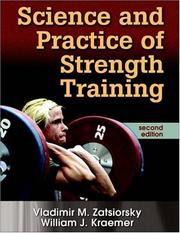
The canonical scientific text on strength adaptation, covering motor unit recruitment, force-velocity relationships, and periodization with a depth that no popular book matches. Read before hypertrophy-specific texts.
The most comprehensive evidence-based synthesis of hypertrophy mechanisms (mechanical tension, metabolic stress, muscle damage) available; Schoenfeld's research background makes this the gold standard for the topic.
Advanced Mechanisms & Research Literacy
ExpertEngage with exercise physiology at a graduate level — understanding molecular signaling (AMPK, mTOR), integrative physiology, and how to critically read and apply primary research.
▸ Study plan for this stage
Pace: 8–10 weeks, ~40–50 pages/day (Powers first: 3–4 weeks; Wackerhage second: 4–5 weeks). Allocate 1–2 days per week for research paper synthesis and lab protocol review.
- Molecular signaling cascades in response to exercise (AMPK, mTOR, MAPK, calcium-calmodulin signaling) and their tissue-specific outcomes
- Mitochondrial biogenesis and PGC-1α as a master regulator of oxidative adaptation
- Protein synthesis and degradation pathways (mTOR/S6K vs. AMPK/FOXO) and their balance in muscle remodeling
- Integrative physiology: how molecular signals coordinate across skeletal muscle, cardiac muscle, and metabolic tissues
- Epigenetic and transcriptional regulation of exercise-induced gene expression (histone acetylation, DNA methylation)
- Critical appraisal of primary research: study design, mechanistic inference, and translational limitations in exercise physiology
- Systems-level integration: linking acute molecular responses to chronic training adaptations and phenotypic outcomes
- Species differences and translational gaps between rodent models and human exercise physiology
- How does AMPK activation during exercise differ from mTOR signaling, and what are the downstream consequences for metabolic adaptation in different fiber types?
- Explain the role of PGC-1α in mitochondrial biogenesis and how its activation integrates signals from multiple upstream kinases (AMPK, SIRT1, p38 MAPK).
- What are the molecular mechanisms by which resistance training and endurance training produce distinct patterns of gene expression and protein remodeling?
- How do you critically evaluate a primary research paper in exercise physiology to distinguish mechanistic insights from correlational findings or model-specific artifacts?
- Describe the cross-talk between skeletal muscle, adipose tissue, and liver during and after exercise, and identify key circulating factors (myokines, hormones) that mediate these interactions.
- What are the major limitations in translating rodent exercise physiology findings to human populations, and how should this inform interpretation of mechanistic studies?
- Map a complete signaling cascade (e.g., muscle contraction → AMPK → SIRT1 → PGC-1α → mitochondrial genes) using both Powers and Wackerhage; annotate tissue-specific outcomes and feedback loops.
- Select 3–4 primary research papers on a single molecular target (e.g., mTOR, FOXO3, or NRF1) and create a critical appraisal table: study design, model organism, key findings, limitations, and human relevance.
- Design a hypothetical exercise intervention (acute bout or training program) and predict the molecular signaling cascade and gene expression changes using principles from both texts; compare predictions to published data.
- Create a concept map integrating acute molecular responses (minutes–hours post-exercise) with chronic adaptations (weeks–months), showing feedback mechanisms and tissue cross-talk.
- Conduct a mini-literature review (5–8 papers) on a specific adaptation (e.g., mitochondrial density, angiogenesis, or metabolic flexibility) and synthesize findings across different exercise modalities and populations.
- Critique a published exercise physiology study: identify the mechanistic claims, evaluate whether the data support them, and discuss alternative explanations or confounds.
Next up: This stage equips you with the molecular and integrative foundation to design evidence-based interventions, evaluate emerging therapies (e.g., AMPK activators, mTOR inhibitors), and conduct or critically appraise your own research—preparing you for specialized applications in clinical exercise physiology, sports science, or aging/disease models.

A graduate-level text that goes deeper into cellular and molecular mechanisms than McArdle, covering signaling pathways, gene expression responses to exercise, and integrative organ-system physiology.

The only major textbook dedicated entirely to the molecular biology of exercise — AMPK, mTOR, PGC-1α, and satellite cells explained from first principles. Read last as the capstone of mechanistic understanding.
Discussion
Keep reading
Paths that share books, cover the same subject, or open a related topic.