Exercise physiology has an unusual reading problem: the textbooks are excellent and the popular books are excellent, but they answer different questions. The textbook tells you what happens to a mitochondrion at 85% of VO2max. The applied book tells you how many minutes to run at that intensity on Tuesday. Read only the first and you will know a great deal and train badly; read only the second and you will follow prescriptions without knowing when they stop applying.
Order also matters because the reference textbooks are enormous. Nobody reads a thousand-page physiology text cover to cover on a first pass. Come to it with concrete questions from the applied books and it becomes a lookup tool instead of a wall.
A note before starting: these books explain mechanisms and training principles, not your body specifically. Cardiac symptoms, persistent injury, or any programming around a diagnosed condition belong with a physician or a credentialed exercise physiologist, not a book.
The reference spine
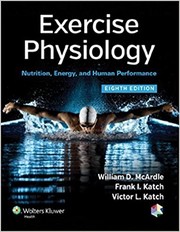
Exercise Physiology: Nutrition, Energy, and Human Performance is the standard survey — McArdle, Katch and Katch cover energy systems, cardiorespiratory function, thermoregulation, and body composition at the level a degree program expects. Keep it on the desk rather than the nightstand. Exercise physiology by Scott Powers and Edward Howley is the leaner alternative, organized more tightly around theory-to-application, and many readers find it the better first textbook. You do not need both — pick McArdle if you want breadth and nutrition coverage, Powers if you want a cleaner path through the core mechanisms.
Applied training science
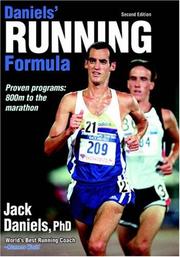
Daniels' running formula is the most useful bridge between physiology and a training week ever written for endurance athletes. Jack Daniels converts VO2max and lactate-threshold concepts into paces you can actually run, with the VDOT tables that made the book famous. For strength, Science and practice of strength training is the counterpart: Vladimir Zatsiorsky and William Kraemer explain force production, the size principle, and periodization from a Soviet sport-science lineage that predates most Western training literature.
The interesting edges
Endure by Alex Hutchinson asks where the actual limit sits — muscle, fuel, or brain — and walks through the evidence for central governor models and perceived-effort research without pretending the debate is settled. It is the best popular account of why two athletes with identical physiology perform differently. Then The Haywire Heart, which covers the arrhythmias and cardiac remodeling that show up in some long-term endurance athletes. It is a genuinely uncomfortable book and an honest one; read it as a prompt to get symptoms checked, not as a reason to stop training.
Down to the molecular level
Finish with Molecular Exercise Physiology. Henning Wackerhage and colleagues take the same adaptations you read about at the whole-body level and explain them as signaling: mechanical load, AMPK and mTOR pathways, gene expression, and why concurrent training can blunt strength gains. It only makes sense after the earlier books, which is exactly why it sits last.
A practical note on how to use the two textbooks: read the energy-systems and cardiorespiratory chapters properly, front to back, because everything else in the field depends on them. The rest — thermoregulation, altitude, ergogenic aids, body composition — is better handled as reference material you open when a training question raises it. Trying to read a survey text linearly is the most common reason people abandon this subject after three weeks.
Read in this order and the textbook stops feeling like homework — every chapter answers a question the applied books already raised. Follow the full path to keep that sequence, or explore related science subjects from the hub.
Follow the full ordered path here: How to Learn Exercise Physiology from Books, in Order.