Ride farther: road & gravel cycling
This four-stage curriculum takes a beginner road and gravel cyclist from first principles to elite-level endurance performance. Each stage builds on the last: you first establish the physical and mechanical foundations, then layer on structured training science, then master fueling and long-effort physiology, and finally immerse yourself in the culture and tactics of gravel and endurance riding that will keep you motivated for years.
Foundations: Bike, Body & Basic Skills
BeginnerUnderstand how a bike should fit your body, develop safe and confident handling skills on road and gravel, and build a working vocabulary for everything that follows.
▸ Study plan for this stage
Pace: 10–12 weeks total. Week 1–4: "The Bicycling Guide to Complete Bicycle Maintenance & Repair" by Todd Downs (~20–25 pages/day, focusing on drivetrain, brakes, and wheel chapters first). Week 5–7: "Bike Fit" by Phil Burt (~15–20 pages/day, re-reading key chapters on saddle and cleat positioning twice).
- Bicycle anatomy & component vocabulary: being able to name and describe the function of every major part — drivetrain, braking system, wheels, cockpit — as presented in Downs' maintenance guide
- Preventive maintenance routines: Downs' framework for cleaning, lubricating, and inspecting a bike before and after every ride to catch problems early
- The five contact points (hands, sit bones, feet × 2, and crotch) and why Phil Burt's fit system is built around optimising each one independently
- Saddle height, fore-aft position, and tilt: the three adjustments Burt identifies as having the greatest injury-prevention impact for new riders
- Cleat alignment and float: Burt's explanation of how poor foot position transfers stress up the kinetic chain to the knee and hip
- Rider typology and self-assessment: Friel's concept of identifying your current fitness baseline, limiters, and riding goals before any training begins
- The aerobic base and training zones: Friel's heart-rate and power zone model (Zones 1–5) and why Zone 2 aerobic work dominates a beginner's early weeks
- Recovery as a training variable: Friel's principle that adaptation happens during rest, not during the ride itself — a mindset shift critical for beginners
- After reading Downs, can you walk up to an unfamiliar road or gravel bike and correctly name every major component group, explain what it does, and identify any obvious signs of wear or damage?
- What are the step-by-step procedures Downs outlines for fixing a flat tyre, adjusting brake pad alignment, and indexing a rear derailleur — and can you perform each one without referring to the book?
- According to Phil Burt, what is the correct method for measuring saddle height, and what are the two most common beginner mistakes that lead to knee pain?
- How does Burt differentiate a 'comfort fit' from a 'performance fit,' and which does he recommend for a rider who is new to road or gravel cycling and why?
- Using Friel's zone framework, how would you determine your own Zone 2 heart-rate range, and what type of ride (duration, perceived effort) would fall squarely within it?
- What does Friel mean by a 'limiter,' and how should a beginner use that concept to decide which physical qualities to prioritise in their first training block?
- Bike teardown & vocabulary drill (Downs): Lay your bike on a stand or the floor. Working through Downs' component chapters, touch each part, say its name aloud, and describe its function. Photograph any part that shows wear and note the fix required.
- Home mechanic session (Downs): Perform a full pre-ride safety check (M-check), remove and reinstall both wheels, fix a deliberately punctured inner tube, and re-index the rear derailleur after slackening the cable. Time yourself; aim to complete the whole sequence in under 45 minutes by week 4.
- Contact-point audit (Burt): Using Burt's self-assessment checklist, measure and record your current saddle height (heel method), saddle setback (plumb-bob method), and handlebar drop. Make one adjustment at a time, ride 20–30 minutes, and log any comfort changes in a notebook.
- Cleat alignment check (Burt): Have a friend photograph your feet on the pedals from behind while you ride on a turbo trainer or smooth road. Compare the angle to Burt's neutral-foot guidelines and adjust float accordingly. Repeat the photo check after adjustment.
- Zone 2 baseline ride (Friel): Using Friel's formula or a field test to estimate your maximum heart rate, set your Zone 2 range and complete three × 45-minute rides in that zone over one week. Log average HR, perceived effort, and average speed to establish a personal baseline.
- Training-load journal (Friel): For four consecutive weeks, record every ride using Friel's basic metrics — duration, zone, and a one-line subjective note on fatigue and mood. At the end of week 4, review the log and identify your first observable pattern (e.g., fatigue spikes, a day that consistently feels strong).
Next up: Mastering how the bike works mechanically (Downs), how it should fit your unique body (Burt), and how your body responds to training load (Friel) gives you the stable, injury-free platform you need to absorb more demanding training methodologies and ride-specific techniques in the next stage.

Before training or racing, you must understand your machine. This comprehensive, heavily illustrated guide teaches you how a bike works, how to keep it running, and how to make basic fit adjustments — essential vocabulary for every later book.

Written by the former head physio at British Cycling, this is the most practical and evidence-based guide to achieving a pain-free, powerful position. Reading it early prevents ingrained bad habits and makes every training hour more effective.

Friel's foundational text introduces the core concepts of periodization, training zones, and annual planning in accessible language. Reading it now gives you the mental framework — even if you won't apply the advanced plans until later stages.
Building Fitness: Structured Training on the Bike
IntermediateApply structured, science-backed training methods to systematically raise your fitness, understand power and heart rate metrics, and design a training plan suited to your goals.
▸ Study plan for this stage
Pace: 8–10 weeks total. Weeks 1–6: "Training and Racing with a Power Meter" (~25–30 pages/day, 4–5 days/week). Weeks 7–10: "The Time-Crunched Cyclist" (~20–25 pages/day, 4–5 days/week). Allow extra days after each book for review, reflection, and completing exercises before moving on.
- Functional Threshold Power (FTP): the cornerstone metric from Allen's book — what it is, how to test it (20-minute and ramp protocols), and why it anchors every training zone
- Power-based training zones (Levels 1–7 per Allen's coggan model): understanding what physiological adaptation each zone targets and how to ride precisely within them
- Training Stress Score (TSS), Chronic Training Load (CTL), Acute Training Load (ATL), and Training Stress Balance (TSB): using the Performance Management Chart to quantify fatigue, fitness, and form
- Normalized Power (NP) and Intensity Factor (IF): understanding why average power alone is misleading and how to measure the true physiological cost of a variable-effort ride
- Heart rate vs. power as training tools: the limitations of heart rate (cardiac drift, temperature, fatigue) and when each metric is most useful, as discussed across both books
- The Time-Crunched Cyclist Training Program (TCTP): Carmichael's philosophy of high-intensity, low-volume training for athletes with ≤8 hours/week, and the trade-offs vs. traditional periodization
- Interval types and their purposes: TempoIntervals, Steady-State Intervals, Climbing Repeats, and Power Intervals as defined by Carmichael — matching the right interval to the right goal
- Periodization and recovery: structuring training blocks (build, peak, recovery weeks) and understanding why rest is a productive part of raising fitness, drawn from both authors
- After completing an FTP test as described in 'Training and Racing with a Power Meter,' how do you calculate your seven training zones, and what is the primary physiological target of each zone?
- What does Training Stress Balance (TSB) tell you about your readiness to race or perform, and how should you interpret a deeply negative vs. a positive TSB on the Performance Management Chart?
- Why does Hunter Allen argue that Normalized Power is a more accurate reflection of training stress than average power, and in what type of ride does the difference between the two become most significant?
- According to Carmichael in 'The Time-Crunched Cyclist,' what are the core physiological adaptations targeted by the TCTP, and why does he argue that high-intensity intervals can substitute for high training volume for time-limited athletes?
- How would you design a 4-week training block using Carmichael's interval types (e.g., Power Intervals, Steady-State Intervals) for a cyclist whose primary goal is a 60-mile gran fondo?
- What are the key warning signs of overtraining that both Allen and Carmichael highlight, and how do the metrics from a power meter help you detect them before performance declines?
- Perform a 20-minute FTP test (as prescribed in 'Training and Racing with a Power Meter'), calculate your FTP (95% of 20-min average power), and derive all seven training zones — record these as your personal reference card for the rest of the stage
- Complete three rides of different character (a steady endurance ride, a group ride with surges, and an interval session) and compare Average Power vs. Normalized Power for each — write a short paragraph explaining why they diverge and what that means for how hard each ride actually was
- Build a simple Performance Management Chart in a spreadsheet (or use a free tool like intervals.icu) by logging TSS for every ride over 4 weeks, then plot CTL, ATL, and TSB — identify one week where you were 'fresh' and one where you were 'fatigued' and explain the numbers
- Select one 4-week block from Carmichael's TCTP (e.g., the Century plan or the Competitive plan) and actually execute it on the bike, logging power data for every interval session — compare your target power ranges to what you actually hit and note where you struggled
- After finishing 'The Time-Crunched Cyclist,' write a one-page training plan brief for yourself: state your goal event, your available weekly hours, which TCTP plan fits best, and how you would modify it (if at all) using the zone framework from Allen's book
- Review two of your past rides in your cycling software (Garmin Connect, TrainingPeaks, or Strava) and annotate them: identify which of Allen's training zones you spent the most time in, calculate the IF, and assess whether the ride matched its intended purpose
Next up: Mastering power metrics and structured training plans gives you the physiological vocabulary and data-driven mindset needed to tackle the next stage, where you'll apply that fitness to real-world riding challenges — race tactics, climbing strategy, and event-specific preparation on road and gravel.

Power is the most objective metric in cycling. This book teaches you to read, interpret, and train with a power meter — building directly on Friel's zone framework and turning abstract concepts into concrete workouts.
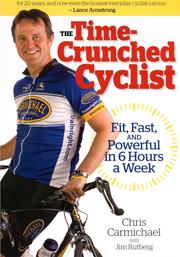
Most beginners have limited training hours; Carmichael's high-intensity, low-volume approach is specifically designed for real-world schedules. It bridges the gap between theory and a plan you can actually execute week to week.
Fueling & Endurance Physiology
IntermediateUnderstand how the body uses fuel during long efforts, develop a practical nutrition and hydration strategy for rides of 3–10+ hours, and learn to avoid the bonk and optimize recovery.
▸ Study plan for this stage
Pace: 8–10 weeks total: Week 1–2 — "The Haywire Heart" (~25 pages/day, ~180 pages); Week 3–5 — "Roar" (~20 pages/day, ~230 pages); Week 6–10 — "The Endurance Diet" (~20 pages/day, ~290 pages). Allow 1–2 buffer days per book for reflection and note-taking.
- Cardiac risk in endurance athletes: how chronic high-volume training can remodel the heart, and the warning signs that distinguish benign athlete's heart from dangerous arrhythmias (The Haywire Heart)
- The physiological differences between male and female athletes — hormonal fluctuations across the menstrual cycle, menopause, and how they directly alter substrate use, hydration needs, and recovery (Roar)
- Sex-specific fueling windows: why women oxidize more fat and less carbohydrate than men at the same relative intensity, and how to time carbohydrate intake around hormonal phases (Roar)
- The bonk (glycogen depletion) mechanism: how muscle and liver glycogen stores are finite, how depletion manifests, and the intake rates (30–90 g carbohydrate/hour) needed to forestall it on rides over 90 minutes (Roar + The Endurance Diet)
- Hydration and electrolyte balance: sweat-rate variability, sodium losses, hyponatremia risk on ultra-long efforts, and practical fluid-intake targets (Roar)
- The 5 Diet Quality Score (DQS) principles in The Endurance Diet: eating more of the highest-quality foods, less of the lowest-quality, and how daily diet quality underpins training adaptation and recovery (The Endurance Diet)
- Periodized nutrition: aligning carbohydrate availability with training load — fueling hard days, training low on easy days, and carbohydrate loading before key events (The Endurance Diet)
- Recovery nutrition timing: the post-ride anabolic window, protein synthesis rates, and the role of sleep nutrition in repairing muscle and restoring glycogen (Roar + The Endurance Diet)
- After reading The Haywire Heart, can you describe at least three cardiac warning signs that an endurance cyclist should never dismiss as 'just training fatigue,' and explain why high training volumes can cause structural heart changes?
- Based on Roar, how should a female cyclist adjust her carbohydrate and fluid intake during the luteal phase of her menstrual cycle compared to the follicular phase, and why does this matter for a 5-hour gravel ride?
- Using the frameworks from both Roar and The Endurance Diet, what is your personal hourly fueling plan (carbohydrates in grams, fluid in ml, sodium in mg) for a 7-hour ride in moderate heat?
- What are the five food-quality tiers in The Endurance Diet's DQS system, and how would you use a week of DQS tracking to identify the single biggest gap in your current diet?
- How does periodized nutrition (from The Endurance Diet) differ from simply 'eating more on hard days,' and what is one concrete way to implement a 'train low' session safely without compromising performance?
- Synthesizing all three books: what is your pre-ride, during-ride, and post-ride nutrition and cardiac-monitoring protocol for a 10-hour gravel event?
- Cardiac self-audit (The Haywire Heart): Log your resting heart rate every morning for 4 weeks and note any palpitations, dizziness, or unusual breathlessness during rides. Flag any anomalies and, if present, schedule a check-in with a sports cardiologist.
- Sweat-rate test (Roar): Weigh yourself nude before and after a 1-hour ride at endurance pace without drinking. Calculate sweat rate (weight loss in kg × 1000 = ml/hour). Use this number to set your per-hour fluid target and repeat in different weather conditions.
- Hormonal fueling journal (Roar — especially relevant for female cyclists): For one full menstrual cycle, track energy levels, perceived exertion at the same power output, and food cravings by cycle phase. Adjust carbohydrate intake in the luteal phase and note performance differences.
- DQS food diary (The Endurance Diet): Track every meal for 7 consecutive days using Fitzgerald's Diet Quality Score. Score each food, tally daily, and identify your two lowest-scoring food categories. Swap one low-quality item per day for a higher-quality alternative in week 2.
- Bonk-prevention ride simulation: Plan a 3.5–4 hour ride with a deliberate fueling protocol (e.g., 60 g carbohydrate/hour from real food and gels). Log what you ate, when, how you felt at hours 1, 2, 3, and 3.5, and whether you hit any energy lows. Adjust and repeat on the next long ride.
- Recovery nutrition experiment (Roar + The Endurance Diet): For four consecutive long-ride weekends, alternate between two recovery protocols — (A) eating within 30 minutes post-ride (protein + carbohydrate) vs. (B) waiting 90+ minutes. Rate next-day leg fatigue and mood on a 1–10 scale and compare results.
Next up: By mastering how the body fuels, hydrates, and recovers during long efforts, the reader has built the physiological foundation needed to intelligently structure training loads — making the next stage on training methodology and periodization immediately actionable rather than abstract.

A cautionary but empowering read about heart health in endurance athletes — knowing the physiological risks and warning signs makes you a smarter, safer long-distance rider before you ramp up big volume.

Sims' research-driven approach to athlete nutrition and physiology — with particular depth on hydration and fueling during long efforts — translates directly to gravel and endurance riding. It reframes generic advice around real human physiology.

Fitzgerald synthesizes how elite endurance athletes actually eat day-to-day versus race-day fueling. Reading it after Sims gives you both the science and a sustainable, practical eating framework to support big training blocks.
Gravel, Endurance Culture & the Long Game
ExpertUnderstand the unique demands and tactics of gravel and ultra-endurance events, absorb lessons from the sport's pioneers, and develop the mental resilience and strategic thinking needed to thrive in long, self-supported efforts.
▸ Study plan for this stage
Pace: 6–8 weeks total: Weeks 1–3 cover "Hell on Two Wheels" (~25–30 pages/day, including reflection time after each rider's story arc); Weeks 4–6 cover "Endure" (~20–25 pages/day, pausing to journal after each chapter's science); Week 7–8 reserved for synthesis, re-reading key passages from both books, an
- Ultra-endurance event structure: the unique physical, logistical, and psychological demands of races like the Race Across America (RAAM) as documented in Hell on Two Wheels — sleep deprivation, crew dependency, and multi-day pacing strategy
- Rider archetypes and motivation: how Snyder's portraits of RAAM competitors reveal that intrinsic motivation, personal narrative, and 'why' are as decisive as fitness in ultra-distance events
- The central governor model: Hutchinson's exploration of Tim Noakes' theory that fatigue is a brain-regulated protective mechanism, not purely a muscular one — reframing the ceiling of human performance
- The mind-body feedback loop: how perception of effort (RPE), self-talk, and emotional state directly modulate physical output, as synthesized across Hutchinson's research chapters
- Pacing as a cognitive skill: lessons from both books on how elite ultra-endurance athletes regulate effort over hours and days, resisting early surges and managing energy reserves strategically
- Crew and support systems in self-supported vs. crewed events: Snyder's detailed accounts of crew dynamics at RAAM and how support (or its absence) shapes race outcomes — directly applicable to gravel event planning
- Pain tolerance and suffering as trainable qualities: Hutchinson's evidence that mental toughness, distraction techniques, and reframing discomfort are learnable, not fixed traits
- The long game mindset: integrating lessons from both books into a personal philosophy of patience, process-orientation, and resilience for multi-hour gravel and ultra-endurance efforts
- After reading Hell on Two Wheels, can you identify at least three distinct motivational profiles among RAAM riders and explain how each rider's 'why' influenced their race strategy and ability to push through crisis moments?
- How does Hutchinson's central governor model challenge the traditional 'peripheral fatigue' explanation of bonking or hitting the wall, and what does this mean practically for how you pace a 200+ mile gravel event?
- What specific crew management lessons from Hell on Two Wheels would you apply when planning a supported ultra-endurance effort, and how would you adapt them for a largely self-supported gravel race like Unbound or Badlands?
- Using Hutchinson's research on self-talk and attentional focus, design a mental toolkit — at least four concrete techniques — you would deploy at different stages of a 12-hour gravel effort when suffering peaks
- Both books suggest that the body's limits are more elastic than athletes believe. What is the strongest evidence each author presents for this claim, and where do the two authors' frameworks complement or tension with each other?
- How do the stories in Hell on Two Wheels illustrate the concept of 'type-2 fun' and voluntary suffering as a source of meaning, and how does Hutchinson's science help explain why humans seek out extreme endurance challenges?
- Rider profile journal: After finishing Hell on Two Wheels, write a one-page profile for three riders from the book — summarizing their motivation, crisis moment, and coping strategy. Then write a fourth profile for yourself as if you were entering a similar event.
- RPE calibration ride: Execute a 3–4 hour gravel or road ride using only perceived effort (no power meter or heart rate display). Every 30 minutes, log your RPE, mood, and a one-sentence self-talk cue. Afterward, compare your pacing consistency to Hutchinson's findings on effort perception.
- Personal central governor experiment: During a hard interval session, when you feel like you must stop, negotiate with yourself for exactly 60 more seconds. Log what happens to your perceived effort after that window. Repeat across three sessions and note any pattern — this directly tests Hutchinson's thesis.
- Crew/logistics simulation: Plan a full mock race-day document for a real gravel event (e.g., a 200-mile route near you) as if you had a two-person crew — including drop bag contents, sleep strategy, caloric schedule, and crew communication checkpoints. Reference specific RAAM crew lessons from Snyder.
- Suffering reframe practice: On your next long ride (4+ hours), deliberately choose one painful moment to apply a reframing technique from Hutchinson (e.g., reattribution, dissociation, motivational self-talk). Write a post-ride note on which technique worked, which failed, and why.
- Synthesis essay: Write a 500-word personal manifesto titled 'My Long Game Philosophy' that draws at least two specific ideas from Hell on Two Wheels and two from Endure, articulating how you will approach training, racing, and setbacks in long-distance cycling going forward.
Next up: By internalizing the psychological frameworks from Hutchinson and the real-world ultra-endurance lessons from Snyder, the reader is now equipped to move into advanced training methodology and periodization — understanding not just the mental demands of long efforts, but how to systematically build the physical and tactical capacity to meet them.

A deep narrative dive into the Race Across America, one of the most extreme endurance cycling events on earth. It illuminates the mental, logistical, and physical demands of ultra-endurance riding in a way no textbook can.

Hutchinson's masterful synthesis of the science of human limits — fatigue, pain, pacing, and the role of the mind — is the perfect capstone. It reframes everything you've learned about training and fueling through the lens of what truly determines performance at the edge.
Discussion
Keep reading
Paths that share books, cover the same subject, or open a related topic.