Edward Said founded postcolonial studies with a single powerful idea, that Western scholarship helped construct the very "East" it claimed to describe, and reading him in order matters because that idea branched in many directions. His critique of representation, his political writing, his cultural criticism, his memoir: following the sequence shows how one argument fanned out across a career.
The path below starts with his foundational works, adds his politics and personal writing, then places him among the theorists he shaped. In sequence, Said's project becomes coherent.
The foundational works
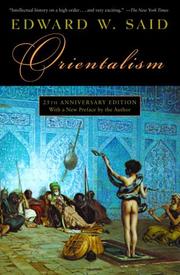
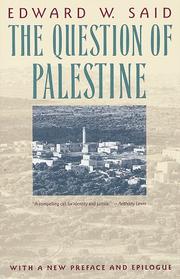
Begin with Orientalism, the field-defining book arguing that Western depictions of "the Orient" served power as much as knowledge. Then The Question of Palestine, his most sustained political statement, and Culture and imperialism, which extends the analysis to the novel and empire.
To hear his voice on the role of the thinker, Representations of the intellectual collects his Reith Lectures, and his memoir Out of Place movingly recounts a life between worlds.
The wider conversation
Said belongs to a network of postcolonial thought. Wretched of the Earth, analyzed by Riley Quinn, connects him to Fanon's anticolonial legacy, and The location of culture by Homi Bhabha and A critique of postcolonial reason by Gayatri Spivak represent the theorists who extended and challenged him.
For a scholarly frame, Orientalism and religion by Richard King applies his method to religious studies, and Edward Said by Valerie Kennedy offers a clear critical introduction to the whole body of work. Follow the full path to read them in order.
Follow the full reading path →
Ready to learn something deeply?
Build a reading path — free