Best Books on Emergency Medicine, in Reading Order
Emergency medicine is defined by a constraint rather than an organ: undifferentiated patients, incomplete information, and a decision that cannot wait. This path starts with first-hand accounts of what that pressure does to clinicians and patients, widens out to the hospital and prehospital system the department sits inside, then moves into the clinical skills — reading an ECG, performing bedside procedures — before opening the two reference texts the specialty is built on. It is a path for understanding a field, not a substitute for training, and nothing in it is guidance for handling a real emergency.
The Work Itself
BeginnerUnderstand what emergency and acute care actually feels like from the inside: triage under uncertainty, the trauma bay, and the culture that forms around relentless intake.
▸ Study plan for this stage
Pace: Four to five weeks for about 1,085 pages, all of it narrative and none of it technical. Twelve Patients (320 pages) reads in about ten days — twelve chapters, one per patient, so it divides neatly. Trauma (352 pages) is similar in length and pace. The House of God (413 pages) is a novel and reads fa
- Undifferentiated presentation as the specialty's defining condition — the patient arrives with a symptom, not a diagnosis, and the clinician must act before knowing what is wrong
- Triage as rationing under uncertainty, and Manheimer's demonstration that a public hospital's caseload is determined by housing, immigration status, addiction and insurance long before anyone reaches the door
- Manheimer's structural choice of twelve patients, including himself as a cancer patient, which is what lets the book show the system from both sides without editorialising
- The trauma bay as a different discipline from the rest of the department: a short list of things that kill quickly, a fixed sequence for finding them, and a clock
- Cole's civilian-and-military range, which shows how much of trauma surgery's technique came out of war and returned to city hospitals
- The House of God's vocabulary — the Fat Man's laws, the acronyms, the institutional cynicism — as the profession's own first attempt to name burnout before the word existed
- Why Shem's novel is contested: it is deliberately unflattering and its treatment of women and of patients has been criticised for decades, and it remains the reference point every later medical memoir is implicitly answering
- Moral injury as distinct from fatigue — the harm that comes from being unable to give the care you believe is owed, which runs through all three books in different registers
- In Twelve Patients, how many of the twelve are in hospital primarily because of a medical problem, and how many because of a social one?
- What does the trauma bay do in its first minutes, and in what order? Cole describes the sequence repeatedly.
- What does Shem's Fat Man mean by doing as much nothing as possible, and is it good advice or a symptom?
- How does Manheimer's own illness change the book, and what would be missing without it?
- The three books are separated by thirty-plus years. What has changed about acute-care culture, and what obviously has not?
- For each of Manheimer's twelve patients, write one line naming the non-medical factor that put them in the hospital. The pattern in that list is the argument of the book.
- Write out the trauma sequence Cole describes from memory after finishing, then check it. You are not learning to perform it — you are learning why the specialty is organised around fixed sequences at all.
- List the House of God laws and mark each as a survival heuristic, a piece of clinical wisdom, or a symptom of a broken system. Most are two of the three at once.
- Write 300 words comparing how Manheimer and Shem handle the same emotion — the sense of being overwhelmed by intake. The forty-year gap in tone is the subject.
Next up: Three books from inside the department have shown you the pressure; the next stage steps back to the institution, the ambulance and the bed, which is where the pressure comes from and where it lands.

Bellevue's former medical director structures the book around twelve individual patients, which is the fastest way to see how a public emergency department's caseload is shaped by everything happening outside it. Start here: it is the broadest and most humane orientation available.

A trauma surgeon's account of the operating side of emergency care, from civilian gunshot wounds to combat casualties. Read second for the sharper, more technical view of what happens when the patient in Manheimer's department is one of the ones who cannot wait.
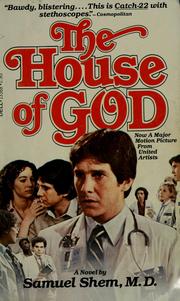
The 1978 novel of medical internship that gave the profession its vocabulary for exhaustion and cynicism. It is a period piece and a deliberately unflattering one, but its picture of how acute-care culture forms is the reference point every later memoir is written against.
The System Around the Department
BeginnerSee the emergency department as one node in a larger system — prehospital care, the hospital, and the social conditions that determine who arrives — and understand the patient's experience of it.
▸ Study plan for this stage
Pace: Four weeks for about 960 pages. Bellevue (387 pages) is history and needs two weeks; it is the institutional spine of the stage. Blood, Sweat, and Tea (301 pages) is assembled from short dispatch-length entries and can be read in fragments over a week, which suits its form. In Shock (272 pages) is s
- Bellevue as the origin point for institutions we now take for granted — the ambulance service, the emergency room as a defined department, and the public safety net that determines who has anywhere else to go
- Epidemic response as the recurring test of a public hospital: yellow fever, tuberculosis, AIDS and Hurricane Sandy each reveal the same institution under a different stress
- The prehospital half of the system: what an ambulance crew can and cannot do, what they carry, and how much of the outcome is decided before the hospital sees the patient
- The reality of the call mix in Reynolds's dispatches — most calls are not the ones the specialty is famous for, and the gap between the caseload and its reputation is the point of the book
- Handover as a system failure point, where information degrades between crew and department, and department and ward
- Awdish's account from the bed: a critical-care physician who nearly died in her own hospital, which turns every assumption in the first stage around
- The overheard sentence in Awdish's book — clinicians speaking about her as though she were not present — as the sharpest available illustration of how detachment is trained and what it costs
- Detachment as a professional technique with a real function and a real price, which is the through-line connecting all three books
- How did the modern emergency department come into existence, on Oshinsky's account? What did hospitals do before it?
- What can a paramedic crew actually do at the scene, based on Reynolds's dispatches, and what must wait for the hospital?
- What proportion of Reynolds's calls are genuine emergencies, and what does the remainder consist of?
- What does Awdish identify as the specific failures in her own care, and how many of them are communication rather than clinical?
- After Awdish, would you revise anything in your reading of Manheimer or Shem?
- Trace one patient journey end to end on paper: 999 or 911 call, dispatch, scene, transport, triage, department, admission or discharge. Mark every point where information could be lost.
- From Bellevue, build a timeline of the public hospital's crises and note what each one changed institutionally. Institutions mostly reform after failures and the pattern is visible.
- Read Awdish's account of the overheard conversation, then write 300 words on what you would have said instead. This is harder than it looks and that is the exercise.
- Write one page arguing that emergency departments are misnamed given the caseload Reynolds describes, then one page arguing the name is right. Both cases are real and the tension is the specialty's central policy problem.
Next up: You now understand what the work is and where it sits, which is the point at which the specialty's actual skills — reading a trace, reasoning from a complaint, doing something with your hands — stop being abstract.

A history of America's oldest public hospital, and through it the invention of the emergency room, the ambulance service and the safety net. It supplies the institutional history that the memoirs assume.

A London ambulance technician's dispatch-by-dispatch account of the prehospital half of emergency care, which most hospital-side books never show. Read it for the part of the story that happens before the doors open.

A critical-care physician who nearly died in her own hospital describes acute care from the bed. It closes the stage by turning the perspective around, and it is the most useful single corrective to the clinician-centred accounts above.
Clinical Foundations
IntermediatePick up the core interpretive and procedural vocabulary of the specialty — rhythm interpretation, high-yield question-and-answer review, and the bedside procedures that define emergency practice.
▸ Study plan for this stage
Pace: Eight to ten weeks, though only the first book is meant to be read cover to cover. The ECG Made Easy (200 pages) is genuinely a beginner's book and takes two to three weeks if you do the traces rather than just look at them. Emergency Medicine Secrets (494 pages) is a question-and-answer review and
- The twelve-lead ECG as a spatial instrument: each lead is a viewpoint, and localising a finding to a territory is the skill that makes the trace informative rather than decorative
- Hampton's method of building from rate and rhythm to axis to the individual complexes, which is the order any competent reader works in and the reason his book has survived
- The rhythms that force immediate action and the ones that do not, and why the distinction is the single most transferable piece of acute-care knowledge
- Presenting-complaint reasoning: emergency clinicians work from chest pain or shortness of breath outward, not from a diagnosis inward, which is why Secrets is organised by complaint
- The differential as a ranked list with the lethal diagnoses at the top regardless of probability — ruling out what can kill before pursuing what is likely
- Disposition as the specialty's real output: admit, discharge, transfer or observe, which is the decision the department exists to make
- The procedural repertoire in Roberts and Hedges — airway management, vascular access, drainage, reduction, wound closure — as the definition of what emergency medicine does that other specialties do not
- Why a procedure is described in a book and learned under supervision: the text gives indications, contraindications and complications, and none of those substitute for training
- Given a twelve-lead ECG, what do you check first, second and third? Hampton's order is the answer.
- Which leads correspond to which region of the heart, and why does that mapping matter clinically?
- Take chest pain as a complaint: what are the diagnoses that must be excluded first, and why those?
- What is disposition, and what information does the department need before it can make that decision?
- For any one procedure in Roberts and Hedges, what are the stated indications, contraindications and complications?
- Work through every trace in The ECG Made Easy with the interpretation covered, write your reading, then check. Doing this rather than reading passively is the whole value of the book.
- Take ten complaints from Emergency Medicine Secrets and write your own differential for each before reading the answer. Then compare — the exercise reveals whether you are reasoning by probability or by lethality.
- Draw the heart with its territories and the leads that view each, from memory. Five minutes, and it makes every subsequent trace legible.
- Pick three procedures from Roberts and Hedges and write, for each, one paragraph on why it belongs to emergency medicine rather than to a surgical specialty. The answer is usually about time.
Next up: With a working vocabulary and a sense of how the specialty reasons, the reference texts stop being unreadable walls and become what they are — the field's own account of its scope and its disagreements.
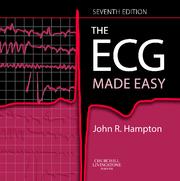
The classic short introduction to reading an electrocardiogram, which is the single most transferable skill in acute care. It is genuinely a beginner's book and the right first technical text in the path.
A question-and-answer review organised by presenting complaint, which mirrors how emergency clinicians actually reason — symptom first, diagnosis later. Read it after the ECG book as a structured tour of the specialty's content.

The standard procedural atlas of the field: airway, vascular access, drainage, reduction, suturing. Read it as a description of what the specialty does with its hands — it is written for clinicians in supervised training, not for use by anyone else.
The Reference Texts
IntermediateUnderstand how the specialty organises its own knowledge base, and how emergency care hands off to intensive care.
▸ Study plan for this stage
Pace: Not a reading stage. These are three references totalling nearly five thousand pages and nobody reads them through. Spend six to eight weeks learning their structures and using them: a week on how Tintinalli's manual (969 pages) is indexed and organised, two weeks reading selected topics in Rosen's
- Tintinalli's organisation for rapid retrieval — by presenting complaint and by system — which mirrors how the department actually needs information at three in the morning
- Rosen's discursive approach, which explains the reasoning and the evidence behind a recommendation rather than stating it, and is therefore the better book for understanding and the worse one for speed
- Reading the two on one topic as the exercise that reveals how much of emergency medicine is judgement rather than protocol — where they diverge, the field genuinely disagrees
- Levels of evidence and the honest fact that a great deal of emergency practice rests on consensus and physiology rather than on trials, because the trials are hard to run in this setting
- Marino's core subject of oxygen delivery and consumption, which is the physiological frame that unifies shock, ventilation and resuscitation
- Shock as a delivery problem rather than a blood-pressure problem, and why that reframing changes what treatment is aiming at
- Mechanical ventilation as a physiological intervention with its own harms, which is where emergency stabilisation hands off to intensive care
- The path's endpoint: the emergency department buys time against mechanisms, and The ICU Book explains the mechanisms it is buying time against
- How is Tintinalli's organised, and how would you find a topic in it under time pressure?
- Take one condition and read both texts on it. Where do they agree, where do they differ, and is the difference about evidence or about emphasis?
- What is the relationship between oxygen delivery and oxygen consumption, and what happens when delivery falls below demand?
- What are the main categories of shock, and how does the underlying mechanism differ in each?
- Marino argues several standard practices are poorly supported. Pick one and state his case.
- Choose one condition — sepsis, upper gastrointestinal bleeding and status epilepticus all work well — and read it in Tintinalli, then in Rosen, then in Marino. Write two pages on how the three texts differ in what they think you need to know. This is the exam for the whole path.
- Draw the oxygen delivery equation and its determinants, then map each of the shock categories onto the term it disturbs. One page, and it organises the entire subject.
- Look up one recommendation in Rosen and follow it to the evidence cited. Note the study design and the year. Doing this once permanently changes how you read a guideline.
- Write a final page on what emergency medicine is for, using at least one book from each stage. Then write one sentence stating plainly what this path has and has not given you — it is understanding of a field, not clinical competence in it, and that distinction is the honest close.
Next up: This is the end of the path — the work, the system, the skills and the references — and the natural next step is the specialty's own current literature: a year of an emergency medicine journal read with the reference texts open beside it.

One of the two canonical texts, organised for rapid retrieval by complaint and system. Read selected sections rather than cover to cover, and treat it as a map of what the specialty considers its own scope.
The other canonical reference, and the more discursive of the two — stronger on the reasoning behind a recommendation than on the recommendation itself. Reading the two side by side on one topic shows how much of the field is judgement rather than protocol.
Where the sickest emergency patients go next. Marino's text on critical care physiology is the natural end point of the path, because it explains the mechanisms the emergency department is trying to buy time against.
Discussion
Keep reading
Paths that share books, cover the same subject, or open a related topic.