Every other medical specialty is organised around something — an organ, an age group, a technique. Emergency medicine is organised around a constraint: the patient is undifferentiated, the information is incomplete, and the decision cannot wait. Read the reference texts first and you get a catalogue of conditions with the defining pressure missing. Read the memoirs first and the reference texts stop looking like lists.
One thing to state plainly before the list, because it matters more here than in most subjects. These books explain a field; they do not qualify anyone to practise in it, and none of them is guidance for handling a real emergency. Clinical competence in acute care comes from supervised training and nothing else. Read this path to understand what emergency clinicians do and why, not to learn what to do.
What the work is actually like
Twelve patients is the broadest and most humane orientation available. Bellevue's former medical director structures the book around twelve individual patients, which turns out to be the fastest way to see how a public emergency department's caseload is shaped by everything happening outside the hospital.
Trauma is the sharper, more technical companion — a trauma surgeon on the operating side of emergency care, from civilian gunshot wounds to combat casualties. It shows what happens to the patients who cannot wait.
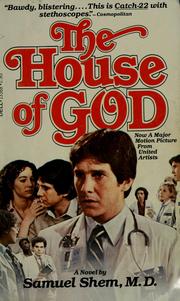
The House of God is a 1978 novel about medical internship, and it gave the profession its vocabulary for exhaustion and cynicism. It is a period piece and a deliberately unflattering one; its treatment of women and of patients has drawn sustained criticism since, and readers should expect that rather than be ambushed by it. It stays on the list because almost every later medical memoir is written in relation to it.
The system the department sits inside
Bellevue is a history of America's oldest public hospital, and through it the invention of the emergency room, the ambulance service and the safety net. It supplies the institutional history the memoirs quietly assume.
Blood, Sweat, and Tea covers the half of emergency care most hospital-side books never show: a London ambulance technician's dispatch-by-dispatch account of what happens before the doors open.
In shock closes the stage by turning the perspective around. A critical-care physician who nearly died in her own hospital writes about acute care from the bed, and it is the most useful single corrective to the clinician-centred books above it.
The clinical vocabulary
The ECG made easy is genuinely a beginner's book, and rhythm interpretation is the most transferable skill in acute care. It is the right first technical text here.
Emergency medicine secrets is organised as questions and answers by presenting complaint, which mirrors how emergency clinicians reason — symptom first, diagnosis later. Read it after the ECG book as a structured tour of the specialty's content.
Roberts and Hedges’ Clinical Procedures in Emergency Medicine and Acute Care is the standard procedural atlas: airway, vascular access, drainage, reduction, suturing. It is written for clinicians in supervised training. Read it as a description of what the specialty does with its hands, not as instructions.
How the field organises its own knowledge
Tintinalli's emergency medicine manual and Rosen's emergency medicine are the two canonical texts. The first is built for rapid retrieval by complaint and system; the second is more discursive and stronger on the reasoning behind a recommendation than on the recommendation itself. Neither is a cover-to-cover read. Taking one topic and reading both accounts of it is the single most revealing exercise in this path, because it shows how much of emergency medicine is judgement rather than protocol.
The ICU book is where the sickest patients go next, and Marino's account of critical care physiology explains the mechanisms the emergency department is trying to buy time against. It is the natural end of the sequence.
Follow the staged version with study plans on the full path, or browse the emergency medicine hub.
Follow the full ordered path here: Emergency Medicine Books: What to Read, and in What Order.