Edible landscaping for beginners: best books to grow a beautiful food garden
This curriculum takes a beginner from the first principles of edible landscaping all the way through advanced design, plant selection, and ecological integration. Each stage builds on the last — starting with the big-picture vision, moving into hands-on plant knowledge, then mastering design craft, and finally deepening into the ecological and perennial systems that make edible landscapes truly self-sustaining and beautiful.
The Big Picture: Vision & Foundations
BeginnerUnderstand what edible landscaping is, why it works, and feel inspired and oriented before touching a single plant or design tool.
▸ Study plan for this stage
Pace: 4–5 weeks, ~25–30 pages/day (approximately 150–180 pages total across both books)
- Edible landscaping as an integrated approach: blending food production with ornamental design principles and aesthetic beauty
- The philosophy and benefits of edible landscaping: sustainability, self-sufficiency, cost savings, and reconnecting with food sources
- How edible plants function in landscape design: layering, spacing, microclimates, and creating productive ecosystems within residential spaces
- The role of the front yard as productive space: challenging conventional lawn culture and reimagining curb appeal through edible plantings
- Practical foundations: site assessment, understanding your growing conditions, and matching plants to your specific environment
- Design thinking for edible landscapes: composition, color, texture, and seasonal interest using food-producing plants
- The psychological and community benefits: food security, environmental stewardship, and neighborhood inspiration
- What is edible landscaping, and how does it differ from traditional gardening or conventional landscaping?
- Why might someone choose to convert their front yard into an edible landscape, and what are the main benefits?
- How do you assess a site to determine what edible plants will thrive there?
- What design principles from ornamental landscaping apply to edible landscapes, and why does aesthetics matter?
- How can edible plants be layered and arranged to create a functional, beautiful, and productive landscape?
- What are the key differences between Creasy's and Soler's approaches to edible landscaping, and when might you use each philosophy?
- Walk your own property (or a friend's) and sketch a site assessment: note sun exposure, water access, soil type, existing structures, and microclimates throughout the day
- Create a mood board or Pinterest collection of 8–10 edible landscape images from Creasy's and Soler's books; annotate what design elements appeal to you and why
- Interview a neighbor or local gardener about their relationship with food production; reflect on how edible landscaping might shift your own thinking about yards and food
- Design a simple front-yard concept sketch (rough, not to scale) showing how you might integrate 3–5 edible plants into your current landscape while maintaining curb appeal
- Research your USDA hardiness zone and local climate; list 5–7 edible plants that thrive in your region and note their aesthetic qualities (color, texture, seasonal interest)
- Read and annotate one chapter from each book side-by-side; write a one-page comparison of how Creasy and Soler frame the purpose and vision of edible landscaping
Next up: This stage establishes the *why* and *what* of edible landscaping; the next stage will move into the *how*—detailed plant selection, design techniques, and practical implementation strategies.
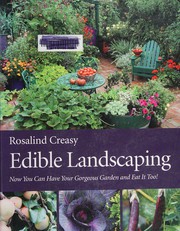
The canonical starting point — Creasy essentially coined the modern term and movement. Reading this first gives beginners the foundational philosophy, vocabulary, and a sweeping sense of what is possible.
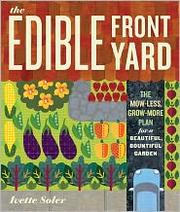
A visually rich, accessible follow-up that focuses on making edible gardens genuinely beautiful in visible spaces, bridging ornamental sensibility with food production right from the start.
Plant Knowledge: Knowing What to Grow
BeginnerBuild a solid working knowledge of edible plants — fruits, vegetables, and herbs — including their habits, needs, and ornamental qualities.
▸ Study plan for this stage
Pace: 8–10 weeks, ~40–50 pages/day. Start with Waters (2–3 weeks), move to Smith (3–4 weeks), finish with Reich (2–3 weeks). Allocate extra time for Smith given its comprehensive depth.
- Seasonal availability and peak flavor: understanding when different edible plants produce and how this shapes menu planning and landscape design
- Plant-to-plate thinking: recognizing how growing conditions, harvest timing, and plant characteristics directly affect taste, nutrition, and culinary use
- Soil health and preparation: building fertile, well-draining soil as the foundation for growing vegetables and herbs with vigor
- Crop rotation and succession planting: managing soil fertility and pest pressure while ensuring continuous harvests across seasons
- Ornamental edibles: selecting and placing fruits, vegetables, and herbs that are both beautiful and productive in a landscape
- Fruit tree and shrub selection: matching fruit varieties to climate, space, and desired harvest season for long-term landscape investment
- Herb cultivation and uses: growing culinary and medicinal herbs while understanding their specific growing needs and flavor profiles
- How does understanding seasonal availability of ingredients (as emphasized in Waters' menus) influence which edible plants you should grow in your landscape?
- What are the key steps in soil preparation and maintenance outlined by Smith, and why is soil health foundational to growing nutritious vegetables?
- How can you select and position fruit trees and shrubs in a landscape design so they serve both aesthetic and productive purposes?
- What is crop rotation, why does Smith advocate for it, and how would you implement it in a small edible landscape?
- How do the growing requirements, flavor profiles, and ornamental qualities of herbs differ, and how should this inform where you place them in your landscape?
- How would you design a succession planting schedule to ensure continuous harvests of key vegetables throughout the growing season?
- Create a seasonal ingredient map: using Waters' menus as inspiration, list 10–15 edible plants and map their peak harvest months in your region, then identify gaps in your landscape's production calendar.
- Conduct a soil test and amendment plan: test your soil following Smith's guidelines, identify deficiencies, and create a detailed plan to build soil fertility over one season.
- Design a crop rotation plan: choose 3–4 vegetable families and map a 3-year rotation schedule for a specific garden bed, explaining how this prevents pest and disease buildup.
- Visit a local nursery or farmers market and identify 5 fruit varieties (using Reich's framework): note their mature size, hardiness zone, harvest season, and ornamental features, then sketch where you'd place them in a landscape.
- Herb propagation and placement exercise: propagate or purchase 6–8 culinary herbs (basil, rosemary, thyme, oregano, mint, parsley, sage, chives), grow them in containers, and design a kitchen-garden layout that balances access with visual appeal.
- Build a planting calendar: create a month-by-month guide for your region showing when to sow, transplant, and harvest 8–10 vegetables from Smith, accounting for succession planting and frost dates.
Next up: This stage equips you with deep knowledge of *what* to grow and *why*—the foundation for the next stage, which will focus on the practical design and layout of an edible landscape, integrating these plants into cohesive, beautiful, and productive spaces.

Grounds the learner in why plant variety and quality matter, cultivating a palate-driven motivation that makes plant selection feel purposeful rather than academic.
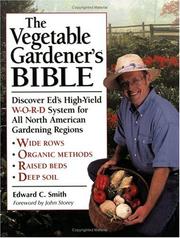
A thorough, beginner-friendly reference for vegetables and herbs that teaches growth habits, spacing, and seasonal timing — essential vocabulary before tackling integrated design.

Reich focuses specifically on fruit trees, shrubs, and vines as landscape elements, teaching how to evaluate and place them for both beauty and harvest — a perfect bridge into design thinking.
Design Craft: Composing Beautiful Edible Gardens
IntermediateApply ornamental design principles — color, texture, structure, and seasonal interest — to edible gardens so they function as true landscapes, not just food plots.
▸ Study plan for this stage
Pace: 4–5 weeks, ~25–30 pages/day, with 2–3 days per week dedicated to garden observation and sketching
- Composition through plant masses and drifts rather than individual specimens — how Oudolf uses repetition and scale to create visual rhythm
- Color theory applied to foliage and flowers across seasons — understanding warm/cool palettes, contrast, and harmony in living plant communities
- Texture and form as primary design tools — how leaf size, plant architecture, and silhouette create visual interest independent of bloom
- Seasonal progression and succession — designing for continuous visual impact across spring, summer, autumn, and winter
- Integration of structure (hardscape, edges, pathways) with planting to unify the garden as a composed landscape
- Ecological planting principles — how density, spacing, and plant associations create self-sustaining, naturalistic compositions
- Translating ornamental design into edible contexts — selecting and arranging food plants for aesthetic and functional cohesion
- How does Oudolf use plant drifts and repetition to create visual coherence, and how can you apply this principle to an edible garden layout?
- What role does foliage color and texture play in Oudolf's designs, and why is this especially important in edible gardens where bloom times may be brief?
- How does Oudolf design for seasonal interest across the full year, and what edible plants can provide structure and visual appeal in winter?
- What is the relationship between plant density, spacing, and the overall composition in Oudolf's work, and how does this affect both aesthetics and productivity?
- How do hardscape elements (paths, edges, structures) support and frame the planting in Oudolf's designs?
- How can you select and arrange edible plants (vegetables, herbs, fruits) to achieve the compositional principles Oudolf demonstrates?
- Read and annotate 3–4 key chapters from 'Planting' (focus on composition, color, and seasonal design); create a one-page summary of Oudolf's core design philosophy
- Analyze 5 garden photographs or plans from the book: sketch the plant masses, note color and texture relationships, and identify the compositional 'rules' at work
- Visit a local garden, park, or your own space and map existing plantings using Oudolf's lens — identify drifts, color progressions, and seasonal gaps
- Design a small edible garden bed (4×8 feet or equivalent) applying Oudolf's principles: choose 5–7 edible plants (vegetables, herbs, perennials) and arrange them in drifts with attention to color, texture, and seasonal form
- Create a seasonal mood board for your edible garden design — collect or sketch images showing spring, summer, autumn, and winter interest using your chosen plants
- Sketch a planting plan with annotations showing: plant masses (not individual plants), color relationships, texture contrasts, and hardscape integration
Next up: This stage equips you with the visual language and compositional toolkit to design edible gardens as cohesive landscapes; the next stage will deepen your ability to select and combine specific edible plants while managing their ecological and horticultural needs.

Oudolf's framework for naturalistic, layered planting design is transformative; reading it here teaches the learner to think in plant communities and seasonal structure, directly applicable to edible schemes.
Perennial Systems & Ecological Depth
ExpertUnderstand how to design multi-layered, self-sustaining edible ecosystems — food forests and permaculture gardens — that require less labor and grow more resilient over time.
▸ Study plan for this stage
Pace: 8–10 weeks, ~25–30 pages/day. Start with "Gaia's Garden" (4–5 weeks), then move to "The Market Gardener" (4–5 weeks). Allow 1–2 weeks for integration and reflection between books.
- Layered garden design: canopy, understory, herbaceous, ground cover, and root layers as the foundation of food forests
- Ecological succession and how to accelerate it to create self-regulating systems that reduce maintenance over time
- Soil building and mycorrhizal networks as the living infrastructure that sustains perennial polycultures
- Permaculture principles (zones, sectors, stacking functions) applied to residential and market-scale edible landscapes
- Polyculture and guild planting: combining plants to enhance productivity, pest management, and nutrient cycling without external inputs
- Balancing diversity with productivity: designing systems that are both ecologically resilient and economically viable
- Intensive management techniques for market-scale production while maintaining ecological integrity
- Seasonal planning and crop rotation within perennial frameworks to optimize yield and soil health
- How do the seven layers of a food forest (from Gaia's Garden) function together, and which layers are most critical for a self-sustaining system?
- What is ecological succession, and how can you design a garden to accelerate it so that it becomes more productive and requires less labor over time?
- How do permaculture zones and sectors (from Gaia's Garden) help you organize an edible landscape, and what are the trade-offs between intensive management and ecological resilience?
- What role do soil organisms and mycorrhizal networks play in perennial polycultures, and how do you build soil to support them?
- How does The Market Gardener's approach to intensive production differ from Gaia's Garden's philosophy, and how can you integrate both perspectives into a resilient system?
- What are plant guilds, and how do you design them to reduce pest pressure, improve nutrient cycling, and increase yield without chemical inputs?
- Map your own garden or a local site using permaculture zones and sectors (from Gaia's Garden). Identify microclimates, sun exposure, water flow, and access patterns, then sketch a layered design.
- Design a food forest guild for your climate: select a canopy tree, understory shrubs, herbaceous plants, ground covers, and root crops that support each other. Research their nutrient needs, allelopathic properties, and pest/disease relationships.
- Start or observe a soil-building experiment: create a small perennial bed with compost, mulch, and mycorrhizal inoculants. Monitor soil structure, organism activity, and plant vigor over 2–3 months.
- Adapt one intensive market-gardening technique from The Market Gardener (e.g., succession planting, bed preparation, spacing optimization) to a perennial polyculture setting and test it on a small scale.
- Create a 12-month management calendar for a mixed perennial/annual edible landscape, incorporating Gaia's Garden principles and The Market Gardener's productivity strategies. Include planting, maintenance, harvesting, and soil-building tasks.
- Visit or research a real food forest or permaculture farm. Document its layers, plant combinations, management practices, and productivity. Compare it to the frameworks in both books.
Next up: This stage equips you with the ecological and design principles to create resilient, multi-layered systems; the next stage will likely focus on scaling these principles, managing specific crops or systems in depth, or addressing economic viability and market integration at a professional level.

The most accessible introduction to home-scale permaculture and food forests; reading it now, after mastering plants and design, allows the learner to absorb its systems thinking without being overwhelmed.

Elevates the learner's understanding of intensive, productive growing within small spaces — adding professional-level efficiency and soil management to round out a deeply integrated edible landscape practice.
Discussion
Keep reading
Paths that share books, cover the same subject, or open a related topic.