Build & plant raised garden beds
This curriculum takes a complete beginner from "what is a raised bed?" all the way to intensive, high-yield planting systems and living soil mastery. Each stage builds on the last: you first learn the physical setup, then the soil science that makes beds productive, then the intensive planting strategies that maximize every square inch, and finally the advanced ecological thinking that sustains long-term harvests.
Foundations: Build Your First Bed
BeginnerUnderstand why raised beds work, choose the right site and materials, and physically construct a functional bed ready for planting.
▸ Study plan for this stage
Pace: 6–8 weeks total. Week 1–3: Read "Raised-Bed Gardening for Beginners" by Tammy Wylie cover to cover (~20–25 pages/day), pausing to sketch and note ideas as you go. Week 4–8: Read "The Vegetable Gardener's Bible" by Edward C. Smith, focusing on his W-O-R-D system chapters and bed-preparation sections
- Why raised beds outperform in-ground plots: superior drainage, faster soil warm-up, reduced compaction, and easier pest/weed management — as introduced by Wylie's foundational overview
- Site selection criteria: minimum 6–8 hours of direct sunlight, proximity to a water source, level ground, and avoiding tree-root competition (Wylie, early chapters)
- Bed dimensions and ergonomics: Wylie's guidance on keeping width to 3–4 feet for no-reach access, and Smith's reinforcement of never stepping in the bed to preserve soil structure
- Material choices for bed frames: Wylie's comparison of untreated cedar/redwood, composite lumber, galvanized metal, and stone — weighing cost, longevity, and food safety
- Smith's W-O-R-D system (Wide rows, Organic matter, Raised beds, Deep soil): understanding how deep, loose, organically rich soil is the engine behind high-yield raised beds
- Soil mix composition: Wylie's beginner-friendly blends (topsoil, compost, perlite/vermiculite) versus Smith's deep-soil philosophy of building fertility from the bottom up with organic amendments
- Lasagna/no-dig bed building as an alternative construction method introduced by Wylie for suppressing weeds and building soil simultaneously
- Bed orientation and spacing: running beds north–south for even sun exposure and leaving adequate pathways (18–24 inches) for comfortable access and airflow
- According to Wylie, what are the three most important factors to evaluate when choosing a site, and how does Smith's W-O-R-D system reinforce or expand on those factors?
- Why do both Wylie and Smith emphasize never walking inside the raised bed, and what does compaction do to soil structure and root development?
- What are the trade-offs between using cedar lumber versus galvanized metal raised-bed kits as described by Wylie — and which would be most appropriate for a shaded, high-moisture climate?
- How does Smith's concept of 'deep soil' differ from simply filling a shallow frame with bagged topsoil, and why does depth matter for root vegetables specifically?
- What is the lasagna bed method outlined by Wylie, and under what circumstances is it preferable to the traditional fill-and-frame approach?
- Using both books, how would you design a first raised bed — dimensions, orientation, materials, and soil mix — for a beginner with a small sunny backyard and a modest budget?
- Site survey walk: Before finishing Wylie's book, walk your outdoor space with a compass and a timer — track sunlight hour by hour across candidate spots for at least one full day, then rank three potential sites using Wylie's criteria and write a one-paragraph justification for your top choice.
- Material cost comparison worksheet: Using Wylie's material options as categories, build a simple spreadsheet comparing cedar, composite lumber, galvanized metal, and stone/brick for a 4×8 ft bed — include cost per linear foot, estimated lifespan, and one pro/con each.
- Soil mix calculation exercise: Using Wylie's recommended blend ratios and Smith's organic-matter principles, calculate the exact volume (in cubic feet) of each ingredient needed to fill a 4×8×12-inch bed; then price it out at a local garden center or online supplier.
- Physical bed construction: Build your first raised bed frame using the dimensions and materials you selected above. Document each step with photos, noting any deviations from Wylie's instructions and why you made them.
- Lasagna bed experiment (optional alternative): If building in fall or on a lawn, follow Wylie's lasagna method — layer cardboard, compost, straw, and topsoil — and journal the process, recording layer thicknesses and materials sourced.
- Reflection journal entry: After finishing both books, write 300–400 words answering: 'How did Smith's W-O-R-D philosophy change or deepen how I thought about raised beds after reading Wylie?' Identify one idea from each book that surprised you.
Next up: Building a structurally sound, well-sited bed with fertile soil — the hands-on outcome of this stage — creates the physical canvas that the next stage will fill, shifting focus from construction to what goes inside: selecting crops, understanding plant families, spacing, and planning a productive planting layout.

A purpose-built beginner primer that walks through siting, sizing, framing materials, and filling a bed from scratch — exactly the vocabulary and confidence needed before anything else.
Introduces the W-O-R-D system (Wide rows, Organic methods, Raised beds, Deep soil) and gives a thorough grounding in bed construction alongside basic vegetable culture, bridging build skills to grow skills.
Soil First: Building Living, Productive Soil
BeginnerUnderstand soil biology, fertility, and how to mix and maintain the rich growing medium that is the true engine of a productive raised bed.
▸ Study plan for this stage
Pace: 6–8 weeks total. Week 1–3: Read "The Ruth Stout No-Work Garden Book" (~20–25 pages/day, including her anecdotes and practical asides — don't skim them, her philosophy is embedded in the stories). Week 4–8: Read "Teaming with Microbes" (~15–20 pages/day — the science is dense; pause after each chapte
- The 'no-work' philosophy as a soil-first mindset: Stout's permanent mulch system works because it continuously feeds soil life from the top down, mimicking natural decomposition cycles.
- Permanent mulch as a living soil amendment: Stout demonstrates that a deep, year-round layer of hay or organic material suppresses weeds, retains moisture, and steadily builds humus without tilling.
- The Soil Food Web (Lowenfels): soil is not a static medium but a complex, interdependent community of bacteria, fungi, nematodes, protozoa, arthropods, and earthworms — each playing a specific role in nutrient cycling.
- Bacterial-dominated vs. fungal-dominated soils: Lowenfels explains how the ratio of bacteria to fungi determines which plants thrive, and why raised-bed vegetable gardens benefit from a more bacterial-leaning balance.
- Nutrient cycling through predator-prey relationships: nutrients locked in microbial biomass are released as plant-available forms when protozoa and nematodes consume bacteria and fungi — the 'Lowenfels loop'.
- Humus formation and soil structure: both books converge on the idea that organic matter, processed by soil organisms, creates the aggregated, moisture-retentive, aerated structure that makes raised beds so productive.
- Why tillage and synthetic fertilizers undermine soil life: Lowenfels provides the biological mechanism behind what Stout observed empirically — disturbance and salt-based inputs disrupt the food web and degrade long-term fertility.
- Compost as inoculant and food source: Lowenfels frames finished compost not just as fertilizer but as a way to introduce and feed a diverse microbial community in a new or depleted raised bed.
- According to Ruth Stout, why is it unnecessary to till or turn the soil each season, and what does her permanent mulch system do for the ground beneath it over time?
- Lowenfels describes the Soil Food Web as a series of trophic levels — can you name at least four organisms in that web and explain how each one contributes to making nutrients available to plants?
- How do Stout's hands-on observations (mulch depth, timing, material choices) map onto the biological mechanisms Lowenfels describes? Where do the two authors' ideas reinforce each other?
- What is the difference between bacterial-dominated and fungal-dominated soil, and why does it matter when choosing what to grow in a raised bed?
- Why does Lowenfels argue that synthetic nitrogen fertilizers can actually reduce long-term soil fertility, even when they produce short-term growth gains?
- If you were building a new raised bed from scratch, what specific steps — drawn from both books — would you take to establish a thriving soil food web from day one?
- Mulch audit and layering experiment: Apply a 6–8 inch permanent mulch layer (straw, hay, or shredded leaves — as Stout prescribes) to one section of a bed or even a patch of ground. Pull it back after two weeks and observe: Is the soil darker? Are there earthworms, fungal threads, or pill bugs? Sketch and date what you find.
- Soil food web diagram: After finishing Lowenfels, draw your own version of the soil food web from memory — organisms, arrows showing who eats whom, and annotations showing where nutrients are released. Compare it to the book's diagrams and fill in gaps.
- Jar soil test (texture and life): Take a soil sample from your intended raised-bed site, fill a jar with it and water, shake, and let it settle for 24 hours to see sand/silt/clay layers. Separately, examine a pinch of the same soil under a magnifying glass or cheap microscope and note any visible organisms.
- Compost observation journal: Start or access a compost pile and log it weekly for four weeks — temperature, smell, material breakdown, and any visible organisms (worms, beetles, white mycelium). Annotate each entry with the relevant organism from Lowenfels' food web.
- Stout vs. Lowenfels synthesis note: Write a one-page 'translation' document where you take three specific practices Stout recommends (e.g., never bare soil, use spoiled hay, no fertilizer needed) and explain the biological 'why' behind each one using Lowenfels' science.
- Raised-bed soil mix design: Using the principles from both books, write out a recipe for your raised-bed growing medium — list each ingredient (topsoil, compost, aged mulch, etc.), its approximate proportion, and its role in feeding the soil food web.
Next up: Building a living, fertile soil is the foundation — the next stage will put that soil to work by introducing what goes into it: selecting, starting, and spacing the plants that will thrive in the rich growing medium you now know how to create and sustain.

Introduces permanent mulching and organic matter cycling in plain language, teaching the beginner how to feed soil continuously — a critical complement to the mix-and-fill approach.

Explains the soil food web in accessible terms, giving the reader the biological 'why' behind every soil-building practice they've just learned and preparing them for more intensive fertility management ahead.
Intensive Planting: Maximizing Every Square Inch
IntermediateMaster spacing, succession planting, companion planting, and vertical growing to achieve genuinely high yields from a small raised-bed footprint.
▸ Study plan for this stage
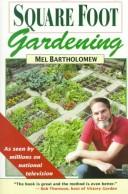
Pace: 8–10 weeks total: Week 1–3 — "All New Square Foot Gardening" (~30 pages/day, reading all chapters on the grid system, Mel's Mix, and per-square spacing charts); Week 4–6 — "The Vegetable Gardener's Container Bible" (~25 pages/day, focusing on soil volume, plant density, and succession strategies ada
- Mel Bartholomew's per-square spacing grid (1, 4, 9, or 16 plants per square foot depending on mature plant size) as the foundation of intensive planting
- Mel's Mix (1/3 blended compost, 1/3 peat moss or coir, 1/3 coarse vermiculite) as the high-fertility, loose growing medium that makes tight spacing viable
- Succession planting within the same square or block — harvesting and immediately replanting to keep every square productive across the full season
- Vertical growing as a space-multiplier: trellising vining crops (cucumbers, pole beans, squash) upward so the horizontal footprint stays free for low-growers
- Soil volume and root-space requirements from Smith's container framework, applied to raised-bed depth decisions and per-plant spacing refinements
- Companion planting logic from Riotte — biochemical, pest-confusion, and nutrient-sharing relationships that allow denser polycultures without yield loss
- Antagonistic pairings to avoid (e.g., onions near beans, fennel near almost everything) so that intensive planting doesn't accidentally suppress crops
- Integrated bed mapping: combining the SFG grid, vertical layers, succession timing, and companion pairs into a single seasonal planting plan
- Using Bartholomew's spacing chart, how many lettuce plants, carrot seeds, and tomato plants would you place in a single 4×4 raised bed, and how does Mel's Mix make those densities achievable?
- How does Smith's analysis of soil volume per plant (from the container context) inform decisions about raised-bed depth and whether a 6-inch vs. 12-inch bed is appropriate for root crops versus leafy greens?
- Describe a three-succession plan for a single square foot dedicated to salad greens across a 5-month growing season, specifying what gets planted after each harvest.
- According to Riotte, why do carrots and tomatoes benefit each other, and what is the proposed mechanism — and which three pairings from the book would you prioritize in your own bed based on your target crops?
- What are two antagonistic plant relationships from 'Carrots Love Tomatoes' that are especially relevant to a small intensive bed, and how would you redesign a bed layout to avoid them?
- How would you combine vertical growing (from Bartholomew) with a companion-planting pair (from Riotte) to design one trellis row that serves double duty — supporting a vining crop and benefiting its ground-level neighbor?
- Draw a scaled 4×4 bed map on graph paper (each square = 1 sq ft) and populate every square using Bartholomew's spacing numbers for at least 6 different crops you actually want to grow — annotate each square with plant count and days-to-maturity.
- Build a succession calendar: pick 3 squares from your map and write out the full season schedule (planting date → harvest window → replant crop → harvest window) so that no square sits empty for more than 2 weeks.
- Audit your planned bed depth against Smith's soil-volume guidance: list each crop, its minimum root depth from Smith's container data, and confirm or revise your bed construction depth accordingly.
- Create a companion-planting matrix using Riotte's pairings: make a simple grid with your chosen crops on both axes, mark green (beneficial), red (antagonistic), or grey (neutral) for each intersection, then use it to finalize your bed map.
- Design a vertical growing zone along the north edge of your bed: sketch the trellis structure, identify the vining crop, then use Riotte to select one companion to plant at its base — write a one-paragraph rationale citing both books.
- Do a 'square-inch audit' of an existing or imagined bed: calculate the total number of plants the bed can support using SFG spacing, compare it to a conventional row-spacing calculation for the same crops, and write up the yield-per-square-foot difference to internalize why intensive methods matter.
Next up: By mastering how to pack maximum productivity into a small footprint through spacing, succession, companions, and vertical growing, the reader has optimized the *planting* side of the system — making the next logical stage, soil fertility and amendment, essential: a densely planted bed depletes nutrients far faster than a conventional garden, so understanding how to feed and sustain that intensive
The definitive guide to grid-based intensive spacing — reading it in full at this stage (after the soil work) lets the learner apply the planting grids with real understanding rather than rote copying.
Extends intensive-planting logic to tight, controlled growing spaces, sharpening the learner's eye for plant density, root competition, and vertical structure directly applicable to raised beds.

The classic companion-planting reference; at this stage the learner has the plant and soil vocabulary to use it practically, layering polyculture strategies onto their intensive spacing plans.
Year-Round Productivity & Advanced Systems
ExpertExtend the growing season, plan multi-bed systems for continuous harvest, and integrate ecological principles for self-sustaining, high-output raised-bed gardens.
▸ Study plan for this stage
Pace: 8–10 weeks total: Weeks 1–5 cover "The Market Gardener" (~25–30 pages/day, 5 days/week); Weeks 6–10 cover "The Living Soil Handbook" (~20–25 pages/day, 5 days/week). Reserve one day per week for review, note synthesis, and hands-on practice.
- Permanent bed systems and the no-till philosophy: how Fortier's permanent 30-inch bed layout maximizes yield per square foot while minimizing soil disturbance and labor
- Micro-farm economics and crop planning: using gross revenue per bed-foot metrics, succession planting schedules, and high-value crop selection to design a continuously productive multi-bed system
- Season extension tools and techniques: low tunnels, high tunnels, row covers, and cold-hardy variety selection as described by Fortier to push harvests beyond the natural frost window
- Soil fertility as a living system: Frost's framework of feeding the soil food web through compost, cover crops, and minimal tillage rather than relying on synthetic inputs
- Compost quality and application: Frost's detailed guidance on producing and applying biologically active compost as the cornerstone of raised-bed fertility management
- Cover cropping and green manures within raised beds: selecting, timing, and terminating cover crops to build organic matter, fix nitrogen, and suppress weeds between cash-crop successions
- Integrated pest and weed management: combining Fortier's practical field strategies with Frost's ecological lens to reduce pest pressure through habitat diversity, soil health, and physical barriers
- Whole-system design thinking: synthesizing both books to map a multi-bed garden as an interconnected ecological unit with planned rotations, companion planting, and self-reinforcing fertility loops
- After reading Fortier, can you design a 12-month succession planting calendar for at least four beds that ensures a continuous harvest with no bed sitting idle for more than two weeks?
- How does Fortier calculate and use the 'gross revenue per bed-foot' metric, and how can a home or market gardener adapt this tool to prioritize which crops to grow?
- What specific season-extension infrastructure and variety choices does Fortier recommend, and how would you sequence them across a calendar year in your climate zone?
- According to Frost, what is the soil food web, and why does feeding it through compost and cover crops produce more resilient long-term fertility than conventional fertilization?
- How does Frost differentiate between compost that is biologically active versus merely decomposed, and what practical steps does he outline for achieving the former in a raised-bed context?
- How do the philosophies of Fortier (productivity and economic efficiency) and Frost (ecological soil health) complement and occasionally tension with each other, and how would you reconcile them in your own garden system?
- Bed-mapping project: Draw a scaled plan of your existing or imagined raised-bed garden (minimum 4 beds). Using Fortier's permanent-bed layout principles, assign each bed a crop family, map a full 12-month succession, and annotate with estimated harvest windows and any season-extension infrastructure needed.
- Succession planting spreadsheet: Build a week-by-week planting and transplanting schedule for one high-value crop (e.g., lettuce, salad mix, or radishes) across multiple beds, following Fortier's succession logic to achieve an uninterrupted weekly harvest for at least 20 consecutive weeks.
- Soil audit and compost plan: Following Frost's guidance, conduct a hands-on assessment of your bed soil (texture, smell, visible biology, drainage). Then write a 6-month compost production and application plan, specifying feedstock ratios, turning schedule, and target application rates per bed.
- Cover crop trial: Select two cover crop species recommended by Frost that suit your season and bed size. Sow them in at least one bed after a harvest, track germination, growth, and termination, and record observations about soil surface condition and weed suppression compared to an uncovered control bed.
- Economic crop audit (Fortier-inspired): List every crop you currently grow or plan to grow. Research local market or household value per pound, estimate yield per bed-foot, and rank crops by value density. Use this ranking to revise your bed-map from Exercise 1, replacing low-value crops with higher-value alternatives.
- Integrated system journal: Over 4 weeks, keep a weekly log that tracks one variable from each book simultaneously — e.g., soil temperature and cover-crop biomass (Frost) alongside days-to-harvest and bed turnover speed (Fortier). At the end, write a one-page synthesis identifying where the two systems reinforce each other in your specific context.
Next up: Mastering year-round productivity and ecological soil systems in raised beds naturally opens the door to scaling up or specializing further — whether into permaculture food forests, aquaponics integration, or community/market-scale production — where the same principles of continuous output and living-soil stewardship must be re-engineered for larger, more complex systems.

Fortier's micro-farm model is built almost entirely on permanent raised beds with intensive successions — it reframes everything learned so far at a professional productivity level, introducing tools, bed layouts, and crop planning systems.

Synthesizes no-till, compost, and cover-cropping specifically for permanent raised beds, closing the curriculum by connecting intensive planting back to long-term soil health — the capstone of the whole learning arc.
Discussion
Keep reading
Paths that share books, cover the same subject, or open a related topic.