Economic Anthropology: The Best Books on Gifts, Debt and Exchange, in Order
Economic anthropology asks what exchange, money and debt look like when you stop assuming the market is the natural form of economic life and go and watch people instead. This path reads the founding ethnographies first, then Polanyi's argument that the self-regulating market was a deliberate nineteenth-century construction, then the long theoretical argument about gifts and commodities, and finally the modern textbooks and the books that carried the field into general reading. Almost everything here is in direct disagreement with a standard economics course, which is the point.
The founding texts
BeginnerRead the ethnographic classics that established that exchange can be about obligation rather than price.
▸ Study plan for this stage
Pace: Eight to ten weeks, 1,135 pages, and the three books are very different lengths. The Gift (Marcel Mauss, 1925) is a long essay running to 226 pages in the catalogued edition, most of which is notes and apparatus; the argument itself can be read in a week, though it repays three readings. Argonauts o
- The total prestation: exchange that is simultaneously economic, legal, religious and political, and cannot be separated into those parts
- The three obligations Mauss identifies — to give, to receive, and to reciprocate — and his question about what in the thing given compels the return
- The hau of the taonga, Mauss's Maori material, and the fact that his reading of it has been disputed since Firth and Sahlins
- Malinowski's kula ring: the circulation of soulava and mwali in opposite directions, and its relation to the gimwali trade that accompanies it
- Participant observation as the method that Argonauts established, and the difference between what Malinowski claims to do and what the text actually does
- Sahlins's original affluent society: the argument that hunter-gatherer work hours were low and wants finite, and the objections to his figures
- Sahlins's domestic mode of production and his typology of reciprocity — generalised, balanced and negative — mapped onto social distance
- What is Mauss actually asking, and why does he think the answer cannot be found in individual self-interest?
- What does the hau explanation do in Mauss's argument, and what did Sahlins and Firth say was wrong with it?
- How does the kula ring work mechanically — who exchanges what, in which direction, and over what time — and what does it produce for participants?
- What is Sahlins's evidence for the original affluent society, and where has it been challenged?
- How does Sahlins's reciprocity typology relate to kinship distance, and what does it predict about strangers?
- What do these three texts jointly establish that a supply-and-demand account of exchange cannot accommodate?
- Read the same passage of The Gift in two different translations — the Halls and the Guyer are easiest to obtain — and write down where the choice of English word changes the argument, particularly around 'gift', 'prestation' and 'hau'
- Diagram the kula ring from Malinowski's own descriptions: islands, directions of travel, which valuable goes which way, and where gimwali sits alongside it
- Take Sahlins's reciprocity typology and classify five exchanges from Malinowski's Trobriand material into it; the cases that do not fit cleanly are the ones the discipline has argued about ever since
- Reproduce Sahlins's work-hours calculation for the original affluent society from his own tables, and identify which assumption the conclusion is most sensitive to
- Write a one-page account of a transaction from your own week using Mauss's three obligations, and note which parts of it the framework illuminates and which it distorts
Next up: The founding ethnographies show non-market exchange working; Polanyi's argument is that the market form itself had to be constructed, which is the next stage.
Mauss's 1925 essay on why a gift obliges a return is the founding document of the field, and short enough to read in an evening. Everything else in this path is a reply to it.
The Trobriand kula ring: an exchange system that circulates valuables which nobody keeps. Read it second, as the fieldwork Mauss was theorising from.
Sahlins's argument that hunter-gatherers were the original affluent society, working few hours because their wants were finite. The most enjoyable frontal attack on scarcity as an axiom.
The market as a historical invention
IntermediateUnderstand Polanyi's claim that the market economy had to be built by states, and did not simply emerge.
▸ Study plan for this stage
Pace: Six to seven weeks, 697 pages. The Great Transformation (Karl Polanyi, 1944) is 315 pages and is a work of economic history and political argument rather than ethnography; it is demanding but continuously readable. Trade and Market in the Early Empires (Polanyi again, 1957) is an edited academic vol
- Polanyi's three forms of economic integration — reciprocity, redistribution and exchange — and his claim that market exchange is one form among them, not the general case
- Embeddedness: that economies are ordinarily embedded in social relations, and that the nineteenth-century market economy attempted to reverse the relationship
- The fictitious commodities — land, labour and money — which Polanyi argues are not produced for sale and are damaged by being treated as though they were
- The double movement: market expansion generating protective counter-movements from society, and Polanyi's reading of the twentieth century through it
- The substantivist definition of the economic — provisioning — against the formalist definition as choice under scarcity, and the long dispute this launched
- Ports of trade, administered trade and equivalencies as they appear in the early-empire case studies
- That Polanyi is arguing a case, and that specialists in Mesopotamian and Greek economies have contested several of his readings
- What does Polanyi mean by embeddedness, and what specifically was disembedded in the nineteenth century?
- Why are land, labour and money fictitious commodities, and what does Polanyi say happens when they are traded as real ones?
- How do reciprocity, redistribution and exchange differ as integration mechanisms, and can a single society run more than one?
- What is the double movement, and what does Polanyi use it to explain about the 1930s?
- In the early-empire volume, which cases actually support Polanyi's framework and which have been argued to strain it?
- What is the substantivist-formalist dispute about, and what is at stake in it beyond terminology?
- Take the Speenhamland chapters of The Great Transformation and reconstruct Polanyi's causal argument step by step; it is the most-criticised passage in the book and working it out is how you see why
- Classify five historical economies from Trade and Market in the Early Empires into Polanyi's three integration forms, and note which ones require more than one form to describe
- Write out the formalist definition of the economic and the substantivist one side by side, then apply both to the kula ring from the previous stage and see what each one can and cannot say about it
- Trace Polanyi's argument about money as a fictitious commodity through to the gold standard chapters, and state exactly what he thinks the standard did to domestic economies
Next up: With the market historicised, the field's long theoretical argument about what distinguishes a gift from a commodity becomes readable as the central dispute it is.
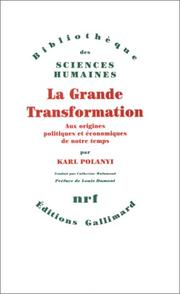
Polanyi's account of how land, labour and money were turned into fictitious commodities, and of the social backlash that followed. The single most cited book in this field outside Mauss.
The comparative volume where Polanyi and his collaborators work the argument through ancient economies, and where reciprocity, redistribution and exchange are set out as distinct forms. Read it as the technical version of The Great Transformation.
Gifts, commodities and what money does
IntermediateFollow the central theoretical argument of the discipline through its main statements.
▸ Study plan for this stage
Pace: Ten to twelve weeks, 1,107 pages — the hardest stage in the path, and the one where page count least predicts effort. Gifts and Commodities (C. A. Gregory, 1982) is 246 pages and is the most technical: a Marxian formalisation of the gift-commodity distinction that assumes familiarity with value theo
- Gregory's core distinction: commodity exchange establishes a relation between objects and alienates them, gift exchange establishes a relation between persons and does not
- Inalienability, and Godelier's argument that some objects are kept precisely so that others can be given
- Appadurai's inversion — following the thing rather than the transactor — and Kopytoff's biography of a commodity, in which objects move in and out of commodity status
- Commodity candidacy, commodity context and the idea of a regime of value
- Parry and Bloch's two transactional orders: short-term individual acquisition and long-term social and cosmic reproduction, and the moral relationship between them
- The corollary that money is not intrinsically corrosive of social relations — the standard Western assumption their cases undercut
- Spheres of exchange and conversions between them, and what happens when general-purpose money makes previously separate spheres convertible
- State Gregory's gift-commodity distinction precisely — what is alienated in one and not the other, and what is the relation being reproduced?
- What is Godelier's answer to Mauss's question about what compels the return, and how does keeping-while-giving produce it?
- What does Kopytoff's biographical method reveal that a study of a transaction cannot?
- What are Parry and Bloch's two transactional orders, and how do the cases in their volume show money moving between them?
- What do these books collectively say about the claim that monetisation dissolves social obligation?
- Where does Gregory's Marxian apparatus do necessary work, and where could his argument be made without it?
- Write out Gregory's gift-commodity table in full from his own text, then use it to classify a set of transactions drawn from Malinowski's Trobriand material in the first stage
- Take one object from your own household and write its cultural biography in Kopytoff's terms — every phase in which it was and was not a commodity — then note what the exercise shows about commodity status being situational
- Read Godelier against Mauss directly on the hau passages and list each point at which Godelier says Mauss went wrong
- Apply Parry and Bloch's two-order framework to one case study in their own volume and one in Appadurai's, and see whether the framework transfers
- Reconstruct a sphere-of-exchange system from any case in these volumes and identify precisely what general-purpose money would do to it
Next up: Having read the arguments in their original form, the next stage is how the field now packages them for teaching.
Gregory's Melanesian material recasts the gift-commodity distinction as a difference between relations between people and relations between things. The most rigorous formulation of the contrast.

Godelier returns to Mauss to ask about the things that are kept rather than given, and what sacred objects do to an exchange system. Read it directly after Gregory.

The edited collection that reframed the question around objects and their careers rather than around exchange types. It is where commodity biography as a method comes from.
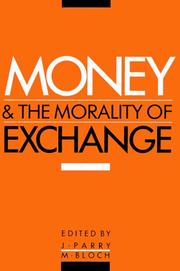
Parry and Bloch's collection on how societies morally distinguish short-term individual gain from long-term social reproduction. The best answer to the claim that money dissolves everything it touches.
The field as it teaches itself now
IntermediateGet the contemporary synthesis and the standard graduate framing.
▸ Study plan for this stage
Pace: Four to five weeks, 397 pages — the lightest stage in the path. Economic Anthropology (Chris Hann and Keith Hart, 2011) is 208 pages and is the standard short survey — a textbook, written to give you the intellectual history and the current shape of the field in one pass. The Anthropology of Economy
- The intellectual history as the field now tells it: from Mauss and Malinowski through the substantivist-formalist debate to Marxist, feminist and cultural approaches
- Hann and Hart's account of what the discipline gained and lost by moving away from Polanyi
- Gudeman's two realms — community and market — as coexisting rather than sequential forms of economy
- The base: Gudeman's term for the shared resources and knowledge a community holds and cannot allocate by price
- Debasement and the tension when market calculation encroaches on the base
- How the field now treats capitalism as one ethnographic object among others rather than as the background condition
- What a graduate framing does to the arguments — where the textbook smooths a dispute that the primary texts left open
- How do Hann and Hart periodise the field, and which of their turning points would you contest after reading the primary sources?
- What are the community and market realms in Gudeman, and what is the relationship between them?
- What does Gudeman mean by the base, and how is it different from common property in the economics sense?
- Which of the disputes from the previous three stages does Hann and Hart's survey present as settled, and are they?
- What does economic anthropology claim to offer that a standard economics course does not, in these authors' own terms?
- Draw the field's genealogy as Hann and Hart present it, then add every author from the first three stages to the diagram and mark where the survey's account and your reading diverge
- Apply Gudeman's community-and-market distinction to one ethnographic case from the previous stage and note what it captures that Gregory's gift-commodity distinction does not
- Find three places where Hann and Hart summarise a debate you have read the primary texts of, and write down what the summary omits
- Identify Gudeman's base in a setting you know well — a household, a workplace, a village — and write out what would be lost if each element were priced
Next up: The final stage reads the books that took these arguments out of the seminar and into general circulation, which is how most readers now encounter them.

Hann and Hart's short survey is the current standard introduction, and unusually good on the history of the substantivist-formalist dispute that shaped the field.

Gudeman's community-and-market model, arguing that every economy runs on both at once. The most useful analytical framework here for thinking about a specific case.
Where it broke into general reading
IntermediateRead the books that took the field's arguments to a wide audience, and one classic of commodity history.
▸ Study plan for this stage
Pace: Eight to ten weeks, 1,071 pages. Debt: The First 5000 Years (David Graeber, 2011) is the long one at 543 pages, written for a general readership and openly polemical; several of its historical claims — particularly on the origins of money and on specific ancient cases — have been contested by econom
- Graeber's inversion of the barter-to-money-to-credit sequence, and his claim that credit preceded coinage — the point on which he is most disputed
- Debt as a moral relation before it is a financial one, and Graeber's account of what quantification does to obligation
- Mintz's method: following sugar from Caribbean plantation production to English working-class consumption, and treating taste as historically produced
- The relationship Mintz draws between slavery, industrial labour discipline and the calorie economics of the British diet
- Scott's subsistence ethic: peasant risk aversion as rational given a subsistence margin, and the moral claims that follow from it
- The safety-first principle and why Scott says rebellion follows violations of subsistence guarantees rather than absolute poverty
- What is gained and lost when a scholarly argument is written for a general audience — all three books demonstrate different points on that trade-off
- What is Graeber's argument about the origins of money, what evidence does he give, and what have his critics said about it?
- How does Mintz connect the plantation to the English factory, and what is the causal claim in that connection?
- What is the subsistence ethic in Scott, and what does it predict about when peasants revolt?
- How do these three books each handle the relationship between economic arrangements and moral obligation?
- Which arguments from the earlier stages does Graeber rely on, and does he represent them accurately?
- After the whole path, what is the strongest single claim economic anthropology makes against the standard economic account of exchange?
- Take Graeber's account of the origins of money, find the specific claims that have been contested, and read at least one published critique of them alongside the relevant chapter — the exercise is in holding a disputed argument rather than adopting or discarding it
- Reconstruct Mintz's commodity chain for sugar as a diagram, from plantation labour through shipping and refining to the working-class tea table, and mark where he makes an economic argument and where a cultural one
- Apply Scott's safety-first model to a case from Trade and Market in the Early Empires in the second stage and see whether the peasant logic transfers to a different agrarian setting
- Write a commodity biography of one item in your kitchen using Mintz's method and Kopytoff's from the third stage, and note where the two approaches ask different questions
- Close the path with a two-page statement of what you now think exchange is, citing at least one book from each of the five stages and naming the point at which two of them contradict each other
Next up: This completes the path: the founding ethnographies, Polanyi's historicisation of the market, the gift-commodity argument, the field's own synthesis, and the books that carried all of it into general reading.

Graeber's argument that credit precedes coinage and that the barter origin story of money never happened. The most widely read book in this field and the one most worth checking against the specialists above.
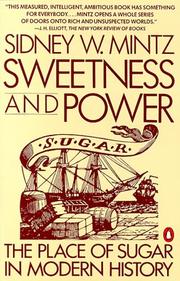
Mintz traces sugar from luxury to working-class calorie and shows an entire labour system organised around a single taste. The model for every commodity history since.
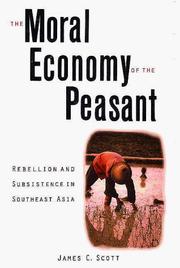
Scott's subsistence-ethic account of why peasants resist some exactions and tolerate others. It closes the path by turning the theory into a testable claim about politics.
Discussion
Keep reading
Paths that share books, cover the same subject, or open a related topic.