Start with Economic Anthropology by Chris Hann and Keith Hart. It is short, it is a history of the field rather than a theory of its own, and it tells you what the arguments were and who stood where — which is exactly what you want before the primary texts, because this discipline is organised around one long dispute and most of its classics are moves within it.
The dispute is between formalists, who hold that the tools of economics apply anywhere because scarcity and choice are universal, and substantivists, who hold that economies are embedded in social relations and that market categories imported into a non-market society describe nothing. Read the primary works in the order below and you watch that argument develop. Read them at random and Mauss, Polanyi and Sahlins look like three unrelated books.
The founding texts
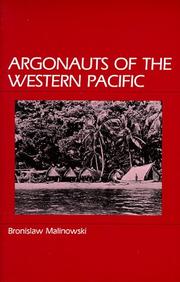
The Gift (1925) is Marcel Mauss's essay on exchange in Polynesia, Melanesia and the Northwest Coast, and on the threefold obligation to give, to receive and to reciprocate. It is short, dense, and built on ethnography Mauss did not collect himself; translations differ substantially, so the edition matters. Argonauts of the western Pacific (1922) is Malinowski's Trobriand fieldwork and the kula ring — a circulating exchange of shell valuables that makes no sense in acquisitive terms. It is long, and the ethnographic accumulation is the point.
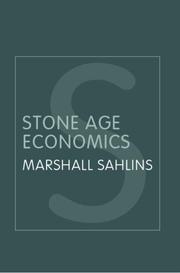
The Great Transformation (1944) is by an economic historian rather than an anthropologist, and it is the source of embeddedness and of the argument that the self-regulating market was a state project rather than a natural growth. Trade and market in the early empires (1957) is Karl Polanyi's programmatic follow-up, an edited volume setting out reciprocity, redistribution and exchange as distinct modes of integration; drier than the first book and more useful than its reputation. Stone age economics (1972) is Marshall Sahlins, best known for the original affluent society — the claim that hunter-gatherers work few hours because their wants are finite. It rests on a small number of time-allocation studies and has been contested since, so read it as an intervention rather than a finding.
The theoretical middle
Gifts and commodities (1982) is where C. A. Gregory formalises the gift and commodity distinction using Melanesian material and a broadly Marxian vocabulary. It is hard going and it is the pivot much of the later literature turns on. The enigma of the gift (1996) has Maurice Godelier returning to Mauss with a different question: what about the sacred objects that are never given at all, but kept out of circulation entirely.
The Social life of things (1986) is Arjun Appadurai's edited collection arguing that objects have biographies and move in and out of commodity status; Igor Kopytoff's chapter is the most cited piece in it. Money and the morality of exchange (1989) dismantles the assumption that money corrodes social relations, and Bloch and Parry's distinction between short-term and long-term transactional orders has proved unusually durable. The Anthropology of Economy (2001) is Stephen Gudeman's own synthesis, built on community and market as two realms of value rather than two stages of history.
The books that reached beyond the field
Sweetness and power (1985) is Sidney Mintz on sugar, connecting Caribbean plantation slavery to the English working-class diet, and it is the model for every commodity history written since. The moral economy of the peasant (1976) is James Scott on the subsistence ethic and why peasants rebel; it was answered directly by Samuel Popkin's rational-peasant argument, which is not in our catalogue but is the standard rejoinder and worth knowing exists.
Debt (2011) is David Graeber's sweep across five thousand years, opening with the argument that a barter economy preceding money is a myth. On that specific point he is reporting mainstream anthropology rather than departing from it; on many particular historical claims, economists and historians have pushed back hard. It is the book most readers arrive by, and the worst one to arrive by, because it is the hardest on the list to evaluate without the shelf underneath it. Read it last, and you will be able to see what it is doing. More reading paths on Discover.
Follow the full ordered path here: Economic Anthropology: The Best Books on Gifts, Debt and Exchange.
Ready to learn something deeply?
Build a reading path — free