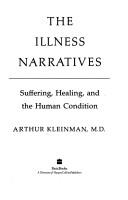
Medical anthropology asks what illness means, not only what causes it, and it treats biomedicine as a culturally specific healing system rather than the neutral standard the others deviate from. The best entry is The Spirit Catches You and You Fall Down by Anne Fadiman, 341 pages on a Hmong child with severe epilepsy in Merced, California, her family who understood it as soul loss, and the doctors who understood it as a seizure disorder — told without deciding who was right. Read it before you have any vocabulary to flatten it with. Then read The illness narratives by Arthur Kleinman, whose distinction between disease as biomedical lesion and illness as lived experience organises the whole discipline and gives Fadiman's story its analytic frame.
No prior anthropology is assumed anywhere on this path; the books teach their own terms. One thing to hold throughout: several authors here are making strong contested arguments rather than reporting settled findings, and the honest way to read them is to keep track of whose claim you are holding. These are books about how medicine is practised and experienced, not clinical guidance, and none of them substitutes for professional care.
The textbooks, and the argument between them
Medical Anthropology by John S. Allen and Andrea S. Wiley is the standard biocultural survey — nutrition, reproduction, infectious disease and stress treated as biology and culture jointly. It is catalogued under the bare title, so check the authors. Introducing Medical Anthropology by Merrill Singer and Hans Baer comes from the critical tradition and foregrounds power, inequality and political economy; the record credits four authors, which reflects a later revised edition than its listed date suggests. The two textbooks disagree productively about what the field is for, and reading them against each other is more useful than picking one.
Patients and healers in the context of culture is Kleinman again, the 1980 Taiwan monograph where the explanatory-model framework was worked out against a genuinely plural healing system — biomedicine, Chinese medicine and shamanic practice in one city. It is denser than the later book and it is the theoretical source everyone cites.
Structural violence, and whose argument it is
Paul Farmer argues, in Infections and inequalities, that the epidemiology of infectious disease is largely a map of poverty; the case is built from tuberculosis and HIV in Haiti. Pathologies of power generalises that into a claim about structural violence and health as a human right. Farmer is advocating a position as well as reporting fieldwork, and he says so; read him as the strongest statement of that position rather than as a consensus summary.
Fresh Fruit, Broken Bodies by Seth Holmes applies the framework to Triqui migrant farmworkers, whose berry harvest and border crossing he shared before following their injuries into American clinics. Its full catalogue title carries the California Series in Public Anthropology name, so it looks longer than it is at 264 pages. Death without weeping by Nancy Scheper-Hughes is the field's most uncomfortable classic: infant mortality in a Brazilian shantytown and mothers who did not grieve dying babies. Her interpretation of that response has been contested by other anthropologists, and the book doubles as a methodological argument about what a researcher owes the people studied. Read it last in this stage.
The body as cultural object, and two long ethnographies
The Woman in the Body by Emily Martin reads American medical textbooks as cultural documents, finding menstruation described as failed production and birth as industrial labour, then sets that against how women describe their own bodies. Illness and culture in the postmodern age by David B. Morris is written by a humanist rather than an ethnographer and is the most accessible book in this stage, on chronic pain, contested syndromes and the placebo response. Twice dead by Margaret Lock compares Japan and North America on brain death and organ transplantation, and argues that even the moment of death is culturally constituted.
Two full-length ethnographies close the path. Vita by João Biehl follows one woman, Catarina, in a Brazilian institution where the unwanted are left to die, reconstructing the family and medical decisions that put her there; it uses photography alongside text. The Paradox of Hope by Cheryl Mattingly spent years with African American families of chronically ill children in a Los Angeles hospital, on sustaining hope inside a system that keeps disappointing it. It is the fullest answer to the question Fadiman raised at the start.
Related fields sit next door on the economic anthropology hub if the political-economy strand is what draws you.
Follow the full ordered path here: Medical Anthropology: The Best Books to Read First.