Grow gourmet mushrooms at home
This curriculum takes a complete beginner from their very first mushroom kit all the way to designing custom substrates and troubleshooting advanced grows. Each stage builds on the last — starting with the biology and beginner-friendly techniques, moving through species-specific mastery, and finally reaching the science of mycology and substrate formulation that separates hobbyists from serious cultivators.
Foundations: Biology & First Grows
BeginnerUnderstand the mushroom life cycle, basic terminology (mycelium, spawn, substrate, fruiting), and successfully complete a first grow using a kit or simple ready-made materials.
▸ Study plan for this stage
Pace: 8–10 weeks total: Weeks 1–5 cover "Organic Mushroom Farming and Mycoremediation" by Tradd Cotter (~25–30 pages/day, focusing on Part I: biology foundations and Part II: cultivation methods); Weeks 6–10 cover "Mycelium Running" by Paul Stamets (~20–25 pages/day, with slower reading on the species pro
- The mushroom life cycle: spore germination → mycelium colonization → pinning → fruiting body → spore release, as laid out in Cotter's opening biology chapters
- Core vocabulary: mycelium, spawn (grain, sawdust, plug), substrate, inoculation, colonization, primordia, and fruiting — defined and contextualized in both Cotter and Stamets
- Substrate science: carbon-to-nitrogen ratios, moisture content, and why different species (oyster, shiitake, lion's mane) prefer different bulk substrates, drawn from Cotter's substrate chapters
- Spawn types and their roles: Cotter's detailed breakdown of grain spawn, sawdust spawn, and plug spawn — what each is used for and how to handle it as a beginner
- Environmental fruiting triggers: the role of temperature drops, humidity, fresh-air exchange (FAE), and light cycles in initiating pinning, covered extensively by Cotter and reinforced by Stamets's species profiles
- Mycelium as a living network: Stamets's foundational argument in 'Mycelium Running' that mycelium is an intelligent, adaptive organism — shifting the reader's mindset from 'growing a crop' to 'partnering with a fungus'
- Species selection for beginners: Stamets's species-by-species profiles help the reader match a mushroom (e.g., oyster, king stropharia) to their available materials, climate, and skill level
- Contamination awareness and sterile technique: Cotter's practical guidance on identifying competitor molds, maintaining cleanliness, and understanding why contamination happens — essential before any first grow
- After reading Cotter's biology section, can you trace a mushroom's complete life cycle from spore to fruiting body and back, naming each stage and what triggers the transition?
- What is the difference between spawn and substrate, and why does Cotter emphasize that confusing the two is one of the most common beginner mistakes?
- Using Stamets's species profiles in 'Mycelium Running,' which two or three species would be the best candidates for your first grow given your local climate and available materials, and why?
- What environmental conditions (temperature, humidity, CO₂ level, light) does your chosen species need to initiate pinning, and how would you replicate them at home based on the guidance in both books?
- How does Stamets's concept of mycelium as a 'Earth's natural internet' change the way you think about contamination, competition, and the health of a colonizing block?
- What are the warning signs of contamination described by Cotter, and what corrective or preventive actions does he recommend at each stage of the grow?
- Complete a full kit grow (oyster or shiitake) while actively reading Cotter's early chapters: keep a daily grow journal that maps your observations (mycelium spread, pinning, humidity) to the terminology and life-cycle stages Cotter describes
- Draw a hand-labeled diagram of the mushroom life cycle from memory after finishing Cotter's biology section — include spore, germination, mycelium, primordia, fruiting body, and spore print, then check it against the book
- Make a substrate comparison chart: using Cotter's substrate chapters, list at least four substrates (straw, hardwood sawdust, cardboard, coffee grounds), their C:N ratios, moisture targets, and which species Stamets recommends for each
- Take a spore print from a store-bought or kit-grown mushroom cap: place it on paper overnight, observe the pattern, and use Stamets's species descriptions to identify the spore color and what it tells you about the species
- Build a simple low-tech fruiting chamber (a 'shotgun fruiting chamber' or martha-tent equivalent) using the environmental parameters from Cotter's fruiting chapters — document how you dialed in humidity and FAE before your first flush
- After finishing both books, write a one-page 'species brief' for the mushroom you grew: cover its preferred substrate, spawn type, fruiting triggers, and ecological role, citing specific passages from both Cotter and Stamets to support each point
Next up: Mastering the life cycle, vocabulary, and first hands-on grow in this stage gives the reader the biological intuition and practical confidence needed to move into intermediate cultivation topics — such as making your own spawn, agar work, and scaling up substrate production — without being overwhelmed by the underlying science.
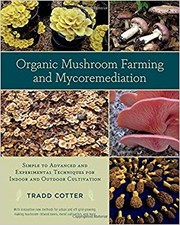
Written accessibly for beginners, it introduces the full life cycle of fungi, explains key vocabulary, and covers low-tech growing methods — perfect as a first read before anything more technical.
Stamets is the most recognized name in popular mycology; this book builds intuition for how mycelium behaves in nature and introduces oysters, shiitake, and other edible species in an engaging, visual way that motivates the learner.
Core Cultivation: Techniques & Species
BeginnerExecute reliable end-to-end grows of oyster and shiitake mushrooms using straw, logs, and simple grain spawn, and understand contamination prevention and fruiting triggers.
▸ Study plan for this stage
Pace: 8–10 weeks, ~20–25 pages/day (the book is dense with technical detail and photographs; slower reading allows time for note-taking and cross-referencing Stamets' species profiles with your active grows)
- The mushroom life cycle: mycelium, primordia, fruiting bodies, and spores — and how each stage informs cultivation decisions
- Substrate selection and preparation: straw (pasteurization via hot-water soak or lime treatment), hardwood logs (inoculation timing, plug/sawdust spawn), and grain spawn production and handling
- Sterile and clean technique: understanding the contamination triangle (competitor molds, bacteria, and pests), and how Stamets distinguishes between sterile lab work and 'clean' home/farm technique
- Spawn types and spawn run: what grain spawn is, how mycelium colonizes a substrate, and the visual/tactile signs of healthy vs. contaminated colonization
- Species biology for oyster mushrooms (Pleurotus ostreatus and related) and shiitake (Lentinula edodes): preferred substrates, temperature ranges, humidity needs, and CO₂ sensitivity
- Fruiting triggers: the role of temperature drops, fresh air exchange (FAE), light cues, and humidity spikes in initiating pinning
- Harvest timing and post-harvest care: reading pin development, cutting vs. twisting technique, and managing subsequent flushes
- Troubleshooting contamination: identifying green mold (Trichoderma), wet rot, and bacterial blotch, and Stamets' recommended corrective actions
- According to Stamets, what are the key differences between pasteurization and sterilization, and when is each approach appropriate for oyster vs. shiitake cultivation?
- What visual and environmental cues indicate that a straw or log substrate has completed a healthy spawn run and is ready to be moved to fruiting conditions?
- How does Stamets describe the specific fruiting triggers for Pleurotus ostreatus (oyster) and Lentinula edodes (shiitake), and how do you replicate them without specialized equipment?
- What are the most common contamination organisms Stamets identifies, how do you distinguish them from healthy mycelium, and what does he recommend to prevent or respond to each?
- Why does Stamets emphasize CO₂ levels and fresh air exchange as critical fruiting variables, and what low-tech methods does he suggest for managing them?
- What does Stamets recommend regarding log selection (species, diameter, season of cutting) for shiitake, and why do these factors affect long-term yield?
- **Straw oyster grow (end-to-end):** Pasteurize a small batch of straw using Stamets' hot-water method, inoculate with grain spawn at the ratios he specifies, and document colonization progress with dated photos every 2–3 days until first pins appear.
- **Log inoculation project:** Source a freshly cut hardwood log (oak or alder as Stamets recommends), inoculate with plug or sawdust spawn following his spacing and wax-sealing instructions, and keep a maintenance log tracking moisture and seasonal conditions over the first 8 weeks.
- **Contamination identification journal:** Each time you observe any off-color, off-smell, or unusual growth in your substrate, photograph it, look it up in Stamets' contamination sections, and write a one-paragraph diagnosis and corrective action.
- **Species profile comparison chart:** Using only Stamets' species profiles, build a reference table for oyster and shiitake covering: substrate, spawn run temp, fruiting temp, humidity %, CO₂ tolerance, days to pin, and days to harvest. Use this as your grow-room checklist.
- **Fruiting chamber build + trigger test:** Construct a simple shotgun fruiting chamber (SGFC) or martha-tent setup, then deliberately test one fruiting trigger at a time (temperature drop, FAE increase, humidity spike) on colonized oyster blocks and record which trigger produces the fastest and densest pinset.
- **Post-harvest flush tracking:** After your first oyster harvest, follow Stamets' guidance on rest periods and re-hydration, and track at least two additional flushes — recording yield weight, days between flushes, and any contamination that appears over time.
Next up: Mastering oyster and shiitake end-to-end with Stamets' foundational techniques builds the substrate knowledge, contamination intuition, and species-reading skills needed to confidently tackle more demanding species, advanced sterile lab work, and larger-scale production in the next stage.
The canonical species-by-species cultivation manual; now that the learner has foundational vocabulary, this book delivers detailed protocols for oysters, shiitake, lion's mane, and more — it becomes the core reference for this entire curriculum.
Intermediate Skills: Spawn & Substrate Mastery
IntermediateProduce your own grain spawn and master bulk substrate preparation (masters mix, supplemented sawdust, pasteurization vs. sterilization), reducing dependence on commercial kits.
▸ Study plan for this stage
Pace: 6–8 weeks total: Weeks 1–4 cover "Radical Mycology" (~25–30 pages/day, focusing on fungal biology, mycelial networks, and ecological substrate relationships); Weeks 5–8 cover "The Essential Guide to Cultivating Mushrooms" (~20–25 pages/day, with slower, hands-on pacing to allow simultaneous lab prac
- Fungal biology and mycelial intelligence as framed in Radical Mycology — understanding HOW mycelium colonizes substrate informs WHY spawn and substrate choices matter
- The ecological role of decomposition (saprotrophic, mycorrhizal, parasitic fungi) and how it maps to substrate selection (wood, straw, grain, dung)
- Grain spawn production: selecting grains (rye, wheat, oats, popcorn), hydration targets, pressure sterilization protocols, and inoculation technique from The Essential Guide to Cultivating Mushrooms
- Masters Mix composition (hardwood sawdust + wheat bran, 80:20) and supplemented sawdust substrates — nutrient density trade-offs vs. contamination risk
- Pasteurization vs. sterilization: temperature thresholds, target organisms eliminated, and which substrates demand which method (straw → pasteurize; masters mix → sterilize)
- Spawn rate, spawn run conditions (temperature, humidity, darkness, gas exchange), and recognizing healthy vs. contaminated colonization
- Radical Mycology's framework of fungi as ecological partners — applying this mindset to sourcing local, sustainable substrate materials rather than relying on commercial kits
- Contamination ecology: understanding competitor molds (Trichoderma, Cobweb, Bacillus) through the lens of Radical Mycology's microbial community thinking, and prevention strategies from The Essential Guide
- After reading Radical Mycology, how does understanding mycelium's ecological role as a decomposer change the way you think about choosing a substrate for a target species?
- What are the critical hydration and sterilization parameters for producing uncontaminated grain spawn, as outlined in The Essential Guide to Cultivating Mushrooms, and what happens if field capacity is exceeded?
- When would you choose pasteurization over sterilization, and vice versa? Name at least two substrates appropriate for each method and explain the biological reasoning.
- What is Masters Mix, what is its nutritional advantage over plain sawdust, and what contamination risk does supplementation introduce — and how do you mitigate it?
- Drawing on both books, how does the concept of 'ecological succession' (Radical Mycology) explain why contamination pressure is higher on rich, supplemented substrates than on straw?
- What are the visual and olfactory signs that a grain spawn jar or bulk substrate block has been successfully colonized versus compromised by contamination?
- Grain Spawn Production Run: Make two 1-quart jars of rye grain spawn following The Essential Guide's protocol. Vary one variable (e.g., hydration level) between jars, document results, and inoculate both with a species of your choice. Log colonization speed and contamination outcomes.
- Substrate Comparison Grow-Off: Prepare three identical fruiting blocks using (a) plain hardwood sawdust, (b) supplemented sawdust (10% wheat bran), and (c) Masters Mix. Inoculate all three with the same grain spawn batch. Track colonization time, yield (grams per block), and any contamination — create a simple data table.
- Pasteurization vs. Sterilization Field Test: Pasteurize a batch of straw (60–82°C for 1–1.5 hrs) and sterilize a batch of Masters Mix (121°C / 15 PSI for 2.5 hrs). Inoculate both and observe which method is appropriate for which substrate by monitoring results over 3 weeks.
- Radical Mycology Reflection Journal: After each major chapter of Radical Mycology, write a 1-paragraph entry connecting a biological concept (e.g., mycelial networks, hyphal anastomosis, ecological succession) to a practical cultivation decision you will make in your grows.
- Contamination Identification Log: Intentionally allow one grain jar to become contaminated (leave it uninoculated and loosely covered for 48 hrs post-sterilization). Photograph and identify the contaminant using Radical Mycology's microbial ecology sections and online references. Document color, texture, and smell.
- Local Substrate Sourcing Project: Inspired by Radical Mycology's ethos of ecological partnership, identify and test one locally available, free or low-cost substrate material (e.g., spent coffee grounds, agricultural straw, wood chips from a local arborist). Run a small trial block and compare results to your Masters Mix control.
Next up: Mastering spawn production and substrate science builds the reliable, repeatable foundation needed to advance into environmental control, fruiting chamber design, and multi-species cultivation — the focus of the next stage — where the quality of your spawn and substrate directly determines the ceiling of your yields and species diversity.

Bridges practical cultivation with deeper fungal science; reading this now gives the learner the conceptual framework — nutrient cycling, substrate chemistry — needed to understand why certain substrates outperform others.

A focused, practical handbook on spawn production, sterilization workflows, and bulk substrate formulas — exactly the skill set needed at this stage to move beyond kits entirely.
Advanced Cultivation: Cloning, Agar & Strain Development
ExpertWork confidently with agar, isolate high-performing strains, clone wild or cultivated specimens, and maintain a personal culture library for long-term growing.
▸ Study plan for this stage
Pace: 3–4 weeks, ~20–25 pages/day — Entangled Life is richly written and rewards slow, reflective reading; budget extra time to revisit chapters on mycelial networks, symbiosis, and fungal identity, as these directly inform how you think about strain selection and culture health.
- Mycelial individuality and genetic plasticity — Sheldrake's exploration of how fungi are not fixed, uniform organisms but dynamic, adaptive networks underpins why isolating a specific high-performing sector on agar actually captures a genetically distinct and potentially superior individual
- Anastomosis and hyphal fusion — understanding how hyphae recognize 'self' vs. 'non-self' and fuse (or reject) is the biological foundation of what you observe when two cultures meet on an agar plate, and why contamination or incompatible strains behave the way they do
- Fungal 'decision-making' and network intelligence — Sheldrake's argument that mycelium solves problems and optimizes resource flow reframes how cultivators should interpret growth patterns on agar: sector variation, fast-growing edges, and rhizomorphic vs. tomentose morphology are expressions of thi
- Symbiosis, co-evolution, and environmental sensitivity — fungi are profoundly shaped by their substrate and microbial neighbors; this explains why a wild clone may perform differently in culture than in nature, and why agar formulation and environmental conditions during isolation matter so much
- The concept of the 'individual' in fungi — Sheldrake challenges the notion of discrete biological individuals, which maps directly onto the cultivator's challenge of defining and stabilizing a 'strain': what you are really capturing is a moment in an organism's ongoing variation
- Spore dispersal, genetic recombination, and sexual reproduction — understanding that spores represent genetic shuffling (unlike cloning, which preserves genetics) clarifies why cloning from a proven specimen is the preferred method for locking in desirable traits
- Lichens as a model for culture purity — Sheldrake's deep dive into lichens as composite organisms illustrates the complexity of 'pure' culture and sensitizes the reader to the reality that even a clean agar plate hosts a negotiated biological community
- Ecological role of decomposers and the wood-wide web — situating gourmet species within their ecological niche informs substrate choice, competitor suppression strategies, and the long-term stewardship of a culture library as a living, evolving resource
- After reading Sheldrake's account of hyphal self/non-self recognition, how would you explain what is actually happening biologically when two mycelial colonies on an agar plate either merge cleanly or form a visible 'barrage zone' — and what does this tell you about strain compatibility or contamination?
- Sheldrake argues that mycelium actively optimizes resource networks. How does this reframe the way you evaluate sector growth on an agar plate — specifically, what biological logic might explain why a rhizomorphic sector at the edge of a culture could outperform a tomentose interior sector in fruiting trials?
- Given Sheldrake's explanation of spore-based genetic recombination versus vegetative (clonal) propagation, why is cloning from a high-performing fruiting body a more reliable strategy for preserving desirable traits than growing from spores — and what are the trade-offs?
- How does Sheldrake's concept of fungal individuality challenge the everyday cultivator's language of 'a strain,' and what practical implications does this have for how you label, store, and document cultures in a personal library?
- Sheldrake describes fungi as exquisitely sensitive to their chemical and microbial environment. How should this sensitivity inform your agar recipe choices (e.g., MEA vs. PDYA vs. WA) when attempting to isolate a wild specimen versus maintaining an established culture?
- Drawing on Sheldrake's broader ecological framing, what ethical and practical considerations should guide a cultivator who is cloning wild specimens — particularly regarding genetic diversity, habitat impact, and the long-term health of their culture library?
- Agar pour & sector mapping journal: Prepare at least three different agar formulations (e.g., MEA, PDA, and one grain-based agar) and inoculate each with the same culture. Photograph plates every 48 hours and annotate growth patterns using Sheldrake's vocabulary — note rhizomorphic vs. tomentose sectors, edge behavior, and any visible zonation. Reflect on what the 'network intelligence' concept pr
- Wild or cultivated clone capture: Select a robust fruiting body (store-bought or foraged where legal). Take 3–5 tissue samples from different internal locations (cap flesh, stipe, gill junction). Plate each on agar, observe which samples establish cleanly, and document variation between samples from the same mushroom — connecting this to Sheldrake's point about intra-organism genetic variation.
- Self/non-self confrontation test: Grow two genetically distinct isolates of the same species on separate plates, then place small agar plugs 3–4 cm apart on a fresh plate. Observe and photograph the interaction zone over 7–14 days. Write a one-page interpretation linking what you see to Sheldrake's discussion of anastomosis and hyphal recognition.
- Culture library setup: Create a physical or digital culture log for at least 5 isolates. For each entry, record: source specimen, isolation date, agar type, observed morphology, transfer history, and storage method (refrigerator slants or long-term grain storage). Annotate each entry with a note on what Sheldrake's 'individuality' concept means for how you interpret that culture's identity over ti
- Contamination ecology reflection: When a plate becomes contaminated, instead of discarding it immediately, spend 10 minutes observing and sketching the interaction between the contaminant and the mycelium. Write a short paragraph connecting what you see to Sheldrake's discussion of fungal competition, chemical signaling, and the negotiated nature of biological communities.
- Strain performance fruiting trial: Take two isolates from the same species (e.g., two clones of Pleurotus ostreatus from different sources) through a full fruiting cycle on identical substrate blocks. Record colonization speed, pinning time, yield, and mushroom morphology. Write a comparative analysis that uses Sheldrake's framework of adaptive network intelligence to hypothesize why differences o
Next up: Sheldrake's deep biological and ecological grounding gives the advanced cultivator a conceptual language for what they are observing on agar and in the fruiting chamber — setting the stage for the next level of study, where that intuition is formalized into systematic breeding, multi-generational strain selection, and potentially working with mycorrhizal or more complex fungal relationships.

At this advanced stage, understanding the broader ecological and biochemical intelligence of fungi deepens intuition for strain behavior, symbiosis, and substrate interactions — making the learner a more thoughtful cultivator.
Mastery: Mycological Science & Scaling Up
ExpertUnderstand the underlying mycology — taxonomy, genetics, ecology — well enough to troubleshoot any grow, design novel substrates, and scale production beyond the hobby level if desired.
▸ Study plan for this stage
Pace: 10–14 weeks total: spend ~4–5 weeks on "Mushrooms Demystified" (~40–50 pages/day, focusing on taxonomic keys, species accounts, and ecological notes) then ~6–8 weeks on "Introduction to Fungi" (~25–35 pages/day, reading more slowly to absorb the dense mycological science, genetics, and physiology ch
- Fungal taxonomy and phylogenetics: understanding how Arora's field-guide classifications map onto modern molecular systematics covered in Webster & Weber, and where older nomenclature diverges from current phylogenetic groupings
- Fungal life cycles and reproductive strategies: the full sexual and asexual cycles of Basidiomycota and Ascomycota as detailed in 'Introduction to Fungi', including dikaryotization, clamp connections, and meiospore dispersal
- Substrate ecology and nutrient cycling: how saprotrophic, mycorrhizal, and parasitic guilds (extensively described in Arora's species accounts) relate to the biochemical decomposition pathways explained in Webster — lignin/cellulose degradation, white-rot vs. brown-rot mechanisms
- Genetics of cultivated species: understanding heterokaryon incompatibility, mating-type systems, and how genetic variation within a species (visible in Arora's varietal descriptions) can be exploited or avoided in culture
- Mycelial physiology and environmental triggers: temperature, humidity, CO₂, light, and nutrient signals that govern primordia initiation and development, grounded in the physiological chapters of 'Introduction to Fungi'
- Substrate design from first principles: using knowledge of fungal nutritional requirements and enzymatic capabilities (Webster) to formulate and troubleshoot novel bulk substrates and supplementation strategies
- Scaling production systems: applying ecological carrying-capacity concepts and contamination ecology (competitor molds described in both books) to design workflows that minimize biological risk at larger volumes
- Identification confidence and quality control: using Arora's keys and macro/microscopic characters to verify culture identity, detect contamination, and authenticate strains before committing them to a scaled grow
- After working through Arora's taxonomic keys and Webster's phylogenetic chapters, how would you explain why a mushroom once classified as a Pholiota might now sit in a different genus — and what practical implications does that have for sourcing reliable culture information?
- Using the life-cycle diagrams in 'Introduction to Fungi', trace the complete developmental pathway of a Basidiomycete from germinating basidiospore to mature fruiting body, identifying every stage at which a cultivator can intervene or optimize conditions.
- Arora describes dozens of saprotrophic species with notes on their preferred substrates in nature. Drawing on Webster's biochemistry chapters, how would you design a novel substrate for one of those species, and what enzymatic profile would you expect it to need?
- What is heterokaryon incompatibility, as explained in 'Introduction to Fungi', and how does it affect strain selection, cloning decisions, and the risk of culture degeneration over successive generations?
- Both books discuss fungal competitors and pathogens (green molds, bacterial blotch, mycoparasites). How would you use an understanding of their ecology and growth requirements to redesign a contamination-prone production workflow?
- How do the environmental triggers for primordia initiation described in 'Introduction to Fungi' translate into concrete parameter changes (temperature drop, fresh-air exchange, light exposure) that a grower can implement at scale?
- Taxonomic keying drill: Select 10 species from Arora's keys that you grow or plan to grow. Key each one out from scratch using only the macro-characters provided, then cross-reference the modern accepted name via MycoBank or Index Fungorum to see how Arora's classification has or hasn't changed — write a one-paragraph note on any discrepancies.
- Life-cycle diagram project: After reading the relevant chapters in 'Introduction to Fungi', draw a fully annotated life-cycle diagram for one Basidiomycete (e.g., Pleurotus ostreatus) and one Ascomycete (e.g., Morchella sp.) from memory, labeling ploidy levels, key structures, and the cultivator's intervention points at each stage.
- Substrate formulation experiment: Using Webster's nutritional and enzymatic principles, design three experimental substrate formulations for a single species — one mimicking its natural ecological niche, one optimized for C:N ratio on paper, and one using locally available agricultural waste. Run small-scale trials (quart jars) and record colonization speed, contamination rate, and yield.
- Competitor mold identification log: Deliberately examine any contaminated grows under a dissecting microscope or hand lens, and use both Arora's brief contaminant notes and Webster's chapters on Zygomycota/Ascomycota to identify the genus of at least three different contaminants. Document conditions that preceded each contamination event.
- Scale-up process map: Draft a written production workflow for scaling your current grow from hobby level (e.g., 10 blocks/month) to a small commercial level (e.g., 200 blocks/month). Annotate each step with the specific mycological risk (from Webster's ecology chapters) it introduces and the mitigation strategy you would apply.
- Strain genetics audit: For two strains you currently culture, research their known mating-type systems using information from 'Introduction to Fungi' as a framework, then design a simple crossing experiment (or agar sector isolation protocol) to test whether your stock has undergone genetic drift — document your hypothesis, method, and expected observable outcomes.
Next up: Mastering the mycological science and scaling principles in these two books gives the reader the theoretical and diagnostic foundation needed to engage confidently with advanced applied literature — whether that means formal mycology research, commercial production management, or specialty cultivation of wild-identified species — because every future practical challenge can now be traced back to a
The definitive reference on fungal identification and species diversity; at the mastery stage this encyclopedic knowledge helps the cultivator understand species relationships, habitat preferences, and how to adapt wild species to cultivation.

A rigorous university-level mycology text that covers fungal genetics, physiology, and ecology — the scientific foundation that ties together everything learned in the previous stages and supports truly expert-level decision-making.
Discussion
Keep reading
Paths that share books, cover the same subject, or open a related topic.