Most subjects reward a good reading order because the material builds. Development economics rewards one for a different reason: the field contains a genuine, unresolved argument about whether foreign aid helps or harms, and if you read only one side first you will mistake a position for a consensus. Almost every popular book here is an intervention in that argument, written by someone who knows exactly which opponent they are answering.
The second trap is scale confusion. A book about why some countries are rich and others poor is answering a different question from a book about whether a particular bed-net programme works, and the two literatures use the same vocabulary. Reading them in sequence — descriptive, then argumentative, then empirical, then structural — keeps you from treating a village-level result as a theory of history.
Start with the shape of the problem
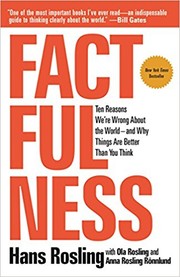
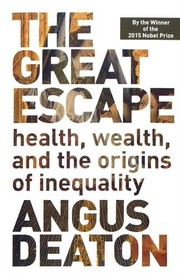
Factfulness is the right first book, not because Hans Rosling is the deepest thinker here but because he corrects the factual baseline most readers arrive with: extreme poverty has fallen dramatically, and most people badly misjudge by how much. It is closer to statistical hygiene than economics. The Great Escape by Angus Deaton then does the serious version of the same move, tracing health and income gains over two centuries and arguing that the same forces producing progress also produce inequality — and it ends with a sharp scepticism about aid that sets up everything after it.
The aid argument, read from both sides
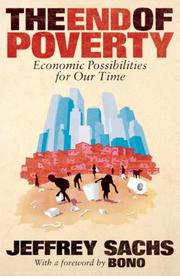
Read these three together or not at all. The End of Poverty is Jeffrey Sachs at his most confident: extreme poverty is a solvable engineering problem, and the money exists. The White Man's Burden is William Easterly's direct rebuttal — that top-down plans fail, that accountability beats ambition, and that searchers outperform planners. Dead aid by Dambisa Moyo pushes further, arguing aid to African governments has actively entrenched bad governance and should be phased out. These are not complementary perspectives to be blended; they are incompatible claims about causation, and the field has not settled which is right.
Then read The idealist, Nina Munk's reported account of Sachs's Millennium Villages Project. She spent six years following it and the book is unsparing. Read it as journalism testing a thesis, and note that Sachs disputes her account.
What the evidence actually shows
Poor Economics is where the argument stops being rhetorical. Abhijit Banerjee and Esther Duflo built their case from randomised trials of specific interventions, and the book is a model of holding conclusions loosely. Its critics argue that trial results travel poorly between contexts and cannot answer the big questions at all — a fair objection the authors partly concede. Good Economics for Hard Times extends the same method to migration, trade and growth in rich countries.
The structural layer
Finish with the books that ask why the poverty exists in the first place. Why Nations Fail makes the institutional case: inclusive political institutions produce growth, extractive ones do not. The bottom billion by Paul Collier isolates the traps — conflict, landlocked geography, resource curse — that keep the poorest countries stuck. Kicking away the ladder is Ha-Joon Chang's heterodox counter-argument that today's rich countries used precisely the protectionist policies they now forbid, and it disagrees openly with the free-trade assumptions elsewhere on this list. Development as Freedom closes it out by reframing the goal: Amartya Sen argues development is the expansion of capability, not income, which changes what counts as success.
If Sachs and Easterly is the only pairing you have time for, read those two and the Munk book. Otherwise work through the whole sequence in order, then browse more reading paths for adjacent economics and policy subjects.
Follow the full ordered path here: Best Books on Development Economics and Global Poverty, in Reading Order.
Ready to learn something deeply?
Build a reading path — free