Best Books on Deaf Culture and the Deaf World, in Reading Order
The central claim of this literature is easy to state and hard to absorb: Deaf people are a linguistic minority with a full natural language and a culture of their own, not a group of people missing a sense. This path starts with accessible introductions, establishes that sign languages are genuine languages with their own grammar, then moves into the community's own institutions and its long argument with the medical professions over schooling and cochlear implants, and ends with the definitive history. Where the path touches medical questions it presents the disagreement rather than settling it, and it is not guidance about hearing, devices or anyone's care.
Start Here
BeginnerGrasp the basic distinction between deafness as an audiological condition and Deaf identity as a cultural one, and meet the community through both an outside observer and Deaf writers.
▸ Study plan for this stage
Pace: 2–3 weeks. Seeing Voices is 189 pages, Deaf in America 134, Deaf Utopia 336. Read them in that order and note the dates as you go — Sacks wrote in 1989 and Padden and Humphries in 1988, so the first two books are describing a community more than thirty-five years ago, and DiMarco's 2022 memoir is th
- The capital-D convention: 'deaf' as an audiological description, 'Deaf' as membership of a linguistic and cultural community, and the fact that the two categories overlap only partly
- The claim the whole path rests on — that Deaf people constitute a linguistic minority rather than a group defined by a deficit — and what would count as evidence for or against it
- Roughly 90 to 95 percent of deaf children are born to hearing parents, which is why the community transmits its culture through schools and peers rather than through families
- Residential schools for the deaf as the historical engine of Deaf culture, and what happens to transmission when children are educated individually in mainstream settings
- Deaf President Now, the 1988 Gallaudet protest, which Sacks witnessed and which is the community's founding modern political event
- Padden and Humphries writing from inside: name signs, Deaf storytelling, ASL literature and humour, and the everyday meanings of Deaf that an outside description misses
- The insider/outsider problem in this literature generally — Sacks is a hearing neurologist and says so, and the field has since produced extensive Deaf-authored scholarship
- DiMarco's fourth-generation Deaf family as the unusual case in which the culture was transmitted at home, and what his account shows about visibility and mainstream expectations today
- State the difference between deaf and Deaf, then give an example of a person who is one and not the other in each direction.
- If 90 percent or more of deaf children have hearing parents, how does a culture get passed on at all? Describe the mechanism Padden and Humphries identify.
- What were the four demands of the Deaf President Now protest, and what did the protest actually achieve beyond the appointment?
- Where does Sacks's account differ from Padden and Humphries's on the same subject, and how much of the difference is attributable to his standing outside the community?
- DiMarco is writing thirty-four years after Deaf in America. Which of Padden and Humphries's descriptions does his memoir confirm, and which look dated?
- Write two 200-word descriptions of the same person — a deaf sixteen-year-old — one framed audiologically and one framed culturally. The exercise is to notice which facts each framing makes relevant and which it discards.
- Learn the ASL manual alphabet from any reliable chart and fingerspell your own name and five words until it is fluent. It takes an evening and it changes how you read every description of signing in the rest of the path.
- List every element of Deaf culture Padden and Humphries describe — name signs, attention-getting conventions, leave-taking, storytelling forms, humour — and mark which of them are practical adaptations and which are cultural in a stronger sense.
- Read the Deaf President Now chapter in Sacks and DiMarco's account of Gallaudet decades later, then write 300 words on what the institution means to the community and why a hearing president was the issue.
Next up: The cultural claim only holds if signed languages are genuine languages, which is exactly what the next stage establishes.
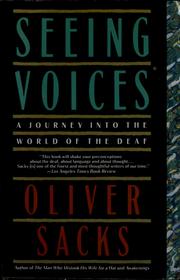
The most common entry point: a neurologist's exploration of sign language, Deaf education and the 1988 Deaf President Now protest at Gallaudet. Read it first for its readability, but read it knowing Sacks is a hearing outsider writing about a community that has since produced its own scholarship — which is exactly what comes next.
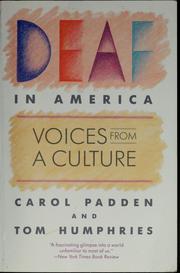
Written by two Deaf scholars, this is the book that established Deaf culture as a subject on its own terms — humour, storytelling, the meaning of 'Deaf' with a capital D. Read it immediately after Sacks so the insider account corrects and deepens the outsider one.

A contemporary memoir from a fourth-generation Deaf family, covering Gallaudet, mainstream expectations and public visibility. It brings the picture up to the present and shows how much of what Padden and Humphries described in 1988 still holds.
Sign Language Is a Language
BeginnerUnderstand why linguists consider signed languages full natural languages, how they arise, and what happens to a community that has one.
▸ Study plan for this stage
Pace: 4 weeks. Talking Hands is 368 pages, Everyone Here Spoke Sign Language a short 169, and Train Go Sorry 296. Groce's book is a 1985 anthropological study of a nineteenth-century community and is best read in two sittings; Fox and Cohen are narrative and move quickly.
- Signed languages are natural languages with phonology, morphology and syntax, not manual codes for spoken ones — ASL and British Sign Language are mutually unintelligible despite a shared spoken language
- The parameters that function as sign phonology: handshape, location, movement, palm orientation and non-manual markers, and minimal pairs that differ in only one
- Non-manual grammar: eyebrow position marking question type, head tilt marking conditionals, and mouth morphemes — grammar carried on the face rather than the hands
- Al-Sayyid Bedouin Sign Language, the village language Fox's linguists were documenting, and why a young language emerging in one community is such powerful evidence about how grammar arises
- Martha's Vineyard: hereditary deafness at high frequency, an entire hearing population that signed, and deafness carrying almost no social disadvantage as a result
- The social model in its strongest empirical form — Groce's islanders show that the disability was mostly produced by the surrounding communication environment
- Cohen's Lexington School as the institutional reality: schooling, mainstreaming, class and race, and the tension between a hearing-run institution and a Deaf student body
- Deaf schools as the site where language transmission actually happens between peers
- Name the five parameters of a sign and give a minimal pair differing in each. Why does this make signing phonological rather than gestural?
- How is a yes/no question marked in ASL, and how does that differ from a wh-question? What is carrying the grammar?
- What made the Al-Sayyid Bedouin case scientifically valuable? Be specific about what a young language lets linguists observe that an old one does not.
- Groce's islanders had a hearing population that signed fluently. What follows from that about whether deafness is a disability — and what are the limits of generalising from one island?
- Cohen writes as a hearing person raised at a Deaf school. What does that position let her see, and where do you notice it constraining her?
- Take ten ASL signs from any reliable dictionary and notate each by its five parameters. Then find two pairs that differ in exactly one parameter and write down what the contrast proves.
- Watch a short signed narrative with the sound off and no captions, and write down everything you can identify about grammatical structure from the face alone — brow, head position, mouth. Compare with what Fox says non-manuals do.
- Write a 400-word account of the Martha's Vineyard case as evidence for the social model of disability, then a 400-word account of the strongest objection to generalising it.
- From Cohen's book, list every point at which an institutional decision at Lexington affected students' language access. Then write 200 words on which decisions were pedagogical and which were budgetary.
Next up: Institutions have now entered the picture, and the next stage is where the disagreement over who decides for deaf children becomes the central subject.
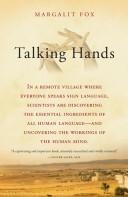
Follows linguists documenting a sign language that emerged in a Bedouin village, and uses it to explain sign linguistics — phonology, morphology, grammar — from the ground up. It is the clearest demonstration that signed languages are not gestural codes for spoken ones.

The classic study of Martha's Vineyard, where hereditary deafness was common and the whole island signed, so deafness carried almost no disadvantage. Read it second: it is the strongest single piece of evidence for the social model this path rests on.
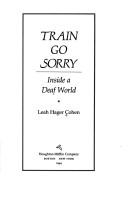
A hearing writer raised at a Deaf school in New York follows students and staff through a year. It moves the argument from linguistics into institutions — schooling, mainstreaming, class and race — and sets up the conflicts of the next stage.
Community, Schooling and the Implant Argument
IntermediateUnderstand the Deaf community's own institutions, and follow the long dispute with medicine and education over oralism, mainstreaming and cochlear implants — with the disagreement laid out rather than adjudicated.
▸ Study plan for this stage
Pace: 8–10 weeks and the longest stage. Deaf Again is 203 pages, Lane's A Journey into the Deaf-World 512, Inside Deaf Culture 224, and The Mask of Benevolence 310. Read them in the order given. This stage deliberately presents a live disagreement rather than settling it: Lane's position is the strongest
- Mainstreaming after the 1975 US education legislation: deaf children individually placed in hearing schools, which improved access in some respects and isolated many from peer language
- Drolsbaugh's account of discovering Deaf culture in his twenties, which is the experiential form of the argument about what an oral upbringing costs
- Lane's survey of the Deaf world — demography, language, education, employment, politics — as the systematic reference text on the community
- Padden and Humphries in 2005 on Deaf institutions historically, and their notably more measured treatment of genetics and cochlear implants than the surrounding literature
- The cochlear implant disagreement stated fairly: clinical outcome data on speech perception and age at implantation on one side; on the other, the community's argument about language deprivation, identity and who consents on a child's behalf
- 'Audism' as Lane's coined term for the assumption that hearing is normative, and the specific institutional practices he applies it to
- The bimodal-bilingual position that has grown since these books were written — sign language and spoken or written language together — which several parties now advocate and which cuts across the older poles
- Language deprivation as the concern both sides can in principle agree matters: the developmental consequences of a child reaching school age without full access to any language
- State the case for cochlear implantation in early childhood as its clinical advocates make it, without caricature. Then state Lane's case against, also without caricature.
- Which of Lane's claims are empirical and which are ethical? Sort them, because they are answerable by different means.
- Where do Padden and Humphries in Inside Deaf Culture differ from Lane in tone and in substance on implants and genetics? Quote the difference.
- Drolsbaugh's account is one person's experience. What can a memoir establish in this argument, and what can it not?
- What is language deprivation, why do both sides of the dispute have reason to care about it, and how does each propose to prevent it?
- Lane calls the establishment 'audist'. Identify two practices he applies the term to where you find it illuminating, and one where you find it overreaching.
- Build a four-column table with Lane, Padden and Humphries, Drolsbaugh and the clinical position, and rows for: what deafness is, what a deaf child needs, who should decide, and what the evidence is. Fill it entirely from the texts.
- Write the strongest 500-word version of the position you disagree with, using only that side's own sources. Then write a paragraph on what changed in your understanding.
- Take Lane's Mask of Benevolence and mark every claim that is supported by a citation and every claim that is asserted. Write 300 words on the ratio and what it tells you about the genre.
- Using Lane's Journey as a reference, compile a one-page factsheet on the Deaf community's demography, employment and educational outcomes as of the mid-1990s — then note next to each figure that it is thirty years old and would need updating.
Next up: Every argument in this stage turns out to be a continuation of a much older fight, which is what the final book documents.

A memoir of growing up deaf in an oral, mainstreamed setting and discovering Deaf culture late. It is the most personal statement of what the educational argument feels like to the person being decided about.
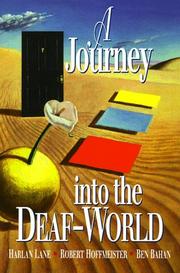
The standard survey of the Deaf world — language, education, community, politics — written by a hearing psychologist with two Deaf co-authors. Use it as the reference text of this stage; it is broader and more systematic than anything before it in the path.
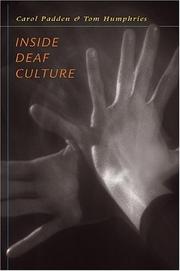
Padden and Humphries return two decades later with a historical account of Deaf institutions, and a more measured treatment of genetics and implants than the surrounding literature. Read it as the Deaf-authored counterweight to Lane's survey.

Lane's polemic against what he calls the audist establishment, and the sharpest statement of the case that implanting Deaf children is a cultural harm. It is deliberately one-sided and widely disputed by clinicians and by some Deaf people; read it as the strongest form of one position, not as the settled view.
The Long History
BeginnerTrace the two-century fight between manual and oral education, and understand why the Milan congress of 1880 is still referred to as a catastrophe.
▸ Study plan for this stage
Pace: 6–8 weeks for 537 pages, and it is the densest book on the path. Lane published When the Mind Hears in 1984 and wrote large sections in the reconstructed first-person voice of Laurent Clerc, which is a deliberate and contested literary device — read the preface first so you know what you are reading
- The Paris school under the Abbé de l'Épée from the 1760s, which took an existing signed language and built formal education on it
- Laurent Clerc, Thomas Hopkins Gallaudet, and the 1817 founding of the American School for the Deaf in Hartford — the transplant of the French method to the United States
- The oralist campaign, Alexander Graham Bell's role, and the eugenic argument in his 1883 Memoir Upon the Formation of a Deaf Variety of the Human Race
- The 1880 Milan congress, where an assembly with almost no Deaf delegates resolved in favour of oral education, and the century of consequences the community dates from it
- The removal of Deaf teachers from Deaf schools after 1880, which is the specific mechanism by which the tradition was interrupted
- William Stokoe's 1960 linguistic work establishing ASL as a language, and the slow institutional reversal that followed
- Lane's device of writing through Clerc, and the historiographical objection to it — that reconstructed voice is not evidence
- The pattern the book reveals: the recurring question is not method but authority — who decides, and on what grounds
- What happened at Milan in 1880, who was in the room, and what did the resolutions actually say? Why is that meeting still cited so often?
- What was Bell's argument, and what part of it was linguistic, what part educational, and what part eugenic? Distinguish them carefully.
- How did removing Deaf teachers from Deaf schools change what those schools transmitted? Give the mechanism, not just the outcome.
- Lane writes in Clerc's voice. What does that gain, what does it cost as history, and how would you cite the book responsibly?
- Trace one argument from stage three — about mainstreaming, or about who consents for a child — back to a nineteenth-century predecessor in this book. How much has actually changed?
- Build a timeline from 1760 to the present with three rows: educational method, institutions, and the legal or political position of Deaf people. Fill it from Lane and add the twentieth-century material from stage three.
- Read Bell's Memoir Upon the Formation of a Deaf Variety of the Human Race, which is short and freely available, and write a 500-word analysis of the argument alongside Lane's characterisation of it. Note where Lane is fair and where he is polemical.
- Pick one chapter written in Clerc's voice, identify every factual claim in it, and check which of them Lane sources in the notes. Write 300 words on what the device is doing.
- Write a final 800-word position paper: having read all eleven books, state what you now think the Deaf community is, what you think the strongest argument against your view is, and what evidence would change your mind.
Next up: The path ends here; the natural continuations are learning ASL properly with a Deaf instructor, Deaf-authored scholarship and literature, or the linguistics of signed languages following Fox's bibliography.
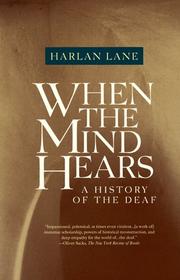
The definitive history of Deaf education, told partly through the voice of an early nineteenth-century Deaf teacher. It is long and it is the last book for a reason: every argument earlier in the path — about language, schooling and who decides — turns out to be a continuation of the fight it documents.
Discussion
Keep reading
Paths that share books, cover the same subject, or open a related topic.