The single idea this whole literature turns on is that Deaf people constitute a linguistic and cultural minority rather than a population defined by a deficit. Stated in a sentence it sounds like a slogan. It only becomes convincing once you understand what a sign language actually is, and that understanding is what the middle of this path is for.
Which is why order matters here more than in most subjects. Readers who start with the cochlear implant argument encounter what looks like an inexplicably furious dispute about a medical device. Readers who arrive at it having first absorbed the linguistics and the history of Deaf schooling encounter something quite different: a two-hundred-year argument about who gets to decide what language a child grows up in. This path lays that disagreement out; it does not settle it, and nothing here is guidance about hearing, devices or anyone's care.
Start here
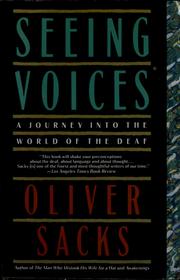
Seeing Voices is the usual entry point — a neurologist's exploration of sign language, Deaf education and the 1988 Deaf President Now protest at Gallaudet. Read it for its readability, and read it knowing Sacks is a hearing outsider writing about a community that has since produced a large scholarship of its own.
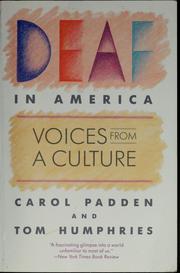
Deaf in America is that scholarship. Written by two Deaf academics, it established Deaf culture as a subject on its own terms: humour, storytelling traditions, and the distinction carried by a capital D. Read it immediately after Sacks so the insider account corrects the outsider one while it is still fresh.
Deaf Utopia brings the picture up to the present, a memoir from a fourth-generation Deaf family covering Gallaudet, mainstream expectations and public visibility. A striking amount of what Padden and Humphries described in 1988 is still recognisable in it.
Sign language is a language
Talking Hands follows linguists documenting a sign language that emerged inside a Bedouin village, and uses that case to teach sign linguistics from the ground up — phonology, morphology, grammar. It is the clearest available demonstration that signed languages are not gestural codes for spoken ones.
Everyone Here Spoke Sign Language is the classic Martha's Vineyard study, where hereditary deafness was common enough that the whole island signed and deafness carried almost no disadvantage. It is the strongest single piece of evidence for the social model the rest of this path rests on.
Train Go Sorry moves from linguistics into institutions. A hearing writer raised at a Deaf school in New York follows students and staff through a year, and the questions that surface — schooling, mainstreaming, class, race — are the ones the next stage argues about.
Community, schooling and the implant argument
Deaf Again is a memoir of growing up deaf in an oral, mainstreamed setting and finding Deaf culture late. It is the most personal statement of what the educational dispute feels like from the position of the child being decided about.
A Journey into the Deaf-World is the reference text for this stage: a broad, systematic survey of language, education, community and politics, written by a hearing psychologist with two Deaf co-authors.
Inside Deaf Culture is the Deaf-authored counterweight, Padden and Humphries returning two decades on with a history of Deaf institutions and a notably more measured treatment of genetics and implants than much of the surrounding literature.
The Mask of Benevolence is the sharpest statement of the case that implanting Deaf children constitutes a cultural harm. It is deliberately one-sided, and it is disputed by clinicians and by some Deaf people as well. Read it as the strongest form of one position. Then read the disagreement as unresolved, because it is.
The long history
When the Mind Hears is the definitive history of Deaf education, told partly through the voice of an early nineteenth-century Deaf teacher. It is long, and it belongs last, because every argument earlier in the path turns out to be a continuation of the fight it documents — including why the Milan congress of 1880 is still spoken of as a catastrophe.
Work through the whole path and the opening claim stops sounding like a slogan.
Follow the full ordered path here: How to Learn About Deaf Culture from Books, in Order.