Sin City Reading Order: Where to Start Frank Miller's Noir Comics
Sin City is seven books that share a city, a handful of recurring characters and a timeline that runs out of order. Publication order and chronological order disagree, and chronological order is the wrong choice for a first read — it front-loads the weakest material and spoils the best. This path reads them in the order that makes the interlocking timeline legible, then places the books beside the Miller comics and the crime novel they came out of.
Start here: the two that made it
IntermediateRead the entry point and the book that turns a one-off into a shared city, and learn Miller's visual grammar.
▸ Study plan for this stage
Pace: Three or four evenings. The Hard Goodbye is 208 pages and A Dame to Kill For 210, 418 between them, and both read far faster than that suggests: Miller works in enormous high-contrast panels with very little text, so a two-hundred-page book here is under an hour. The reading time is not the point —
- Pure black-and-white with no greys: the visual grammar of the series, at its most disciplined in The Hard Goodbye
- Marv as the entry-point protagonist, and why a first book needs someone with no plan
- First-person narration in caption boxes, driving pace and voice in the absence of dialogue
- The city's rules — police, Old Town, the church, the Roarks — established here and assumed everywhere else
- Chronology deliberately declined: Dwight's story reads as a reversal only if you already know the rules
- A Dame to Kill For as the most conventionally noir of the seven, and what the others are doing instead
- What does Miller do with pure black that a greyscale artist could not, and where in The Hard Goodbye is it most obvious?
- How much of each page is text? Estimate it, then say what the narration boxes are doing that dialogue is not.
- What are the city's rules as these two books establish them — who is untouchable, who is disposable, and who enforces it?
- Why does reading A Dame to Kill For second make it a reversal, and what would it be if read first?
- What makes A Dame to Kill For the most conventional noir here, and is convention working for it or against it?
- Pick five consecutive pages from The Hard Goodbye and mark which areas are black, which are white, and where Miller uses the reverse of the expected assignment. The technique is legible in five pages and invisible if you only read the plot.
- Count the words on one full page of each book. The number is small enough to be surprising and it explains why a 208-page book takes under an hour.
- Write down the city's rules as a list, as you infer them from these two books. Every later book either uses or breaks a rule on that list.
- After finishing A Dame to Kill For, write two sentences on what would have been spoiled had you read it first. This is the argument for the entire path's ordering.
Next up: Dwight's story is unfinished at the end of A Dame to Kill For, which is exactly where the next stage picks it up.

The first Sin City story and the correct entry point: Marv, Goldie, and the high-contrast black-and-white style at its purest. Note the shelving convention — these books are catalogued under their bare volume titles, not as Sin City: The Hard Goodbye.

Chronologically it precedes The Hard Goodbye, which is exactly why it should be read second — Dwight's story only registers as a reversal if you already know the city's rules. The most conventionally noir book of the seven.
The interlocking middle
IntermediateRead the two books that overlap in time with each other and with what you have already read.
▸ Study plan for this stage
Pace: Three or four evenings. The Big Fat Kill is 184 pages and That Yellow Bastard 240, 424 in total — again under an hour each at this series' pace. Read The Big Fat Kill immediately after the previous stage, since it is a direct continuation of Dwight's story and the two are effectively one narrative.
- Direct continuation as against parallel narrative — two different relationships to what you have already read
- Old Town given its fullest treatment, and the arrangement that keeps the city's factions apart
- Hartigan as a protagonist with a code, against Marv and Dwight who have appetites
- Parallel timelines: events you have already witnessed from another angle, and the recognition that produces
- The long time-jump structure of That Yellow Bastard and how it changes what the ending can mean
- Why the interlocking works only in this reading order, and collapses in chronological order
- How does The Big Fat Kill complete Dwight's story, and what does it decide about him that A Dame to Kill For left open?
- What is the arrangement governing Old Town, and what happens to the city when it fails?
- How does Hartigan differ from Marv and Dwight as a protagonist, and does the book treat his code as admirable?
- Where do That Yellow Bastard and The Hard Goodbye overlap in time, and what do you see in one that recontextualises the other?
- That Yellow Bastard spans years rather than nights. What does that structure allow that the compressed books cannot?
- Draw the series timeline as you now understand it, placing all four books read so far. Mark which overlap and which are sequential; the diagram is the point of this ordering.
- Find the specific panels in That Yellow Bastard that intersect with events in The Hard Goodbye and note what each version withholds.
- Compare a page of Marv's narration with a page of Hartigan's. Same device, two voices — describe what changes in rhythm and vocabulary.
- Write down why chronological order would spoil That Yellow Bastard. If you can state it in three sentences you have understood the series' construction.
Next up: The four major books are behind you and the timeline is legible, which is the condition under which the remaining three read as variations rather than as a decline.

A direct continuation of Dwight's story from A Dame to Kill For and the fullest picture of Old Town. Read it immediately after; the two are effectively one narrative.
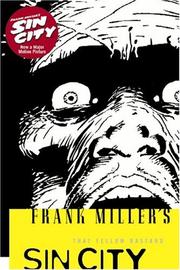
Hartigan and Nancy, and the story that runs in parallel with The Hard Goodbye rather than after it. Most readers name this the best of the seven — placed fourth so the timeline trick lands.
The remaining three
IntermediateFinish the sequence, including the two short books that are usually mis-sold as major volumes.
▸ Study plan for this stage
Pace: Three or four evenings, and adjust your expectations for scale. Family Values is 128 pages and Booze, Broads, and Bullets 151 — both genuinely short, and both regularly mis-sold as major volumes when they are a novella and a collection of shorts respectively. Hell and Back is 296 pages, the longest
- Novella and short-story collection as forms inside a comics series, and how to read each on its own terms
- Miho and the minor cast given their own space in Family Values
- Corner-filling as a legitimate mode: shorts that add texture to the city rather than plot
- Hell and Back as the series' most extreme formal experiment, colour included
- Colour used as an event rather than as a default, and what it costs the black-and-white grammar
- An ending chosen rather than arrived at — why Hell and Back functions as a conclusion
- What does Family Values do at 128 pages that it could not have done at 240?
- Which of the shorts in Booze, Broads, and Bullets adds most to the city, and what specifically does it add?
- How does Hell and Back use colour, and does it strengthen or dilute the visual grammar established in The Hard Goodbye?
- In what sense is Hell and Back an ending? Point to what it closes rather than to its position in the sequence.
- Having read all seven, which are the major books and which are the minor ones — and does the marketing agree with you?
- Rank all seven books by how much of the city they add, and separately by how much you enjoyed them. Where the two rankings disagree is the most interesting thing to explain.
- Take the colour sequences in Hell and Back and cover the colour with your hand, panel by panel. Judge what the page loses; the exercise is the test of whether the colour is doing work.
- Read one short from Booze, Broads, and Bullets and write the version of it that would have been a full book. The exercise shows what the short form is buying Miller.
- Update the timeline diagram from the previous stage with all seven books in place. That diagram is the deliverable of the entire Sin City sequence.
Next up: With the seven books read in an order that makes the city legible, the next stage goes back into Miller's own work to find where the style came from.

A Miho and Dwight novella, shorter and slighter than what precedes it. Read here rather than by publication date, so the drop in scale reads as a change of pace.

A collection of shorts rather than a novel, filling in corners of the city and several minor characters. Published with the ampersand, and catalogued that way.
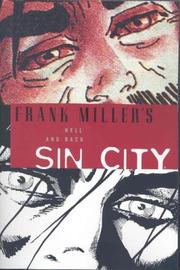
The longest and last book, and the one that pushes the style furthest — including its use of colour. A genuine ending point for the series, so read it last.
The Miller around it
IntermediateSee where the Sin City style came from inside Miller's own work.
▸ Study plan for this stage
Pace: A week to ten days, and these four are unlike each other in length as well as in kind. Ronin is 272 pages and Elektra: Assassin 264 — 536 between them, and both denser on the page than Sin City, so they take longer per page rather than less. 300 is 92 pages and can be read in a single sitting, thoug
- Ronin as the origin of the layout experiments Sin City industrialises: page architecture before panel content
- Elektra: Assassin and the invention of the interior monologue Sin City runs on, with Sienkiewicz supplying the visual chaos Miller later disciplines
- The Dark Knight Returns as the reputation-making work, and the clearest statement of politics Miller elsewhere leaves implicit
- 300 as a colour and horizontal-composition experiment written between Sin City volumes
- Tracing a style backwards through one creator's own work rather than through influences on him
- Collaboration as a variable: what changes when Miller writes for another artist
- Which specific layout devices in Ronin reappear in Sin City, and what did Miller simplify in between?
- Where in Elektra: Assassin is the Sin City narration voice already present, and what does Sienkiewicz's art do to it that Miller's own does not?
- What politics does The Dark Knight Returns argue explicitly, and where does Sin City rely on the same assumptions without stating them?
- What is 300 doing with colour and horizontal composition, and does any of it survive into Miller's black-and-white work?
- Having read these four, which single element of the Sin City style is genuinely new to Sin City rather than imported?
- Set a page of Ronin beside a page of The Hard Goodbye and identify the shared structural device. There is usually more than one.
- Read a page of Elektra: Assassin narration aloud, then a page of Marv's. The voice is close enough that hearing them is the cleanest way to establish the debt.
- Read 300's 92 pages in one sitting with the book open flat, then reread one spread as two separate pages. The difference is the argument for the format.
- Write a list of the Sin City style's components and mark each with the work it came from. Anything left unattributed is your answer to the last question above.
Next up: You can now trace the style to its origins inside Miller's own career; the final stage goes outside it, to the prose the whole genre is rewriting.
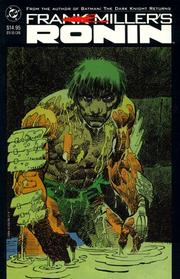
His first fully creator-driven work and the origin of the layout experiments Sin City industrialises. Catalogued as Frank Miller's Ronin; it is the same book.
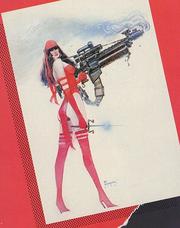
With Bill Sienkiewicz, and the most formally violent thing Miller wrote before Sin City. Read for the narration style — the interior monologue Sin City runs on is invented here.

The book that made Miller's reputation, and the clearest view of the politics Sin City later strips of any framing. Our record is the DC Compact Comics edition, which is the same work in a smaller format.
Written between Sin City volumes, and the place to see what he does with colour and horizontal composition. Short enough to read in a sitting.
The novel underneath
IntermediateRead the hardboiled source the whole genre, and Sin City specifically, is rewriting.
▸ Study plan for this stage
Pace: Four or five evenings — a real change of gear after eleven comics. Red Harvest is 224 pages of prose, which is a comparable page count to The Hard Goodbye and perhaps five times the reading time, since Hammett's pages are dense with dialogue and double-dealing and the plot depends on keeping a dozen
- The corrupt-city premise: an outsider setting factions against each other and letting the city destroy itself
- Hammett's flat, reportorial prose against Miller's operatic narration — the same material at opposite registers
- The nameless protagonist, and what withholding a name buys a crime writer
- Plot machinery: how many factions a story can juggle, and the bookkeeping Hammett expects of a reader
- What Miller took, what he inverted, and what he simply made louder
- Reading a source after its descendants, and what that ordering reveals that the reverse would not
- Which Sin City books most closely rerun Red Harvest's plot, and where do they diverge?
- How does Hammett's prose register differ from Miller's narration, and what does each register make possible?
- What does the operative want, and how reliable is he as a narrator of his own motives?
- How many factions is Red Harvest running at once, and how does Hammett keep them straight for the reader?
- After all twelve books, is Sin City a homage to this tradition, a parody of it, or an escalation? Argue it from specific scenes in both.
- Keep a faction chart as you read Red Harvest — who is aligned with whom, and how it changes. Hammett expects this bookkeeping and the novel is much clearer with it on paper.
- Take one scene of violence from Red Harvest and one from The Hard Goodbye and compare how each is narrated: word count, level of detail, and what the narrator says about it afterwards.
- Write a paragraph naming the single largest thing Miller added to the Hammett template. Support it from both texts rather than from what is usually said about the two.
- Finish by writing your own recommended reading order for Sin City for a new reader, with a sentence of justification for each placement. If you can defend putting That Yellow Bastard fourth, you have the path.
Next up: This is the end of the path: the seven books in the order that makes the timeline legible, the Miller works the style was assembled from, and the novel the whole tradition is still rewriting.
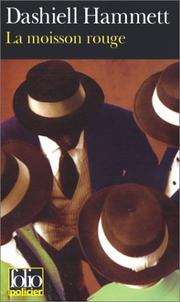
A nameless operative in a wholly corrupt city, playing its factions against each other — the plot Sin City reruns in several of its books. Read last, when you can see how much Miller took.