Event planning looks glamorous and is mostly logistics: a hundred moving parts converging on a date that cannot move, in front of people who will remember every mistake. The field spans creative design, ruthless project management, and running a client business, and beginners who focus only on the pretty part get blindsided by the timelines, contracts, and contingencies that actually make events succeed.
The order that works builds the fundamentals, then the project-management backbone and specialties, then the business around it.
The fundamentals
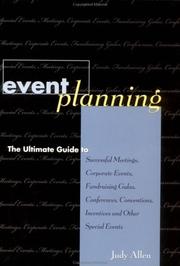
Start broad. Art of the Event by James Monroe covers the design and production of events at a professional level, setting the aesthetic and experiential bar. Event planning by Judy Allen is the widely used practical foundation, walking through the full arc from concept to execution. The Complete Guide to Successful Event Planning by Shannon Kilkenny fills in the beginner-friendly, step-by-step mechanics so nothing catches you unprepared.
Project management and specialties
Events are project management with an immovable deadline. Event Planning and Management by Ruth Dowson brings a rigorous management framework to the craft, and The Event Manager's Bible by D.G. Conway is the practical checklist-driven companion for pulling an event off without gaps. Then specialize: Event Planning Ethics and Etiquette, again by Allen, covers the professional conduct that protects your reputation. Weddings are their own world, so The Wedding Planner's Handbook by Natasha Reed and Wedding planning and management by Maggie Daniels teach that high-stakes, high-emotion specialty in depth.
Running the business
The final arc turns skill into a living. Start and Run an Event-Planning Business by Cindy Lemaire covers getting a planning business off the ground. Corporate event project management by William O'Toole applies formal project methods to the lucrative corporate side. Close with The business of event planning, once more by Judy Allen, on the pricing, proposals, and client management that keep the calendar full.
These books complement real on-site experience and clear contracts rather than replacing them; plan smaller events and consider professional advice before taking on large financial commitments. Read in order and event planning becomes a controllable process rather than controlled chaos. Follow the full path from the fundamentals to a running event business.
Follow the full reading path →
Ready to learn something deeply?
Build a reading path — free