Cross-Cultural Psychology: The Best Books on How Culture Shapes the Mind, in Order
Most of what psychology textbooks call "human nature" was measured on a narrow and unusual slice of humanity, and this path starts by making that problem concrete before offering anything to replace it. The first stage establishes that standard findings often fail to generalise; the middle stages give you the two competing traditions that tried to map the variation — the dimension frameworks built for business and diplomacy, and the academic discipline of cross-cultural psychology proper; the last stages go underneath both, to the argument that culture is not a layer on top of the mind but the thing that built it, and to what any of it means when you are actually working across a cultural line.
The Problem With the Evidence Base
BeginnerUnderstand why a large share of published psychological findings describe one unusual population rather than people in general, and what changes when the same questions are asked elsewhere.
▸ Study plan for this stage
Pace: 6-8 weeks. Henrich's The WEIRDest People in the World (704 pp) is the long one - three to four weeks; it is written for a general reader but carries a full academic apparatus and the argument runs through history, not just psychology. Nisbett's The Geography of Thought (288 pp) in a week. Watters's
- The WEIRD sampling claim: the overwhelming share of published psychology drawn from Western, Educated, Industrialised, Rich, Democratic populations, and how small a slice of humanity that is
- Specific findings that fail to generalise - Ultimatum Game offers, the Muller-Lyer illusion, self-concept, analytic attention
- Henrich's proposed cause: the Western Church's marriage and family programme dissolving intensive kinship, and the psychological consequences he attributes to it
- Analytic versus holistic cognition: field dependence, attention to object versus field, categorisation by taxonomy versus relationship
- Culture-bound syndromes and what happens when Western diagnostic categories are exported
- The difference between a finding that fails to replicate and one that replicates perfectly in one population and does not generalise to another - two separate problems often conflated
- Journalism, popular synthesis and peer-reviewed evidence as three different kinds of claim, all present in this stage
- Which specific findings does Nisbett show to differ between East Asian and Western samples, and how large are the differences?
- What is Henrich's causal chain from Church policy to modern psychology, and which link in it is weakest?
- How does the replication crisis differ from the generalisability problem, and why does fixing one not fix the other?
- What does Watters claim actually changed when a Western diagnostic category was exported, and what is his evidence in each of his four cases?
- How would you design a study to test whether a standard finding holds outside a WEIRD sample?
- List ten well-known findings from an introductory psychology textbook and check, for each, whether Henrich or Nisbett reports non-Western data on it
- Read the description of Nisbett's fish-tank attention task and his categorisation tasks, predict in writing what each sample would do, then read his results
- Take one of Watters's four cases - Hong Kong anorexia, Sri Lanka post-tsunami PTSD, Zanzibar schizophrenia, Japan depression - and separate the documented evidence from the interpretive claim
- Go through Henrich's kinship-intensity argument marking each step as correlational, historical inference, or experimentally supported
- Find one paper cited by Nisbett, read its methods section, and write down its sample - who they were, how many, and where
Next up: Once you accept that psychological variation across cultures is real and large, the obvious next question is how to map it - which is what the dimension frameworks tried to do.

Henrich's argument that Western, Educated, Industrialised, Rich, Democratic populations are psychological outliers is the frame the whole field now argues with. Read it first because everything after it is either evidence for this claim or a response to it.

The most readable demonstration that basic perception and reasoning — what you attend to in a scene, whether you sort by category or relationship — differ measurably between East Asian and Western samples. It makes the abstract WEIRD claim into specific laboratory results you can picture.

The uncomfortable corollary: Western diagnostic categories for mental illness have been exported worldwide, and Watters follows four cases where doing so changed how distress was actually experienced. Placed here because it shows the stakes of treating one culture's psychology as universal.
The Dimension Frameworks
IntermediateLearn the vocabulary — high and low context, individualism and collectivism, power distance, uncertainty avoidance — that practitioners actually use, and where each framework's evidence is weakest.
▸ Study plan for this stage
Pace: 5-6 weeks. Hall's The Silent Language (217 pp) and Beyond Culture (298 pp) over two weeks together - they are short, essayistic and built on an anthropologist's field observation and diplomatic training work rather than on survey data. Hofstede's Cultures and Organizations (279 pp) over two weeks, r
- High-context and low-context communication, the single distinction in this stage that does the most practical work
- Monochronic and polychronic time, and proxemics - Hall's spatial and temporal categories
- Hofstede's dimensions: power distance, individualism-collectivism, uncertainty avoidance, masculinity-femininity, long-term orientation, indulgence
- The ecological fallacy: country-level scores are not descriptions of individuals, and the most common misuse of Hofstede is exactly that
- The IBM sampling limitation - one firm's employees, one period - and why it is a real constraint rather than a footnote
- Trompenaars's seven dimensions and the specific places his results contradict Hofstede's
- Response style artefacts: acquiescence, extreme responding, reference-group effects, and how each can manufacture a dimension
- Why is applying a Hofstede country score to a person you are about to meet a fallacy, and what is the score legitimately for?
- Which dimensions appear in both Hofstede and Trompenaars, and where do the two datasets disagree?
- What is Hall's evidence base, and how does it differ in kind - not just in size - from Hofstede's?
- In what situation would high-context versus low-context predict a workplace misunderstanding better than individualism-collectivism would?
- How much of any dimension could be an artefact of how the questions were worded?
- Score two countries you know well on all of Hofstede's dimensions from your own experience before looking at his numbers, then account for every gap
- Put one Trompenaars dilemma item beside one Hofstede item measuring nominally the same construct and write down what each is actually asking a respondent to do
- Take a specific incident from Hall's Beyond Culture and re-describe it entirely in Hofstede's vocabulary, then list what the translation lost
- Write out Hofstede's stated limitations as he gives them, then the criticisms his critics add, and mark which he addresses
- Predict from Hall's high-context and low-context framing how a specific email exchange between two named countries would go wrong, then test it against someone who has done it
Next up: The frameworks give you a working vocabulary but not a way to tell a real cultural difference from a measurement artefact - which is the discipline's own central problem, and the next stage.

The 1959 book that started the applied tradition, introducing culture as a system of unspoken rules about time, space and directness. Read it before the later frameworks because they are all, in part, arguments with Hall.

Hall's fuller statement of high-context versus low-context communication, the single distinction that does the most practical work in this field. Follows directly from The Silent Language and sharpens it.

Hofstede's dimensions came out of a very large IBM employee survey and became the default corporate model of cultural difference. Read it after Hall for the quantitative version, and read the methodological criticism alongside it — sampling one firm's staff is a real limitation, not a footnote.
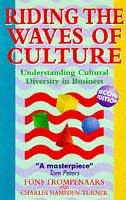
A rival dimensional scheme built from a different survey base, useful precisely because it disagrees with Hofstede in places. Comparing the two teaches you how much of any such model is an artefact of how the questions were asked.
The Academic Discipline
IntermediateMove from popular frameworks to the field's own methods: equivalence and bias in cross-cultural measurement, emic versus etic approaches, and what the individualism–collectivism literature actually established.
▸ Study plan for this stage
Pace: 12-14 weeks. Berry, Poortinga, Segall and Dasen's Cross-Cultural Psychology (610 pp) over six to seven weeks - this is a genuine graduate and upper-undergraduate textbook, not a trade book like stage one: it assumes research methods, basic statistics and comfort with reading a results section, and i
- Emic and etic approaches, and the imposed etic - taking a Western construct abroad and assuming it exists there
- Bias types in cross-cultural measurement: construct bias, method bias (sample, administration, instrument), item bias and differential item functioning
- Levels of equivalence - structural, metric, scalar - and precisely what conclusion each level licenses
- Back-translation and its limits, and why a linguistically correct translation can still be a different item
- Country as a confounded proxy for culture: wealth, language, education and religion all travel with it
- Absolutism, relativism and universalism as the three positions on how much of psychology is shared
- The individualism-collectivism literature: horizontal and vertical refinements, and idiocentrism and allocentrism at the individual level
- How measurement invariance is actually tested, and what a failed invariance test does to a published mean difference
- If only metric invariance holds, what may you conclude from a mean difference between two national samples?
- What is an imposed etic, and how would you detect one in a paper you are reading?
- Which criticisms of individualism-collectivism does Triandis accept and answer, and which does he decline?
- How would you establish that a psychological construct exists at all in a second culture, before measuring it?
- Where does Matsumoto and Juang's topic-by-topic treatment reach a different conclusion from Berry's methodological one?
- Take one published cross-cultural finding and run Berry's bias taxonomy over it, deciding whether the reported difference could be construct, method or item bias
- Apply Berry's equivalence checklist to the Hofstede survey design from stage two and record every requirement it fails
- Read the emotion chapter in Matsumoto and Juang and list which universality claims are backed by cited evidence and which are asserted
- Write the strongest possible case against individualism-collectivism using Berry's methodology, then read Triandis's response and mark what he answers
- Find a translated psychological scale, back-translate two items yourself, and write down what shifted
Next up: The discipline's methods assume there is a universal cognitive substrate to measure variation against; the next stage reads the two traditions that dispute exactly that assumption.

The standard multi-author textbook, and the place where the methodological problems — translation equivalence, sampling, whether a construct even exists in the second culture — are treated as the central difficulty rather than a caveat. This is the pivot from reading about the field to being able to evaluate a study in it.

A more accessible textbook treatment organised by psychological topic — emotion, development, health, cognition — so you can see how each subfield was affected. Useful as a companion that covers the same ground as Berry with less machinery.

The book-length treatment of the field's most-used and most-criticised construct, by the researcher who did most to develop it. Read it here so you can judge for yourself whether the dimension survives the scrutiny the previous two books teach you to apply.
Culture as the Thing That Built the Mind
IntermediateTake on the deeper claim that cultural learning is not a modifier of universal cognition but its precondition, and read the anthropological work that resists reducing culture to dimensions at all.
▸ Study plan for this stage
Pace: 10-12 weeks and the most demanding stage here. Henrich's The Secret of Our Success (445 pp) over three weeks - trade-published but arguing a technical case in cultural evolution. Shweder's Thinking Through Cultures (404 pp) over four weeks: it is a collection of academic essays in dense theoretical
- Cumulative cultural evolution: the collective brain, and the claim that human success rests on accumulated knowledge rather than individual reasoning
- Prestige-biased and conformist social learning as the transmission mechanisms
- Gene-culture coevolution, and the argument that culture has shaped human biology and not only the reverse
- Shweder's intentional worlds: mind and culture as mutually constituting, so that stripping culture out to find a universal core is wrong in principle rather than merely difficult
- Cultural psychology as a rival programme to cross-cultural psychology, not a branch of it
- Distributed cognition - the unit of analysis is the system of people, instruments and representations, not the individual head
- Representational state and its propagation across media, as Hutchins traces a navigational fix through a ship's bridge
- What all three imply for the experimental method the previous stage taught
- What is Henrich's evidence that individual reasoning is weaker than we assume, and which lost-explorer cases carry the weight?
- On Shweder's account, what exactly is wrong with the etic project that Berry's textbook is built on?
- What is the unit of cognitive analysis in Hutchins, and what does adopting it do to the design of a psychology experiment?
- Do Henrich and Shweder actually disagree, or are they answering different questions with different tools?
- Does The Secret of Our Success make the WEIRD claim from stage one stronger, or only older?
- Pick one technology Henrich discusses - manioc detoxification, the Arctic kayak, a bow - and reconstruct his argument that no individual could have designed it
- Write a page stating Shweder's objection to Berry's programme as strongly as you can, then write Berry's reply using the equivalence machinery from stage three
- Take Hutchins's account of a single navigational fix and redraw it as a diagram showing where each piece of information physically lives and how it moves
- Choose one finding from Nisbett and re-describe it first in Berry's dimensional terms and then in Shweder's constitutive terms, noting what each description makes invisible
- List the social-learning mechanisms Henrich names and find an instance of each in Hutchins's navigation team
Next up: After the theory, the last stage asks what any of it is worth when you are the one across the table - and ends on a case that no framework in this path would have resolved.

Written before The WEIRDest People but argued at a deeper level: human intelligence is largely the ability to acquire accumulated cultural knowledge, not to reason from scratch. Placed after the empirical stages because it reframes everything you have read as evidence for a claim about our species.

The cultural-psychology counterposition: Shweder argues that mind and culture make each other up, so stripping culture out to find a universal core is the wrong move in principle. The strongest available objection to the dimension approach.

An ethnography of ship navigation that shows a cognitive task being performed by a group and its instruments rather than by any single head. Read last in this stage: it is the most concrete demonstration of what "distributed, culturally constituted cognition" actually means.
When You Actually Have to Do It
IntermediateTranslate the research into working across a cultural boundary, and see what happens in a real case where two cultural models of the same problem collide.
▸ Study plan for this stage
Pace: 3-4 weeks. Meyer's The Culture Map (283 pp) in a week - it is a business-school practitioner's synthesis, deliberately simplified, and it is selling a usable tool rather than reporting research. Fadiman's The Spirit Catches You and You Fall Down (341 pp) over two weeks; it is long-form reporting on
- Meyer's eight scales: communicating, evaluating, persuading, leading, deciding, trusting, disagreeing and scheduling
- Relative rather than absolute positioning - you compare two cultures pairwise, and a score alone predicts nothing
- The difference between feedback directness and communication context, which Meyer separates and Hall does not
- Explanatory models of illness: the family's account of what is happening and the hospital's, both internally coherent and mutually unintelligible
- Compliance versus comprehension, and what an interpreter can and cannot bridge
- Institutional culture as a third culture in the room, alongside the two national ones
- The limit of a dimension score when a single family is in front of you
- Which of Meyer's eight scales are Hall's, renamed, and which are Hofstede's?
- What would Meyer's map have predicted about the Lee family and their doctors, and what would it have missed entirely?
- Where in Fadiman's chronology could a different decision have changed the outcome, and by whose framework would that decision have looked right?
- What does the medical system in Fadiman's account do well, and what does that complicate about the standard reading of the book?
- After four stages of theory, what would you actually do differently in a real cross-cultural working relationship?
- Place your own working culture and one other on all eight of Meyer's scales, find the pair with the largest gap, and write the specific misunderstanding it predicts
- Retell one chapter of Fadiman from the family's side and then from the hospital's, using only what that side knew at the time
- Apply Berry's bias taxonomy from stage three to Meyer's eight scales and say which of them would fail an equivalence test
- List the points in Fadiman's account where an interpreter was present and note what still failed to cross
- Take one real disagreement you have had across a cultural line and write it up twice - once in Meyer's vocabulary and once in Shweder's - then judge which description would have helped at the time
Next up: This is the end of the path; from here the live work is in the journals - the Journal of Cross-Cultural Psychology and the many-labs replication projects that test in practice everything argued here.

The most usable applied synthesis — eight scales for comparing working cultures on things like feedback directness and decision-making. It is a practitioner's simplification of the earlier frameworks, so read it after them rather than instead of them.

A Hmong family and a California hospital in irreconcilable disagreement about what was wrong with a child, reported at length and with sympathy for both. The right book to end on because it shows a cultural mismatch that no framework in this path would have resolved.
Discussion
Keep reading
Paths that share books, cover the same subject, or open a related topic.