Forensic psychology is not the discipline television built out of it. Its largest and best-evidenced parts are unglamorous: how memory fails under questioning, how innocent people come to confess, how the risk of reoffending is estimated and managed. Offender profiling — the part almost everybody arrives for — is the smallest corner of the field and the one with the weakest empirical support. Read in that order of confidence and this list works. Read the profiling memoirs first and uncritically and you will finish with a badly calibrated picture of what psychologists actually do in courts and prisons.
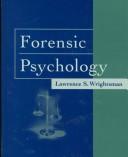
One practical note before the books. Two titles on this path display in our catalogue as simply Forensic psychology, and they are very different books, so the authors matter: David Canter wrote one, Lawrence S. Wrightsman the other.
Two introductions with the same name
David Canter's Forensic psychology is a short, opinionated introduction by the British psychologist who founded investigative psychology as an academic discipline. It is the better first book if you want the state of the evidence rather than the shape of the profession. Wrightsman's Forensic psychology is an American undergraduate textbook, built around the courts — competency to stand trial, the insanity defence, jury behaviour, the ethics of expert testimony. Read one. They overlap enough that reading both back to back is repetitive, and the choice is really between a critical essay and a survey course.
Profiling, and why to read it sceptically
Mindhunter by John Douglas and Whoever fights monsters by Robert Ressler are memoirs from the FBI's Behavioral Science Unit, and they are the origin of the popular image. They are professional recollections rather than research, and they should be read as such: the organised and disorganised offender typology grew out of interviews with a few dozen incarcerated sexual murderers, and later attempts to reproduce the dichotomy statistically have largely failed. Canter's Criminal shadows is the empirical rejoinder from the other side of the Atlantic, arguing that inference from crime scenes has to be built on data rather than accumulated intuition. Brent Turvey's Criminal profiling is the practitioner textbook, sharply critical of the FBI tradition and much heavier going. Most reviews of profiling accuracy find performance that is modest at best; the honest summary is that this is the most famous and least demonstrated technique in the field.
Psychopathy, and the instrument courts actually use
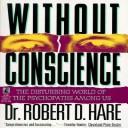
Robert Hare's Without conscience is the popular account by the author of the checklist that dominates forensic risk assessment. Kent Kiehl's The Psychopath Whisperer follows the neuroimaging work he carried out inside prisons using a mobile scanner. Snakes in suits, by Paul Babiak and Hare, extends the construct to workplaces and is the most speculative of the three. Worth knowing while you read: field studies have found that scores on Hare's checklist vary depending on which side in a case retained the evaluator, which is a serious problem for an instrument used in sentencing and civil commitment.
Where the evidence is strongest
This is the core of the path. Elizabeth Loftus's Eyewitness Testimony summarises decades of experimental work on how memory is reshaped by questioning, and it changed how lineups are run. Gisli Gudjonsson's The Psychology of Interrogations and Confessions is the reference work on false confessions and interrogative suggestibility, and it is dense but repays the effort. Brandon Garrett's Convicting the Innocent is a law professor's study of the first 250 American DNA exonerations, tracing what went wrong in each — and the failures cluster exactly where Loftus and Gudjonsson predict.
Causes and management
Adrian Raine's The anatomy of violence argues for biological contributions to violent behaviour; it is well written and genuinely contested, both on the strength of the imaging evidence and on the policy speculation in its closing chapters. Finish with The psychology of criminal conduct by D. A. Andrews and James Bonta, which sets out the risk-need-responsivity model that shapes how correctional programmes are actually designed. It is a textbook and reads like one, but it is the framework practitioners work inside.
Forensic psychology is a licensed practice with supervised training requirements; these books explain the field and the evidence, and none of them qualifies anyone to assess, treat or testify. If you want the developmental research that underpins much of this, the developmental psychology hub is the neighbouring collection.
Follow the full ordered path here: Forensic Psychology: The Best Books on Psychology in the Justice System, in Order.
Ready to learn something deeply?
Build a reading path — free