Best Books on Cross-Country Skiing, in Order
This curriculum takes a complete beginner from their first glide on skis all the way to advanced racing technique, waxing mastery, structured endurance training, and the rich cultural traditions of ski touring. Each stage builds on the last — you'll develop physical vocabulary and gear knowledge before tackling biomechanics and periodized training, and you'll finish with the literature and lore that give cross-country skiing its soul.
First Tracks: Foundations of XC Skiing
BeginnerUnderstand the basic classic and skate techniques, learn how to choose and care for entry-level gear, and get comfortable on snow with safe, enjoyable outings.
▸ Study plan for this stage
Pace: 4–5 weeks, ~25–30 pages/day, with 2–3 days per week reserved for on-snow practice and gear maintenance
- Classic technique fundamentals: diagonal stride, double poling, and kick turns on varied terrain
- Skate technique basics: V1 and V2 skate patterns and when to apply each
- Gear selection for beginners: skis, boots, bindings, poles, and clothing layers appropriate for entry-level skiing
- Equipment care and maintenance: waxing, base preparation, binding adjustment, and seasonal storage
- Safety principles: avalanche awareness, weather assessment, pacing, and navigation on marked trails
- Physical conditioning and injury prevention specific to XC skiing movements
- Trail etiquette and responsible outdoor behavior in shared skiing areas
- What are the key differences between classic and skate skiing techniques, and when would you choose one over the other?
- How do you perform a proper diagonal stride with correct weight transfer and pole timing?
- What factors should you consider when selecting entry-level XC skis, boots, and bindings for your body type and skiing goals?
- Describe the steps for basic ski waxing and base preparation to maintain your equipment throughout the season
- What are the essential safety considerations before heading out on a backcountry or trail skiing outing?
- How should you layer clothing for an XC skiing outing, and what adjustments might you make based on temperature and exertion level?
- Practice the diagonal stride on flat and gentle terrain for 30–45 minutes, focusing on weight transfer and pole plant timing; video record yourself to compare with Tokle's descriptions
- Perform double poling drills on flat sections, working up to 10–15 minutes of continuous poling to build upper-body endurance
- Practice skate technique (V1 and V2 patterns) on a groomed slope or flat area for 20–30 minutes, alternating between patterns
- Complete a full ski wax cycle on one pair of skis: scrape old wax, apply base, apply glide wax, and test on snow
- Conduct a pre-outing safety checklist: assess weather, plan a marked route, check avalanche forecasts (if applicable), and review your gear
- Take three progressively longer on-snow outings (45 minutes, 60 minutes, 90 minutes) on marked trails, practicing both classic and skate techniques and noting what feels natural
- Organize and document your gear inventory: photograph each item, note its specifications, and create a maintenance log for waxing and repairs
Next up: This foundation in classic and skate techniques, combined with hands-on gear knowledge and safe trail practices, prepares you to progress into more challenging terrain, longer-distance touring, and specialized techniques like hill climbing and descent control.
A long-standing introductory text that demystifies both classic and touring skiing for absolute beginners, covering equipment selection, basic technique, and trail etiquette — the perfect first read before touching a ski.
A well-organized, illustrated beginner manual from the Trailside series that walks through classic and skate fundamentals, waxing basics, and how to read terrain — read this second to reinforce and expand on the first book's vocabulary.
Waxing and Gear Mastery
IntermediateUnderstand the full waxing system — kick waxes, klister, glide waxes, and waxless options — and make confident gear choices for any snow condition.
▸ Study plan for this stage
Pace: 4–5 weeks, ~25–30 pages/day, with 2–3 days per week dedicated to hands-on wax testing and gear evaluation
- The waxing system hierarchy: kick waxes, klister, glide waxes, and their distinct purposes in the ski-snow interface
- How snow crystal structure and temperature determine wax selection and application strategy
- The chemistry and mechanics of hard waxes, soft waxes, and klisters—when and why each performs
- Waxless ski technology: construction, performance trade-offs, and when they are the practical choice
- Glide wax selection and application techniques for maximizing ski efficiency across temperature ranges
- Gear compatibility: matching skis, boots, bindings, and poles to skiing style and snow conditions
- The economics and environmental considerations of wax selection and gear maintenance
- What is the relationship between snow crystal type, temperature, and wax selection, and how would you diagnose which wax to use in unfamiliar conditions?
- Explain the functional differences between kick wax, klister, and glide wax—what does each do and why can't one replace another?
- How do waxless skis work mechanically, and in what snow conditions do they outperform or underperform waxed skis?
- Walk through a complete waxing sequence for a classic-technique ski in wet spring snow, including base preparation, kick wax, and glide wax choices
- What are the key compatibility factors when selecting boots, bindings, and poles, and how do they interact with your waxing strategy?
- Given a specific snow temperature, crystal structure, and skiing goal, how would you build a complete gear and wax plan?
- Conduct a hands-on wax hardness and texture comparison: collect samples of hard wax, soft wax, and klister; examine their consistency at room temperature and after brief heating; apply each to a test ski base and observe adhesion and workability
- Build a personal snow-condition reference chart: document 5–8 real snow days with temperature, crystal type (using a magnifying glass), humidity, and which wax performed best; photograph and annotate for future reference
- Practice complete ski preparation: select a pair of classic skis, clean the base, apply glide wax, apply appropriate kick wax for current conditions, and test on a short trail; repeat 3–4 times across different snow conditions
- Research and compare three waxless ski models: read their technical specifications, identify the pattern type and construction, and test one pair if possible; document performance vs. waxed skis in the same conditions
- Create a gear-matching checklist for your skiing style: list your skis, boots, bindings, and poles; verify compatibility using Brady's guidance; identify any mismatches and plan upgrades
- Conduct a glide-wax application and burnishing experiment: apply glide wax to two identical ski bases using different techniques (iron temperature, number of passes, burnishing method); test both on the same snow and compare speed and durability
Next up: This stage equips you with the technical knowledge and hands-on confidence to manage skis in any snow condition, setting the foundation for the next stage—applying these skills to race preparation, trail strategy, and performance optimization in competitive or challenging terrain.
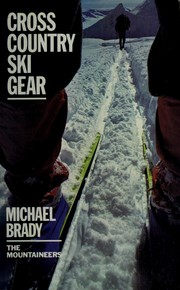
Brady is the foremost English-language authority on Nordic equipment; this book explains boot-binding systems, ski construction, and pole selection in depth, rounding out your gear knowledge alongside the waxing manual.
Training for Distance and Performance
IntermediateBuild a periodized, science-based endurance training plan specific to cross-country skiing, covering dryland preparation, intensity zones, and race-day readiness.
▸ Study plan for this stage
Pace: 8–10 weeks, ~25–30 pages/day (with 2–3 days per week for practical application and training log review)
- Periodization frameworks (macrocycles, mesocycles, microcycles) and how to structure a multi-month training plan for cross-country skiing
- Aerobic base building through low-intensity, high-volume training and its role in endurance performance
- Intensity zones and how to train at the correct intensities (Zone 1–5) for different adaptations
- Lactate threshold testing and field-based methods to identify and monitor training zones without laboratory equipment
- Dryland training principles: strength, power, and movement quality as foundations for ski-specific endurance
- Periodized strength and power development integrated with endurance work to prevent injury and improve performance
- Race-specific preparation: tapering, pacing strategies, and mental readiness for distance events
- Individual variability in training response and how to adjust plans based on recovery, fatigue, and performance feedback
- How would you structure a 16-week periodized training plan for a cross-country skier targeting a 50 km race, and what are the key phases?
- What is the difference between Zone 1 and Zone 2 training, and why is spending 80% of training time in these zones critical for endurance development?
- How do you conduct a field-based lactate threshold test, and how would you use the results to set your training zones?
- What dryland exercises should form the foundation of a cross-country skier's strength program, and how do they transfer to skiing performance?
- Describe a two-week taper protocol before a major race: what changes in volume, intensity, and frequency, and why?
- How would you adjust a periodized training plan if an athlete shows signs of overtraining or insufficient recovery?
- Design a complete 16-week macrocycle for a cross-country skier, breaking it into mesocycles (build, peak, taper, recovery) with specific training focuses for each phase
- Conduct a field-based lactate threshold test (e.g., 3×3 minute hard efforts with heart rate/pace data) and calculate your five training zones; log results in a spreadsheet
- Create a weekly microcycle template that allocates training time across zones (e.g., 50% Zone 1, 30% Zone 2, 10% Zone 3, 10% Zones 4–5) and includes one dryland session
- Film yourself performing 3–5 key dryland exercises (e.g., single-leg squats, lateral bounds, core holds) and self-assess movement quality against House's standards; identify one limiting factor
- Plan and execute a 4-week dryland block focusing on strength endurance and power; track exercises, loads, and perceived difficulty in a training log
- Write a race-day plan for a target 50 km event: include pacing strategy by zone, nutrition/hydration timing, mental cues, and a 10-day taper schedule
Next up: This stage equips you with a science-based, periodized training framework and the tools to monitor and adjust your own plan; the next stage will likely focus on sport-specific technique refinement, advanced race tactics, and integrating this training foundation into competitive performance scenarios.

Though focused on mountain endurance sports broadly, its aerobic base-building and periodization principles are directly applicable to XC ski racing and long-distance touring, and it is the most rigorous training science text accessible to serious amateurs.
Discussion
Keep reading
Paths that share books, cover the same subject, or open a related topic.