Skiing for beginners: top books to carve down the mountain
This curriculum takes a complete beginner from their very first time on snow all the way to confident parallel carving on groomed and varied terrain. Each stage builds directly on the last — starting with snow awareness and basic movement, advancing through turn mechanics and technique refinement, and finishing with mountain knowledge, safety, and the mindset of a lifelong skier.
Parallel Pursuit: Refining Stance & Turn Shape
IntermediateTransition from stem/wedge turns to a parallel stance, develop edge control, and ski blue runs with consistent rhythm and control.
▸ Study plan for this stage
Pace: 4–5 weeks, ~15–20 pages/day, with 2–3 on-snow practice days per week
- Stance fundamentals: centered position, hip angulation, and pressure distribution in parallel skiing
- Edge control and edge angles: how to initiate and maintain edges for carving vs. skidding
- Turn shape progression: from wedge to parallel by eliminating the wedge and using angulation
- Rhythm and timing: matching turn length to terrain and maintaining consistent cadence
- Pressure management: using flexion and extension to control speed and flow through turns
- The role of upper/lower body separation in maintaining balance during direction changes
- Reading terrain and adjusting technique for blue-run conditions
- What is the correct centered stance in parallel skiing, and how does it differ from a wedge position?
- How do edge angle and angulation work together to control turn shape and carving?
- What is the relationship between rhythm, turn length, and terrain difficulty?
- How do you transition from stem turns to parallel turns without reverting to a wedge?
- What role does pressure control (flexion/extension) play in maintaining consistent speed and flow?
- How do you adjust your technique when skiing blue runs with varying terrain and snow conditions?
- On-snow: Practice straight-line skating on flat terrain to build confidence in a centered, parallel stance
- On-snow: Perform side-slipping exercises on a gentle slope to develop edge awareness and control
- On-snow: Execute 10–15 consecutive parallel turns on a green run, focusing on eliminating any wedge tendency
- On-snow: Ski blue runs while counting turn rhythm aloud (1-2-3, 1-2-3) to internalize consistent cadence
- On-snow: Practice pressure control drills—flex down at turn initiation, extend at turn completion—on varied terrain
- Off-snow: Review video analysis of your own skiing vs. Harb's demonstration footage, identifying stance and edge-control differences
- Mental practice: Visualize a complete blue-run descent with smooth rhythm and parallel turns before each ski day
Next up: This stage establishes the mechanical foundation—parallel stance, edge control, and rhythm—that enables progression to advanced carving techniques, mogul navigation, and steeper terrain in the next level.

Harb's Primary Movements Teaching System (PMTS) is one of the most influential modern approaches to parallel skiing, focusing on foot and ankle movements that naturally eliminate the wedge.

A natural follow-on to Harb's first book, this volume deepens the biomechanical understanding of edge engagement and carving mechanics needed to progress beyond intermediate terrain.
Mountain Mastery: Safety, Awareness & Lifelong Skiing
ExpertUnderstand avalanche safety, mountain hazard assessment, and off-piste awareness so you can ski the whole mountain confidently and responsibly.
▸ Study plan for this stage
Pace: 8–10 weeks, ~25–30 pages/day, with 1–2 weeks per book plus integration time
- Avalanche formation: understanding snowpack structure, layers, bonds, and failure mechanics
- Avalanche terrain recognition: slope angle, aspect, elevation, and terrain traps that increase risk
- Decision-making frameworks: using stability tests, weather data, and human factors to assess hazard
- Backcountry navigation and route finding: map reading, GPS use, and terrain assessment off-piste
- Rescue readiness: beacon use, probe technique, and shovel efficiency for self-rescue and partner rescue
- Mountain hazard assessment: cornices, wind slabs, exposure, and objective hazards beyond avalanche
- Risk management and personal responsibility: knowing your limits, group dynamics, and when to turn back
- Seasonal and regional variations: how snowpack, weather patterns, and geography affect avalanche danger
- What are the main layers in a snowpack, and how do weak layers and bonds lead to avalanche failure?
- How do slope angle, aspect, and elevation influence avalanche risk, and what angles are most dangerous?
- What are the key stability tests described in Tremper's book, and what do they tell you about snowpack stability?
- How do you read a backcountry map, use a compass and GPS, and identify safe vs. hazardous terrain features?
- What is the correct beacon search procedure, and how do you efficiently probe and shovel to rescue a buried skier?
- What human factors (fatigue, groupthink, overconfidence) affect avalanche decision-making, and how do you mitigate them?
- How do cornices, wind slabs, and terrain traps increase avalanche danger, and how do you identify and avoid them?
- What seasonal changes in snowpack occur, and how do regional differences (maritime vs. continental snow) affect your approach?
- Complete a full beacon practice drill: hide a beacon, search for it, probe the burial location, and excavate it—time yourself and repeat until you can do it in under 3 minutes
- Study real avalanche accident reports (from NTSB, CAC, or local avalanche centers) and identify the decision points where the accident could have been prevented
- Take a field stability test course or practice pit: dig a snow pit, identify layers, perform a compression test and shear test, and document your findings
- Plan a backcountry ski tour using a topographic map: identify start/end points, mark avalanche terrain, note terrain traps, and plot a safe route with escape routes
- Attend an avalanche safety clinic or take an AIARE Level 1 or 2 course to practice decision-making in a structured environment
- Create a personal decision matrix: list your local mountains, slopes, and hazards; rate them by aspect, angle, and elevation; and determine when each is safe to ski
- Practice map and compass navigation in the backcountry: navigate to a waypoint using only map and compass, then verify with GPS
- Interview an experienced backcountry skier or avalanche forecaster about their decision-making process and common mistakes they've seen
Next up: This stage equips you with the knowledge and practical skills to assess and manage mountain hazards independently, setting the foundation for the next stage—whether that's specialized terrain (steep couloirs, glaciers) or expedition skiing—where you'll apply these principles in more complex, remote, or extreme environments.
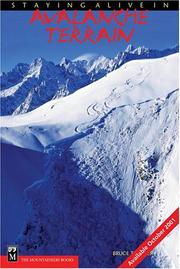
The definitive English-language guide to avalanche science and decision-making — essential reading before venturing off groomed runs or into backcountry terrain.

A practical, illustrated guide to backcountry travel and mountain safety that consolidates terrain reading, weather awareness, and touring skills for the skier ready to explore beyond the resort.
Discussion
Keep reading
Paths that share books, cover the same subject, or open a related topic.