Cross-country skiing punishes people who buy gear before they learn technique. The sport looks like walking with sticks and is in fact a full-body coordination problem — diagonal stride timing, weight transfer onto a gliding ski, and pole plant all have to arrive together, and equipment chosen before you know your style will fight you. Add wax, which most beginners find genuinely mysterious, and the first season can be frustrating for reasons that have nothing to do with fitness.
The literature here is small, which is a mercy. Three books cover the arc if you read them in the right order: learn the movement and the touring craft first, then understand the equipment system, then train the engine.
Learn the movement and the tour
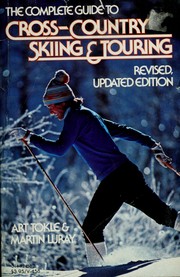
Start with The complete guide to cross-country skiing and touring by Art Tokle and Martin Luray. It is the general instruction book — classic technique broken down into its components, plus the touring side of the sport: route choice, what to carry, how to manage cold and layering on a long day. Read the technique chapters before your first outing and re-read them after, because the corrections will only make sense once you have felt the ski slip out from under you.
The touring material matters more than beginners expect. Track skiing at a groomed center is a controlled environment; heading out on backcountry snow means navigation, weather judgment and self-rescue, and none of that is optional.
Understand the equipment system
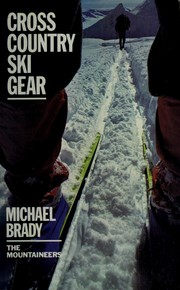
Then read Cross-country ski gear by M. Michael Brady. Nordic equipment is a system rather than a set of parts: ski camber has to match your weight, the base structure interacts with snow temperature, and binding and boot systems are not interchangeable across standards. Brady explains how the pieces fit together and, crucially, demystifies waxing — kick wax for grip in classic skiing, glide wax underneath, and the conditions where klister is the only answer.
Understanding this before you buy saves real money. It also explains the single most common beginner complaint, which is skis that either slip backward on every stride or refuse to glide at all. That is almost always a wax or camber mismatch rather than a technique failure.
Train the engine
Once you can ski and your gear works, the limiting factor becomes aerobic capacity. Training for the Uphill Athlete by Steve House, Scott Johnston and Kilian Jornet is aimed at mountain endurance athletes broadly — ski mountaineers, alpinists and skimo racers — and it is the most rigorous training book in this list. It covers aerobic base building, the cost of too much intensity too early, strength work that supports rather than competes with endurance, and periodizing a season around a winter goal.
Take it as a framework rather than a prescription. The physiology is well grounded, but the volumes assume an athlete with substantial time to train; scale honestly to your own week. If you are managing an injury or a health condition, work with a clinician rather than a book — training plans are not medical advice, and nordic skiing puts real load on the shoulders and lower back.
For a change of pace between seasons, the darts hub and lacrosse hub sit nearby in the same sports cluster.
Three books, read in this order, and your first full season will go far better than most.
Follow the full ordered path here: Cross-Country Skiing Books to Read First.