Trail running: first trailhead to ultra
This four-stage curriculum takes a road runner from their very first trail steps all the way to the start line of an ultramarathon. Each stage builds on the last: you first rewire your mindset and movement for trails, then develop mountain fitness and gear knowledge, then master fueling and race-specific training, and finally absorb the hard-won wisdom of elite ultra runners to carry you through your first big race.
Foundations: Trails, Technique & Mindset
BeginnerUnderstand how trail running differs from road running, develop safe downhill and uphill technique, learn what gear you actually need, and build a trail-ready mental framework.
▸ Study plan for this stage
Pace: 2–3 weeks, ~20–25 pages/day; read actively with a notebook nearby to flag foot-care protocols relevant to your current shoe/sock setup
- Blister prevention triangle: friction, moisture, and pressure — and how trail running amplifies all three compared to road running
- Foot anatomy basics: understanding hot spots, pressure points, and why trail terrain (roots, rocks, camber) creates unique stress patterns
- Sock and insole selection: material properties (wool vs. synthetic), double-layer designs, and how fit interacts with trail shoe lasts
- Taping and lubrication techniques: when to use each, how to apply pre-emptively vs. reactively, and product trade-offs (BodyGlide, Leukotape, etc.)
- Toenail and skin care routines: trimming protocols, callus management, and why neglecting these leads to black toenails and lost nails on long descents
- Blister treatment hierarchy: recognizing blister types (blood, fluid, roof intact vs. torn), field treatment vs. post-run care, and infection warning signs
- Footwear fit for trails: the 'thumb's width' rule, toe box width for swelling on long efforts, and lacing systems that prevent heel lift on climbs and toe-bang on descents
- The prevention mindset: building a pre-run foot-check habit and a race-day foot-care kit as foundational ultramarathon self-sufficiency skills
- What are the three primary causes of blisters, and which one is hardest to control on technical singletrack versus a road?
- How should you size trail shoes differently from road shoes, and what happens to foot volume during a 4+ hour effort that makes this critical?
- Walk through the step-by-step process for treating an intact fluid blister at mile 30 of a race using only what fits in a drop bag.
- What sock characteristics matter most for trail running, and why does cotton fail so dramatically in wet or muddy conditions?
- Describe a complete pre-race foot preparation routine — from toenail trimming timeline to lacing strategy — that you would follow the week before your first trail race.
- What are the early warning signs of a hot spot, and what is the correct immediate response when you feel one developing mid-run?
- Foot audit: trace both feet on paper, note any existing calluses, blisters, or nail issues, then re-read the relevant chapters in Fixing Your Feet and create a personal care action plan
- Gear kit build: assemble a real-world trail foot-care kit (taping supplies, lubricant, spare socks, needle/alcohol wipe) and photograph it — use Vonhof's recommended kit lists as your checklist
- Taping practice session: watch a tutorial, then practice applying Leukotape or Kinesio tape to your own heel and ball-of-foot; go for a 45–60 minute trail walk/run and assess comfort and adhesion afterward
- Shoe fit test: visit a specialty running store with Vonhof's fit criteria in hand; try on at least three trail shoes and evaluate each against toe box width, heel hold, and the thumb's-width rule
- Wet-sock simulation: deliberately run a short trail loop (20–30 min) in conditions that will wet your feet (stream crossing, wet grass), then immediately inspect and document any hot spots or friction points — compare to Vonhof's friction/moisture discussion
- Post-run foot log: for every trail run during this stage, spend 2 minutes recording foot condition (hot spots, nail stress, skin changes) in a notebook; by the end of the stage you will have a personal data set to guide gear decisions going forward
Next up: Mastering foot care establishes the self-sufficiency and body-awareness mindset that the next stage will build on as you layer in trail-specific running technique, uphill/downhill mechanics, and longer time-on-feet — because no amount of good form matters if you're hobbling at mile 15 with preventable blisters.

Foot care is the single most overlooked skill for new trail and ultra runners; reading this early prevents the blisters and injuries that derail beginners before they ever reach a start line.
Building Mountain Fitness & Strength
BeginnerDevelop the aerobic base, hill-specific strength, and injury-resistant body needed to handle technical terrain and back-to-back training days.
▸ Study plan for this stage
Pace: 6–8 weeks total: Weeks 1–4 cover "Training for the Uphill Athlete" (~25–30 pages/day, including re-reading key training-plan chapters); Weeks 5–8 cover "Relentless Forward Progress" (~20–25 pages/day with journaling after each chapter). Allow 2–3 rest/reflection days per week to apply concepts to yo
- Aerobic Threshold (AeT) vs. Anaerobic Threshold (AnT): understanding the two zones that anchor all training intensity in 'Training for the Uphill Athlete' and why most beginners train too hard
- Zone 1–2 polarized training: the 80/20 principle of keeping the vast majority of volume at low intensity to build a durable aerobic base without accumulating excessive fatigue
- Muscular Endurance & Hill-Specific Strength: the role of weighted carries, step-ups, and uphill hiking/running repeats as prescribed in 'Training for the Uphill Athlete' to prepare legs for sustained climbing
- Vertical gain as a training metric: tracking weekly elevation gain alongside mileage to ensure progressive overload specific to mountain terrain
- Walk/run strategy and power-hiking: Bryon Powell's core beginner principle in 'Relentless Forward Progress' that strategic walking is not failure but a key tool for managing effort and preventing injury on long efforts
- Back-to-back long runs: Powell's method of scheduling consecutive long-effort days to simulate ultra fatigue and build recovery capacity without requiring extreme single-day mileage
- Injury prevention fundamentals: both books emphasize single-leg stability, hip strength, and eccentric quad loading (downhill running) as the pillars of a resilient trail-running body
- Periodization basics: understanding base, build, and recovery weeks as a repeating cycle, and how to scale volume and intensity across a beginner's first training block
- According to 'Training for the Uphill Athlete,' how do you field-test your Aerobic Threshold, and why is training below it so important for beginners building a base?
- What distinguishes Zone 1 from Zone 2 training in the House framework, and what physiological adaptations does each zone primarily develop?
- How does Bryon Powell in 'Relentless Forward Progress' justify the walk/run approach for ultramarathon training, and at what point (effort level or terrain type) does he recommend transitioning to a walk?
- What does Powell mean by 'back-to-back long runs,' and how should a beginner structure the distance/duration ratio between the Saturday and Sunday efforts?
- How do both books approach the 10% weekly mileage increase rule — do they follow it strictly, modify it, or replace it with a different progression model?
- What specific strength exercises or drills does 'Training for the Uphill Athlete' recommend for hill-specific muscular endurance, and how are they integrated into a weekly training schedule?
- AeT Self-Test Run: Perform the nose-breathing or heart-rate drift test described in 'Training for the Uphill Athlete.' Run 60 minutes at a pace where you can breathe exclusively through your nose; note the heart rate and use it as your Zone 1/2 ceiling for the next 4 weeks.
- Weekly Vertical Log: Track every run in a simple spreadsheet with columns for distance, time, elevation gain, and perceived effort (1–5). After 4 weeks, calculate your average weekly vertical gain and set a 10–15% increase target for the next block.
- Hill Repeat Strength Session: Once per week, find a 6–10% grade hill and perform 6–8 x 2-minute uphill efforts at a brisk hike or easy run, focusing on forward lean and powerful glute drive as cued in 'Training for the Uphill Athlete.' Walk back down for full recovery.
- Back-to-Back Weekend Simulation: Following Powell's template in 'Relentless Forward Progress,' schedule one weekend where Saturday's long run is your target distance and Sunday's run is 50–70% of that distance at an easy effort. Journal how your legs feel on Sunday morning versus Sunday evening.
- Single-Leg Stability Circuit: 3x per week, perform 3 sets of: 10 single-leg Romanian deadlifts, 10 lateral band walks, and 10 step-downs off a 6-inch box (slow eccentric). This directly addresses the injury-prevention priorities both books highlight.
- Power-Hike Interval Practice: On your next trail outing, deliberately alternate 5 minutes of running with 3 minutes of aggressive power-hiking on any uphill grade above 8–10%. Track your average heart rate during both segments to confirm hiking keeps you in Zone 1–2 per Powell's guidance.
Next up: Mastering aerobic base-building, hill strength, and walk/run pacing in this stage gives you the durable engine and injury-resistant body required to absorb the higher mileage, technical navigation, and race-specific demands that the next stage's books will introduce.

The definitive science-based guide to mountain endurance training; it introduces polarized aerobic base-building and strength work that underpins every serious trail and ultra training plan.

Written specifically for first-time ultramarathoners, this book translates mountain fitness concepts into concrete weekly training plans and bridges the gap between trail running and ultra distances.
Fueling, Gear & Race Logistics
IntermediateMaster nutrition and hydration strategies for long efforts, choose and test gear for your first ultra, and understand how to plan aid station and crew logistics.
▸ Study plan for this stage
Pace: 6–8 weeks total: Weeks 1–4 on "The Endurance Diet" (~25–30 pages/day, reading alongside active meal planning); Weeks 5–8 on "Waterlogged" (~20–25 pages/day, slower pace to absorb the science-heavy hydration research).
- The 5 High-Quality Diet Habits from The Endurance Diet (eating quality, not just quantity) and how Fitzgerald's 'Diet Quality Score' (DQS) framework applies to ultra-distance fueling
- Periodized nutrition: aligning carbohydrate, fat, and protein intake with training load cycles as outlined in The Endurance Diet, and how this scales to back-to-back long run days common in ultra prep
- Race-day carbohydrate targets and the practical role of real food vs. engineered gels/bars during efforts lasting 6+ hours, as discussed in The Endurance Diet's performance nutrition chapters
- Fat adaptation and metabolic efficiency: Fitzgerald's evidence-based take on low-carb approaches for endurance athletes and where the science supports or limits their use in ultramarathon contexts
- Noakes' central thesis in Waterlogged: the myth of 'drink ahead of thirst' and the dangers of overhydration/hyponatremia in endurance events, backed by decades of clinical and field research
- The brain-regulated thirst mechanism: how Waterlogged reframes thirst as a reliable, physiologically calibrated signal rather than a lagging indicator, and what this means for aid station drinking strategy
- Sodium, electrolytes, and hyponatremia: Noakes' detailed breakdown of why excess fluid intake — not sodium loss — is the primary driver of exercise-associated hyponatremia (EAH), and how to avoid it during an ultra
- Gear and logistics integration: synthesizing both books' nutritional frameworks into a concrete aid station nutrition plan, drop bag contents, and crew instructions for a first ultramarathon
- According to Fitzgerald's Diet Quality Score system in The Endurance Diet, which food categories are weighted most heavily, and how would you score a typical day of your current eating?
- How does The Endurance Diet recommend adjusting macronutrient ratios during a high-volume ultra training week versus a recovery week, and why does this matter for race readiness?
- What is Noakes' core argument in Waterlogged against the 'drink before you are thirsty' guideline, and what specific evidence (studies, race data) does he cite to support it?
- How does Waterlogged define exercise-associated hyponatremia (EAH), what populations are most at risk, and what practical drinking behavior changes does Noakes recommend for ultramarathon runners?
- How would you reconcile Fitzgerald's emphasis on adequate carbohydrate fueling with Noakes' hydration-by-thirst model to build a coherent, hour-by-hour nutrition and hydration plan for a 50K race?
- What would you put in a drop bag at mile 25 of a 50-miler, and how do the principles from both The Endurance Diet and Waterlogged inform those choices?
- DQS Food Diary (Week 1–2): Log every meal for 7 consecutive days using Fitzgerald's Diet Quality Score rubric from The Endurance Diet. Identify your three lowest-scoring habits and write one specific swap for each.
- Long-Run Fueling Lab (Week 2–4): On each long run of 2+ hours, test a different fueling protocol drawn from The Endurance Diet (e.g., real food only, gels only, hybrid). Log energy levels, GI comfort, and performance at 30-min intervals in a training journal.
- Thirst-Only Hydration Trial (Week 5–7): On two separate runs of 90+ minutes, drink strictly by thirst as Noakes prescribes in Waterlogged. Record pre- and post-run body weight to estimate fluid loss, note perceived thirst cues, and compare to your previous ad-hoc drinking habits.
- Mock Aid Station Setup (Week 6–7): Physically lay out a mock aid station on your kitchen table — foods, fluids, electrolytes, and gear — for a hypothetical 50K with aid stations at miles 10, 20, and 31. Write a one-page crew/pacer instruction sheet specifying what you will eat and drink at each stop, grounded in both books' principles.
- Drop Bag Build & Test (Week 7–8): Pack an actual drop bag for a long training run or local race simulation. Include nutrition, hydration, and gear items. After the run, audit what you used vs. ignored and revise your list with written rationale tied back to concepts from The Endurance Diet and Waterlogged.
- Synthesis Essay (Week 8): Write a 1–2 page personal race nutrition and hydration manifesto for your first ultra. It must explicitly address: daily diet quality (Fitzgerald), race-day carbohydrate strategy (Fitzgerald), and drinking-by-thirst / hyponatremia prevention (Noakes). This document becomes a living reference you refine through training.
Next up: Mastering the internal systems of fueling and hydration sets the foundation for the next stage, where the focus shifts outward to race selection, mental toughness, and the physical and psychological demands of actually executing an ultramarathon on race day.

Establishes a sustainable, whole-food nutritional foundation before tackling race-day fueling; understanding everyday diet first makes in-race nutrition strategies far more effective.

Noakes dismantles common hydration myths that cause DNFs and medical emergencies in ultras; reading this ensures you approach drinking and electrolytes with evidence rather than marketing.
Ultra Wisdom: Racing, Suffering & the Long Game
IntermediateAbsorb race-day strategy, pacing, mental toughness, and the lived experience of ultramarathon racing from athletes who have done it at every level.
▸ Study plan for this stage
Pace: 8–10 weeks total, reading ~25–35 pages per day. Week 1–3: "Born to Run" (read leisurely but actively — annotate race scenes and pacing observations). Week 4–6: "North" (read with a training journal open — mirror Jurek's daily reflections). Week 7–9: "The Ultra Mindset" (read one chapter per sitting,
- Evolutionary running & natural form: McDougall's central argument in 'Born to Run' that humans are biomechanically designed for long-distance running, and how the Tarahumara model joy-based, low-ego ultra running
- Race-day pacing philosophy: The 'start slow, finish strong' principle illustrated through the Copper Canyon Ultra and Jurek's AT record attempt in 'North' — treating early miles as an investment, not a gift
- Suffering as a tool, not an obstacle: Jurek's raw account in 'North' of managing injury, sleep deprivation, and self-doubt reframes suffering as information and a rite of passage rather than a signal to quit
- The Ultra Mindset's 10 mantras: Travis Macy's framework — especially 'Make it a game,' 'It always gets better,' and 'Your crew is your race' — as a portable mental operating system for race day
- Crew, pacer, and community dynamics: All three books show that ultras are never truly solo endeavors; understanding how to leverage and give back to your support network is a strategic skill
- Identity-based motivation: Jurek's vegan athlete identity and Macy's family legacy (his father's Alzheimer's journey) demonstrate how anchoring racing to a deeper 'why' sustains effort when physical resources fail
- Adaptation over perfection: McDougall's critique of the modern running industry and Macy's embrace of imperfect forward motion both argue that rigid systems break; flexible, feel-based adaptation wins long races
- The long game mindset: Across all three books, short-term pain is consistently subordinated to long-term vision — finishing, legacy, and who you become through the process matter more than any single split
- After reading 'Born to Run,' can you articulate McDougall's argument for why modern running shoes may contribute to injury, and how the Tarahumara's approach to ultra running challenges Western competitive norms?
- What specific mental and physical strategies does Scott Jurek employ in 'North' to push through his lowest moments on the Appalachian Trail, and which of those strategies are transferable to your own racing?
- How does Travis Macy define 'The Ultra Mindset' and which of his 10 mantras do you find most personally applicable — and why?
- Across all three books, how is the role of community, crew, and pacers portrayed as a performance variable rather than just emotional support?
- How do McDougall's joy-based running philosophy, Jurek's identity-driven suffering, and Macy's gamification framework complement or contradict each other — and how would you synthesize them into your own race-day mental toolkit?
- What does 'the long game' mean to each author, and how does each book suggest you should make decisions in the final third of a race when your original plan has broken down?
- 'Suffer Journaling': During your next long run (10+ miles), carry a small card with one Ultra Mindset mantra from Macy's book. At every low point, apply it consciously. Afterward, write 200 words on whether it worked and why.
- Tarahumara Tempo Run: Inspired by 'Born to Run,' do one run per week with no GPS data visible — run purely by feel and joy, no pace targets. Log how your perceived effort and enjoyment shift over 4 weeks.
- Jurek's Daily Debrief: For the duration of reading 'North,' keep a nightly 5-minute journal mimicking Jurek's reflective style — note one physical win, one mental low, and one thing you'll do differently tomorrow.
- Race Strategy Blueprint: Write a 1-page 'race brain document' for an upcoming race or goal event. Include: your pacing plan by thirds (conservative/steady/push), your top 3 Macy mantras for crisis moments, and your crew/pacer instructions drawn from lessons in all three books.
- Cross-Book Character Study: Create a simple 3-column comparison table — one column per book/author — mapping how each handles: pacing, pain management, community, and motivation source. Use direct quotes where possible.
- Simulated 'Dark Moment' Drill: On a long training run, intentionally run the last 20% on empty (skip a gel, run tired). Practice applying one strategy from each book simultaneously — Tarahumara joy ('Born to Run'), a Jurek identity anchor ('North'), and a Macy mantra ('The Ultra Mindset'). Debrief in writing afterward.
Next up: This stage builds the experiential and psychological foundation — the 'why' and 'how it feels' of ultra racing — that makes the next stage's focus on structured training methodology, physiology, and performance optimization immediately meaningful and personally grounded.
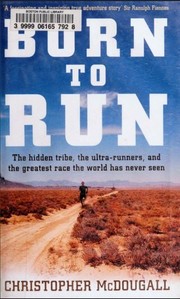
The book that ignited the modern ultra movement; reading it at this stage — after you have the technical foundation — lets you absorb its lessons on natural movement and joy of running without being misled by its simplifications.

Jurek's account of his Appalachian Trail record attempt is a masterclass in ultra pacing, crew management, and mental resilience — essential reading before your first race.

Closes the curriculum by translating elite mental strategies into actionable principles any first-time ultra runner can apply on race day when the body wants to quit.
Discussion
Keep reading
Paths that share books, cover the same subject, or open a related topic.