The Supreme Court & your Constitution
This curriculum moves from accessible narrative introductions to rigorous legal and historical analysis, and finally to the live debates about the Court's power and future. Each stage builds the vocabulary, case knowledge, and analytical framework needed for the next, so a complete beginner can arrive at a sophisticated, insider-level understanding of constitutional law and the Supreme Court.
Foundations: What the Court Is and How It Works
BeginnerUnderstand the basic structure of the Constitution, the Court's role in American democracy, and how constitutional interpretation actually works in plain language.
▸ Study plan for this stage
Pace: 8–10 weeks total. Week 1–4: The Federalist Papers — focus on the curated "essential" papers (Nos. 1, 9, 10, 39, 47, 48, 51, 78, 79, 80, 81) at a pace of 2–3 papers per sitting, 3 sittings per week (~15–20 pages/day). Annotate as you go. Week 5–10: A People's History of the Supreme Court — roughly 40
- Separation of powers and checks and balances: how Hamilton and Madison in Federalist Nos. 47–51 argue that dividing government into three branches prevents tyranny
- Judicial independence: Federalist No. 78's case for life tenure and an unelected Court as a guardian of the Constitution against temporary popular majorities
- Constitutional supremacy and judicial review: the logic — laid out in No. 78 and historicized by Irons — that courts, not legislatures, have final say on what the Constitution means
- Faction and democracy: Madison's Federalist No. 10 argument that a large republic filters out dangerous factions, providing the political theory backdrop for why an independent Court matters
- The Court's actual mechanics: how Irons explains case selection (certiorari), oral argument, conference, opinion writing, and the role of dissents and concurrences
- Constitutional interpretation methods: Irons contrasts originalism, textualism, and living-constitutionalism through real cases, showing these are not abstract debates but ones with human consequences
- The Court's evolving composition and legitimacy: Irons traces how appointments, confirmations, and shifting majorities have shaped doctrine from the founding era forward
- The tension between law and politics: Irons's 'people's history' lens reveals how social movements, presidential agendas, and public pressure have always shaped the supposedly apolitical Court
- According to Federalist No. 78, why did Hamilton argue that the judiciary would be the 'least dangerous' branch — and do Irons's historical examples support or complicate that claim?
- How does Madison's theory of faction in Federalist No. 10 relate to the Court's role in protecting minority rights against majority will, as illustrated by cases in Irons's book?
- What is judicial review, where does it come from in the constitutional text (or does it?), and how does Irons describe its contested origins in early American history?
- In plain language, how does a case get to the Supreme Court? Walk through each step using Irons's description of the Court's internal processes.
- What is the difference between an originalist and a living-constitutionalist reading of the Constitution, and can you find one example of each approach in the cases Irons discusses?
- How does Federalist No. 51's 'ambition must be made to counteract ambition' principle show up — or fail to show up — in the historical episodes Irons recounts?
- Federalist Paper mapping: After reading each assigned Federalist Paper, write a 3-sentence summary — (1) the problem Hamilton/Madison is solving, (2) their proposed solution, and (3) one way Irons's book later confirms or challenges their prediction.
- Case-to-concept matching: As you read Irons, keep a running two-column log — left column: case name and one-sentence outcome; right column: which Federalist Paper principle (if any) that case upholds, tests, or overturns.
- Judicial review explainer: Write a one-page plain-language explanation of judicial review as if writing for a curious 16-year-old. Use only evidence from Federalist No. 78 and Irons's account of Marbury v. Madison.
- Interpretation debate card: Choose one landmark case from Irons. Write two short paragraphs arguing the outcome — one from an originalist perspective, one from a living-constitutionalist perspective — then note which view Irons seems to favor and why.
- Court process flowchart: Draw or digitally create a flowchart of how a case travels from a trial court to a Supreme Court opinion, labeling each stage with vocabulary from Irons (petition for certiorari, merits brief, oral argument, conference vote, majority opinion, dissent, etc.).
- Reflection journal entry: After finishing both books, write 300–400 words answering: 'The Framers designed the Court to be above politics. Based on what Hamilton promised in Federalist No. 78 and what Irons actually shows happened, how well did that design hold up?'
Next up: Having internalized why the Court exists and how it operates mechanically and philosophically, the reader is now ready to engage with landmark constitutional decisions in depth — moving from understanding the institution's structure to critically analyzing its most consequential and contested rulings.

Federalist Nos. 78–83 lay out the original theory of judicial power and lifetime tenure — the intellectual DNA of everything the Court does. Reading these early anchors all later debates about originalism and judicial review.
A narrative-driven, chronological history of the Court from its founding to the modern era, written for general readers. It introduces landmark cases in story form, building the case-law vocabulary you'll need for harder books.
Landmark Cases: The Law That Shaped America
BeginnerKnow the canonical cases — what was decided, why it mattered, and how each ruling changed American life — so you can reason about constitutional law concretely.
▸ Study plan for this stage
Pace: 10–13 weeks total. Weeks 1–4: "Gideon's Trumpet" (~30–35 pages/day, ~240 pages); Weeks 5–13: "Simple Justice" (~25–30 pages/day, ~750 pages). Allow extra days at the end of each book for review and reflection.
- The Sixth Amendment right to counsel and its evolution — Gideon's Trumpet traces how Clarence Earl Gideon's handwritten petition dismantled Betts v. Brady and established that the right to an attorney is fundamental to a fair trial in all felony cases
- How a single case travels through the court system — Lewis's narrative in Gideon's Trumpet makes the certiorari process, oral argument, and opinion-writing concrete and human, showing the machinery behind a Supreme Court ruling
- The Equal Protection Clause of the Fourteenth Amendment as the constitutional engine of Brown v. Board of Education — Simple Justice shows how 'separate but equal' (Plessy v. Ferguson) was a legal fiction that Thurgood Marshall and the NAACP dismantled fact by fact
- Incremental litigation strategy — Simple Justice reveals how the NAACP Legal Defense Fund deliberately built toward Brown over decades, winning cases on graduate schools and law schools before attacking segregated elementary schools
- The role of social-science evidence in constitutional law — Kluger details how Kenneth Clark's doll studies and sociological data were introduced in Brown to prove psychological harm, expanding what counts as legal proof
- Judicial unanimity as a political tool — Simple Justice explains Chief Justice Earl Warren's deliberate effort to produce a 9-0 opinion in Brown, and why unanimity mattered for the ruling's legitimacy and enforcement
- The gap between legal victory and social reality — both books show that a landmark ruling is a beginning, not an end: Gideon required states to fund public defenders; Brown triggered massive resistance rather than immediate integration
- Constitutional law as a living argument — reading both books together shows that rights are not self-executing; they are won through persistent human effort, strategic lawyering, and political will
- After reading Gideon's Trumpet, can you explain in plain language what Betts v. Brady held, why the Court overruled it in Gideon v. Wainwright, and what constitutional provision was at stake?
- Lewis shows Abe Fortas arguing on behalf of a poor Florida prisoner. What does this reveal about how the Supreme Court selects and decides cases — and why did the justices grant certiorari to Gideon's petition at all?
- Simple Justice spans decades of NAACP litigation. What was the strategic logic of winning Sweatt v. Painter and McLaurin v. Oklahoma before bringing Brown — and what risk did that incremental approach carry?
- How did Thurgood Marshall and his colleagues use social-science and psychological evidence in the Brown trials, and why was that evidentiary choice both powerful and controversial?
- Why did Earl Warren work so hard to make the Brown decision unanimous, and what does Kluger's account suggest would have happened to the ruling's authority had even one justice dissented?
- Both Gideon and Brown produced landmark rulings that were not immediately enforced. What obstacles followed each decision, and what does that tell you about the limits of judicial power in American democracy?
- Case-brief both rulings: Write a one-page brief for Gideon v. Wainwright and a one-page brief for Brown v. Board of Education using the standard IRAC format (Issue, Rule, Application, Conclusion) — drawing only on what Lewis and Kluger describe, not outside sources.
- Timeline wall: Create a visual timeline from Plessy v. Ferguson (1896) through Brown II (1955) using events Kluger narrates in Simple Justice. Mark each NAACP litigation milestone and note what constitutional argument was advanced at each step.
- Rewrite the petition: Lewis reproduces Gideon's original handwritten petition. Draft your own version of that petition as if you were Gideon — then compare your argument to the polished brief Abe Fortas eventually filed. What did professional lawyering add?
- Debate the dissent: Simple Justice discusses Justices who were reluctant or slow to join Warren's unanimous opinion. Write a one-page hypothetical dissent in Brown from the perspective of a justice who believed in judicial restraint and stare decisis — then write a one-page rebuttal using Marshall's arguments.
- Trace the aftermath: Research (briefly) what happened in Florida after Gideon won and in Little Rock after Brown was decided. Write two short paragraphs — one per case — connecting what Lewis and Kluger foreshadow about resistance to what actually unfolded.
- Compare the protagonists: Write a 300-word character comparison of Clarence Earl Gideon (Gideon's Trumpet) and Thurgood Marshall (Simple Justice). What personal qualities, circumstances, and support systems determined whether each man could change constitutional law?
Next up: By grounding constitutional rights in the flesh-and-blood stories of Gideon and Brown, this stage gives you concrete anchors — real cases, real stakes, real consequences — that make abstract constitutional theory legible, preparing you to engage more analytically with the structural and philosophical frameworks that govern how courts interpret the Constitution.
A masterclass in how a single case (Gideon v. Wainwright) travels from a handwritten prison petition to a unanimous Supreme Court ruling. It demystifies the litigation process and shows constitutional law as a living, human drama.
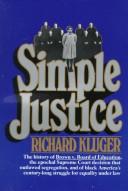
The definitive account of Brown v. Board of Education — the most consequential constitutional decision of the 20th century. Its depth of research makes abstract ideas about equal protection viscerally real.
How Justices Think: Interpretation and Ideology
IntermediateUnderstand the competing theories of constitutional interpretation (originalism, living constitutionalism, textualism) and how a Justice's judicial philosophy shapes outcomes.
▸ Study plan for this stage
Pace: 6–7 weeks total: Week 1–2 — "Active Liberty" (~20–25 pages/day, including Breyer's preface and epilogue); Week 3–4 — "A Matter of Interpretation" (~15–20 pages/day, reading Scalia's essay first, then each respondent's commentary, then Scalia's reply); Week 5–7 — "The Nine" (~25–30 pages/day, treatin
- Active Liberty vs. Constitutional Detail: Breyer's two-tier framework — 'active liberty' (participatory self-government) as the deeper constitutional purpose that should guide interpretation of specific textual provisions
- Living Constitutionalism: The view that the Constitution's meaning must evolve with changing social conditions and democratic values, as argued by Breyer through practical consequences and democratic participation
- Originalism (Original Meaning): Scalia's argument that constitutional text must be interpreted according to the objective public meaning it carried at the time of ratification, not the Framers' subjective intent
- Textualism in Statutory Interpretation: Scalia's companion doctrine that courts must read statutory language as written, rejecting legislative history (e.g., committee reports) as an authoritative guide to meaning
- The Common-Law Judge Model (and Scalia's Rejection of It): The tradition of judge-made law evolving case by case, which Scalia critiques as illegitimate when applied to a written Constitution or statute
- Respondent Critiques of Originalism: The counter-arguments from Dworkin, Tribe, Sunstein, and Tushnet inside 'A Matter of Interpretation' — e.g., that original meaning is indeterminate, that moral reading is unavoidable, and that Scalia selectively applies his own method
- Judicial Philosophy in Action — The Rehnquist and Early Roberts Courts: Toobin's 'The Nine' shows how the abstract theories in Breyer and Scalia played out in real coalitions, confirmation battles, and landmark decisions (Bush v. Gore, Gonzales v. Carhart, etc.)
- The Role of Ideology, Personality, and Institutional Pressures: Toobin's reporting reveals that judicial outcomes are shaped not only by stated interpretive theory but also by personal relationships, strategic behavior, and political context
- According to Breyer in 'Active Liberty,' why is 'active liberty' a more reliable interpretive touchstone than strict textualism, and what practical consequences does he say a judge should weigh?
- What is the precise distinction Scalia draws in 'A Matter of Interpretation' between 'original intent' and 'original meaning,' and why does he insist the latter — not the former — is the correct originalist standard?
- How do the respondents in 'A Matter of Interpretation' (particularly Dworkin and Tribe) challenge Scalia's claim that originalism constrains judicial discretion more effectively than living constitutionalism?
- Using at least two specific cases or examples from 'The Nine,' explain how a Justice's stated interpretive philosophy either predicted or failed to predict their actual vote — and what Toobin suggests accounts for any gap?
- How do Breyer and Scalia differ in their treatment of legislative history and congressional purpose when interpreting a federal statute? Which real-world statutory cases does each invoke to support their view?
- After reading all three books, how would you characterize the relationship between interpretive theory and political outcome — are they tightly linked, loosely linked, or something more complicated?
- Debate Prep — Steel-Man Both Sides: Write a one-page argument FOR originalism using only Scalia's text, then a one-page argument AGAINST it using only the respondents in 'A Matter of Interpretation.' Read them back-to-back to feel the tension each side must resolve.
- Annotation Dialogue: Read a short passage from Breyer's 'Active Liberty' (e.g., his free-speech or federalism chapter) and a thematically related passage from Scalia's essay. Annotate them side by side, marking every point where they would directly disagree and writing one sentence explaining why.
- Case Mapping with 'The Nine': Choose three Supreme Court decisions Toobin discusses in depth (e.g., Bush v. Gore, Gonzales v. Carhart, Hamdan v. Rumsfeld). For each, write a short paragraph predicting how a strict originalist and a living constitutionalist would rule, then compare your prediction to what Toobin reports actually happened.
- Interpretive Theory Scorecard: Create a simple table with rows for 'Role of Text,' 'Role of History/Original Meaning,' 'Role of Consequences,' 'Role of Precedent (Stare Decisis),' and 'Legitimacy Source.' Fill in columns for Breyer and Scalia based solely on these two books. Add a third column for your own tentative view.
- Mock Confirmation Hearing: Write 5 questions a Senator might ask a nominee to probe whether they are an originalist or a living constitutionalist, drawing on the specific arguments in all three books. Then write the nominee's evasive answer and a follow-up that exposes the evasion.
- Reading Journal — Toobin as Reality Check: After each major chapter of 'The Nine,' write 2–3 sentences connecting a Justice's behavior or vote to a specific argument made by either Breyer or Scalia. By the end of the book you will have a running log that grounds the abstract theories in real institutional behavior.
Next up: By internalizing how interpretive philosophy is constructed (Breyer, Scalia) and how it plays out — imperfectly — in real judicial behavior (Toobin), the reader is now equipped to move from theory to doctrine: the next stage can examine specific constitutional domains (free speech, equal protection, executive power) and ask how originalism and living constitutionalism produce divergent outcomes in
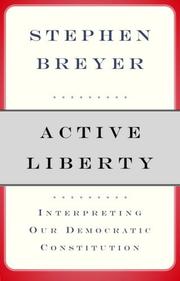
A sitting Justice argues for a 'living Constitution' approach rooted in democratic participation. Reading a Justice's own theory in their own words is irreplaceable, and Breyer writes accessibly for non-lawyers.
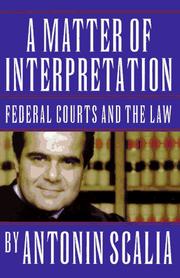
The canonical statement of originalism and textualism, written by their most influential champion. Pairing Scalia with Breyer gives you both poles of the interpretive debate and the vocabulary to navigate everything in between.
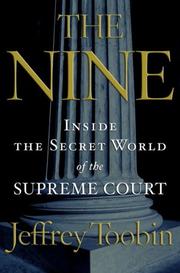
A deeply reported behind-the-scenes account of the Rehnquist and early Roberts Courts. After absorbing competing judicial philosophies in the abstract, this book shows how ideology, personality, and politics interact in practice.
Deep Dives: Power, Legitimacy, and the Court's Future
ExpertEngage with the hardest current questions: Is the Court too powerful? Is it a political institution? What reforms, if any, are justified — and what does the Constitution actually permit?
▸ Study plan for this stage
Pace: 10–13 weeks total: ~3–4 weeks per book at roughly 25–35 pages/day. Suggested breakdown — "The Oath" (Toobin): weeks 1–3 (narrative-heavy, faster pace); "The Case Against the Supreme Court" (Chemerinsky): weeks 4–7 (argument-dense, slower and more analytical); "The Most Dangerous Branch" (Kaplan): we
- Judicial supremacy vs. constitutional supremacy: whether the Court's word is truly final on constitutional meaning, as interrogated across all three books
- The Court as a political institution: Toobin's portrait of the Roberts Court reveals how ideology, strategy, and personality shape ostensibly 'legal' decisions
- Legitimacy and the counter-majoritarian difficulty: Chemerinsky's central critique that an unelected Court has systematically failed ordinary Americans and protected the powerful
- Judicial minimalism vs. maximalism: the tension between narrow rulings and sweeping constitutional pronouncements, a fault line running through Kaplan's analysis
- The scope of judicial overreach: Kaplan's thesis that the modern Court has expanded its power far beyond what the Constitution's framers envisioned or democratic governance can tolerate
- Structural reform proposals: term limits, court-packing, jurisdiction-stripping, and supermajority requirements — their constitutional permissibility and political feasibility as weighed by Chemerinsky and Kaplan
- The Roberts Court's jurisprudential identity: how Chief Justice Roberts manages the Court's institutional reputation while delivering ideologically charged outcomes, per Toobin
- Failure cases as evidence: Chemerinsky's method of using the Court's worst decisions (on race, civil liberties, corporate power) to build a systemic indictment rather than an anecdotal one
- According to Toobin's 'The Oath,' in what specific ways did the Roberts Court's internal dynamics and the personalities of individual justices translate into doctrinal outcomes — and does Toobin's narrative journalism ultimately support or undermine the idea of the Court as a principled legal body?
- Chemerinsky structures 'The Case Against the Supreme Court' around the Court's failures rather than its triumphs. What are his strongest examples, and does his critique target the institution itself, the justices who have served on it, or both — and what is the difference?
- Kaplan argues in 'The Most Dangerous Branch' that the Court has become 'too powerful.' What constitutional or historical baseline is he using to measure 'too powerful,' and how does that baseline hold up under scrutiny?
- All three authors implicitly or explicitly engage with the question of democratic legitimacy. Compare how Toobin, Chemerinsky, and Kaplan each define what would make the Court *more* legitimate — do their visions converge or conflict?
- What specific reforms does Chemerinsky propose, and how does Kaplan's analysis either reinforce or complicate the case for those reforms? Which reforms, if any, does the text of the Constitution clearly permit?
- After reading all three books, how would you answer the core question of this stage: Is the Supreme Court too powerful? Construct an argument that engages with at least two of the three authors, including at least one point of disagreement with your chosen sources.
- **The Failure Audit (Chemerinsky-driven):** Choose three decisions Chemerinsky cites as failures of the Court. For each, write a one-page brief: (1) what the Court held, (2) Chemerinsky's critique, (3) the strongest counterargument to his critique, and (4) your verdict. This forces engagement with his evidence rather than just his conclusions.
- **Toobin's Personality-to-Doctrine Map:** After finishing 'The Oath,' create a one-page chart mapping each justice Toobin profiles to: their judicial philosophy, one key decision that reflects it, and one moment where Toobin suggests personal or political factors overrode stated principle. Then write a short reflection: does this chart prove the Court is political, or merely human?
- **Reform Proposal Stress-Test (Chemerinsky + Kaplan):** Pick one structural reform either author discusses (e.g., 18-year term limits). Write a two-page memo in the style of a Senate Judiciary Committee staffer: (1) the constitutional authority for the reform, (2) the strongest objections, (3) likely practical effects, and (4) your recommendation. Cite the books directly.
- **Cross-Book Debate Simulation:** Write a structured 600-word dialogue between Chemerinsky and Kaplan debating this proposition: 'The Supreme Court should be stripped of jurisdiction over abortion and gun rights.' Each 'speaker' must use arguments traceable to their respective books. Conclude with a paragraph identifying where they genuinely agree.
- **The Legitimacy Spectrum:** Draw a simple spectrum from 'fully legitimate' to 'fully illegitimate' institution. Place the Supreme Court on it based on each of the three authors' implicit or explicit positions. Write three sentences per author justifying the placement, with page-level evidence. Then place yourself on the spectrum and defend it.
- **Op-Ed Draft:** Write a 700-word op-ed for a general audience titled either 'Why the Supreme Court Must Be Reformed' or 'Why Court Reform Is More Dangerous Than the Court Itself.' You must steelman the opposing view (drawing from whichever of the three books best represents it) before making your own case. This synthesizes all three books into a single, audience-aware argument.
Next up: By wrestling with whether the Court is too powerful and what reforms are constitutionally permissible, the reader has now confronted the institution at its most contested — making them ready to engage with primary constitutional texts, landmark opinions, and foundational theory to evaluate these critiques from the ground up rather than from the commentary down.
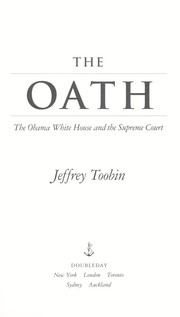
Focuses on the Roberts Court and the clash between Chief Justice Roberts and President Obama, tracing how the Court's legitimacy became a central political battleground. Bridges the previous stage's insider view to today's fights.

A leading constitutional law scholar argues the Court has repeatedly failed its core mission. This is the most rigorous structural critique available to a general reader and forces you to evaluate the institution critically.

A reported argument that the modern Court has accumulated too much power at the expense of democracy. Pairs with Chemerinsky to give you the full debate over judicial supremacy and Court reform heading into the present day.
Discussion
Keep reading
Paths that share books, cover the same subject, or open a related topic.