Two things to establish before the list. Almost everything here is American law-school material, and American criminal law is not one body of rules: substantive offences are defined state by state, so a doctrine that holds in a Model Penal Code jurisdiction may not hold in a common-law one, and criminal procedure works as a federal constitutional floor that individual states build above. Second, none of this is legal advice. These are teaching texts and works of scholarship; if you are facing a charge, you need a lawyer admitted in your jurisdiction, not a treatise.
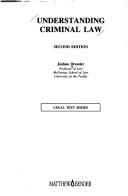
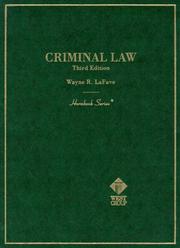
Start with Joshua Dressler's Understanding criminal law. It is the standard student treatise — actus reus, mens rea, causation, homicide grading, the defences — and it is written to be read rather than consulted, which sets it apart from most books in this genre. Its companion, Understanding criminal procedure, runs in two volumes: the first on investigation, which is the search-and-seizure, interrogation and identification material most courses cover, and the second on adjudication, from charging through trial to appeal. Wayne R. LaFave's Criminal law and Criminal procedure are the hornbooks that sit behind them — denser, more heavily footnoted, and the ones practitioners and courts actually cite. Read Dressler to learn the subject and LaFave to check a point.
Why punish at all
H. L. A. Hart's Punishment and responsibility is analytic philosophy of law, and it is the book that separated the question of why a system of punishment is justified at all from the question of how much any individual deserves. It is short, difficult in the ordinary philosophical way, and it underlies most later argument about culpability. Andrew Ashworth's Principles of criminal law is worth knowing about for a specific reason: it is a principled account of the criminal law of England and Wales, not the United States. As comparative reading it is excellent — it shows which American doctrines are contingent rather than necessary — but do not use it to study for an American exam.
David Garland's Punishment and modern society comes at the same territory sociologically, reading Durkheim, Marx, Foucault and Elias on what punishment does as a social institution rather than what justifies it. It is the natural bridge from doctrine to the books that follow.
The system as it actually runs
The remaining books are about the gap between the doctrine and the practice, and it is very large. William J. Stuntz's The Collapse of American Criminal Justice is the major legal-academic argument: that procedural rights expanded while substantive criminal law grew so broad and so discretionary that prosecutors, not juries, became the deciding actors. John F. Pfaff's Locked in is the empirical challenge to the standard account of mass incarceration — he argues the growth was driven by prosecutorial charging decisions and by admissions for violent offences rather than by the drug war or private prisons. It is contested, and the disagreement is about how to read state-level data rather than about anyone's good faith; read it alongside the accounts it is arguing with. Lawrence M. Friedman's Crime and punishment in American history supplies the long historical view that both are working within.
Four books report from inside. Anthony Lewis's Gideon's trumpet is the classic account of Gideon v. Wainwright and the establishment of the right to appointed counsel — journalism, and still the best single introduction to how a case reaches the Supreme Court. Amy Bach's Ordinary Injustice is reported from ordinary courtrooms where nothing dramatic is happening and the system is failing quietly anyway. Emily Bazelon's Charged documents prosecutorial power through two cases and makes the argument for constraining it. Bryan Stevenson's Just Mercy is a participant memoir by the founder of the Equal Justice Initiative, built around his death-penalty and juvenile-sentencing work; it is advocacy written by the advocate, which is exactly what gives it its authority and also the reason to read the scholarship alongside it.
Follow the full reading path in order and the doctrine will arrive before the critique, which is the only sequence in which the critique makes sense.
Follow the full ordered path here: Criminal Law and Procedure: The Best Books to Read, in Order.
Ready to learn something deeply?
Build a reading path — free