Best Books on Cosplay Costume Making
This curriculum takes a beginner cosplayer from zero to advanced maker across five tightly sequenced stages. Each stage builds on the last — starting with sewing and patterning fundamentals, moving through foam and thermoplastic armor, then into painting, weathering, wigs, and props, and finally tackling the structural engineering challenges that separate good costumes from jaw-dropping ones.
Foundations: Sewing, Patterning & the Cosplay Mindset
BeginnerUnderstand how fabric behaves, how to read and draft basic patterns, and how to approach a costume as a construction project from reference to finished garment.
Quindt (Kamui Cosplay) wrote this as a true beginner's entry point, covering materials, tools, planning, and workflow — it establishes the mental framework every later technique builds on.
Foam Armor: The Core Skill
BeginnerMaster EVA foam as the primary armor-building material — cutting, shaping, heat-forming, gluing, and finishing foam pieces into wearable armor sets.
The most comprehensive single resource on EVA foam armor making, covering every technique from basic cuts to complex curved shapes; reading it right after the foundations book means every tip lands with context.
Thermoplastics, Resin & Hard Materials
IntermediateGraduate to rigid and semi-rigid materials — Worbla, Wonderflex, and casting resin — to achieve sharper detail, greater durability, and professional-level surface quality.
A dedicated deep-dive into thermoplastic techniques that directly follows foam skills; Quindt shows how to layer, texture, and prime Worbla for a finish foam alone cannot achieve.
Painting, Weathering, Wigs & Surface Finishing
IntermediateTransform raw armor and props into screen-accurate pieces through priming, painting, weathering, and learn to style wigs and fabricate hair pieces that complete a character illusion.
Covers priming foam and thermoplastics, airbrushing, hand-painting, and weathering effects — placed here so the reader has finished pieces ready to paint from the previous stages.
Wearable Engineering & Advanced Construction
ExpertSolve complex structural problems — internal frames, articulated joints, weight distribution, LED integration, and large-scale builds — so ambitious costumes are both spectacular and wearable all day.
▸ Study plan for this stage
Pace: 4–5 weeks, ~25–30 pages/day, with 2–3 days per week dedicated to hands-on casting and mold-making practice
- Mold design principles: choosing between rigid, flexible, and hybrid mold types based on geometry and production volume
- Casting material selection: resins, urethanes, plasters, and rubbers—properties, cure times, and structural performance under load
- Undercuts, draft angles, and parting lines: how to design molds that release cleanly and support wearable armor geometry
- Reinforcement techniques: fiberglass, fabric, and internal armatures within castings to achieve strength-to-weight ratios needed for all-day wear
- Surface finishing and post-processing: demolding, sealing, painting, and assembly of cast components into functional costume pieces
- Scaling and structural analysis: how to calculate wall thickness and support structures for large-scale cast pieces that won't fail under body movement
- When would you choose a flexible silicone mold over a rigid plaster mold, and what are the trade-offs in cost, durability, and production speed?
- How do undercuts and draft angles affect mold design, and what strategies can you use to eliminate or manage them in complex armor geometry?
- What is the relationship between casting material choice (polyurethane, epoxy, polyester resin) and the structural demands of a wearable piece that must support its own weight for 8+ hours?
- Describe the process of reinforcing a large cast chest plate or shoulder armor with internal fiberglass or fabric to prevent cracking under movement and impact.
- How would you design a mold and casting strategy for a multi-part costume element (e.g., a segmented pauldron) that must assemble seamlessly and move with the wearer?
- What post-processing steps are critical to transform a raw casting into a finished, paintable, and structurally sound costume component?
- Create a simple two-part rigid mold (plaster or silicone) of a geometric shape (cube, sphere, or wedge) and cast it in polyurethane or resin; document demolding challenges and surface quality
- Design and build a flexible silicone mold of a more complex shape (e.g., a curved armor piece or helmet section) with intentional undercuts; practice multiple pours to test mold durability
- Cast a large flat panel (12"×12" or larger) in resin or urethane, then reinforce it with fiberglass mat or fabric; test its rigidity and weight before and after reinforcement
- Create a multi-part mold system for a costume element that requires assembly (e.g., a gauntlet with separate palm, fingers, and wrist sections); cast and assemble all parts
- Experiment with different casting material formulations (varying resin-to-hardener ratios, adding fillers) and compare cure times, hardness, and brittleness; document results
- Design a mold for a piece with a challenging undercut or draft angle; solve the problem using either a parting line strategy or a flexible mold approach, then execute the casting
Next up: Mastery of molding and casting techniques provides the structural foundation and production efficiency needed to tackle the next stage—integrating electronics, articulated joints, and weight-distribution systems into these cast components so they function as dynamic, moving costume systems.
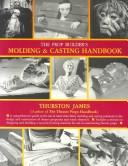
A professional theatrical prop-making reference that teaches industrial-grade mold and casting techniques, giving cosplayers the engineering vocabulary to tackle any large or complex piece.
Discussion
Keep reading
Paths that share books, cover the same subject, or open a related topic.