Mergers and acquisitions: an ordered M&A reading list
This curriculum takes an intermediate learner from a solid conceptual grounding in M&A mechanics all the way through advanced deal structuring, valuation, negotiation, and post-merger integration. Each stage builds directly on the last — establishing deal logic and vocabulary first, then layering in technical valuation and due diligence, then sharpening negotiation and legal craft, and finally tackling the hardest part: making deals actually work after close.
Deal Logic & The M&A Landscape
IntermediateUnderstand why deals happen, how the M&A process flows end-to-end, and develop the vocabulary and mental models needed for all deeper study.
▸ Study plan for this stage
Pace: 6–8 weeks, ~40–50 pages/day (Sherman first: ~2 weeks; Reed second: ~4–6 weeks). Allocate 1–2 days per week for exercises and concept review.
- The strategic rationale for M&A: growth, market consolidation, synergy creation, and competitive positioning
- Deal structure fundamentals: asset vs. stock purchases, cash vs. stock consideration, and tax implications
- The M&A process flow: sourcing, due diligence, valuation, negotiation, and closing mechanics
- Key deal participants and their roles: buyers, sellers, advisors, lenders, and regulators
- Valuation methods in M&A: comparable companies, precedent transactions, DCF, and accretion/dilution analysis
- Due diligence frameworks: financial, legal, operational, and cultural assessment
- Deal documentation: LOI, purchase agreement, representations and warranties, and closing conditions
- Post-merger integration fundamentals and common pitfalls
- What are the primary strategic reasons companies pursue M&A, and how do they differ from organic growth?
- Walk through the end-to-end M&A process from deal identification to closing—what are the critical milestones and decision gates?
- What is the difference between an asset purchase and a stock purchase, and when would a buyer or seller prefer each structure?
- Explain the role of due diligence in M&A and describe the main categories of due diligence investigation.
- What are the key valuation approaches used in M&A, and how do precedent transactions and comparable companies inform deal pricing?
- What is accretion/dilution analysis, and why is it critical for public company acquirers?
- Map out a real M&A deal (e.g., a recent public acquisition) against Sherman's A-to-Z framework—identify each stage and key decision points.
- Create a side-by-side comparison table of asset vs. stock purchase structures, noting tax, liability, and operational implications for both buyer and seller.
- Build a simplified due diligence checklist based on Reed's framework; then apply it to a case study company to identify red flags.
- Analyze a public company's 8-K filing announcing an acquisition—extract the deal structure, purchase price, and stated synergies; compare against valuation concepts from both books.
- Role-play a deal negotiation scenario: one person as buyer, one as seller; use LOI and purchase agreement concepts from Reed to negotiate key terms (price, reps and warranties, closing conditions).
- Calculate a simple accretion/dilution analysis for a hypothetical acquisition using EPS and share count data; interpret the results.
Next up: This stage builds the foundational vocabulary, process knowledge, and mental models required to dive deeper into specialized topics—whether financial engineering (valuation and modeling), deal execution (negotiation and documentation), or post-deal value creation (integration and synergy realization).

A comprehensive, practitioner-written overview of the full deal lifecycle — from strategy and sourcing through closing — that efficiently builds the vocabulary and process intuition every serious M&A student needs first.

A landmark reference that covers deal structures, financing, legal frameworks, and due diligence in a Q&A format; reading it second cements the breadth of the field before diving into any single discipline.
Valuation & Financial Modeling
IntermediateBuild rigorous skills in valuing target companies using DCF, comparable companies, precedent transactions, and accretion/dilution analysis — the quantitative core of any deal.
▸ Study plan for this stage
Pace: 8–10 weeks, ~40–50 pages/day (mix of dense technical content and case studies). Start with Rosenbaum's practical frameworks (weeks 1–4), then deepen with Copeland's theoretical foundations (weeks 5–8), then synthesize both through modeling exercises (weeks 9–10).
- DCF (Discounted Cash Flow) methodology: building 3-statement models, forecasting WACC, terminal value calculations, and sensitivity analysis
- Comparable Company Analysis (trading multiples): selecting peer sets, calculating EV/EBITDA, P/E, and other valuation multiples, and applying them to target companies
- Precedent Transactions Analysis: identifying comparable M&A deals, extracting implied multiples, and understanding deal premiums and synergy assumptions
- Accretion/Dilution Analysis: modeling the pro forma impact of an acquisition on the acquirer's EPS, understanding dilution drivers, and identifying break-even scenarios
- WACC (Weighted Average Cost of Capital): calculating cost of equity (CAPM), cost of debt, and optimal capital structure for valuation purposes
- Terminal Value and Exit Scenarios: perpetuity growth method vs. exit multiple method, sensitivity to long-term assumptions, and their impact on DCF value
- Valuation bridges and triangulation: reconciling DCF, comparable companies, and precedent transactions to arrive at a defensible valuation range
- Deal mechanics and financial engineering: understanding how financing structure, synergies, and integration assumptions affect deal value and returns
- How do you construct a three-statement financial model (income statement, balance sheet, cash flow statement) for a target company, and what are the key drivers and assumptions?
- What is WACC, how do you calculate it using CAPM, and why is it critical to DCF valuation?
- How do you perform a comparable company analysis? What multiples do you use, how do you select peers, and how do you apply multiples to value a target?
- What is precedent transactions analysis, and how does it differ from comparable company analysis in terms of the multiples it reveals?
- How do you build an accretion/dilution analysis, and what are the key drivers that determine whether a deal is accretive or dilutive to the acquirer's EPS?
- What are the two main methods for calculating terminal value in a DCF, and how sensitive is your valuation to terminal value assumptions?
- How do you triangulate across DCF, comparable companies, and precedent transactions to establish a valuation range, and what does it mean if the three methods diverge significantly?
- Build a complete DCF model for a real public company (e.g., from Rosenbaum's case studies): forecast 5–10 years of financials, calculate WACC, compute terminal value using both perpetuity growth and exit multiple methods, and run sensitivity tables on key assumptions (revenue growth, WACC, terminal growth rate).
- Perform a comparable company analysis: select 5–8 peer companies in the same industry, calculate EV/EBITDA, EV/Revenue, P/E, and other relevant multiples, identify outliers, and apply the median multiple to value a target company.
- Conduct a precedent transactions analysis: identify 4–6 historical M&A deals in the same sector, extract implied multiples (EV/EBITDA at close, deal premium), and compare them to current trading multiples to assess whether valuations are rising or falling.
- Build an accretion/dilution model: assume an acquirer purchases a target at a given price, model the pro forma combined company (including financing assumptions and synergies), and calculate the impact on EPS in years 1–3 post-close.
- Calculate WACC from scratch for a real company: gather market data (risk-free rate, market risk premium, beta), estimate cost of equity using CAPM, cost of debt from credit spreads, and combine using the company's target capital structure.
- Perform a sensitivity analysis and valuation bridge: create a summary table showing DCF value, comparable company value, and precedent transaction value; explain the drivers of any divergence and articulate which method you trust most and why.
Next up: This stage equips you with the quantitative toolkit to value any target company rigorously; the next stage will teach you how to structure deals, negotiate terms, and integrate financial analysis with strategic and legal considerations to close transactions successfully.
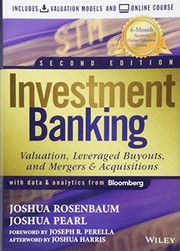
The definitive practitioner guide to valuation methodologies used on Wall Street; its step-by-step treatment of comps, precedent transactions, DCF, and LBO analysis is the essential technical foundation for M&A work.
Provides the strategic and economic theory behind value creation in deals — why most acquirers overpay and how to think about synergies rigorously — deepening the 'why' behind the numbers learned in Rosenbaum.
Deal Structuring, Due Diligence & Legal Craft
IntermediateMaster how deals are legally and financially structured, how to conduct and interpret due diligence, and how contract terms allocate risk between buyer and seller.
▸ Study plan for this stage
Pace: 12–14 weeks, ~40–50 pages/day. Gaughan (weeks 1–5, ~350 pages), Hennessey (weeks 6–9, ~250 pages), Freund (weeks 10–14, ~300 pages). Allocate 1–2 days per book for review and integration.
- Deal structure mechanics: cash vs. stock, taxable vs. tax-free transactions, and how each affects buyer/seller incentives and post-closing integration
- Financial modeling fundamentals: accretion/dilution analysis, purchase price allocation (PPA), and earnout calculations as taught in Gaughan
- Due diligence frameworks: financial, legal, operational, and commercial deep-dives; how to identify and quantify risks before signing
- Contract architecture: representations & warranties, indemnification, escrow mechanics, and how these terms shift risk and protect both parties
- Real estate-specific due diligence: property condition assessment, title/lien review, lease analysis, and environmental/zoning compliance (Hennessey focus)
- Negotiation dynamics and deal psychology: how lawyers and advisors navigate competing interests, trade-offs, and closing conditions
- Post-closing adjustments: purchase price true-ups, working capital adjustments, and dispute resolution mechanisms
- Legal and tax implications: Section 368 reorganizations, step-up basis, and how structure choice cascades through the entire deal
- What are the key differences between a stock purchase and an asset purchase, and how does each structure affect tax liability, liability assumption, and buyer due diligence scope?
- How do representations, warranties, and indemnification clauses work together to allocate post-closing risk, and what are the practical limits of indemnification baskets and caps?
- Walk through a financial due diligence checklist: what documents would you request, what red flags would you investigate, and how would you model the impact of identified issues on deal value?
- Describe the components of a real estate due diligence process, including property condition, title, environmental, and lease review—what are the most common deal-breakers?
- How do earnout provisions work, and what are the key drafting challenges in defining earnout metrics, measurement, and dispute resolution?
- What is purchase price allocation (PPA), why does it matter for both buyer and seller, and how does it interact with tax planning?
- Build a simple accretion/dilution model for a mock acquisition (using Gaughan's framework): assume a buyer acquiring a target with given EBITDA, margins, and purchase price; calculate EPS impact over 3 years under cash vs. stock scenarios.
- Conduct a financial due diligence review of a real or hypothetical company: request/analyze 3 years of audited financials, tax returns, and working capital schedules; document findings and quantify adjustments.
- Draft a representations and warranties schedule for a mid-market acquisition: include financial, legal, environmental, and operational reps; set baskets, caps, and survival periods; justify each term.
- Analyze a real property lease (or sample lease from Hennessey): identify key terms (renewal options, rent escalations, assignment restrictions, landlord consent); assess risk to buyer and impact on deal value.
- Complete a property condition assessment checklist: walk through a commercial property (or review a Phase I/II environmental report); document defects, estimate remediation costs, and recommend deal adjustments.
- Negotiate a mock purchase agreement: role-play as buyer and seller counsel; practice trading off price, reps & warranties, indemnification caps, and earnout terms; document final positions and trade-offs made.
Next up: This stage equips you with the technical and legal foundations to structure, evaluate, and protect deals; the next stage will apply these skills to real-world deal execution, integration planning, and post-closing value creation.
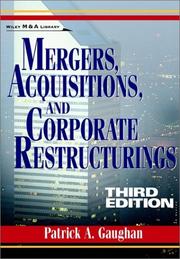
A rigorous academic-yet-practical treatment of deal types, defensive tactics, restructurings, and the empirical evidence on deal outcomes — ideal for understanding structural choices and their consequences.

While sector-specific, this book is widely used to build a disciplined, checklist-driven due diligence mindset that transfers directly to general M&A practice; read it to internalize the process rigor before applying it broadly.

A classic by a leading M&A attorney that walks through the drafting and negotiation of acquisition agreements clause by clause, making the legal architecture of deals concrete and navigable.
Negotiation, Strategy & the Dealmaker's Edge
ExpertDevelop sophisticated negotiation strategy, understand the behavioral and strategic dynamics at the deal table, and learn how elite dealmakers think about leverage, timing, and counterparty psychology.
▸ Study plan for this stage
Pace: 8–10 weeks, ~25–30 pages/day. Allocate 4–5 weeks to "Bargaining for Advantage" (Shell's frameworks require deliberate practice), then 3–4 weeks to "Deals from Hell" (case-heavy; allow time for deep analysis of each failure).
- The five foundations of negotiation (information, leverage, time, alternatives, and legitimacy) and how to assess and manipulate each
- Shell's BATNA (Best Alternative to Negotiated Agreement) and how to strengthen your own while weakening the counterparty's
- Negotiation styles (competitive, collaborative, accommodating, avoiding) and when to deploy each based on deal context and relationship
- Behavioral economics and cognitive biases (anchoring, loss aversion, overconfidence) that shape dealmaker psychology at the table
- The anatomy of deal failure: how structural flaws, misaligned incentives, and poor governance create value destruction (Bruner's framework)
- Leverage asymmetries and how elite dealmakers exploit information gaps, time pressure, and walk-away power
- The role of narrative and framing in negotiations—how the story you tell shapes the deal's perceived value and terms
- Post-deal integration risks and how to negotiate protective mechanisms (earn-outs, reps & warranties, governance rights) that survive closing
- What are the five foundations of negotiation, and how would you assess your position on each in a specific M&A deal you're analyzing?
- How do anchoring and loss aversion shape the opening moves in M&A negotiations, and what tactics can you use to counter these biases in yourself and your counterparty?
- Describe a deal from 'Deals from Hell' and explain which of Shell's negotiation principles, if applied earlier, might have prevented or mitigated the failure.
- What is the relationship between leverage and BATNA, and how do you identify and strengthen your walk-away position before entering serious negotiations?
- How do different negotiation styles (competitive vs. collaborative) affect long-term value creation in M&A, and when is each appropriate?
- What are the key post-deal integration risks that should be negotiated into the purchase agreement, and how do protective mechanisms (earn-outs, reps & warranties) address them?
- Conduct a five-foundations audit on a real or hypothetical M&A deal: map your information, leverage, time, alternatives, and legitimacy position. Identify gaps and develop a pre-negotiation strategy to strengthen each.
- Analyze three case studies from 'Deals from Hell' and for each, identify the negotiation failure point. Rewrite the deal terms or negotiation approach using Shell's frameworks to show how the outcome could have been different.
- Role-play a seller-buyer negotiation on a mid-market acquisition: one person uses Shell's collaborative style, the other uses competitive tactics. Debrief on how each style affected the final terms and relationship.
- Create a detailed BATNA map for a buyer and seller in a hypothetical deal. Quantify each party's walk-away value and show how BATNA asymmetry creates negotiating leverage.
- Draft a purchase agreement section (representations, warranties, or earn-out structure) for a deal with known integration risks. Justify each protective mechanism using lessons from a 'Deals from Hell' case.
- Analyze the narrative/framing in a real M&A announcement (press release, investor call) and identify how the buyer and seller each framed the deal's strategic rationale. Discuss how this framing influenced the negotiated terms.
Next up: This stage equips you with the psychological, strategic, and tactical tools to navigate the negotiation table; the next stage will focus on translating those negotiated terms into legal and financial structures that protect value and ensure deal execution.
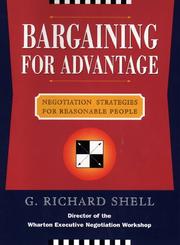
The most rigorous and practical book on negotiation strategy; its frameworks for leverage, style, and preparation apply directly to M&A deal tables and should be read before studying deal-specific negotiation cases.

A case-study-driven autopsy of famous failed acquisitions that reveals the strategic, financial, and behavioral mistakes dealmakers repeatedly make — essential reading for developing sound deal judgment.
Post-Merger Integration & Value Realization
ExpertUnderstand why most M&A value is won or lost after signing, and develop a practical playbook for integrating people, culture, operations, and systems to actually capture deal synergies.
▸ Study plan for this stage
Pace: 8–10 weeks, ~40–50 pages/day (mix of dense analytical content and case studies; allow time for reflection on integration frameworks)
- The synergy paradox: why projected synergies are routinely overestimated and how to build realistic forecasts
- The integration value chain: how people, culture, operations, and systems integration directly determine whether synergies are captured or destroyed
- Governance and leadership structures during integration: the role of the integration management office (IMO) and decision-making authority
- The hidden costs of integration: disruption, talent loss, customer churn, and how to quantify and mitigate them
- Synergy tracking and accountability: measurement frameworks and KPIs that ensure synergies are actually realized post-close
- Cultural integration and organizational design: balancing retention of key talent with necessary restructuring
- Operational integration playbooks: sequencing and prioritizing integration activities to minimize business disruption
- Why do most M&A deals fail to realize their projected synergies, and what are the common estimation biases Sirower identifies?
- What is the integration value chain, and how do failures in people, culture, operations, or systems integration cascade to destroy deal value?
- How should an acquiring company structure governance and decision-making during integration, and what role should the integration management office play?
- What are the hidden costs of integration (beyond the obvious synergy targets), and how do you quantify and budget for them?
- How do you design a synergy tracking system that creates accountability and ensures value is actually captured post-close?
- What are the key levers for retaining critical talent during integration, and how do you balance this with necessary organizational restructuring?
- Build a synergy reality-check model: take a real (or hypothetical) M&A deal, identify projected synergies, and apply Sirower's framework to stress-test assumptions and estimate realistic capture rates
- Design an integration management office (IMO) charter: define governance structure, decision rights, reporting lines, and KPIs for a specific acquisition scenario
- Create a 100-day integration plan: map out the critical path for people, culture, operations, and systems integration with sequencing, dependencies, and risk mitigation
- Conduct a hidden-cost audit: identify and quantify non-obvious integration costs (customer churn, talent attrition, operational disruption) for a case study acquisition
- Build a synergy tracking dashboard: design a measurement framework with leading and lagging indicators that tracks synergy realization monthly for 24 months post-close
- Interview or case-study analysis: analyze a real post-merger integration (using Harding's frameworks) to identify what went right and what went wrong in capturing synergies
Next up: This stage equips you with the practical playbook and accountability systems to ensure value is captured during integration; the next stage will likely shift focus to specialized integration challenges (technology integration, regulatory integration, or specific industry scenarios) or to scaling integration capabilities across a portfolio of acquisitions.

Sirower's updated work provides the definitive evidence-based framework for planning and delivering synergies from day one — directly addressing the most common reason acquisitions destroy shareholder value.

A Bain & Company-backed playbook focused on the four critical decisions that determine integration success; it closes the curriculum by translating all prior deal knowledge into post-close execution and value capture.
Discussion
Keep reading
Paths that share books, cover the same subject, or open a related topic.