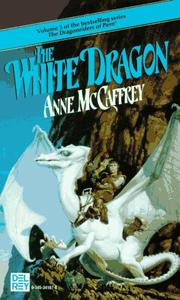
The Inheritance Cycle Reading Order: Where to Start
Christopher Paolini's Inheritance Cycle is four books telling one continuous story, so the reading order is not in dispute — the only real questions are where the later Alagaesia books fit and what to read once you have finished. This path reads the quartet in order, adds the two continuations in the order they were written, and then puts Eragon next to the dragon fantasy it was openly built out of and the books a reader graduates to afterwards.
The Quartet, in the Only Order That Works
BeginnerRead the four books of the Cycle in sequence. ORDER CHOSEN: publication order, which is also strict internal chronology — this is a single continuous narrative and there is no alternative arrangement. Note that the Cycle was announced as a trilogy and became four books when the third grew too large to publish as one.
▸ Study plan for this stage
Pace: Two to three months for 2,876 pages, and the books get steadily longer as they go: Eragon 576, Eldest 704, Brisingr 763, Inheritance 833. That escalation is worth planning for — a reader who paces the first book comfortably will find the fourth is nearly half as long again. These are young-adult fan
- The Ancient Language as a hard magic system — true names, the cost of speaking, and the constraint that resolves the Cycle
- The dragon-and-Rider bond as the series' central relationship and the source of most of its rules
- The split-viewpoint structure introduced in Eldest, alternating Eragon's training with Roran's defence of Carvahall, which carries the rest of the quartet
- How the Cycle grew from a planned trilogy to four books when Brisingr outgrew a single volume, and what that did to the third book's shape
- Paolini's own history — begun at fifteen, self-published at nineteen — and how the prose changes across the four volumes
- Prophecy as a plotting device, and the difference between a foretelling that constrains the author and one that does not
- State the rules of the Ancient Language as the books give them. Which rule does the ending of Inheritance turn on, and where was it first stated?
- Eldest splits the narrative in two. What does Roran's storyline supply that Eragon's cannot, and would the book work without it?
- Brisingr exists because a trilogy became a quartet. Reading it, can you find the seam — the material that was meant to be compressed?
- Compare the prose of Eragon's first chapter with Inheritance's. What has changed, and what has not?
- The ending leaves Alagaesia open. Is that a satisfying close to Eragon's arc, or a commercial decision? Argue from the text.
- Keep a glossary of Ancient Language words as they are introduced, with the page and the effect described; by Inheritance the list is effectively the magic system's rulebook and you will need it.
- At the end of Eldest, write down what you think Eragon's true name would be, then check it against the reveal — the exercise tests whether Paolini played fair.
- Track the chapter alternation in Eldest and mark where the two storylines finally touch; the delay is a deliberate structural choice.
- List every prophecy or foretelling given in the first two books and tick each one off as it resolves; the ones that do not resolve are as informative as the ones that do.
Next up: With the quartet closed and Alagaesia left deliberately open, the next stage picks up the two books Paolini has since published in the same world.
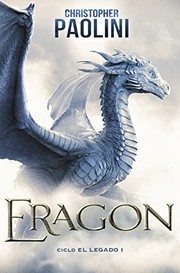
A farm boy finds a dragon egg. The book Paolini started writing at fifteen and self-published at nineteen, and the entry point to everything else — its rough edges are part of the story of the series.

Second, splitting the narrative between Eragon's training with the elves and his cousin Roran defending Carvahall. The split viewpoint is the structural change that carries the rest of the Cycle.
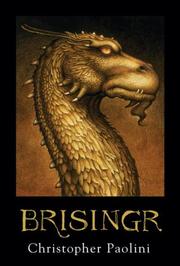
Third, and the book that turned the planned trilogy into a quartet. It is where the Ancient Language and the rules of magic stop being scenery and become plot mechanics, so it repays slower reading than the first two.
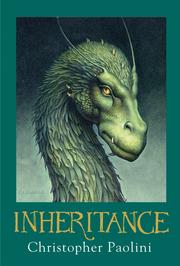
Fourth and final, resolving Galbatorix and Eragon's arc. Read it last for the obvious reason — but be aware that its ending deliberately leaves Alagaesia open, which is what the next stage picks up.
After Alagaesia: Paolini's Own Continuations
BeginnerPick up the two books Paolini has since published in the same world, in publication order, both of which assume you have finished Inheritance.
▸ Study plan for this stage
Pace: Two to three weeks for 984 pages, and the two books are very unevenly sized. The Fork, the Witch, and the Worm is 288 pages of three short pieces and can be read in two or three sittings; Murtagh is a 696-page full-length novel and needs a fortnight at the same pace as the quartet. Read the shorter
- The difference between a continuation and a sequel — these extend a world rather than resume a plot
- A short-story collection as a market test, and what its contents reveal about which threads Paolini wanted to pull
- Murtagh and Thorn as a bonded pair whose relationship was formed under coercion, in contrast with Eragon and Saphira's
- A secondary character promoted to protagonist: what has to be added to a figure built to be an antagonist
- How much of the Cycle's magic system the later books preserve, alter or ignore
- Reading published-order for continuations when there is no chronological dispute to settle
- The Fork, the Witch, and the Worm spoils Inheritance on its opening pages. What does that tell you about the audience Paolini assumed?
- Murtagh was an antagonist for most of the Cycle. What did Paolini have to give him to make a novel-length viewpoint work?
- Compare Murtagh and Thorn's bond with Eragon and Saphira's. Which of the series' stated rules about the bond hold for a pair forced into it?
- Does Murtagh assume knowledge of the short collection, or only of the quartet? Test it against a specific scene.
- Is Alagaesia a world worth returning to, or a story that finished? Answer with a reason from these two books rather than from the quartet.
- Before reading Murtagh, write a paragraph summarising everything you know about him from the quartet; compare it with the novel's own account of the same events.
- List which pieces in The Fork, the Witch, and the Worm advance a plot and which are world-building only — the proportion is the honest description of the book.
- Check three magic-system rules from your Ancient Language glossary against how Murtagh uses them, and note any that have quietly changed.
- Decide in writing whether you are following Alagaesia further, and what specifically would have to appear in the next book for the answer to be yes.
Next up: Having exhausted the world itself, the next stage steps outside it to the older fantasies Eragon is visibly built from, so the borrowings read as a tradition rather than as accidents.

Three short pieces set after the Cycle, with Eragon in the east and a story credited in part to Angela Paolini. Read it first of the continuations: it is short, it tells you whether you want more Alagaesia, and it spoils the quartet's ending on page one.

A full-length novel following Murtagh and Thorn after the Cycle, published in 2023. Second, and the better book of the two — but it depends completely on knowing who Murtagh was by the end of Inheritance.
The Dragon Books Eragon Is Built Out Of
IntermediateRead the three older fantasies that Eragon draws on most visibly, so the Cycle's borrowings become legible as a tradition rather than as accidents.
▸ Study plan for this stage
Pace: Three weeks for 891 pages — The Hobbit 310, Pawn of Prophecy 272, Dragonflight 309 — and every one of them is shorter than any book in the quartet, so this is a much lighter stage than its position suggests. Read them in the order given: Tolkien first because most of Alagaesia's furniture comes thro
- The Tolkien inheritance: dwarves, a dragon-hoard, a map at the front, and a reluctant protagonist leaving home
- The farm-boy-with-a-destiny template as Eddings executes it, almost beat for beat the shape of Eragon
- Pern's dragons as engineered creatures in a science-fiction setting, with telepathic bonding as a designed feature rather than a magical one
- The difference between influence, convention and imitation, and how to tell them apart in a specific scene
- Why the elements Eragon takes from science fiction behave differently from the ones it takes from fantasy
- Reading a source directly rather than accepting a summary of what a book borrowed
- List the elements Eragon shares with The Hobbit. Which are Tolkien's inventions and which were already genre conventions before him?
- Pawn of Prophecy and Eragon share a structure. Where does Paolini diverge from it, and is the divergence an improvement?
- Pern's dragon bond is engineered; Alagaesia's is magical. Which produces the more interesting constraints on the story?
- Dragonflight was published decades before the Cycle. Which of its assumptions about its heroine would a current young-adult novel not make?
- Having read all three, is Eragon derivative, traditional, or both? Defend the distinction.
- Write out the beats of Pawn of Prophecy's first hundred pages and set them beside Eragon's; the overlap is easier to argue about once it is on paper.
- Compare the first appearance of a dragon in each of Dragonflight, The Hobbit and Eragon, and note what each author wants you to feel about the creature.
- Take your Ancient Language glossary from stage one and mark which of its principles have an equivalent in the Pern books' telepathy rules.
- Pick one scene in Eragon you had considered original and locate its nearest ancestor in these three; if you cannot find one, that is a finding too.
Next up: With the tradition behind the Cycle visible, the last stage moves forward instead of back, to four dragon and epic fantasies pitched slightly older.
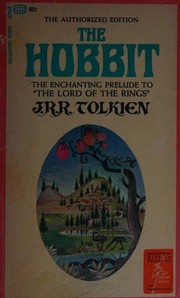
The dwarves, the dragon-hoard, the reluctant journey and the map. Start here: almost every piece of furniture in Alagaesia comes through Tolkien, and reading the source directly is more interesting than being told about it.
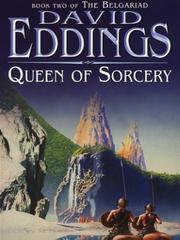
The first Belgariad book, and the purest form of the farm-boy-with-a-destiny structure that Eragon follows almost beat for beat. Read second — it is the template, and it is short.

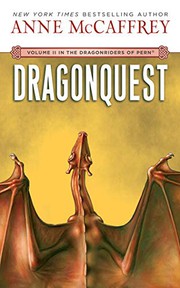
The first Pern novel and the origin of the bonded dragon-and-rider relationship in modern fantasy. Third because it is the one element Eragon takes from science fiction rather than from Tolkien, and Pern's dragons work on quite different rules.
Where to Go Next
IntermediateMove on to four dragon and epic fantasies pitched slightly older than the Cycle, ordered from the closest match to the biggest step up.
▸ Study plan for this stage
Pace: Six to eight weeks. His Majesty's Dragon is 356 pages, Seraphina 465 and Assassin's Apprentice 400; we hold no page count for our record of Eon, so budget it by its part divisions rather than by a page target. The four are ordered from the closest match to the biggest step up, and that ordering is t
- The captain-and-dragon partnership in Novik as the adult version of the bond the Cycle is built on
- Dragons as a military service arm — logistics, rank and discipline instead of prophecy
- Seraphina's uneasy human-dragon treaty as a politics-first use of the same materials, with identity rather than battle as the subject
- The training-and-apprenticeship structure that Eldest half-uses, expanded into a whole book in Eon
- Consequence that sticks: what changes in a fantasy when the author refuses to undo damage, as Hobb does
- Reading up in age bracket — the specific skills a reader needs for Hobb that the Cycle did not demand
- Novik puts dragons inside a real historical army. What does that constraint force her to invent that Paolini never had to?
- Seraphina is the same age bracket as the Cycle but a very different book. What is it doing with its dragons that Eragon is not interested in?
- Eon expands an apprenticeship into a whole novel. Compare its training sequences with Eragon's time among the elves in Eldest.
- Assassin's Apprentice refuses to undo its damage. Name a point where the Cycle would have softened the same event.
- Of these four, which one would you hand to a reader who has just finished Inheritance, and what is the risk of your choice?
- Read the first fifty pages of His Majesty's Dragon and Eragon on consecutive evenings and note the difference in how much the reader is expected to infer.
- List the political factions in Seraphina and their positions on the treaty; the book is a negotiation and the list is the plot.
- For Eon, track the rules of the dragoneye selection as they are stated, and mark where the protagonist's disguise puts her outside them.
- After Assassin's Apprentice, write one paragraph on what the Cycle gave you and one on what it did not; that comparison is the whole purpose of this stage.
Next up: This is the end of the path: the quartet, Paolini's own continuations, the books it came out of and four to go on with — from here, follow whichever of those four you liked into its own series rather than adding another survey.

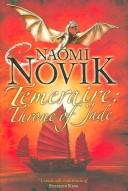
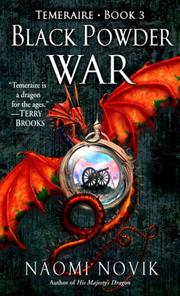
Dragons as an air corps in the Napoleonic wars, with a captain-and-dragon partnership at the centre. The nearest thing to Eragon's dragon bond written for adults, and the easiest next step.
A court musician in a kingdom of uneasy human-dragon treaties, where dragons take human form. Second because it is the same age bracket as the Cycle but far more interested in politics and identity than in battles.

A girl disguised as a boy competes to become a dragoneye in an East Asian-inspired court. Here for readers who want the training-and-apprenticeship half of Eldest expanded into a whole book.
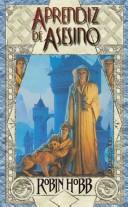
The biggest step up on this list: a royal bastard raised as an assassin, animal-bonding, and consequences that stick. Last because it is where a reader who loved the Cycle finds out what the same material feels like handled by a major adult fantasy novelist.
Discussion
Keep reading
Paths that share books, cover the same subject, or open a related topic.