Ranger's Apprentice Reading Order: Where to Start
Ranger's Apprentice is twelve books read in publication order, and unlike most long children's series it genuinely has no chronological argument to settle — with one wrinkle. Erak's Ransom was published seventh but is set between books four and five, so a strict internal chronology would move it; read it seventh anyway, because it is written to be read after The Siege of Macindaw and its flashback framing only works there. The other question new readers ask is where the spin-offs go: the Brotherband Chronicles run alongside from a different country and eventually cross over, and the Early Years prequels go back to Halt and Crowley's generation. Both are better after Will's story rather than before it.
Start Here: The Ruins of Gorlan
BeginnerMeet Will and Halt, learn what a Ranger actually is, and get through the four-book opening arc that ends the Morgarath and Skandian threat.
▸ Study plan for this stage
Pace: Four to six weeks for the four books, or considerably less if you are the target reader. The Ruins of Gorlan is 261 pages, The Burning Bridge 278, The Icebound Land 266 and The battle for Skandia 336 — these are fast, short-chaptered novels and a motivated reader gets through one in three or four ev
- What a Ranger actually is in this world — not a woodsman and not a wizard, but the Kingdom's intelligence service, and the superstition that they use magic is deliberately encouraged by the Rangers themselves
- Flanagan wrote these as short stories for his own son, which is why The Ruins of Gorlan spends its first half on training rather than plot. That is not slow pacing, it is the book teaching you the craft it will later expect you to understand
- Halt's method of teaching by withholding praise, and the running question of whether Will ever knows where he stands. The emotional engine of the whole series is that Halt cannot say what he feels and Will cannot tell
- The Ward children — Will, Horace, Alyss, Jenny, George — are assigned to five different trades in book one, and Flanagan uses them across twelve books as a way of showing the same kingdom from five vantage points
- Horace's arc in The Ruins of Gorlan and The Burning Bridge is the quiet achievement of the opening arc: he starts as the bully and Flanagan rehabilitates him without ever softening what he did
- The Icebound Land is much darker than the two before it — Will enslaved in Skandia, with a warmweed addiction plot that catches out readers who expected a comfortable children's series. It is not skippable and it is the making of the character
- The battle for Skandia turns the enemy into an ally, which is the structural move that makes the rest of the series possible. Note how deliberately Flanagan sets it up rather than declaring it
- Why is Will rejected by Battleschool at the Choosing, and what does the reason turn out to be worth later?
- What does Halt do in The Ruins of Gorlan that tells you he thinks well of Will, given that he never says so?
- By the end of The Burning Bridge, what has changed in Horace, and can you point to the specific scene where it turns?
- What happens to Will in Skandia in The Icebound Land, and why did Flanagan take the series there so early?
- How does The battle for Skandia convert Erak and the Skandians from enemies into allies without asking the reader to forget the previous three books?
- Stop after chapter one of The Ruins of Gorlan and write down what you expect the book to be about. Check the note when you finish book four. Flanagan sets an expectation in the opening and then quietly replaces it.
- Keep a list of every time Halt gives Will an instruction without an explanation. By The battle for Skandia the reasons have almost all arrived, and reading the list back is the clearest picture of how the training arc was built.
- After The Icebound Land, write two hundred words on whether the warmweed material belongs in a series marketed to eleven-year-olds. There is a serious case both ways and the series is worth taking seriously enough to argue about.
- Track the five Ward children across the four books and note which chapter each is reintroduced in. Flanagan brings them back on a schedule and seeing it makes the series' architecture visible.
Next up: The Morgarath and Skandian threats are finished and Will is a Ranger rather than an apprentice, so the next three books can stop being war stories and start being about the job.
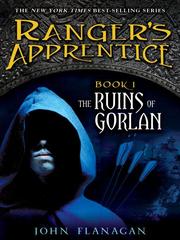
Book one and the only place to start. A small orphan is passed over for knight school and apprenticed instead to the kingdom's most frightening man. Flanagan wrote these as short stories for his own son, which is why the first book teaches you the craft before it gives you a plot.
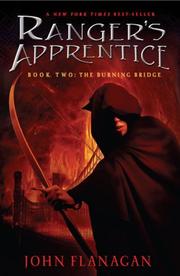
Book two, and the first real war. It ends on a cliffhanger that runs straight into book three, so have that one to hand.
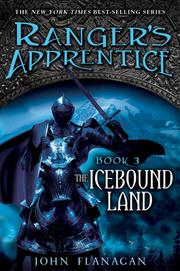
Book three, and the darkest of the early run — Will as a slave in Skandia, with an addiction plot that surprises people who came for a comfortable children's series. Third, and unskippable.
Book four, resolving the Skandian arc and turning an enemy into an ally. Fourth, and the natural end of part one — a fine place to pause, and the point at which the series changes shape.
Will as a Ranger
BeginnerFollow Will into his own fief and his first solo commissions, and pick up the flashback novel that fills in the gap.
▸ Study plan for this stage
Pace: Three to four weeks. The Sorcerer of the North and The Siege of Macindaw are effectively one novel published in two halves, so read them back to back with no gap at all — The Sorcerer of the North does not have an ending. Erak's Ransom is 304 pages and stands alone. Order matters more in this stage
- The chronology wrinkle, stated once so you can stop worrying about it: Erak's Ransom was published seventh but is set between books four and five. Read it seventh anyway. It resolves a question about Will's Ranger assessment that books five and six deliberately leave open, and moving it earlier thro
- The tonal shift at book five — from open warfare to undercover work. Will operates as a jongleur, which means the skill on display is now deception and patience rather than archery
- The Sorcerer of the North and The Siege of Macindaw are one story: the first is the infiltration, the second is the siege, and the split falls mid-plot rather than at a natural break
- Alyss moves from background to the centre in this pair, and the way Flanagan handles her competence — she is a Courier, which is its own trained profession, not a rescue target
- Will's first solo command, and how differently Flanagan writes him when Halt is not there. The absence is the point of the whole stage
- Erak's Ransom's desert setting in Arrida gives Flanagan a chance to widen the map, and the Ranger assessment framing is why the book has to sit where it sits
- The genuine cost of the missing-Halt structure: by the end of this stage Will has been tested alone three times, which is what makes the reunion in the next arc land
- What is Will pretending to be in The Sorcerer of the North, and why is that particular cover so well chosen for the mission?
- Where exactly does The Sorcerer of the North stop, and what does that tell you about how the two books were originally planned?
- What does Alyss do in The Siege of Macindaw that she could not have done as a Ranger, and what does that say about how Flanagan divides his professions?
- What question about Will's assessment does Erak's Ransom answer, and why would reading it fifth spoil the effect?
- Across these three books Will works largely without Halt. What specifically has he learned to do for himself?
- Before starting book five, write down the publication-versus-chronology problem in one sentence, along with your decision. This is the only ordering choice the series presents and having it settled in writing stops you second-guessing at book seven.
- Read The Sorcerer of the North and The Siege of Macindaw in one continuous stretch with no other book in between, then write a paragraph on where you would have split them if it had been your decision.
- Note every scene in this stage where Will consciously does something Halt taught him in stage one. The list is the payoff of the training arc and it is longer than it feels while reading.
- After Erak's Ransom, sketch the internal chronology of books one to seven against the publication order. Seeing both on paper settles the question for good.
Next up: Will is established, tested and trusted, which is exactly the condition Flanagan needed before he could put Halt's own past on the page.
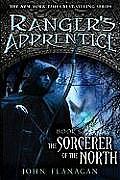
Book five, with Will a full Ranger working undercover as a jongleur. Fifth: the tone shifts from war story to mystery, and the two-book unit it opens is one of the best in the series.
Book six, resolving book five directly. Sixth — the pair are effectively one novel split in half, so do not stop between them.
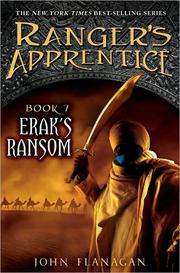
Book seven by publication, set between books four and five. Read it seventh regardless: it answers a question the previous two books deliberately raised about Will's Ranger assessment, and moving it earlier throws that away.
The Outsiders and Nihon-Ja
BeginnerRead the two-book Outsiders arc and the standalone that closes Will's original run.
▸ Study plan for this stage
Pace: Five to six weeks — these are the longest books so far, at 358, 416 and 435 pages. The Kings of Clonmel and Halt's Peril are a direct two-book unit and must be read consecutively; Halt's Peril in particular should not be started unless you can finish it, because the middle third is genuinely tense.
- Halt's history in Hibernia, withheld for seven books and delivered in The Kings of Clonmel. Note how much of his behaviour in stages one and two retroactively makes sense once you know it
- The Outsiders as a genuinely well-observed cult: Flanagan writes the recruitment mechanism — manufactured threat, then paid protection — rather than simply asserting that the villains are wicked
- Halt's Peril is the series at its most frightening, and it earns that by making the threat medical rather than martial. A children's adventure series does not usually put its mentor in this position
- Will's role reverses across this pair. He has spent seven books being taught; here he is the one who has to act, and Flanagan makes the reversal explicit rather than leaving it to be inferred
- The Emperor of Nihon-Ja was written as the finale, which is why it assembles the entire cast — Will, Halt, Horace, Alyss, Evanlyn, Selethen — for a campaign rather than a mission
- The Nihon-Ja setting is feudal Japan under a thin disguise, and the plot is about a rigid warrior caste learning to fight alongside people it despises. It is the most political book in the series
- Reading it as an ending is correct even though two more books follow: The Lost Stories is a collection and The Royal Ranger jumps fifteen years, so Nihon-Ja is the last book of the continuous run
- What is Halt's real name and family history, and why has he kept it from Will for seven books?
- How do the Outsiders recruit, in Flanagan's account? Describe the mechanism in two steps
- In Halt's Peril, what is the actual danger, and why is it more effective than another battle would have been?
- In The Emperor of Nihon-Ja, what does the Senshi caste have to learn, and how does Flanagan make that lesson land without preaching it?
- If The Emperor of Nihon-Ja was written as the last book, what does it deliberately close off, and does anything feel left open?
- Reread the first Halt scene in The Ruins of Gorlan immediately after finishing The Kings of Clonmel. Almost every line reads differently, and the exercise is the best demonstration in the series of how much Flanagan was holding back.
- During Halt's Peril, mark the point where you realise Will is now the senior figure in the situation. Write down the page. Different readers pick different scenes and the disagreement is worth having.
- At the end of The Emperor of Nihon-Ja, write a paragraph on where each of the main cast has ended up. Keep it — The Royal Ranger opens fifteen years later and the comparison is stark.
- Write two hundred words on the Outsiders as a portrait of a cult, and judge how much Flanagan is willing to say about why people join. He is more serious about it than the genre requires.
Next up: With the continuous run finished and the whole cast dispatched to their futures, the last two books of the sequence go back to fill gaps and then forward to hand the series to someone new.
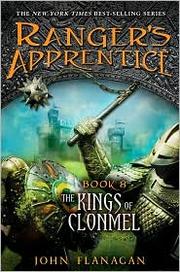
Book eight, opening the Outsiders cult arc in Hibernia, with Halt's own history finally on the page. Eighth, and the best Halt book in the series.

Book nine, the direct conclusion, and the most frightening thing Flanagan wrote. Ninth, immediately after eight.

Book ten, a rescue campaign in a country modelled on feudal Japan, and originally intended as the finale. Tenth: it gives the whole cast a send-off, so it reads like an ending even though two books follow.
Endings and Beginnings
IntermediateFinish the original run and meet the apprentice who takes over the series.
▸ Study plan for this stage
Pace: Three to four weeks. The Lost Stories is 464 pages but it is a collection of independent stories, so it is the one book in the path that can be read a piece at a time over as long as you like. The Royal Ranger: A new Beginning should be read straight through and reasonably soon after — it is the tru
- The Lost Stories is deliberately non-linear: the stories are scattered across the whole timeline, from before book one to after book ten, which is exactly why it must be read eleventh. Several would spoil major events if taken earlier
- The wedding readers had been waiting for is in here, and so is a story that answers a question about Halt's earliest days. Flanagan is settling accounts with his own readership as much as with his plot
- The frame of the collection — presented as recovered documents — lets Flanagan write in registers the novels do not allow, and the variation is the pleasure of the book
- The Royal Ranger jumps fifteen years, which is the most consequential structural decision in the series. The characters you have followed are middle-aged, and the book is unsentimental about what that has cost them
- The painful circumstances under which Will takes an apprentice are the point of the book, not its setup. Flanagan is deliberately inverting book one, where an apprentice was given to a mentor who did not want him
- Maddie as a mirror of Will in The Ruins of Gorlan: resentful, unqualified, and assigned to a Ranger who is in no state to teach. Read the two first-training sequences against each other
- The later Royal Ranger novels continue from here as a separately numbered series, so this book is both a genuine ending and a deliberate handover. Twelve books is a complete reading
- Which stories in The Lost Stories would have spoiled which novels if you had read them earlier? Name at least two
- What does the recovered-document frame let Flanagan do that the numbered novels do not?
- What has happened to Will in the fifteen years before The Royal Ranger opens, and how does it change the kind of mentor he is?
- Compare Maddie's first weeks with Will's in The Ruins of Gorlan. What has Flanagan deliberately reversed?
- Is The Royal Ranger an ending or a beginning? The subtitle claims one and the book does a good deal of the other
- As you read The Lost Stories, note beside each story which novel it belongs next to chronologically. By the end you will have built a timeline of the whole series, which is the most useful thing the collection offers.
- Read the opening chapter of The Royal Ranger and then the opening chapter of The Ruins of Gorlan back to back. Write two hundred words on what Flanagan is doing with the echo.
- Write down what you expected to happen to Will, Halt, Horace and Alyss after The Emperor of Nihon-Ja, then check it against what The Royal Ranger reports. The gap between your expectation and Flanagan's answer is the effect he was after.
- Decide, in writing, whether you are stopping at twelve books or continuing into the Royal Ranger sequence. Both are legitimate stopping points and it is worth being deliberate about it.
Next up: The main sequence is finished, which is exactly the condition under which the two connected series become worth reading rather than confusing.

Book eleven, a collection of gap-filling stories scattered across the timeline including a wedding readers had been asking for. Eleventh, because most of the stories spoil earlier books if taken out of order.

Book twelve, set fifteen years on, with Will taking an apprentice of his own under painful circumstances. Twelfth, and the true end of the original sequence — the later Royal Ranger novels continue from here as a separate numbered series.
Past Will's Story
IntermediatePick the right entry point into the two connected series, now that the main sequence is finished.
▸ Study plan for this stage
Pace: Two to four weeks for the two entry points, and then as long as you like — both are the openings of ongoing series rather than standalone books. The Tournament at Gorlan is 400 pages and The Outcasts 443. Read The Tournament at Gorlan first if what you want is more Halt; read The Outcasts first if w
- The Tournament at Gorlan is set roughly twenty years before The Ruins of Gorlan, with Halt and Crowley as young men. Its entire pleasure is watching characters you already know turn into the people you met, which is why it is a terrible starting point and a very good eleventh-hour one
- It also explains the state of the Ranger Corps at the opening of book one — why it is respected, why it is small, and what nearly destroyed it. Background that book one assumed
- Young Halt is unmistakably the same person and very obviously not yet the man from The Ruins of Gorlan. Flanagan's restraint about how much he changes is what makes the prequel work
- The Outcasts opens the Brotherband Chronicles in Skandia — the country Will was enslaved in during The Icebound Land — and deliberately shows it from the inside rather than as the enemy
- Hal and his brotherband are misfits in a warrior culture, which is a different structure from Ranger's Apprentice: a team story rather than a mentorship, with training organised as competition
- The two series eventually cross over, which is the practical reason to have read at least through The Emperor of Nihon-Ja before starting Brotherband — the crossovers assume you know the Araluen cast
- Neither series requires the other. If you finish the main twelve and stop, you have read a complete story; these are extensions rather than continuations
- What is the Ranger Corps' situation at the start of The Tournament at Gorlan, and how does it explain the Corps as book one presents it?
- In what specific ways is the young Halt different from the Halt of The Ruins of Gorlan, and in what ways is he already exactly the same?
- How does Skandia look from the inside in The Outcasts, and what did The Icebound Land necessarily leave out?
- The Brotherband structure is a team rather than a mentorship. What does Flanagan gain by that change, and what does he give up?
- Having sampled both, which of the two connected series do you want to continue, and what is your reason? They are aiming at different things
- Before starting The Tournament at Gorlan, write down three things you think you know about Halt's youth from the main series. Check them at the end — Flanagan contradicts at least one for most readers.
- While reading The Outcasts, note every reference that only makes sense if you have read the main sequence. That list is the argument for the reading order this path recommends.
- Write two hundred words comparing Halt teaching Will with the way Hal's brotherband learns in The Outcasts. Two entirely different theories of how a young person is trained, from the same author.
- Pick one of the two series to continue and one to leave. Being deliberate about it is more useful than trying to read everything, and the path ends here either way.
Next up: This is the end of the path — twelve books of Will's story plus the door into both connected series — and the natural next move is to reread The Ruins of Gorlan, which is a different book once you know who Halt was and what The Royal Ranger costs him.
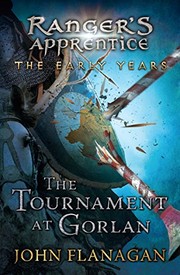
The first Early Years prequel: Halt and Crowley as young men, twenty years before book one. Read it after the main series — its whole pleasure is watching characters you already know become the people you met.
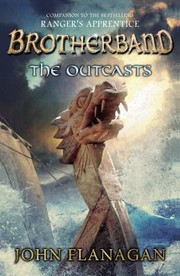
The first Brotherband book, following Skandian boys in the country Will was enslaved in. It runs parallel to Ranger's Apprentice and eventually crosses over, so start it once you have read at least through book ten.
Discussion
Keep reading
Paths that share books, cover the same subject, or open a related topic.