The Wheel of Time Reading Order and Reading Guide
This curriculum guides you through the complete Wheel of Time saga in the intended reading order, starting with the prequel short novel to ease into the world, then tackling the fourteen main books in three honest stages. The middle stage includes a frank heads-up about the notorious "slog" books so you can pace yourself and push through, while the final stage delivers the explosive payoff that rewards your investment.
The On-Ramp: Meet the World
BeginnerGet oriented in Randland — its magic system, factions, and tone — before the full saga begins. The prequel is short, low-stakes, and the perfect first step.
▸ Study plan for this stage
Pace: 6–8 weeks total: Week 1 — New Spring (~300 pages, ~50 pages/day, 6 days); Weeks 2–7 — The Eye of the World (~800 pages, ~30–35 pages/day, 6 days/week); Week 8 — review, re-reads of key chapters, and exercise completion. Take your time with The Eye of the World — the world-building density rewards sl
- The One Power and its gendered split: saidin (men) vs. saidar (women), and why this division is the engine of the world's history and politics
- The Aes Sedai and the Ajah system: who they are, how they are organized, and why ordinary people both fear and rely on them — introduced through Moiraine and Siuan's novice/Accepted years in New Spring
- The Breaking of the World and the taint on saidin: understanding why male channelers go mad, and how this single historical trauma shapes every faction's attitude toward power
- The Dragon Reborn prophecy: what it means for the world, why it terrifies institutions like the Aes Sedai, and how Rand al'Thor's arc in The Eye of the World begins to fulfill it
- The Two Rivers and the concept of 'ordinary people pulled into destiny': Rand, Mat, Perrin, Egwene, and Nynaeve as archetypes of the reluctant hero
- The Dark One, the Forsaken, and the cosmological stakes: the Wheel of Time's version of good vs. evil as a cyclical, not linear, conflict
- Trollocs, Myddraal, and the Shadow's forces: the immediate physical threat that sets the plot of The Eye of the World in motion
- Tone and narrative style: Robert Jordan's deliberate, detail-rich prose, his use of dreams and Foretelling as foreshadowing tools, and the series' debt to Tolkien while carving its own identity
- By the end of New Spring, what has Moiraine learned about the Dragon Reborn, and how does this mission connect directly to her arrival in the Two Rivers in The Eye of the World?
- What is the One Power, and why is the ability to channel saidin considered a death sentence in the current age — who enforces this, and why?
- Who are the Aes Sedai Ajahs introduced or referenced in these two books, and what does each one's general purpose suggest about the political complexity of Tar Valon?
- What distinguishes Rand, Mat, and Perrin as ta'veren, and what early signs in The Eye of the World hint that each of them is more than a simple farmboy?
- What is the significance of the Eye of the World itself — what does the group find there, and what does it cost and accomplish?
- How does Robert Jordan use the 'Wheel of Time' metaphor (the turning of the Wheel, the weaving of the Pattern, souls being spun out again) to frame the stakes differently from a typical 'save the world once' fantasy narrative?
- Draw a simple faction map: place Aes Sedai (with Ajahs), the Two Rivers characters, the Dark One's forces, and the Whitecloaks on a single page with one-sentence descriptions — update it as you finish each book.
- Keep a character index card (physical or digital) for every named character you meet. Note their allegiance, their relationship to the One Power, and one defining moment from the text. This habit will pay enormous dividends later in the series.
- After finishing New Spring, write a one-paragraph 'mission briefing' from Moiraine's point of view: what does she know, what is she looking for, and what is she afraid of? Then re-read Chapter 1 of The Eye of the World and annotate how her behavior reflects that briefing.
- Identify three moments in The Eye of the World where the world's history (the Age of Legends, the Breaking, the Trolloc Wars) is explained through in-world storytelling — a gleeman's tale, a character's memory, a fragment of text. Note how Jordan delivers exposition without stopping the plot.
- Write a short compare-and-contrast (half a page) between Moiraine as seen in New Spring (young, uncertain, newly raised Aes Sedai) and Moiraine as she appears in The Eye of the World (controlled, mysterious, purposeful). What changed, and what stayed the same?
- Sketch or describe the geography of the journey in The Eye of the World — from Emond's Field through Shadar Logoth, Caemlyn, and on to the Eye. Note what threat or revelation occurs at each major stop. This 'road map' exercise builds the spatial intuition the later books demand.
Next up: By grounding you in the world's foundational magic, history, and core cast through these two entry points, this stage equips you to handle the expanded scope, new POV characters, and accelerating political intrigue that the next books in the saga introduce at full speed.
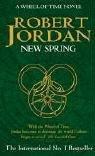
This prequel novella is set ~20 years before the main series and introduces Moiraine and Lan, two of the saga's most important characters. Reading it first gives you crucial context and eases you into Jordan's dense prose style without overwhelming you.
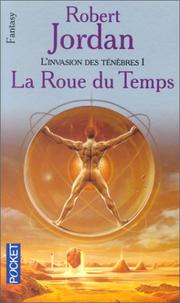
Book 1 of the main series. Jordan deliberately wrote this as an accessible, Tolkien-flavored adventure to hook new readers. It establishes the core cast, the central conflict, and the world's geography — everything that follows builds on this foundation.
The Rising Action: Books 2–6
BeginnerFollow the story as it expands dramatically in scope, introducing major new factions, cities, and plotlines. By the end of this stage the world feels genuinely vast and the stakes are sky-high.
▸ Study plan for this stage
Pace: 16–20 weeks total (roughly 3–4 weeks per book), reading ~25–35 pages per day. Suggested breakdown: The Great Hunt (weeks 1–3), The Dragon Reborn (weeks 4–6), The Shadow Rising (weeks 7–10, it's the longest), The Fires of Heaven (weeks 11–14), Lord of Chaos (weeks 15–18). Allow buffer weeks for re-re
- The Horn of Valere and its mythological significance: understanding why the Horn is a world-altering artifact and how its retrieval in The Great Hunt sets the tone for escalating stakes throughout the stage.
- The Dragon Reborn as a title vs. a person: distinguishing between the prophecies of the Dragon and Rand al'Thor's reluctant, psychologically tortured journey toward accepting his identity across all five books.
- The Forsaken as antagonists: learning to identify each of the thirteen Forsaken (especially Ishamael/Ba'alzamon, Lanfear, Rahvin, and Sammael), their individual agendas, and how they manipulate events from behind the scenes.
- The Aiel and the Waste: The Shadow Rising's deep dive into Aiel history and culture — the Way of the Leaf, ji'e'toh (honor and obligation), and the shocking revelation of the Aiel's true origin — is one of the stage's most important world-building payoffs.
- The White Tower schism: tracking the political fracture within the Aes Sedai from Siuan Sanche's deposing in The Fires of Heaven onward, and understanding how the rebel Aes Sedai (the Salidar faction) form a counter-power structure that will dominate later books.
- Ta'veren and the Pattern: deepening the Book 1 concept — Rand, Mat, and Perrin are not just lucky; the Wheel itself bends probability around them, and this stage shows large-scale consequences (entire villages swearing fealty, battles turning on impossible odds).
- Parallel and split storylines: from The Dragon Reborn onward, Rand, Perrin, Mat, Egwene, and Nynaeve frequently operate in completely separate plotlines across different continents. Readers must track multiple threads simultaneously and understand that each thread advances the same overarching confl
- The 'Dumai's Wells' climax and the Asha'man: Lord of Chaos ends with one of the series' most pivotal battles, introducing the Asha'man (men trained to channel) and signaling a fundamental shift in the balance of power — setting up the entire second half of the series.
- By the end of The Great Hunt, why is the retrieval of the Horn of Valere considered a victory even though the Horn itself ends up in uncertain hands, and what does Mat's blowing of the Horn reveal about his past-life connections?
- In The Dragon Reborn, Rand is barely a point-of-view character — how does Jordan use Egwene, Nynaeve, Elayne, and Mat's perspectives to build Rand's legend indirectly, and what does this technique tell us about how the world perceives the Dragon Reborn?
- What do the ter'angreal visions in The Shadow Rising reveal about the Aiel's origins, and why is this revelation so devastating to Aiel identity and to Rand's understanding of his own destiny?
- How does Siuan Sanche's removal from the Amyrlin Seat in The Fires of Heaven fracture the Aes Sedai politically, and who are the key players on each side of the resulting divide?
- Trace Mat Cauthon's character arc across these five books: how does he evolve from a reluctant, cursed farmboy in The Great Hunt to the charismatic, strategically brilliant (if still reluctant) military leader glimpsed by Lord of Chaos?
- What is the significance of the final scene of Lord of Chaos ('Kneel or be kneel'd upon') and how does the Battle of Dumai's Wells change the political and military landscape for every major faction — the Aes Sedai, the Asha'man, and Rand's growing army?
- Character tracker spreadsheet: Create and maintain a living document with columns for Name, Faction/Allegiance, Current Location, and Key Motivations. Update it at the end of each book. Pay special attention to Forsaken aliases (e.g., Ishamael = Ba'alzamon = Moridin in later books — note the first two here).
- Prophecy journal: Each time a Foretelling, a Prophecy of the Dragon, or a Rhuidean vision appears in the text, copy it into a dedicated journal entry. After finishing Lord of Chaos, go back and annotate which prophecies have been fulfilled, which are in progress, and which remain mysterious.
- Aiel culture deep-dive (after The Shadow Rising): Write a one-page summary explaining ji'e'toh in your own words, including at least three specific examples of characters honoring or violating it. Then reflect: how does the Aiel code of honor contrast with Andoran or Aes Sedai social structures?
- Plotline map: Draw a physical or digital map of where each major POV character is located at the END of each book in this stage. Use the in-book maps of Randland as your reference. This spatial awareness will prevent confusion as storylines diverge further in later books.
- Faction relationship diagram: After finishing Lord of Chaos, draw a web diagram showing the major factions (the White Tower, the Salidar Aes Sedai, the Aiel, the Seanchan, the Forsaken, the Asha'man, Rand's court) with lines indicating alliance, conflict, or uneasy neutrality. Annotate each line with a one-sentence explanation.
- Re-read the Rhuidean sequence (The Shadow Rising, chapters 25–26) and the Dumai's Wells battle (Lord of Chaos, final chapters) after finishing the stage. Write a short paragraph on each explaining why Jordan placed these scenes where he did structurally, and what emotional effect the pacing creates.
Next up: Having witnessed the world expand from a single village's quest to a continent-spanning war with Rand now a captive-turned-conqueror and the Aes Sedai split in two, the reader is perfectly positioned to enter the next stage, where every faction established here collides in increasingly complex political and military confrontations.
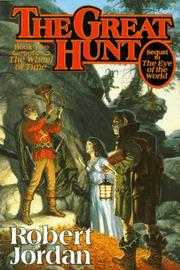
Book 2 raises the stakes immediately with a thrilling chase plot and introduces the Seanchan — one of the saga's most important antagonist factions. The ending is one of the series' best.

Book 3 shifts perspective brilliantly, keeping the main hero offscreen for much of the novel while the supporting cast carries the story. It deepens the world's lore and delivers a landmark climax in Tear.
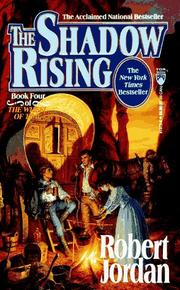
Book 4 is widely considered the series' first masterpiece. It splits the cast across multiple continents, reveals the deep history of the Aiel people, and is essential reading before the slog books ahead.

Book 5 keeps the momentum of Book 4 going with a relentless pace and a shocking ending. Read it immediately after The Shadow Rising while the energy is high.
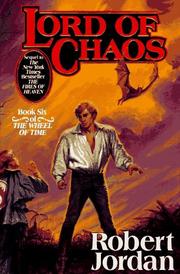
Book 6 is long and begins to slow down, but it ends with the single most celebrated battle scene in the entire series — 'Dumai's Wells.' Push through; the payoff is enormous.
The Honest Slog: Books 7–10
IntermediateNavigate the infamous 'middle books' with clear eyes. These four volumes are slower, more political, and more POV-heavy — but they lay essential groundwork. Knowing the slog is coming makes it manageable.
▸ Study plan for this stage
Pace: 10–14 weeks total (~2.5–3.5 weeks per book); aim for 25–35 pages per sitting, 4–5 sittings per week. A Crown of Swords and Winter's Heart are the most plot-dense, so push to 35 pages/day on those. The Path of Daggers and Crossroads of Twilight are shorter but slower — resist the urge to rush or aban
- The 'slog' is structural, not accidental: Jordan deliberately slows the pace to show that the world does not revolve around Rand — dozens of power centers are moving simultaneously, and these books make that visible.
- Political fragmentation of the White Tower: the Aes Sedai schism between the Salidar rebels and Elaida's Tower deepens across all four books, and understanding which faction each character serves is essential for later payoffs.
- Rand's psychological deterioration and the 'twice and twice' wound from Fain's dagger compounding his side wound — his growing hardness and paranoia are not character flaws to dismiss but a central thematic arc about the cost of being the Dragon Reborn.
- Faile's capture and the Shaido subplot (introduced in A Crown of Swords, consuming Perrin's arc through Crossroads of Twilight) is the most divisive storyline in the series — tracking it carefully reveals Jordan's themes of duty, obsession, and the price of love.
- The Kin, the Sea Folk, and the Seanchan: A Crown of Swords and The Path of Daggers massively expand the world's channeling societies and political powers, establishing rules and tensions that pay off in later volumes.
- Cleansing of saidin: Winter's Heart's climax — Rand and Nynaeve cleansing the male half of the One Power at Shadar Logoth — is one of the most consequential single events in the entire series and must be understood mechanically and thematically.
- Crossroads of Twilight's deliberate stasis: almost the entire book takes place concurrently with the last chapters of Winter's Heart, showing every other POV character reacting to the cleansing's shockwave — this is a bold narrative choice, not lazy writing.
- POV management as a reading skill: these four books introduce or heavily expand more than a dozen point-of-view characters (Elayne's succession arc, Mat in Ebou Dar, Egwene leading the rebel Aes Sedai, etc.) — actively tracking each POV's goals, location, and knowledge state is the key survival skil
- By the end of A Crown of Swords, what has Rand secured in Illian, and how does his acquisition of the Crown of Swords reflect both his military progress and his emotional state?
- What is the significance of the Bowl of the Winds in The Path of Daggers, who uses it, and what are the immediate and long-term consequences of its use on the weather and on the characters involved?
- How does Egwene's leadership of the rebel Aes Sedai evolve across these four books — what specific political and personal challenges does she face, and what strategies does she use to consolidate authority?
- Explain the mechanics and the stakes of the cleansing of saidin in Winter's Heart: who participates, where does it take place, why is Shadar Logoth chosen, and why is this moment a turning point for the Last Battle?
- Why is Crossroads of Twilight considered the most controversial book in the series, and what is Jordan's apparent structural justification for its near-total lack of forward momentum in most plotlines?
- Across all four books, how does the Seanchan military campaign reshape the political map of the western lands, and what does this mean for Rand's ability to unite the world before Tarmon Gai'don?
- Keep a living 'POV tracker' document: for each book, list every POV character, their current location, their primary goal, and one thing they do NOT yet know that the reader does. Update it at the end of every reading session — this combats the confusion that makes readers quit during the slog.
- Draw or annotate a simple map of the White Tower schism: place each named Aes Sedai you encounter on one of three columns (Elaida's Tower / Salidar Rebels / Unknown/Neutral) and add a one-line note on their agenda. Revise it as allegiances are revealed or shift.
- Write a one-paragraph 'chapter brief' for every chapter in Crossroads of Twilight — just one or two sentences on what actually changes or is revealed. At the end of the book, review your briefs and identify which three chapters moved the plot most. This exercise reframes the book as a puzzle rather than a chore.
- After finishing Winter's Heart, write a 300-word scene summary of the cleansing of saidin from the perspective of a non-POV bystander (e.g., one of the Asha'man holding the perimeter). This forces you to synthesize the mechanics, the geography, and the emotional weight of the scene.
- Create a 'faction threat matrix': list the Seanchan, the White Tower (both factions), the Shaido, the Black Ajah, and the Forsaken as rows, and score each from 1–5 on (a) immediate military threat to Rand, (b) long-term political threat, and (c) knowledge of Rand's plans. Revisit and revise after each book.
- Identify one moment per book where a character makes a decision based on incomplete or wrong information — write two sentences on what they believed, two on what was actually true, and one on how this gap drives the plot forward. This builds the 'dramatic irony literacy' that makes the dense political chapters rewarding rather than frustrating.
Next up: Completing these four books means the reader has survived the series' widest narrative sprawl and witnessed the cleansing of saidin — the act that fundamentally changes the rules of the world — so they arrive at Knife of Dreams and the Sanderson-completed finale with every political thread, faction, and character wound already loaded and ready to fire.
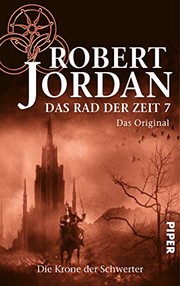
Book 7 is the last book before the pace noticeably drops. It resolves several plotlines from Book 6 and introduces Ebou Dar, an important location. Enjoy the relative momentum here.

Book 8 — the slog begins in earnest. It is the shortest main-series book but feels dense. Rand is barely present. Tip: read in short sessions and focus on Egwene's compelling political storyline to stay engaged.
Book 9 is slow in the middle but ends with a stunning, world-changing scene ('Cleansing of the Source') that makes the whole book worthwhile. Keep that finale as your carrot.
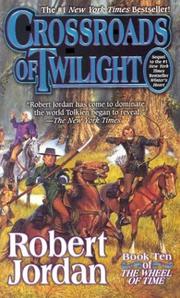
Book 10 is universally acknowledged as the series' low point — most of it runs parallel to the end of Book 9. Honest advice: read it, but don't linger. The series recovers sharply in Book 11.
The Resurgence & Grand Finale: Books 11–14
ExpertExperience the series' triumphant second wind as Brandon Sanderson joins to complete Jordan's work. The pace rockets back up, every plotline converges, and the Last Battle arrives. This is the payoff for everything.
▸ Study plan for this stage
Pace: 10–12 weeks, ~35–40 pages/day. Knife of Dreams is the longest and densest of the four (~800 pages), so allow 3 weeks for it. The Gathering Storm and Towers of Midnight each warrant ~2.5–3 weeks. Save a full 3 weeks for A Memory of Light (~900 pages), reading more slowly during the Last Battle chapte
- The Jordan-to-Sanderson transition: recognizing tonal and stylistic continuity vs. change across the four books, and how Sanderson honored Jordan's notes and outlines
- Resolution of long-stalled plotlines: the Mat–Tuon marriage and the Seanchan political arc, Perrin's battle for his own identity and his rescue of Faile, and Rand's psychological unraveling and ultimate transcendence at Dragonmount
- Egwene's rise to the Amyrlin Seat: her captivity in the White Tower as a masterclass in soft power, her unification of the Tower, and her sacrifice during the Last Battle
- The nature of the Dark One and the Pattern: the philosophical debate in A Memory of Light about whether to destroy or merely seal the Dark One, and what Rand's final choice reveals about free will and the necessity of evil
- Convergence of all ta'veren threads: how Rand, Mat, and Perrin's separate arcs are deliberately woven together at the Field of Merrilor and throughout Tarmon Gai'don
- The Last Battle as a multi-front military, political, and spiritual war: the logistics of the four battlefronts, the role of the Great Captains and their compulsion-induced failures, and the Seanchan alliance
- Death, sacrifice, and the cost of victory: the fates of Egwene, Siuan, Gawyn, Bela, and others, and how Jordan/Sanderson use loss to give the victory weight
- The ending and the Wheel's continuity: Rand's body-swap survival, the symbolic lighting of his pipe, and the open-ended implication that the Wheel turns again
- How does Knife of Dreams signal a dramatic shift in pacing compared to the preceding 'slog' books, and which specific plot resolutions in that novel feel most earned after the long build-up?
- Trace Rand al'Thor's psychological collapse and his epiphany on Dragonmount in The Gathering Storm — what causes his breaking point, and what philosophical realization pulls him back from destroying the world?
- In Towers of Midnight, how does Perrin's arc resolve his internal conflict between being a leader and rejecting power, and what is the significance of him forging his own Power-wrought hammer?
- How does Egwene's arc across The Gathering Storm and Towers of Midnight redefine what it means to be the Amyrlin Seat, and why is her death in A Memory of Light framed as a triumph rather than a tragedy?
- What is the thematic argument A Memory of Light makes through Rand's confrontation with the Dark One, and why does Rand choose to seal rather than destroy him?
- How does the series use Mat Cauthon's arc across these four books — from reluctant husband to battlefield genius at Merrilor — to balance the darkness of the Last Battle with humor and humanity?
- **The Resolution Tracker:** Before starting Knife of Dreams, write down your top 10 unresolved plotlines from Books 1–10. Check them off as each is resolved across the four books, and write 2–3 sentences on whether each resolution felt satisfying and why.
- **Dragonmount Close-Read:** Re-read Rand's epiphany scene on Dragonmount (The Gathering Storm, Chapter 50) twice — once for plot, once for philosophy. Write a one-page reflection on what the 'laughter and tears' moment means thematically and how it recontextualizes everything Rand has suffered since Book 1.
- **The Last Battle Chapter Map:** Chapter 37 of A Memory of Light ('The Last Battle') is one of the longest single chapters in fantasy literature. As you read it, keep a running log of each POV switch: who, where, and what the stakes are. Afterward, sketch a rough timeline of simultaneous events to appreciate the structural ambition.
- **Jordan vs. Sanderson Style Comparison:** Choose one Mat scene from Knife of Dreams and one from The Gathering Storm. Write a side-by-side paragraph analysis of voice, humor, and interiority. What feels consistent? What feels different? This sharpens your critical reading and deepens appreciation for the collaborative authorship.
- **Eulogy Exercise:** Choose one character who dies in A Memory of Light and write a one-page in-world eulogy from the perspective of another character who knew them. This forces deep engagement with character relationships and the emotional weight of the finale.
- **Series Retrospective Essay:** After finishing A Memory of Light, write a 500-word essay answering: 'What is The Wheel of Time ultimately about?' Draw on specific moments from all four books in this stage as your primary evidence, using earlier books only as supporting context.
Next up: Completing A Memory of Light gives readers the full emotional and thematic foundation to explore the expanded universe — whether that means diving into the prequel New Spring, the companion The World of Robert Jordan's The Wheel of Time, or community deep-dives into prophecy fulfillment and foreshadowing, all of which reward the complete series knowledge earned here.

Book 11 — Jordan's last fully written volume — is a dramatic return to form. Nearly every dangling plotline gets a major push forward. After the slog, this feels like a reward and re-energizes you for the finish.

Book 12, completed by Brandon Sanderson from Jordan's notes. Focuses on Rand and Egwene in alternating arcs, both building to explosive climaxes. Sanderson's faster prose is a noticeable gear-shift — in a good way.
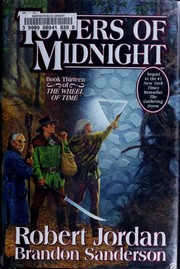
Book 13 focuses on Perrin and Mat, resolving their long-running storylines in deeply satisfying ways. It runs partly concurrent with Book 12, and together they form one massive penultimate act.
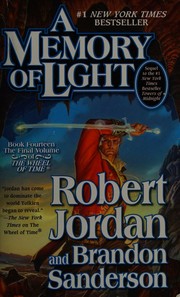
Book 14 — the finale. The Last Battle occupies nearly the entire novel. It is one of the longest single battles in fantasy literature. Everything you have read across 15 books pays off here. Read it in as few sittings as possible.
Discussion
Keep reading
Paths that share books, cover the same subject, or open a related topic.