Garth Nix books in order: where to start with the Old Kingdom
Start with Sabriel and read the Old Kingdom in publication order — Sabriel, Lirael, Abhorsen — not in internal chronology. The prequels Clariel and Terciel and Elinor are set centuries and decades earlier, and both are written for readers who already know what an Abhorsen is and what the seven bells do; put either one first and you spend the book waiting to be told things the original trilogy assumes. Lirael and Abhorsen are also a single novel split in two, so treat them as one book with a hard stop in the middle. After the Old Kingdom, the Keys to the Kingdom is a separate seven-book series for younger readers beginning with Mister Monday, and there are three strong standalones.
The Old Kingdom, In Order
BeginnerRead the core trilogy as one continuous story and learn its system — the Charter, Free Magic, the nine gates of Death and the bells the Abhorsen carries.
▸ Study plan for this stage
Pace: 3 to 4 weeks, about 1,270 pages. Sabriel is 352 pages and self-contained — read it first and stop to see whether the world has taken. Lirael, catalogued here under its fuller title Lirael: Daughter of the Clayr, is 519 pages and does not resolve on its own; Abhorsen is 394 and is the second half of
- Two countries and a Wall: Ancelstierre, roughly interwar England with telephones and machine guns, and the Old Kingdom, where magic works and technology does not. The border is the series' governing idea and its best running joke.
- Charter Magic is lawful, bounded and written; Free Magic is older, unbounded and corrupting. Every conflict in the trilogy is some version of the difference between them.
- The Abhorsen is a necromancer whose job is the opposite of the usual one — putting the dead back rather than raising them — and this inversion is what makes the premise more than a gimmick.
- The seven bells each do a specific and different thing to the dead, and the order in which they are carried on the bandolier is deliberate. Learn them; the plots turn on which bell is reached for.
- Death is a place with nine gates and a current, and it is described consistently across every book in the sequence. Nix never cheats on his own geography.
- Sabriel is self-contained. Lirael and Abhorsen are one novel split in two by a publishing decision, and the break falls in an unsatisfying place by design of the format, not the story.
- Lirael introduces a new protagonist eighteen years on and spends a long time on someone who is not doing anything heroic. That patience is the trilogy's strongest writing.
- What does the Wall let Nix do that a single-world setting would not? Name two scenes that depend on it entirely.
- List the seven bells and what each is for. Then find the scene in Sabriel where the wrong bell would have produced a different book.
- How does the Charter differ from Free Magic in what it costs the user, and which characters pay each cost?
- Lirael spends a large part of her novel in a library rather than on a quest. What is the book building in that time, and does it pay off in Abhorsen?
- Sabriel and Lirael both cross into Death. How does Nix keep the second crossing from being a repetition of the first?
- Draw the nine precincts of Death and the gates between them as they are described in Sabriel, then check your diagram against the descriptions in Abhorsen. The consistency is a real feature of the books and worth verifying rather than trusting.
- Write the seven bells in bandolier order with one line each on function, and keep the list in the book. Every major set piece in the trilogy can be read against it.
- Read the last chapter of Lirael and the first chapter of Abhorsen back to back and mark exactly where a single novel was cut. Knowing where the seam is makes the pacing complaint about Lirael answerable.
- Track the Disreputable Dog and Mogget across all three books and note every occasion on which each tells the truth, lies, or refuses to answer. The pattern is the trilogy's quietest piece of construction.
Next up: With the core trilogy read in order, you can take the continuation and the two prequels in the sequence that keeps their reveals intact.

A schoolgirl on the modern side of the Wall crosses into the Old Kingdom to find her father, the necromancer whose job is putting the dead back. Self-contained, and still the best single book Nix has written — the correct starting point with no argument to be had about it.
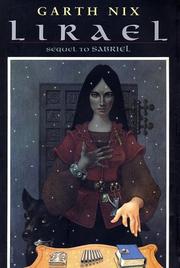
Set eighteen years later with a new protagonist, and the first half of a two-volume novel. Catalogued here under its fuller title Lirael: Daughter of the Clayr. Be warned that it does not resolve on its own — have the next book to hand before you start it.
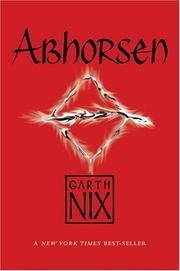
The second half of Lirael and the conclusion of the trilogy. Read it immediately; the break between the two is a publishing decision, not a structural one, and the pair together are the high point of the series.
Back and Forward in the Old Kingdom
BeginnerRead the continuation and the two prequels in the order that keeps their reveals intact.
▸ Study plan for this stage
Pace: 4 to 5 weeks, about 1,690 pages, and the most uneven stage on the path. Across the Wall is 384 pages but only its first and longest piece, the novella Nicholas Sayre and the Creature in the Case, is Old Kingdom material — read that, and the rest at leisure. Goldenhand is 421 pages and follows direct
- Nicholas Sayre and the Creature in the Case is a genuine bridging novella, not an extra. Goldenhand assumes it, so skipping Across the Wall leaves a real gap.
- Goldenhand is the last book in internal chronology and the natural end of the main sequence — read it before either prequel.
- Publication order and internal chronology diverge sharply from here, and the series is designed for publication order: both prequels are written for readers who already know what an Abhorsen is and what the bells do.
- Clariel is a study of a young woman who wants nothing the Old Kingdom is offering her, and it refuses the shape a prequel is normally expected to have.
- Reading Clariel first destroys its ending completely. This is the single strongest ordering argument in Nix's whole bibliography.
- Terciel and Elinor tells the story of Sabriel's parents and is the slightest of the Old Kingdom novels — worth it if the world is what you read for, easy to skip if the plots are.
- Across six books the magic system does not change its rules. Nix adds detail without retconning, which is why the prequels can deepen the trilogy rather than contradicting it.
- What does Goldenhand assume you know from the Across the Wall novella? Be specific about characters and events.
- Clariel is a prequel by six hundred years. What does that distance let Nix show about the Old Kingdom that the trilogy could not?
- Does Clariel's ending read as tragedy, as inevitability, or as a character choosing? The book leaves room for all three — which does the text support?
- What does Terciel and Elinor add to Sabriel, and would Sabriel be weaker without it?
- Having read all six, is publication order still the right recommendation? Argue it from a specific reveal.
- Build a single timeline of the Old Kingdom with all six books placed on it by internal date, then mark the publication order beside it. Seeing both at once is the clearest possible demonstration of why the two differ.
- Reread the trilogy's account of the Abhorsen line and Free Magic after finishing Clariel, and mark every sentence Clariel has given a new meaning.
- Note the point in Clariel at which you first knew who she was. Then find the earliest clue Nix actually planted and compare the two page numbers.
- Track how the Charter is described in Terciel and Elinor against how it is described in Sabriel, a generation later in the same world, and note what has changed politically rather than magically.
Next up: The Old Kingdom is complete; the Keys to the Kingdom is an entirely separate series, pitched younger and built on a fixed pattern rather than an open world.
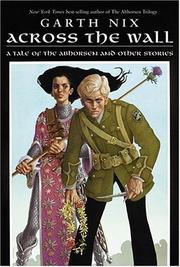
A collection whose first and longest piece, Nicholas Sayre and the Creature in the Case, is a genuine Old Kingdom novella bridging Abhorsen and Goldenhand. Read it here rather than skipping it — Goldenhand assumes it. The other stories are unrelated.
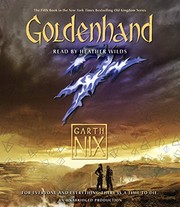
The direct sequel to Abhorsen, picking up Lirael's story some months on. The last book in internal chronology and the natural end of the main sequence; read it before either prequel.

Set roughly six hundred years earlier, and much the best of the prequels — a study of a young woman who wants nothing the Old Kingdom is offering, with an ending that only lands if you already know who she becomes. Reading it first spoils that entirely, which is why it is fourth here.

Sabriel's parents, a generation before the first book. The slightest of the Old Kingdom novels and the most optional — worth it if the world is what you are reading for, easy to skip if the plots are.
The Keys to the Kingdom
BeginnerRead the separate seven-book series, which is pitched younger, structured around a fixed pattern, and must be read strictly in order.
▸ Study plan for this stage
Pace: 3 to 4 weeks for the first four, about 1,430 pages — Mister Monday 361, Grim Tuesday 321, Drowned Wednesday 400, Sir Thursday 348. These are pitched at younger readers than the Old Kingdom and read considerably faster; a book every four or five days is comfortable. The series must be read strictly i
- The premise: an asthmatic boy is handed part of a key by a dying man and inherits a claim on a bureaucratic afterlife run by seven Trustees, one per day of the week.
- The House is a satire of institutions before it is a fantasy world — offices, records, promotion boards and infinite paperwork — and the comedy comes from taking the bureaucracy entirely seriously.
- The structure is fixed and announced: one Trustee, one region of the House, one Key fragment per book. Grim Tuesday is where the pattern becomes visible.
- Each Trustee embodies one of the seven deadly sins, and each has broken the Will in a way that suits it. The scheme is rigid on purpose.
- Drowned Wednesday is where the series gets substantially stranger and better — the Border Sea, and a Trustee whose sin has made her a problem to herself rather than only to others.
- Sir Thursday is the midpoint and turns the House's politics darker with a conscription plot, which is where the series stops being purely comic.
- This is a different kind of book from the Old Kingdom: constrained, patterned and written for a younger reader. Judging it by the trilogy's standards will produce the wrong verdict.
- What is the House, administratively? Describe it as an organisation rather than as a setting.
- State the series formula in one sentence, then say what each of the first four books does to vary it.
- Which Trustee is the most interesting character, and is it the one whose sin is most interesting?
- How does Arthur change across four books, and what is the cost the series attaches to each Key fragment?
- Sir Thursday introduces conscription and an army. What does that let Nix say that the earlier, more comic volumes could not?
- Make a seven-row table before you start — day, Trustee, sin, region of the House, Key fragment — and fill it in as you read. By Sir Thursday you will have predicted half of the remaining three books, which is the series being honest about its own design.
- Track Arthur's asthma across the four volumes. It is not a decorative detail; note every point at which it constrains a plot decision.
- Compare the opening chapter of Mister Monday with the opening chapter of Sabriel and write a paragraph on how differently Nix pitches the same author's voice at two audiences.
- After Drowned Wednesday, write down what you expect Lady Friday, Superior Saturday and Lord Sunday to do with their sins. Checking the prediction later is the best test of whether the pattern is a strength or a limitation.
Next up: Two long series in, the standalones show what Nix does when he has no pattern and no world to return to.

An asthmatic boy is handed part of a key by a dying man and inherits a claim on a bureaucratic afterlife run by seven Trustees. The first of seven, one per day of the week, and the entry point to the series — catalogued here with its series subtitle attached.
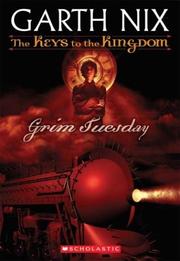
Second, and the volume that establishes the pattern the whole series runs on: one Trustee, one region of the House, one fragment of the Key per book. Reading these out of order does not work at all.
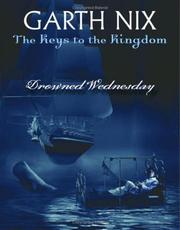
Third, and where the series gets substantially stranger and better — the Border Sea, and a Trustee whose sin has made her a problem to herself. The book that convinces most readers to finish the run.
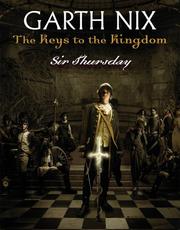
Fourth, and the midpoint: a conscription plot that makes the House's politics considerably darker. The series continues through Lady Friday, Superior Saturday and Lord Sunday, all of which resolve in our catalogue and should be read in that order.
The Standalones
IntermediateRead the three unconnected novels that show what Nix does outside a long series.
▸ Study plan for this stage
Pace: 3 to 4 weeks, about 1,320 pages, and three books with almost nothing in common. Shade's Children is 345 pages and much the hardest-edged: it is a post-apocalyptic novel in which children are harvested for parts on their fourteenth birthday, told partly through interrogation transcripts, and it is co
- Shade's Children is early Nix and formally the most adventurous: the interrogation transcripts and data fragments between chapters are doing structural work, not decoration.
- The novel's central question is what Shade himself is and whether he is any better than the Overlords, and the book declines to make that easy.
- The Left-Handed Booksellers of London is set in a 1983 London where two rival families of booksellers police the mythic Old World, and it is the closest later Nix comes to Sabriel's briskness.
- Angel Mage builds its magic on summoning angels through icons, at a specific cost to the summoner, and sets four viewpoint characters inside one woman's very long-term plan.
- The antagonist of Angel Mage is competent, patient and largely correct about the mechanics of her world, which is why the novel is denser than the rest of this list.
- Across three books written more than twenty years apart, the constant is a hard-edged magic system with an explicit price. The register changes completely; the design principle does not.
- A Confusion of Princes and Frogkisser are the lighter alternatives if Angel Mage is not to taste.
- What do the transcripts and data fragments in Shade's Children tell you that the narrative does not, and when do the two begin to disagree?
- Is Shade an ally? Point to the evidence on both sides rather than settling it.
- The Left-Handed Booksellers of London is set in a precisely dated 1983. What does the period specificity buy the book?
- How does the cost of angelic magic in Angel Mage shape what its characters are willing to do, and how does it compare with the cost of Free Magic in the Old Kingdom?
- Across these three, what stays recognisably Nix when the world, the audience and the tone all change?
- Read the interrogation transcripts of Shade's Children in sequence, skipping the narrative, and note what story they tell on their own. Then read the book normally. The gap between the two accounts is the novel's real subject.
- List the price attached to magic in each of the four Nix worlds you have now read — Old Kingdom, the House, Shade's Children, Angel Mage — in one line each. Setting them side by side shows exactly what he is consistently interested in.
- In Angel Mage, track the antagonist's plan backwards from the ending and mark the earliest chapter in which each step was already in motion. Almost all of it is visible on a reread.
- Compare an action sequence in Sabriel with one in The Left-Handed Booksellers of London, written twenty-five years apart, and write a paragraph on what changed in the prose.
Next up: This is the last stage: you have both long sequences in their correct orders and the standalones that show what Nix does outside them.
Early, bleak, and unlike everything else here: a post-apocalyptic novel in which children are harvested for parts at fourteen, told partly through interrogation transcripts. Considerably harder-edged than the Old Kingdom books and worth reading for the contrast.

A 1983 London where two rival families of booksellers police the mythic Old World. The most purely enjoyable of the later novels and the easiest recommendation to someone who liked Sabriel's briskness.

A standalone secondary-world fantasy with a magic system built on summoning angels through icons, and four viewpoint characters caught in one woman's very long-term plan. Denser than the rest of this list — a reasonable last stop, and A Confusion of Princes and Frogkisser are the lighter alternatives if it is not to taste.
Discussion
Keep reading
Paths that share books, cover the same subject, or open a related topic.